Farhan hamdan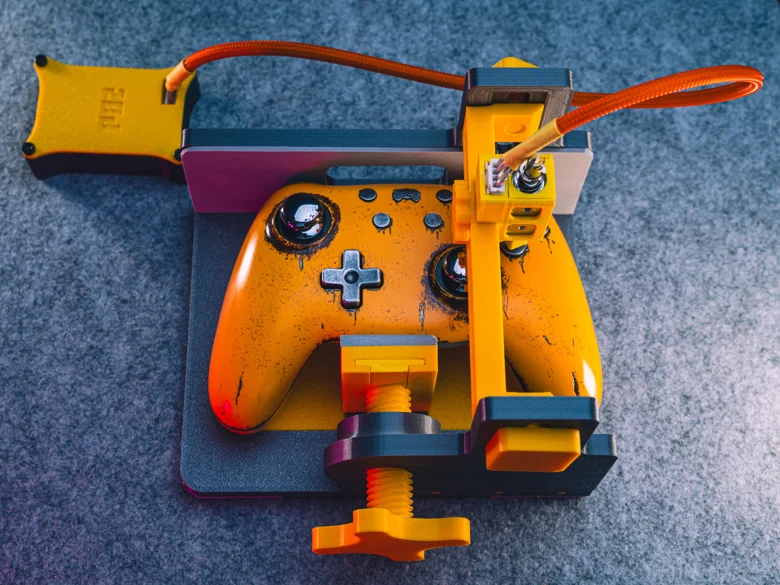
The team behind the renowned lag testing platform Gamepadla has officially introduced the Prometheus 82, a groundbreaking device and kit designed to measure both button and stick latency in game controllers without requiring any disassembly or soldering. This innovative solution marks a significant leap forward for gamers, hardware enthusiasts, and professional reviewers seeking accurate, real-world performance metrics for their input devices. Currently in its beta phase, the Prometheus 82 is available for purchase at $225, offering a comprehensive tool for understanding the often-overlooked factor of input lag.
The Genesis of Gamepadla and the Need for Precision Latency Measurement
Input latency, commonly referred to as input lag, is a critical factor in competitive gaming, influencing player reaction times and overall gaming experience. Even a few milliseconds of delay can significantly impact performance in fast-paced genres like fighting games, first-person shooters, and rhythm games. For years, accurately measuring this latency has been a complex endeavor, often requiring specialized equipment, intricate setup procedures, and, frequently, the irreversible modification of controllers through disassembly and soldering directly to button contacts. This barrier to entry has limited widespread testing and understanding of controller performance.
Gamepadla emerged from this challenge, aiming to provide a more accessible and standardized method for quantifying controller lag. Its initial iterations involved software-based analysis, but the desire for a physical, repeatable, and non-invasive measurement tool led to the development of the Prometheus 82. The device represents the culmination of extensive research and engineering, bridging the gap between sophisticated lab testing and practical, user-friendly application. The project’s lead, John, alongside his team, has been a vocal advocate for transparency in controller performance, pushing the boundaries of what’s possible for consumer-grade testing. An interview with John and Anna from Gamepadla conducted several years prior (available on platforms like RetroRGB) highlights their foundational commitment to addressing input lag in the gaming ecosystem.
How Prometheus 82 Works: A Deep Dive into Non-Invasive Measurement
The Prometheus 82 system is ingeniously designed to simplify the latency testing process. It comprises a lag testing circuit integrated with a custom 3D-printed brace and a precision solenoid kit. To use the device, a controller is securely mounted within the brace. The solenoid, a compact electromechanical actuator, is then carefully aligned to either a specific button or an analog stick, allowing for individual component testing. This targeted application ensures precise activation without affecting other parts of the controller.
Once the controller is mounted and the solenoid is positioned, the Prometheus 82 connects to a personal computer. Proprietary software then takes over, initiating a controlled sequence. The software commands the solenoid to actuate the chosen button or stick. Simultaneously, it begins measuring the time elapsed from the physical actuation of the input until that action is registered by the PC. This end-to-end measurement captures the entire signal chain, from the controller’s internal processing to its communication with the computer and the PC’s recognition of the input.
A key technical advancement of the Prometheus 82 is its ability to automatically compensate for factors such as pulse duration and contact delay. These subtle variables, which can introduce minor inaccuracies in less sophisticated testing methods, are accounted for, ensuring a more precise measurement. The output provided by the system typically includes minimum, maximum, and average latency measurements. This detailed data allows users to understand not just the typical delay but also the variability in performance, which can be crucial for competitive play. The developers assert that these measurements are within a millisecond of the results obtained through traditional, invasive methods that involve soldering directly to controller contacts, a testament to the device’s accuracy without the associated risks.
Understanding Latency: Controller vs. System Lag
A critical distinction highlighted by the Prometheus 82 is its measurement of "total controller latency," which encompasses not only the inherent lag of the controller hardware itself but also the latency introduced by the connected PC. This approach provides a "real-world" measurement, reflecting the actual delay a user would experience on their specific setup. However, it’s important to understand that this differs from an "isolated controller lag test," which aims to measure only the controller’s internal latency, free from any operating system or PC variables.
For the average gamer or enthusiast looking to optimize their personal setup, the total system latency provided by Prometheus 82 is highly relevant. It helps identify bottlenecks in their specific PC configuration, operating system, and driver stack. For instance, a PC heavily burdened by background applications, less optimized drivers, or an older operating system might introduce additional milliseconds of lag, even with a low-latency controller. The Prometheus 82 helps users diagnose these system-level contributions to overall input delay.
However, for professional reviewers, hardware manufacturers, and individuals seeking to compare controllers purely on their intrinsic hardware performance, isolating the controller’s lag becomes paramount. The original article’s author notes that their PC, optimized for video capture and content creation rather than low-lag gaming, consistently adds 1-2ms of latency. This observation is reinforced by comparative testing using a MiSTer lag testing kit, which provides isolated controller lag measurements. For example, an arcade controller with a Brook Retro board consistently yields min/max/average latencies of 0.3 / 3.3 / 1.3 ms when tested with a MiSTer. The same controller, when tested on the author’s PC with Gamepadla, shows significantly higher and more variable results (e.g., 1.59 / 9.61 / 5.42 ms average), indicating the PC’s substantial contribution.
Real-World Performance and Consistency
Despite the influence of PC-specific latency, the Prometheus 82 and Gamepadla platform demonstrate remarkable consistency in their measurements. John from Gamepadla emphasizes that the hardware variance between Prometheus 82 units is under 0.2ms, a figure he describes as "awesome." Furthermore, the platform tracks tests from different users globally, revealing an average tester-to-tester difference of only 0.92ms. This data, accessible via the live consistency report on the Gamepadla website, underscores the reliability of the system as a comparative tool, even if the absolute "raw controller" latency isn’t isolated by default.

Impressive latency figures have been observed with high-performance controllers. For instance, testing a GameSir G7 Pro 8K AimLabs Edition with Prometheus 82 on a standard Windows PC yielded average latencies of 1.54ms for buttons and 0.68ms for sticks, with stick latency dropping to 0.5ms with the latest algorithmic improvements. These figures, while including PC overhead, still represent exceptionally low input delays, indicative of cutting-edge controller technology.
A particularly insightful discovery facilitated by Prometheus 82 is the often-significant difference between button and stick latency on the same controller. Traditional testing methods frequently focused primarily on button presses, but analog stick movements involve complex internal algorithms that vary across different technologies (potentiometers, Hall effect, TMR, capacitive). Prometheus 82 provides a standardized way to test all stick technologies under identical physical conditions, revealing distinct latency profiles that might surprise many, as noted by John. This capability is invaluable for understanding the full performance spectrum of modern gamepads.
The Professional Conundrum: Isolating Controller Latency for Reviewers and Developers
While Prometheus 82 is an ideal solution for 99.9% of lag testers, professional reviewers, hardware developers, and companies manufacturing controllers or adapters face a unique challenge: the need to isolate only the controller’s latency, free from PC variables, to provide universally comparable data. The original article raises important questions about how this can be achieved with the Prometheus 82, ideally without resorting to invasive methods.
The current recommended approach for such high-precision, isolated testing still involves supplementary tools like the MiSTer lag testing kit for button latency. This dual-testing method, while effective, underscores the desire for a single, non-invasive solution that can provide both total system and isolated controller lag.
Pioneering Solutions for System Variability
The author of the original article proposes several forward-thinking solutions to address the challenge of PC-induced latency variability, aiming to make Prometheus 82 even more versatile for professional use:
- Dedicated Lag Testing PC: Establishing a dedicated PC solely for lag testing, with strict environmental controls and minimal background processes, could significantly reduce and stabilize PC latency. This involves calibrating the setup using a known low-latency controller (verified by isolated tests) across all connection types (Bluetooth, wired, wireless dongle). By running thousands of input tests on this controlled environment, it might be possible to empirically calculate the PC’s consistent latency contribution, allowing for a more accurate deduction of isolated controller lag from Prometheus 82 results.
- "Loopback Tester" Device: A more elegant solution could involve the Gamepadla team developing a secondary "loopback tester" device, perhaps another Arduino-based unit. This device would connect to the PC and then loop back into the Gamepadla/Prometheus 82 hardware. Running thousands of loopback tests would measure only the system’s latency, allowing users to identify and potentially mitigate PC-specific delays through BIOS or OS adjustments. This "system calibration" step, similar to how MD Fourier testing or the arcade controller control test is performed, would precede controller testing. By connecting the test controller to the exact same USB port (or via BT if feasible for loopback) used by the loopback device, one could theoretically achieve dedicated controller tests with a margin of less than a millisecond, significantly simplifying professional-grade analysis.
- Linux Boot USB Stick Image: For ultimate OS isolation, creating a specialized Linux boot USB stick image could remove Windows/macOS variability from the equation entirely. While this introduces new complexities due to motherboard/CPU/BIOS differences across systems, it represents the "end goal" for companies seeking complete OS independence in their lag testing. Combined with a loopback tester, this setup could offer highly accurate, isolated controller lag measurements without any disassembly or soldering.
These potential advancements highlight the ongoing evolution of lag testing methodology and the community’s collective effort to achieve increasingly precise and user-friendly solutions.
Broader Implications for Gaming and Hardware Innovation
The Prometheus 82, even in its current beta form, holds significant implications for the gaming industry:
- Empowering Gamers: Enthusiasts can now accurately measure their total system latency, allowing them to optimize their setups for competitive advantage. This moves beyond anecdotal perceptions of lag to quantifiable data.
- Driving Hardware Improvement: For controller manufacturers, Prometheus 82 offers a robust, non-destructive tool for R&D and quality control. They can iterate on designs and firmware, quickly assessing latency improvements without damaging prototypes. The ability to test stick latency specifically is a major boon for analog input development.
- Enhancing Reviewer Credibility: While professional reviewers will still need to account for system variability, Prometheus 82 provides a standardized, repeatable method for gathering extensive data. As the proposed solutions for system isolation mature, it will further elevate the scientific rigor of controller reviews.
- Community Engagement and Knowledge Sharing: The Gamepadla platform, with its global consistency reports, fosters a community where users can share data and collectively advance the understanding of input lag.
The Prometheus 82 is not merely a device; it is an evolution in the pursuit of gaming precision. It democratizes access to sophisticated latency testing, making it accessible to a broader audience than ever before. While the nuances of isolating raw controller latency remain a topic of discussion for the most demanding professional applications, the Prometheus 82 in its current form is an exceptional tool for understanding and optimizing the critical interface between player and game. Its introduction solidifies Gamepadla’s position at the forefront of input lag research and innovation.
Availability and Community Engagement
For those eager to dive into the world of precise latency measurement, the full Prometheus 82 kit is available for purchase through Ko-fi. Further information, including updates and community discussions, can be found on the main Gamepadla website and Reddit. This accessibility ensures that the benefits of advanced lag testing are within reach for a wide audience, from casual gamers to competitive esports aspirants and hardware developers.
- Purchase Here: https://ko-fi.com/s/a4c414c6f3
- Main Site: https://gamepadla.com/
- Updates: https://www.reddit.com/user/JohnnyPunch/
- Live Consistency Report: https://gamepadla.com/latency/
The ongoing development and community engagement surrounding Prometheus 82 signify a dynamic future for input latency analysis, promising ever more precise and user-friendly tools for optimizing the gaming experience.