Jia Lissa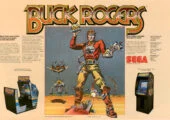
The Corporate Pivot: Sega Electronics and the Paramount Alliance
The year 1982 marked a significant rebranding for Sega’s North American operations. Previously operating as Sega/Gremlin—following Sega’s 1976 acquisition of the San Diego-based Gremlin Industries—the entity was renamed Sega Electronics. This change coincided with a mandate from Gulf + Western to integrate its various entertainment arms. Having moved Sega from its manufacturing division to its entertainment group in late 1981, the conglomerate sought to capitalize on Paramount Pictures’ cinematic successes.
While competitors like 20th Century Fox and MCA were licensing their properties to external developers, Gulf + Western possessed a unique vertical integration. It owned both a major film studio and a world-class arcade manufacturer. This synergy was intended to produce a wave of movie-based games, with titles like Dragonslayer, Friday the 13th, and War of the Worlds entering the conceptual pipeline. However, the development cycle of the early 1980s was volatile, and only two titles from this ambitious slate reached the arcade market: Star Trek: Strategic Operations Simulator and Buck Rogers: Planet of Zoom.
From Zoom 909 to Buck Rogers: A Strategy of Rebranding
The development of Buck Rogers: Planet of Zoom reveals the pragmatic, often opportunistic nature of the early video game industry. The game did not begin as a dedicated Buck Rogers project. Instead, it was an adaptation of a Japanese-developed Sega title known as Zoom 909. Recognizing that the Zoom 909 brand carried little weight in the North American market, Sega Electronics opted to skin the game with the Buck Rogers license to ensure immediate consumer recognition.
Buck Rogers, a character who first appeared in 1928, had already seen multiple revivals in American pop culture, most notably a 1979 feature film and a television series that ran until 1981. Although the television show had recently concluded, the character remained a household name. By branding Zoom 909 as Buck Rogers: Planet of Zoom, Sega aimed to capture the demographic that had grown up with the space opera hero while simultaneously riding the coattails of the broader science fiction boom fueled by the Star Wars and Star Trek franchises.
Technical Architecture: The VCO Object System and Pseudo-3D
Technologically, Buck Rogers: Planet of Zoom was a pioneer. It utilized Sega’s VCO (Voltage Controlled Oscillators) Object system, a hardware architecture that served as a critical stepping stone between early raster graphics and the legendary "Super Scaler" technology found in later hits like OutRun and After Burner. The VCO system allowed for the scaling of sprites—the process of increasing or decreasing the size of a 2D image to create the illusion of depth.
This pseudo-3D effect was essential for the game’s "rear-perspective" gameplay, where the player’s craft appears to fly into the screen. While not a true 3D environment, the fluid scaling of enemy ships and obstacles provided a sense of speed and immersion that was nearly unparalleled in 1982. The hardware enabled the game to maintain a high frame rate even as multiple objects moved toward the player, a feat that necessitated specialized hardware before the advent of dedicated 3D GPUs.
Gameplay Mechanics and Design Innovation
The gameplay of Planet of Zoom was structured around high-speed navigation and combat. Players assumed control of Buck Rogers’ starfighter, viewed from a third-person perspective. Unlike traditional "shmups" (shoot ’em ups) of the era, which were often fixed-screen or side-scrolling, Planet of Zoom emphasized forward momentum.
The Fuel and Speed Dynamic
One of the game’s defining mechanics was the integration of speed control via an accelerator pedal (in the cockpit version) or a button. The game featured a fuel gauge that acted as a timer; traveling at higher speeds consumed fuel more efficiently in terms of distance covered, but increased the difficulty of dodging obstacles. This created a risk-reward loop where players were incentivized to "zoom" through stages to maximize bonus points and ensure they reached the next section before running out of fuel.
Stage Structure and Combat
The game consisted of multiple rounds, each divided into eight short sections. These sections varied from open space dogfights to hazardous planetary surfaces filled with "energy towers" and narrow gaps. The climax of each round was a confrontation with the "Source Ship," a massive boss entity. To defeat the Source Ship, players had to navigate its defenses and destroy four specific engines. Despite the Buck Rogers name, the narrative was minimalist: a destructive entity known as the Planet of Zoom was threatening the galaxy, and the player was the only force capable of stopping it.
The Cockpit Experience and Market Presence
Sega released Buck Rogers: Planet of Zoom in several cabinet configurations, including a standard upright and a premium sit-down cockpit. The cockpit cabinet was particularly significant for the game’s reception. It featured a high-quality flight stick and a wraparound feel that enhanced the immersion of the VCO scaling effects.
Industry data from the era suggests that the cockpit version was a significant "earner" in high-traffic arcades. The tactile feedback of the flight stick and the physical sensation of the accelerator pedal differentiated the game from the more static experiences offered by contemporary titles. However, the game’s difficulty and the hardware’s complexity meant that the upright versions were more common in smaller venues, though they lacked the full sensory impact of the dedicated cockpit.
Critical Analysis: Licensing vs. Innovation
Historical analysis of Buck Rogers: Planet of Zoom often highlights a disconnect between the brand and the gameplay. Critics and historians note that the game shares almost no DNA with the Buck Rogers lore beyond the title. There are no appearances by Wilma Deering or Dr. Huer, and the primary antagonist, Princess Ardala, is notably absent.
Furthermore, the game’s first stage—a high-speed run through a trench-like environment—drew immediate comparisons to the Death Star attack in Star Wars: A New Hope. While this served to attract players looking for a Star Wars-like experience, it also led to accusations that the game was a derivative "knockoff" rather than an original contribution to the genre.
From a technical standpoint, the game was also criticized for its repetitive nature. Because it relied on an indefinite looping structure—where the game simply becomes faster and more difficult after the initial five stages—long-term engagement often waned. Additionally, the arcade version did not reset the score when a player used a continue, a design choice that many competitive players felt devalued the high-score leaderboard.
Chronology of Development and Release
To understand the game’s place in history, one must look at the timeline of Sega’s early 80s output:
- December 1981: Gulf + Western transfers Sega to its entertainment group, initiating the Paramount licensing strategy.
- Early 1982: Zoom 909 is developed by Sega’s Japanese team as an exploration of VCO scaling technology.
- Mid-1982: Sega/Gremlin is rebranded as Sega Electronics; the decision is made to localize Zoom 909 as Buck Rogers: Planet of Zoom.
- Late 1982: Buck Rogers: Planet of Zoom is released in North American arcades.
- 1983: Home ports begin appearing on systems such as the Atari 2600, ColecoVision, and Commodore 64, though they struggle to replicate the arcade’s scaling effects.
- Post-1983: The video game crash of 1983 severely impacts Sega Electronics’ North American operations, leading to the eventually divestment of the division.
Broader Impact and Industry Implications
Despite its flaws, Buck Rogers: Planet of Zoom was a pivotal release. It was one of the first games to demonstrate that a licensed brand could be used to revitalize an existing software project for a new market—a practice that would become standard in the industry. It also pushed the boundaries of what was possible with sprite-based hardware, paving the way for the "3D" revolution that Sega would dominate in the mid-to-late 1980s.
The game also served as a counterpoint to Star Trek: Strategic Operations Simulator. While Star Trek offered a tactical, slower-paced experience using vector graphics, Planet of Zoom provided a visceral, high-speed alternative using raster sprites. Together, they showcased Sega’s versatility and its ability to cater to different segments of the burgeoning sci-fi fan base.
In the decades following its release, Buck Rogers: Planet of Zoom has maintained a respected position among arcade enthusiasts. While it may not have the cultural ubiquity of Pac-Man or Space Invaders, its role as a technological bridge and a pioneer in licensed gaming ensures its place in the annals of interactive entertainment history. It remains a testament to a time when the industry was still defining itself, blending Hollywood glamour with cutting-edge engineering to create the "zooming" future of play.