Jia Lissa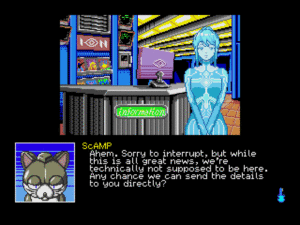
The independent development studio Pixel Pusher Games has officially unveiled Chords, an ambitious graphic adventure designed specifically for the Sega Genesis and Mega Drive hardware. While the 16-bit console is traditionally associated with high-speed platformers and arcade-style shoot-’em-ups, Chords seeks to bridge the gap between the standard cartridge-based library and the more expansive, cinematic experiences typically reserved for the Sega CD peripheral. Developed by a team led by veteran enthusiast Matt, the project represents a multi-year effort to replicate the narrative depth and atmospheric world-building found in 1990s classics like Hideo Kojima’s Snatcher, while utilizing the hardware constraints of the original Genesis console.
The Evolution of the Graphic Adventure on 16-Bit Systems
The history of the graphic adventure genre on Sega hardware is largely defined by the technological divide between the base Genesis console and its CD-ROM expansion. During the early 1990s, the Sega CD became the preferred home for "point-and-click" and menu-driven adventures due to the vast storage capacity of the disc format. Titles such as The Secret of Monkey Island, The Adventures of Willy Beamish, and Rise of the Dragon leveraged the 500MB capacity of the CD-ROM to include digitized voice acting, CD-quality Red Book audio, and detailed cinematic cutscenes.
In contrast, the standard Genesis cartridge—limited by memory costs and storage caps that rarely exceeded 40 megabits (5 megabytes)—struggled to provide the same level of immersion. While the console saw some success with titles like Scooby-Doo Mystery or the localized version of Shadowrun, the "cyberpunk" or "prestige" graphic adventure was almost entirely absent from the cartridge library. Pixel Pusher Games aims to disrupt this historical precedent. By utilizing modern compression techniques and optimized coding, Chords is being positioned as a technical showcase for what is possible on the Motorola 68000 processor without the aid of a secondary CD sub-processor.
Narrative Structure and Character Development
The narrative of Chords follows the journey of Akio, an aspiring musician caught in the high-stakes environment of a global battle-of-the-bands competition. However, the story quickly pivots from a traditional musical underdog tale into a complex conspiracy thriller. As Akio progresses through the tournament, he uncovers the influence of a powerful clandestine organization that is manipulating the competition for its own geopolitical or corporate ends.
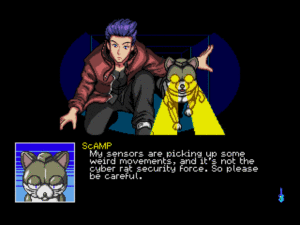
According to the developers, the game is structured into three distinct parts, each designed to escalate the tension and expand the scope of the world. Unlike many indie "homebrew" titles that focus on short-form gameplay loops, Chords is intended to be a "meaty" experience. Lead developer Matt noted that a recent internal speed-run of just the first chapter took approximately 45 minutes to complete. For a standard player engaging with all dialogue and environmental clues, the full three-part adventure is expected to span several hours, rivaling the length of professional retail releases from the 16-bit era.
Gameplay Mechanics and Puzzle Design
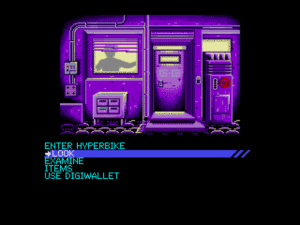
In terms of mechanical execution, Chords adheres to the established conventions of the Japanese Adventure Game (AVG) sub-genre. Players interact with the world through a menu-driven interface featuring commands such as "Move," "Look," "Talk," and "Investigate." The gameplay loop prioritizes observation and logical deduction over reflex-based challenges.
Early feedback from the playable Genesis demo suggests that the game avoids the pitfall of "menu exhaustion"—the common adventure game trope where players simply click every option until the story advances. Instead, Chords incorporates puzzles that require a synthesis of information gathered from multiple sources. Players must pay close attention to:
- Environmental Cues: Examining background posters, discarded items, and architectural details to find hidden passwords or directions.
- Dialogue Branching: Recalling specific details mentioned by non-player characters (NPCs) to unlock new conversational paths.
- In-Game Logic: Applying real-world reasoning to overcome obstacles, such as navigating the logistics of the music competition.
The developers have emphasized that while the puzzles are not designed to be unfairly difficult, they require a level of scrutiny that encourages players to fully immerse themselves in the 16-bit environments.
Technical Artistry and Audio Engineering
To achieve the "prestige" look of a Sega CD title on a cartridge, Pixel Pusher Games collaborated with prominent figures in the retro development community. The visual direction is handled by Daniel "108 Stars" H., a pixel artist recognized for his work on Pier Solar and the Great Architects, which remains one of the most successful independent Sega Genesis releases in history. The artwork in Chords utilizes the console’s limited 512-color palette (with only 64 colors on screen at once) to create moody, detailed urban environments that echo the aesthetic of 1980s and 90s anime.
The auditory experience is managed by SuperJet Spade, who is composing an energetic chiptune soundtrack using the Genesis’s Yamaha YM2612 FM synthesis chip. Given the game’s central theme of music and band culture, the soundtrack serves as more than just background noise; it is an integral part of the atmosphere and narrative identity. Furthermore, the game is being developed with a global audience in mind, featuring full localization in English, French, German, Spanish, and Portuguese. This level of linguistic accessibility is rare for independent retro projects and underscores the studio’s commitment to reaching the international "Mega Drive" fan base.
Chronology of Development and Release Strategy
The development of Chords has followed a deliberate timeline, reflecting the complexity of creating a narrative-heavy game for legacy hardware:
- Initial Concept (Early 2020s): The project began as an exploration of the graphic adventure genre, heavily influenced by the work of Hideo Kojima at Konami.
- Art and Audio Integration (2022-2023): The team expanded to include Daniel H. and SuperJet Spade, solidifying the game’s visual and musical identity.
- Demo Release (Mid-2024): A playable demo was made available to the public and press, showcasing the first segment of Chapter One.
- Current Status: The game is currently in active development, with the team focusing on completing the remaining two chapters and refining the logic puzzles.
Pixel Pusher Games has confirmed that Chords will receive both a digital release and a physical cartridge release. The physical edition is expected to cater to collectors, potentially including a high-quality manual and box art consistent with original Sega releases. A PC port is also in development to ensure the game is accessible to those without original hardware or flash cartridges.
Market Analysis and Genre Implications
The announcement of Chords comes at a time when the "aftermarket" scene for the Sega Genesis is experiencing a significant shift. For much of the last decade, the homebrew market was dominated by arcade ports and platformers. However, the success of narrative-driven projects like Paprium and Xenocrisis has demonstrated a growing appetite for games with higher production values and deeper storylines.
By targeting the graphic adventure genre, Pixel Pusher Games is entering a niche that has been largely underserved since the mid-90s. The decision to focus on original IP rather than a direct "Snatcher clone" is a strategic move that allows the studio to explore themes of modern music culture and corporate manipulation without being tethered to existing lore. This approach provides Chords with a distinct identity that can stand alongside historical classics.
Future Outlook for Pixel Pusher Games
While Chords is the primary focus for the studio, Pixel Pusher Games is also maintaining a secondary project titled Crypt of Dracula. This title is described as a dungeon crawler for the Genesis, indicating that the studio intends to become a long-term contributor to the console’s library across multiple genres.
As the development of Chords nears its final stages, the retro gaming community will be watching closely to see if the project can deliver on its promise of a "Sega CD-quality" experience on a standard cartridge. If successful, Chords could serve as a blueprint for future developers looking to push the boundaries of 16-bit storytelling, proving that the limitations of the past can still be overcome with modern ingenuity.
Updates on the project’s progress, including release dates and pre-order information for the physical edition, are expected to be shared via the studio’s official website and social media channels on BlueSky. For now, the playable demo remains the primary point of entry for fans eager to experience Akio’s journey through the neon-lit world of the global battle-of-the-bands.