Farhan hamdan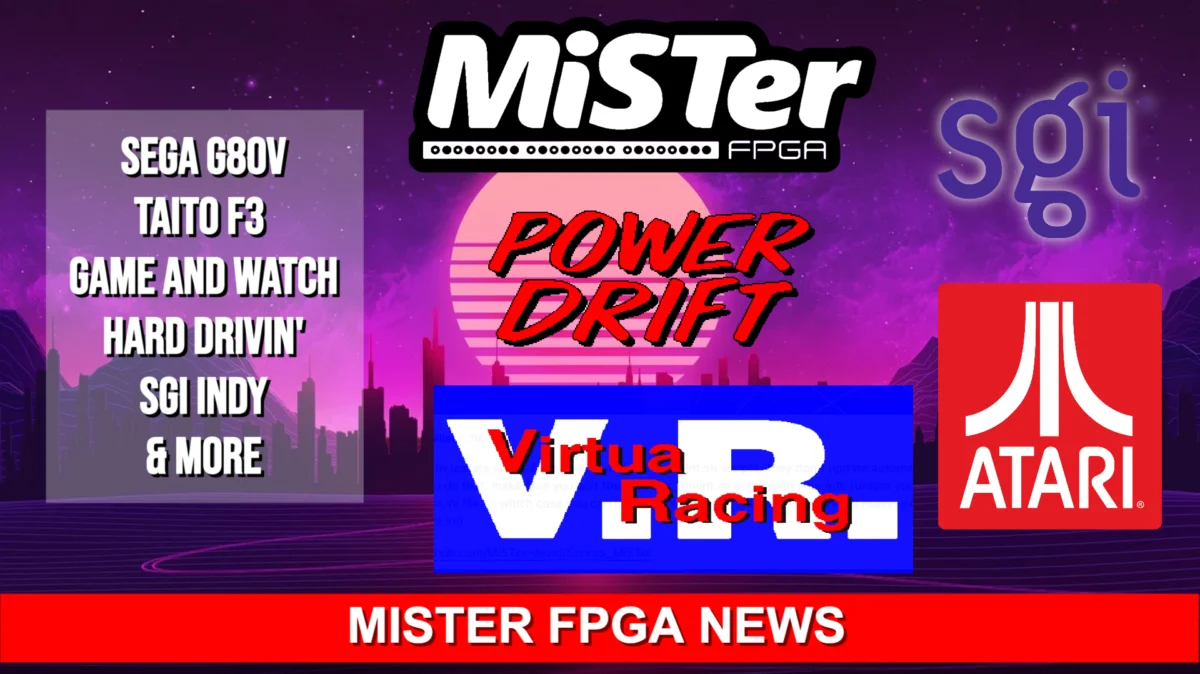
The MiSTer FPGA open-source hardware project has experienced a wave of significant development activity, highlighted by major framework revisions, critical core updates, and the introduction of several highly anticipated arcade and retro-computing hardware implementations. As the community continues to push the boundaries of hardware emulation, recent updates to core system software like Update All, MiSTer Main, and prominent frontends are expanding both the accessibility and capabilities of the platform. These developments underscore the maturation of FPGA-based preservation, offering hardware-accurate execution of classic arcade machines, personal computers, and vintage workstations without the latency and software overhead associated with traditional emulation.
Major Framework Updates and Frontend Enhancements
At the heart of the recent software rollout is the release of Update All version 2.10, a cornerstone utility for MiSTer FPGA users that automates the downloading and updating of cores, ROMs, and support files. Version 2.10 introduces four new hybrid cores, significantly broadening the platform’s library. Among these additions is Maldita Castilla, a 2D side-scrolling platformer heavily inspired by Capcom’s classic Ghosts ‘n Goblins series. Joining it is Solarus MiSTer, an official port of the open-source Solarus 2D action-RPG engine, enabling players to experience native-running games developed within that framework.
Additionally, Update All 2.10 introduces 3S-ARM, a native port derived from the PlayStation 2 version of Capcom’s legendary fighting game Street Fighter III: 3rd Strike, alongside NBlood, a dedicated port of the cult-classic PC first-person shooter Blood. Beyond new software titles, the update integrates the MiSTer Monitor database—a dedicated tool that displays dynamic game artwork, RetroAchievements progress, and real-time system statistics on a secondary display output. The Tools & Scripts menu has similarly been expanded to include advanced multimedia utilities covering music playback, Jellyfin integration, and native DVD support.
Frontend environments have also received substantial overhauls. The Degauss frontend has been updated with new customizable themes, including Amber, Mono, and Blue-Orange, alongside a built-in scraper via ScreenScraper, live preview theme editing, and two new browse views: Gallery and Multi List. Furthermore, Degauss now natively supports game detection across USB, local networks, and CIFS protocols without requiring complex configuration. Concurrently, the Zaparoo frontend has implemented significant performance optimizations, resulting in accelerated asset loading, streamlined directory navigation, and the inclusion of Zaparoo Core v2.17.1 to resolve long-standing stability bugs.
Arcade Preservation Milestones: Sega, Taito, and Atari
The arcade emulation landscape on MiSTer FPGA has seen monumental strides, particularly in the domain of complex, polygon-pushing hardware from the early 1990s. Most notably, a Sega Model 1 core has emerged on GitHub, currently enabling playable execution of Virtua Racing, albeit without audio at this early developmental stage. This breakthrough joins the newly released Sega Y Board core, which successfully boots and plays arcade titles such as Galaxy Force II, Power Drift, G-LOC Air Battle, G-LOC R360, Rail Chase, and Strike Fighter.
Sega’s broader ecosystem also received attention with updates to the Sega G80V core, which now incorporates Zektor (Revision B) complete with spinner controls, speech synthesis, AY audio channel support, and a schematic-derived discrete sound board alongside 480i sync compatibility tweaks.
Atari’s rich arcade history has been further cemented with the release of a dedicated Hard Drivin’ core. This intricate implementation features FPGA-based translations of the cabinet’s main processor, graphics and math processors, geometry processors, and discrete sound board. It supports polygon road and scenery rendering alongside the cockpit dashboard, analog steering, pedal inputs, and authentic H-pattern gear selection, with persistent settings managed via MiSTer NVRAM.
Progress continues across other prominent arcade architectures. The Taito F3 core has received extensive optimization, bringing several marquee titles closer to full playability: Ray Force (US) is operating at approximately 90% fidelity, Glock (World) and Ray Force (Japan) at 85%, Elevator Action Returns at 80%, Bubble Bobble II at 65%, Bubble Memories at 40%, and Puzzle Bobble 2 at 35%. Meanwhile, 1st and 2nd generation Psikyo hardware has officially arrived on GitHub, supporting titles such as Samurai Aces (Sengoku Ace), Gunbird, Battle K-Road, Strikers 1945, and Sengoku Blade (Tengai). Data East’s 1993 belt-scrolling beat-’em-up Night Slashers (Version 1.8 RM) has also joined the stable, complete with CRT adjustment tools and 16-slot save-state support. Konami’s 1987 arcade release Battlantis rounds out the recent arcade drops, bringing a tactical twist to fixed-shooter gameplay.
Retro Computer and Workstation Core Evolutions
MiSTer Main has received a comprehensive series of under-the-hood refinements, addressing Bluetooth pairing menu locks, IDE stability, CD-i compatibility, and HDMI hot-plug reliability. These core framework changes have directly enhanced several vintage computing implementations.
The Arduboy core now supports loadable custom palettes courtesy of developer Cory M. Stargel, alongside extensive improvements to the ATMega32U4 module. The Sharp X68000 core has benefited from contributions by odiaboeeu and albconde, fixing reversed audio channels, implementing OPM flag latching, introducing partial SXSI and 1.44 floppy disk support, and refining MIDI controller accuracy. Commodore 64 enthusiasts will note critical fixes to NMI handling, EZFlash saves, Ocean Type 1 512KB cartridge support, and tape control operations, alongside a complete SID audio rework designed to mirror the reSIDfp reference standard. The ZX Spectrum core now includes SNA 128K snapshot support with automatic 48K/128K detection, accurate ULA snow effect timings, and robust TZX block navigation via developers Ilia Sharin and d00rsfan.
In the Amiga ecosystem, the Minimig core has integrated support for the Commodore A2065 Zorro II Ethernet card. This implementation allows users to leverage the DE10-Nano board’s physical Ethernet interface to grant authentic network connectivity to Amiga OS environments. Atari 8-bit systems have similarly progressed, with the Atari 800 and 5200 cores receiving updates from carlosbravoa and Wojciech Mostowski to fix fine-scroll anomalies in ANTIC mode 8 and implement PokeyMax and VBXE compatibility layers.
Pushing Boundaries: High-End Workstations and Hardware Mods
Perhaps the most ambitious long-term project currently underway is developer danifunker’s work on an SGI Indy core. Representing a significant leap into high-end 1993 computing, the Silicon Graphics multimedia workstation core is currently in its infancy. According to repository documentation, the core successfully draws graphics and boots, but lacks functional IRIX operating system support, mouse pointer integration, network connectivity, audio output, and persistent non-volatile storage across resets. Despite its early state, the project highlights the community’s expanding ambitions to preserve complex RISC-based Unix architectures on programmable logic.
On the physical hardware front, community fabrication has bridged the gap between vintage peripherals and modern setups. A Reddit user recently published 3D-printable CAD files on Printables for a CD/DVD slice tray adapter designed to mount laptop-style optical drives inside a Heber MMS2 Slice tray, providing a cleaner physical integration option for users building authentic enclosure setups.
Analysis of Implications
The rapid accumulation of these updates points to a maturing ecosystem where hardware preservation is no longer confined to 8-bit and 16-bit home consoles. By successfully translating complex 3D polygon-rendering arcade boards like Sega Model 1 and proprietary RISC workstations like the SGI Indy, the MiSTer FPGA project continues to cement its status as the premier platform for cycle-accurate hardware preservation. As development tools improve and community collaboration deepens—evidenced by the use of modern AI assistance in core debugging and software translation—the barrier to entry for both users and open-source hardware developers continues to lower, ensuring the longevity of digital heritage for decades to come.