Ganda Hendra Perkasa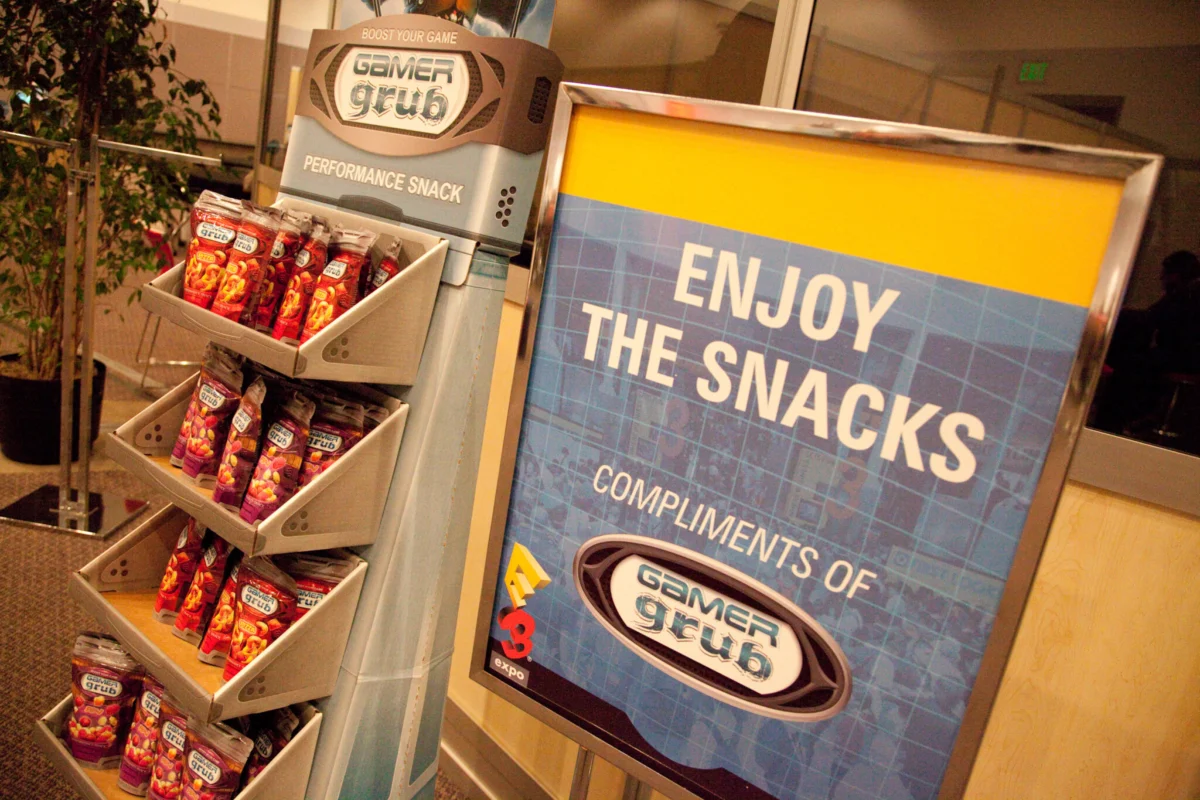
The Video Game History Foundation has brought to light a comprehensive digital archive containing more than 1,600 promotional photographs from the 2009 Electronic Entertainment Expo (E3). Donated by Carolyn Rauch, the former senior vice president of the Entertainment Software Association (ESA), the collection consists of high-resolution images originally stored on a DVD-R. Captured primarily by event photographer Asa Mathat and commissioned by entities including the ESA and IDG Communications, the archive documents a critical turning point for the video game industry’s premier annual gathering.
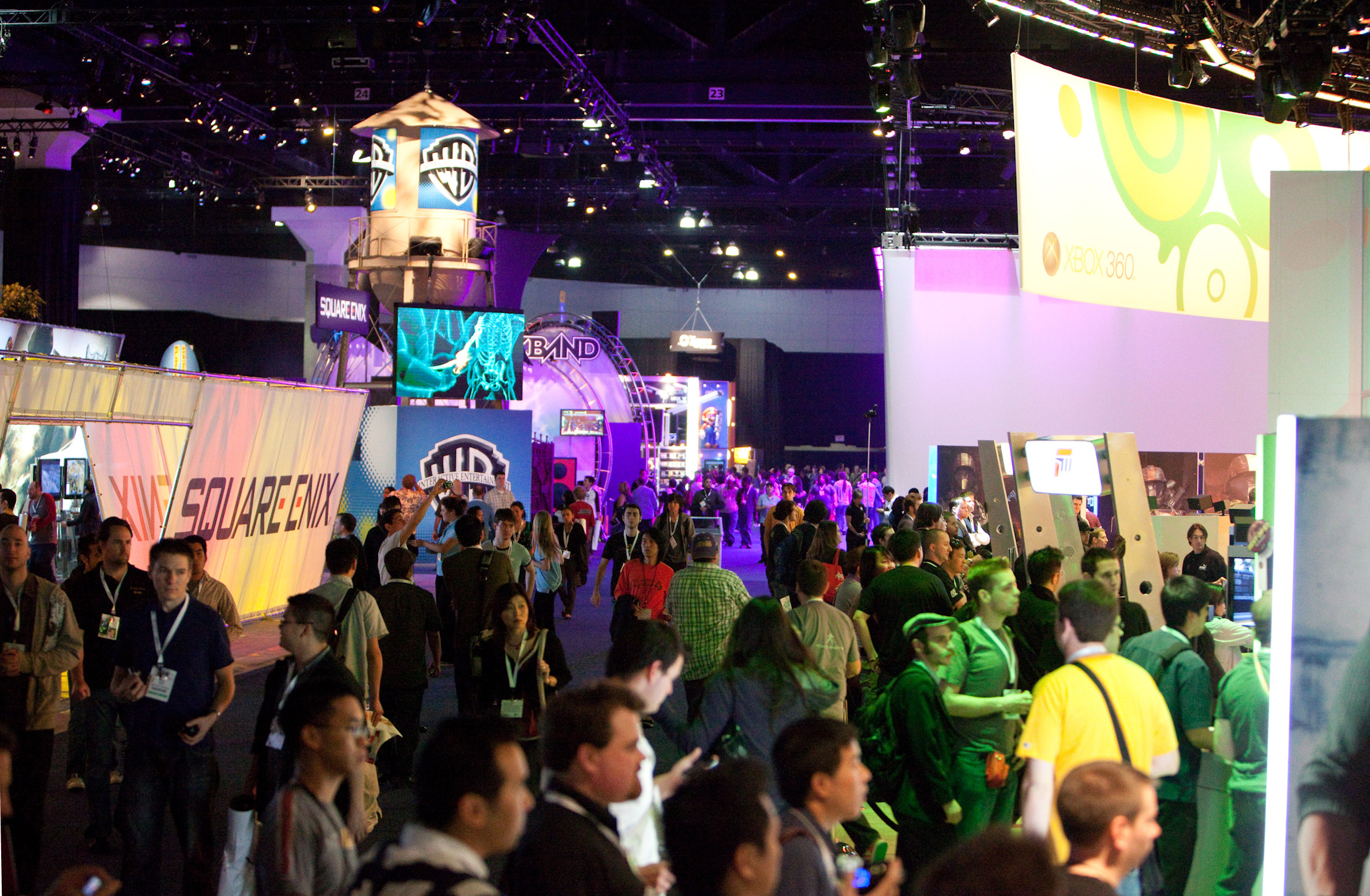
Far from focusing solely on blockbuster stage presentations and marquee game reveals, the newly accessible gallery provides an exhaustive, ground-level chronicle of the Los Angeles Convention Center in June 2009. The archive covers every facet of the convention ecosystem, from bustling show floors and media press rooms to behind-the-scenes registration desks, VIP lounges, and ubiquitous corporate sponsorships.
Chronology and Context: The Evolution of E3
To understand the significance of the 2009 photo archive, industry historians must examine the turbulent evolution of E3 leading up to that year. Established in 1995 by the Interactive Digital Software Association (IDSA, later renamed the ESA), E3 rapidly grew into the undisputed epicenter of global video game culture. Throughout the late 1990s and early 2000s, the convention expanded aggressively, characterized by massive, elaborate booths, deafening audio visual spectacles, and an influx of tens of thousands of attendees, trade professionals, and media personnel.
However, by 2006, major publishers and exhibitors had grown increasingly frustrated by the escalating costs, logistical headaches, and overwhelming chaos of the massive trade show. Seeking a more streamlined, business-focused environment, the ESA drastically scaled down the event for 2007 and 2008. Rebranded as the "E3 Media and Business Summit," these iterations were held in more intimate, restricted venues—most notably the Barker Hanger in Santa Monica—and were closed to the general public and peripheral media. While successful at cutting costs, the scaled-down summits lacked the cultural footprint and industry-wide electricity of traditional conventions.
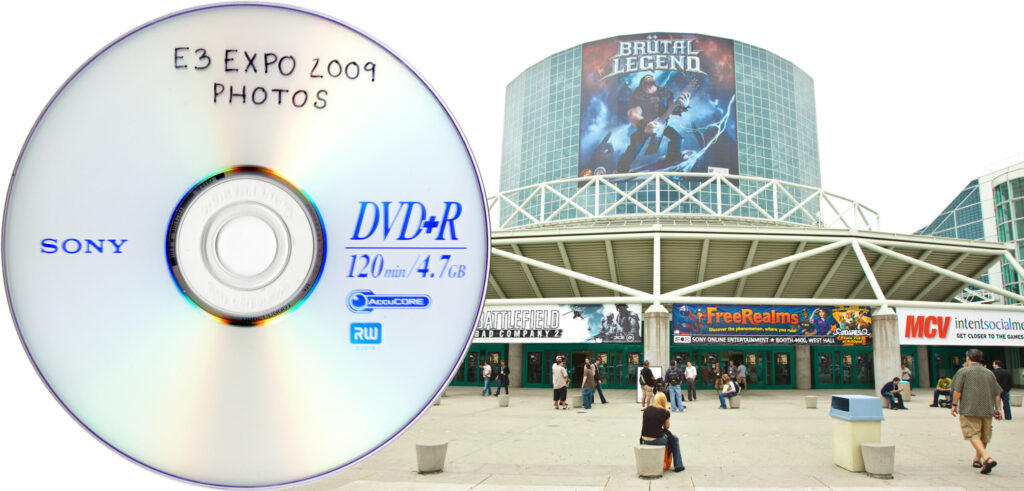
Recognizing the need for a sustainable middle ground, organizers orchestrated a strategic return to the Los Angeles Convention Center for E3 2009. According to retrospective interviews with Rauch and IDSA co-founder Doug Lowenstein on the Video Game History Hour podcast, E3 2009 was designed as a deliberate compromise. The event brought back the large-scale showcase format demanded by the gaming business while carefully managing overhead costs and subduing the chaotic spectacle of earlier years. The newly uncovered photo collection serves as visual documentation of this exact transitional era.
Anatomy of a Transitional Trade Show
The Asa Mathat photographic collection reveals a physical layout that reflects this newly calibrated philosophy. Major software publishers and hardware manufacturers—including Microsoft, Sony, and Nintendo—retained significant footprints on the main exhibition floor, yet their booth designs exhibited a noticeable shift toward functional efficiency rather than purely ostentatious set design.
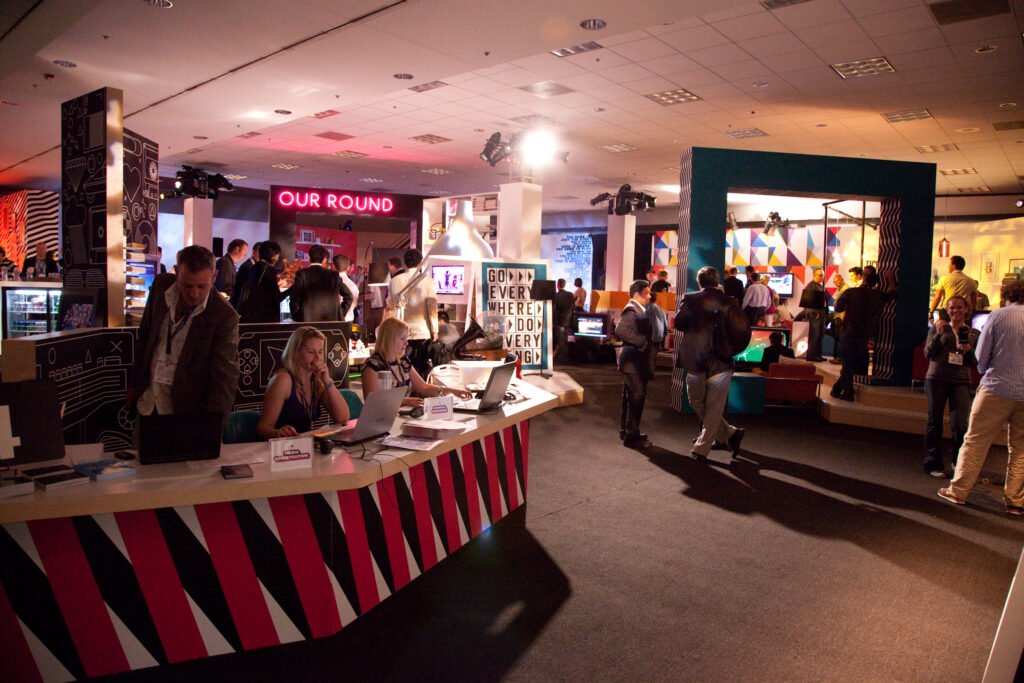
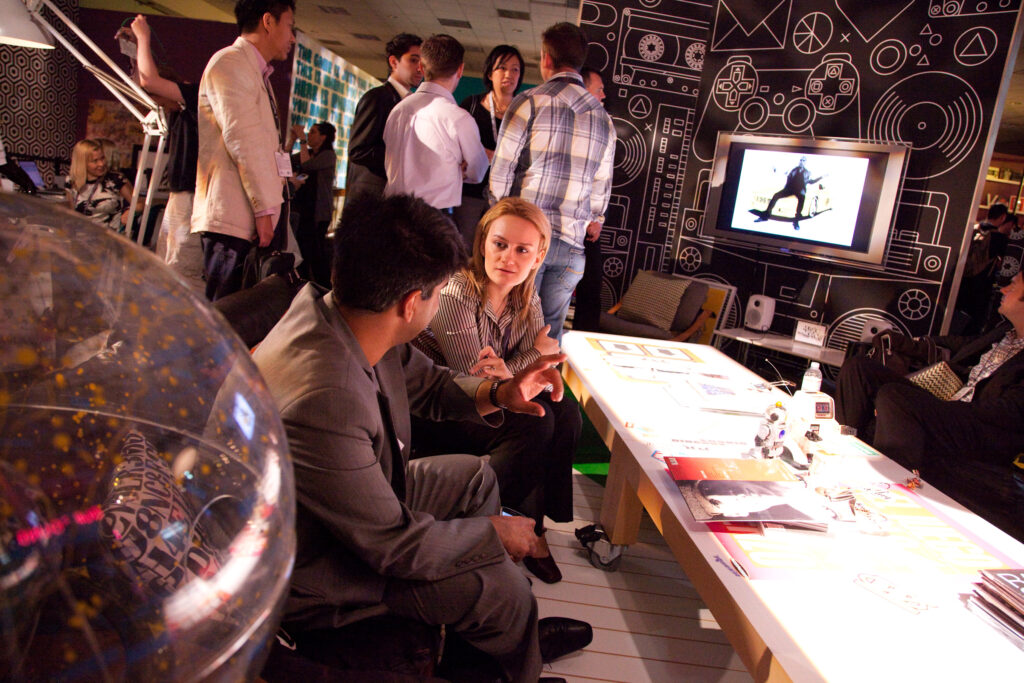
Furthermore, the archive highlights the growing importance of auxiliary spaces within the convention center. Substantial portions of the photographic record are dedicated to controlled, high-end environments away from the general public eye. These include exclusive VIP break rooms and specialized hospitality suites, such as a cozy, carpeted lounge engineered by Sony Computer Entertainment Europe to host select media and industry partners in a relaxed atmosphere.
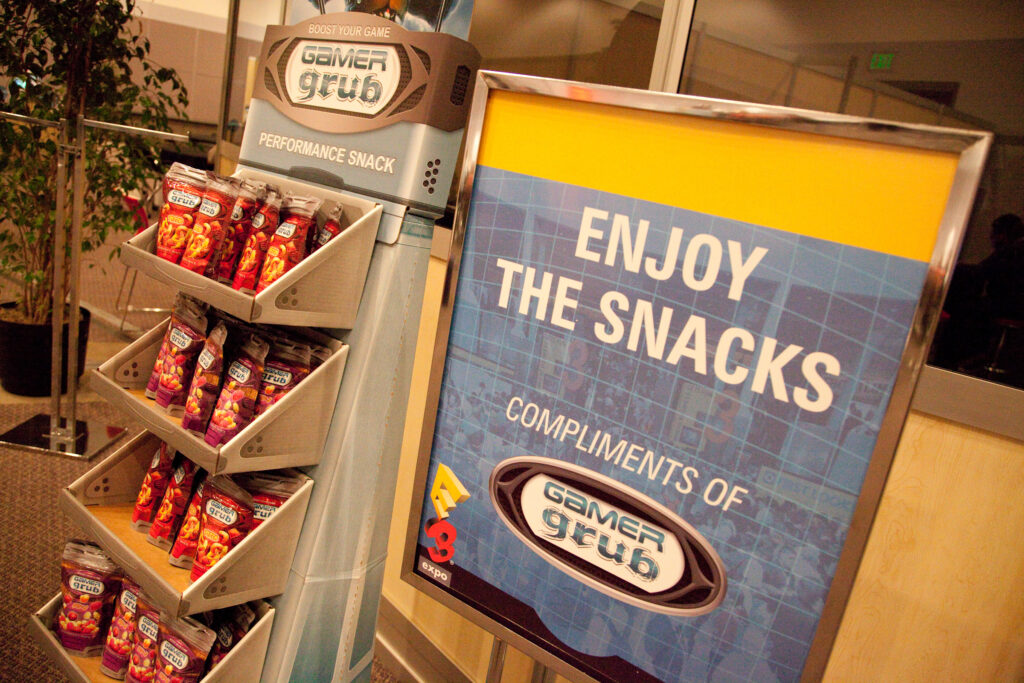
Equally striking is the documentation of commercial partnerships that defined the era. A prominent feature within the photo gallery is the pervasive presence of Gamer Grub, a short-lived, gamer-oriented performance snack mix. Photographic evidence shows extensive displays, branded signage, and large quantities of the snack distributed throughout convention hubs, illustrating the unique promotional synergy between consumer food brands and video game conventions during the peak of the seventh-generation console cycle.
Implications and Historical Significance
The release of the E3 2009 photo archive arrives at a time when the broader video game industry is reckoning with the permanent loss of physical trade shows. Following years of pandemic-related cancellations and shifting publisher strategies centered on digital-first broadcasts—such as Nintendo Directs and standalone publisher livestreams—the ESA officially announced the permanent discontinuation of E3 in December 2023.
Consequently, historical preservation efforts surrounding the expo have taken on heightened academic and cultural importance. While public-facing coverage of E3 2009 was widely documented through contemporaneous journalism, televised press briefings, and early internet forums, institutional records detailing the operational mechanics and backstage realities of the event have historically been sparse.
Archivists and researchers note that collections of uncurated, documentary-style photography offer invaluable insights into the labor, logistics, and corporate culture underpinning major pop-culture conventions. By capturing moments of quiet downtime among press personnel, administrative processes at registration desks, and the interior architecture of corporate hospitality rooms, the 2009 gallery demystifies an event that is frequently remembered only through highly polished, PR-driven media narratives.
As historians continue to catalog and analyze the material donated by Rauch, the E3 2009 DVD-R stands as a permanent digital monument to a specific, transitory chapter in interactive entertainment history—capturing the video game industry right as it transitioned from the bombastic excesses of the early 2000s into the modern, digitally integrated era of the Xbox 360, PlayStation 3, and Wii generation.