Farhan hamdan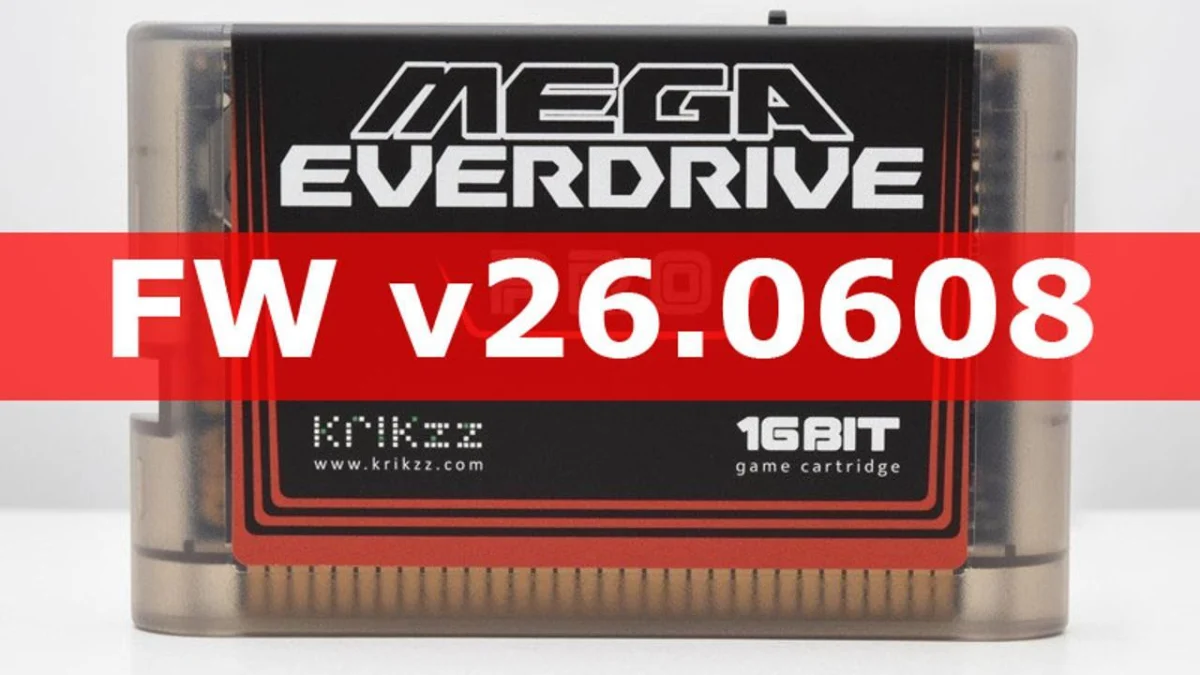
Krikzz, a prominent developer in the retro gaming hardware scene, has announced the immediate release of a significant firmware update for its acclaimed Mega Everdrive Core and Mega Everdrive Pro flash cart series. This update addresses several key areas, most notably introducing an option to bolster compatibility with early Sega 32X add-on units and delivering substantial improvements to savestate functionality, alongside a suite of new menu options and various other refinements. The update underscores Krikzz’s ongoing commitment to enhancing the user experience and ensuring robust compatibility across the diverse landscape of vintage gaming hardware.
The Enduring Appeal of Everdrives in Retro Gaming
Everdrives are sophisticated flash cartridges designed for various classic gaming consoles, allowing users to play ROM images of games directly on original hardware. Developed by Igor S., known as Krikzz, these devices utilize Field-Programmable Gate Array (FPGA) technology to accurately emulate the original cartridge hardware, providing a highly authentic gaming experience. Unlike software emulation on modern PCs or dedicated handhelds, Everdrives operate within the original console’s architecture, leveraging its native processors, sound chips, and video output. This approach is highly prized by retro gaming enthusiasts who seek the genuine feel and fidelity of playing on the hardware as it was originally intended.
The rise of Everdrives has been pivotal in the modern retro gaming movement, which has seen a significant resurgence in popularity over the last two decades. According to various market analyses, the retro gaming sector continues to expand, driven by nostalgia, the desire for unique gameplay experiences, and a growing community of collectors and enthusiasts. Everdrives serve multiple crucial functions within this ecosystem:
- Game Preservation: By enabling the playback of digital ROM files, Everdrives facilitate the preservation of vast game libraries, many of which are becoming increasingly rare, expensive, and fragile in physical cartridge form. This is particularly vital for titles that were released in limited quantities, in obscure regional markets, or for systems with proprietary cartridge formats that are difficult to replicate. The digital archiving of these games, combined with the ability to play them on original hardware via an Everdrive, ensures their long-term accessibility.
- Enhanced Accessibility: For collectors and casual players alike, Everdrives offer unparalleled access to an entire console’s catalog without the prohibitive cost and logistical challenge of acquiring hundreds of individual, often costly, physical cartridges. This significantly lowers the barrier to entry for exploring classic gaming, making it more inclusive for a wider audience.
- Homebrew and Fan Translations Support: The devices are indispensable tools for the vibrant homebrew community, allowing developers to test and distribute their new creations on real hardware, ensuring optimal performance and compatibility. They also robustly support fan-translated versions of games that were never officially localized, opening up new narrative and gameplay experiences for non-native speakers, particularly from regions like Japan.
- Testing and Development Platform: For hardware modders, software developers, and researchers working with retro systems, Everdrives provide an efficient and safe platform for testing modifications, patches, and custom firmware without risking damage to rare or expensive original cartridges. This accelerates development cycles and encourages innovation within the retro tech space.
Krikzz’s portfolio extends across numerous iconic platforms, including the Nintendo Entertainment System (NES), Super Nintendo Entertainment System (SNES), Nintendo 64 (N64), Game Boy, and Sega’s Master System, Genesis/Mega Drive, and Saturn. Each Everdrive model is meticulously engineered to replicate the specific nuances of its target console’s cartridge architecture, a testament to Krikzz’s dedication to accuracy and quality.
The Sega Genesis/Mega Drive Ecosystem: A Historical Context
The Sega Genesis, known as the Mega Drive outside North America, stands as one of the most iconic 16-bit consoles of its era. Launched in 1988 in Japan and 1989 in North America, it became a fierce competitor to Nintendo’s Super Nintendo, defining a generation of gaming with its faster Motorola 68000 processor, emphasis on arcade-style action, and "blast processing" marketing slogan. Titles like "Sonic the Hedgehog," "Streets of Rage," "Phantasy Star," and "Gunstar Heroes" solidified its legacy, selling over 30 million units worldwide.
The Genesis ecosystem was particularly notable for its various add-ons, which, while innovative, often contributed to market fragmentation and technical complexities. Among these, the Sega CD and the Sega 32X are particularly relevant to the Mega Everdrive Pro. The Mega Everdrive Pro, in particular, distinguishes itself by offering advanced hardware-level support for Sega CD BIOS and direct playback of Sega CD ISOs through its powerful FPGA, effectively integrating the functionality of two consoles into one cartridge slot. The "Core" series, while robust, focuses primarily on standard Genesis cartridge emulation. This latest firmware update specifically targets both series, ensuring broad improvements across Krikzz’s Mega Drive offerings, addressing challenges that have persisted for decades since the original hardware’s release.
In-Depth Analysis of Key Firmware Enhancements
1. Enhanced 32X Extension Unit Compatibility: A Niche, Yet Critical Fix
Perhaps the most specialized, yet crucial, feature in this update is the added option to improve compatibility with early Sega 32X units that require an "extension unit." The Sega 32X, released in late 1994, was Sega’s ambitious attempt to bridge the gap between the 16-bit Genesis and the forthcoming 32-bit Sega Saturn. It added two 32-bit Hitachi SH-2 processors, a new graphics chip, and extra RAM to the Genesis, allowing for improved polygon rendering and a larger color palette. However, the 32X was commercially unsuccessful due to its late release, relatively high price (approximately $150 USD at launch), and the impending launch of more powerful next-generation consoles like the Sega Saturn and Sony PlayStation. It sold roughly 665,000 units globally, making it a rare and somewhat niche piece of retro hardware today.
From a technical standpoint, the 32X was an intricate add-on that physically connected to the Genesis cartridge slot and required its own dedicated power supply. Over its short production run, the 32X saw minor hardware revisions. Some of the very earliest production units, particularly those from initial manufacturing batches, exhibited subtle differences in their internal timing, power delivery, or communication protocols with the host Genesis. These variances could lead to intermittent compatibility issues with certain third-party peripherals or advanced flash carts that expected a more standardized signal.
The "extension unit" mentioned in the changelog likely refers to a specific hardware configuration or signal requirement unique to these early 32X revisions, possibly related to how the 32X interacts with the Genesis’s cartridge port for data transfer and control signals. By introducing an explicit option to enable this compatibility mode, Krikzz demonstrates an acute understanding of the niche challenges faced by a segment of the retro gaming community. For owners of these specific early 32X units, who might have struggled with stability or functionality when pairing them with a Mega Everdrive, this fix is not merely an improvement but a critical enabler. It ensures their expensive and relatively rare hardware can function optimally with their Everdrive, unlocking the full potential of their 32X game library. This level of granular compatibility support highlights Krikzz’s dedication to comprehensive hardware preservation and user satisfaction, even for peripheral devices that had limited commercial success and inherent technical quirks. It directly addresses the inherent variability of vintage electronics and prevents a "fragmented" experience for users with specific, non-standard hardware iterations.
2. Improved Savestates: Bridging Modern Convenience with Authentic Hardware

Savestates are a cornerstone feature of modern emulation, allowing players to instantly save and load the exact state of a game at any given moment, irrespective of the game’s original save mechanisms. While commonplace in software emulators running on PCs or modern consoles, implementing reliable savestates on real hardware via an FPGA-based flash cart is a significantly more complex undertaking. It requires the FPGA to capture the entire volatile state of the console’s RAM, CPU registers, various peripheral chip states (like sound and video registers), and then store this data efficiently on the SD card. Later, it must accurately restore this complex state, ensuring the game resumes precisely where it left off without glitches or crashes.
The term "improved savestates" in the context of this update can encompass several critical enhancements:
- Enhanced Stability: Reducing the incidence of crashes, freezes, or corruptions when saving or loading savestate files, ensuring a seamless and trustworthy experience. Unstable savestates can be highly frustrating, leading to lost progress.
- Wider Game Compatibility: Expanding the number of games that reliably support savestates. Some complex titles or those with unusual memory access patterns, dynamic RAM allocation, or specific timing-sensitive routines can be particularly challenging to implement, and improvements in this area are highly valued.
- Faster Save/Load Times: Optimizing the process of writing and reading savestate data to and from the SD card, minimizing interruption during gameplay.
- Increased Save Slots: Potentially allowing users to store more savestate files per game, offering greater flexibility for experimentation or for different players sharing the same Everdrive.
- Better User Interface Integration: More intuitive access to savestate functions within the Everdrive’s menu, making them easier to manage and utilize.
For players, improved savestates translate directly into a more flexible and user-friendly experience. They can overcome particularly difficult sections without repeatedly replaying earlier segments, experiment with different strategies or choices, or simply pick up and put down games more easily, making retro titles more accessible to those with limited time. This feature, while not native to the original Genesis hardware, adds a layer of modern convenience that significantly enhances the enjoyment of classic titles without detracting from the authentic hardware experience, effectively bridging the gap between the convenience of software emulation and the fidelity of original hardware.
3. More Menu Options and General System Refinements
While the specific new menu options are not detailed in the provided snippet, their inclusion generally points towards a richer and more customizable user interface, which is a common area for continuous improvement in Everdrive firmware. New menu options could include:
- Advanced Display Settings: Options for video filters (e.g., scanlines), aspect ratio control, or specific output modes optimized for modern displays (e.g., HDMI via a video scaler) or CRT televisions.
- Audio Configuration: Fine-tuning sound output, volume control, or specific audio enhancements/disablers.
- Enhanced File Management Tools: Improved ways to browse, sort, search, and manage ROMs, save files, and savestates on the SD card, especially for users with extensive libraries.
- Cheat Code Integration: Built-in support for popular cheat code systems like Game Genie or Action Replay, directly accessible from the in-game menu.
- Detailed System Information: Access to diagnostic data, firmware version, SD card status, or even performance metrics for power users.
- Streamlined Firmware Update Functionality: Making it easier to update the Everdrive’s firmware directly from the device itself, reducing the need for manual file transfers.
Beyond these, the phrase "bunch more" strongly suggests a variety of under-the-hood bug fixes, performance optimizations, and minor feature additions that collectively contribute to the overall stability and polish of the firmware. These often include addressing rare game-specific glitches, optimizing SD card access speeds, improving system boot times, refining the responsiveness of the menu system, and patching security vulnerabilities. Krikzz’s consistent release of such comprehensive updates demonstrates a commitment to long-term product support and continuous improvement, actively responding to community feedback and evolving technical understanding of the complex vintage hardware.
Chronology of Krikzz’s Development and Community Engagement
Krikzz, helmed by Igor S., has a long-standing reputation for pioneering the development of FPGA-based flash carts. His journey began over a decade ago, driven by a passion for retro gaming and a desire to create reliable, high-quality alternatives to expensive and aging physical cartridges. Over the years, Krikzz has consistently pushed the boundaries of what’s possible with FPGA technology, often being the first to market with advanced features like in-game save states, real-time clock support, and extensive compatibility with challenging console architectures. His first widely recognized product, the Everdrive MD (Mega Drive), was released around 2010, setting a precedent for future innovations.
The release of this Mega Everdrive firmware update fits into a broader pattern of regular, impactful updates across Krikzz’s product lines. Users of his NES, SNES, N64, and Game Boy Everdrives also frequently receive firmware revisions that address bugs, add new features, and improve compatibility. This iterative development model, often informed by direct feedback from the passionate retro gaming community on dedicated forums (like Krikzz’s own forum or RetroRGB’s community), social media, and YouTube channels, is a cornerstone of Krikzz’s success. It fosters a strong sense of trust and loyalty among users, who know that their investment in an Everdrive product is supported by ongoing development. This community-driven approach ensures that even niche compatibility issues, like those with early 32X units, are acknowledged and addressed, reinforcing Krikzz’s position as a responsive and dedicated developer.
Broader Impact and Implications for the Retro Gaming Ecosystem
This firmware update, while seemingly technical in nature, carries significant implications for the wider retro gaming community and the future of game preservation:
- Reinforcing Hardware Preservation: By ensuring compatibility with even the most idiosyncratic hardware revisions (like early 32X units), Krikzz directly contributes to the utility and longevity of original vintage consoles and their peripherals. This is critical as physical hardware ages, components degrade, and becomes more fragile. The ability to use modern, reliable flash carts with these older systems means fewer original game cartridges need to be handled, reducing wear and tear on valuable collectibles and preserving their condition.
- Enhancing User Experience and Accessibility: Features like improved savestates and more menu options democratize retro gaming. They make classic titles more approachable for new players who might be accustomed to modern gaming conveniences, and they enhance the experience for seasoned veterans. This increased accessibility helps keep classic games relevant and enjoyed by new generations, fostering continued interest in gaming history.
- Setting Industry Standards: Krikzz’s consistent innovation and commitment to quality often set a benchmark for other developers in the flash cart and retro hardware space. The meticulous attention to detail in replicating complex hardware behaviors (like the 32X interaction) pushes the entire industry forward, encouraging higher standards for accuracy and reliability in retro hardware solutions.
- Supporting Digital Archiving and Homebrew: The robust functionality of Everdrives makes them ideal platforms for playing digitally archived game ROMs, fan translations, and independently developed homebrew titles. This fosters a creative and collaborative environment within the retro gaming community, ensuring that the legacy of these consoles continues to evolve beyond their original commercial lifespan, with new content being created and shared.
- Economic Impact: While Krikzz’s products are premium, they offer a long-term cost-effective solution compared to collecting hundreds of physical cartridges, some of which command exorbitant prices on the secondary market. This allows enthusiasts to invest in a single, versatile device that unlocks an entire library, thereby making the hobby more sustainable and financially accessible for many. The availability of clear purchase channels, such as the Amazon link provided, also streamlines acquisition.
The provision of direct firmware download links, a purchase link for new users, and a comprehensive product manual demonstrates a user-centric approach. The inclusion of a Patreon link for supporting "Bob on Patreon" (likely referring to Bob from RetroRGB, a prominent retro gaming journalist and Krikzz supporter) also highlights the direct support model that enables independent developers and content creators to continue their invaluable work, underscoring the symbiotic relationship between creator, community, and the broader retro gaming ecosystem.
Conclusion
The latest firmware update from Krikzz for the Mega Everdrive Core and Pro series is more than just a routine patch; it represents a continuation of dedicated product stewardship and a deep understanding of the retro gaming landscape. By meticulously addressing niche compatibility issues such as those found in early 32X units, refining core features like savestates, and expanding user interface options, Krikzz reaffirms its position as a leading innovator in hardware-based game preservation. This commitment not only enhances the immediate user experience for Mega Drive and 32X enthusiasts but also contributes significantly to the broader mission of making classic games accessible, enjoyable, and enduring for generations to come, ensuring the legacy of these iconic systems remains vibrant and alive on original hardware.