Indra Gunadi
The Architecture of EnviroGun
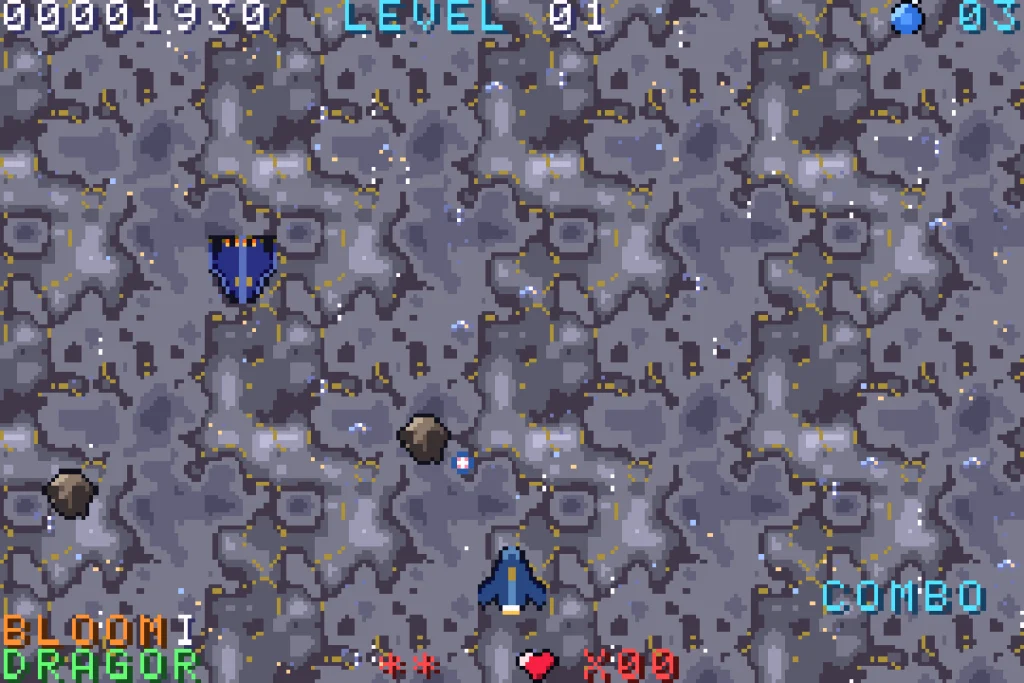
At its core, EnviroGun is categorized as a procedural shoot-‘em-up, a genre that has seen a resurgence within the homebrew community due to the increased availability of advanced cross-compilation tools. The game is structured across nine distinct stages, which serve as the primary framework for the player’s journey. However, the depth of the title is derived from its inclusion of over 50 unique biomes. This architectural choice necessitates a procedural engine that can manage asset allocation and level layout within the Game Boy Advance’s strictly limited 256KB of internal WRAM and 32KB of internal IRAM.
The weapon system in EnviroGun is intrinsically linked to the environmental context of each planet. By tethering combat capabilities to the specific biomes—a mechanic often seen in modern roguelike titles—Enarkz forces players to adapt their strategies based on the current procedural generation. This integration of environmental variables into core gameplay loops represents an evolution in how homebrew developers are leveraging the GBA’s ARM7TDMI processor to simulate complex systemic interactions that were rarely seen in the original commercial retail library.
Data Persistence and The Enviropedia
One of the most notable features of EnviroGun is the integration of the "Enviropedia," a specialized data-logging system that tracks player performance across multiple runs. In the original retail era of the Game Boy Advance, data persistence was primarily limited to battery-backed SRAM or EEPROM chips embedded within the game cartridges. EnviroGun utilizes these hardware protocols to store the records of the player’s last ten attempts.
This functionality provides a quantifiable metric for progress, allowing users to analyze their tactical efficacy over time. For the homebrew community, the implementation of a persistent log—essentially a localized replay and statistics database—demonstrates a growing trend toward "modernizing" retro experiences. By prioritizing the collection and display of performance data, Enarkz has provided a competitive incentive for players, effectively increasing the game’s lifespan beyond the initial nine-stage completion.
The Evolution of GBA Homebrew Development
To understand the significance of EnviroGun, one must view it within the broader chronology of the Game Boy Advance’s post-commercial lifecycle. When Nintendo officially discontinued the GBA in 2008, the console entered a secondary phase of life sustained by collectors and hobbyist developers.
- 2001–2008: The commercial era, characterized by high-budget titles and the establishment of the GBA as a dominant force in portable gaming.
- 2009–2015: The "preservationist" phase, where the focus was primarily on emulation and the development of basic homebrew tools like libgba.
- 2016–2022: The emergence of advanced hardware development, utilizing flash cartridges and custom-made hardware to push the boundaries of the console’s original capabilities.
- 2023–2026: The current "modernization" era, marked by the release of titles like EnviroGun that utilize complex algorithms, procedural generation, and high-fidelity data tracking.
The shift from 2023 to 2026 has been particularly marked by the professionalization of these development workflows. Developers are no longer merely porting existing concepts; they are building original, feature-rich engines that rival the technical complexity of the GBA’s late-life commercial releases.
Comparative Technical Analysis
While contemporary games on modern platforms like the Nintendo Switch or PlayStation 5 operate on vastly superior hardware, the technical hurdles faced by developers like Enarkz are arguably more rigorous. The Game Boy Advance operates at a clock speed of 16.78 MHz. Creating a procedural engine that can generate fifty biomes and manage weapon-environment interactions within this constraint requires highly optimized assembly code and efficient use of the GBA’s DMA (Direct Memory Access) channels.
When compared to early 2000s shoot-‘em-ups, which relied heavily on pre-rendered backgrounds and static sprites, EnviroGun’s reliance on procedural generation places it in a different class of software. The procedural nature suggests a modular approach to assets, where the engine dynamically assembles room blocks or entity spawns based on a seed. This method not only saves cartridge space but also creates a unique footprint for each play session, a feat that would have been computationally expensive and memory-intensive for developers in the year 2001.
Market Reception and Accessibility
Enarkz has adopted a dual-tiered distribution strategy for the project. By making the "Normal Mode" available as a free download, the developer has lowered the barrier to entry, ensuring that the title reaches the widest possible segment of the retro-gaming demographic. This follows a growing industry standard within the independent development sphere, where "freemium" or "lite" versions are utilized to build brand recognition before introducing more advanced or premium iterations.
The response from the homebrew community has been largely positive, with analysts pointing to the game’s accessibility as a key factor in its early success. Within the digital forums where GBA enthusiasts congregate, the consensus suggests that the game’s "pick-up-and-play" nature is perfectly suited for the portable form factor, while the inclusion of the Enviropedia provides enough depth to keep long-term players engaged.
Implications for the Retro Ecosystem
The release of EnviroGun highlights a broader trend: the transformation of the GBA from a legacy platform into a viable canvas for contemporary indie game design. This movement has significant implications for the broader gaming industry. Firstly, it keeps the demand for original hardware high, which in turn fuels the market for aftermarket parts, such as high-resolution IPS screens and high-capacity flash memory cartridges.
Secondly, it serves as an educational bridge for aspiring developers. By working within the severe constraints of the ARM7TDMI architecture, developers learn fundamental principles of optimization, memory management, and efficient coding that are often obscured by the abstraction layers of modern game engines like Unity or Unreal.
Finally, the success of titles like EnviroGun suggests that there is a sustainable market for "new-old" software. As modern gaming continues to push toward digital-only distribution and always-online requirements, a subset of the gaming population is increasingly gravitating toward offline, hardware-contained experiences. The GBA, with its physical cartridge format and instantaneous boot time, provides the perfect vessel for this movement.
Looking Ahead: The Future of GBA Development
As we move into late 2026 and look toward 2027, the trajectory of GBA homebrew suggests that we may soon see even more ambitious projects. The limitations of the hardware are no longer viewed as insurmountable obstacles, but as creative parameters that define the aesthetic and mechanical identity of the platform.
The release of EnviroGun serves as a testament to the enduring relevance of the Game Boy Advance. By bridging the gap between retro hardware and modern design philosophy, Enarkz has not only contributed a new title to the GBA library but has also set a benchmark for future developers. As the community continues to refine its tools and techniques, it is likely that the "procedural" trend seen in EnviroGun will become a standard feature in future homebrew projects, further cementing the GBA’s status as a platform that, while technically frozen in time, remains creatively fluid.
In conclusion, the launch of EnviroGun is more than a mere software release; it is a manifestation of a mature, sophisticated development community that respects the past while leveraging the best of modern design logic. For the end user, it offers a robust, challenging, and highly replayable experience that effectively utilizes every cycle of the console’s processor. For the industry at large, it remains a compelling case study in the longevity of hardware and the creative ingenuity of the independent developer.