Indra Gunadi
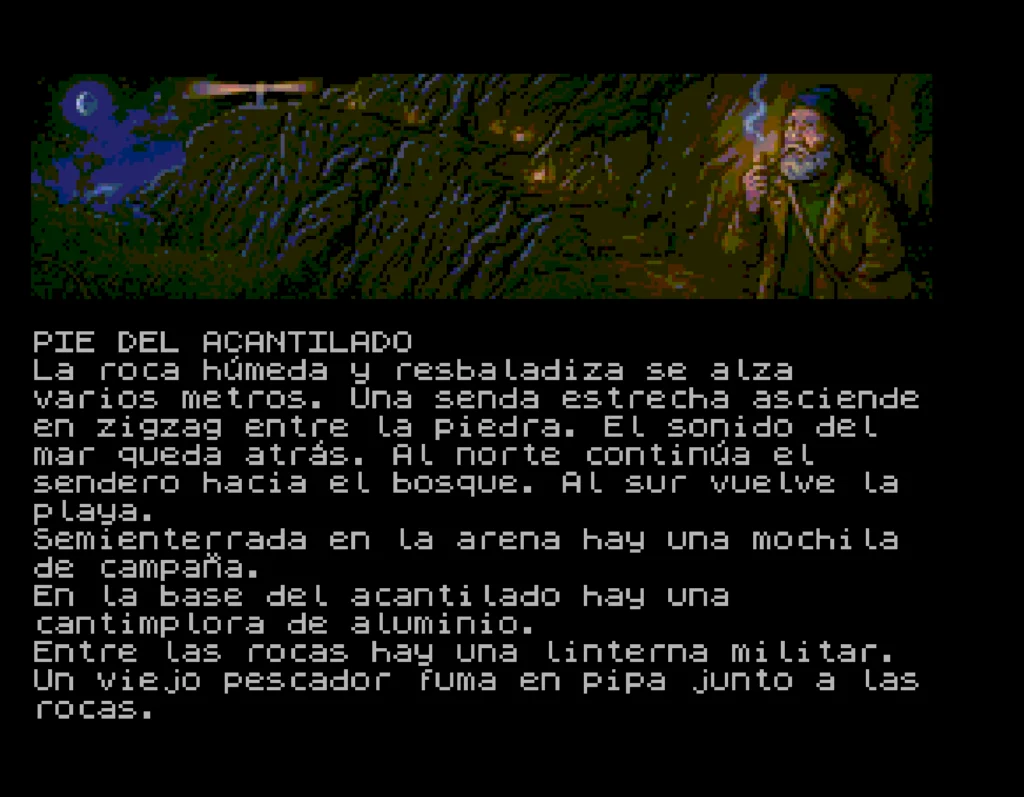
The landscape of retro computing continues to demonstrate remarkable vitality as developer Sergio Morales announces the release of his latest title, Das Boot, a narrative-driven text adventure designed specifically for the Sinclair ZX Spectrum. The game, which officially launched in late 2026, represents a sophisticated intersection of modern development tools and the hardware constraints of 8-bit architecture. Set against the harrowing backdrop of occupied France during the Second World War, the project utilizes the Scriba engine to deliver a complex, branching narrative that challenges the player to manage time as a critical resource, all while running on hardware that dates back to the early 1980s.
Technical Foundations and Development Methodology
The creation of Das Boot is notable not only for its thematic depth but for the technical pipeline employed by Morales. The title was built using Scriba, a development tool increasingly favored by the homebrew community for crafting text-based adventures, before being compiled into native Z80 machine code. This approach allows for a level of structural complexity—including 23 distinct, illustrated locations and multiple narrative endings—that pushes the memory and processing boundaries of the original 48K and 128K ZX Spectrum models.
The decision to target the Z80 processor—the heart of the Spectrum—requires significant optimization. By compiling the game into native code rather than running it through a high-level interpreter, Morales has ensured that the game remains responsive. This is a critical factor for the game’s core mechanic: a real-time clock system where every action taken by the player consumes precious minutes. This mechanical constraint forces the player to engage in strategic decision-making, as the urgency of the narrative is mirrored by the depletion of the in-game timer.
Narrative Premise and Setting
In Das Boot, the player assumes the identity of an SOE (Special Operations Executive) agent operating deep within occupied France. The SOE was a British intelligence organization formed during World War II to conduct espionage, sabotage, and reconnaissance in occupied Europe. By grounding the game in this historical reality, Morales elevates the title beyond a standard text adventure, transforming it into a historical simulation.
The gameplay experience is defined by its focus on resource management and environmental exploration. The 23 locations are not merely static descriptions; they are illustrated, providing visual cues that complement the prose. The inclusion of a save/restore feature is a necessary concession to modern player expectations, acknowledging that the difficulty inherent in the game’s time-based mechanics necessitates the ability to preserve progress during long, high-stakes sessions. The multiple endings suggest a high degree of replayability, as players are tasked with navigating the moral and tactical quandaries of wartime resistance.
The Evolution of the ZX Spectrum Homebrew Scene
The release of Das Boot arrives at a time when the "retro" gaming scene is shifting from simple preservation to active, modern development. While the ZX Spectrum was discontinued as a mainstream commercial platform decades ago, the community surrounding it has grown increasingly sophisticated.
The development of titles like Das Boot highlights a broader trend: the use of AI-assisted tools in legacy platform development. Morales has explicitly noted the use of AI in the creation of text, graphics, and code for this project. This integration of modern generative technology into 40-year-old hardware creates a unique juxtaposition. It allows independent developers to achieve levels of aesthetic and narrative density that would have been cost-prohibitive or physically impossible during the original lifespan of the ZX Spectrum.
This trend has sparked debate within the community regarding the nature of "authentic" retro gaming. However, the prevailing view among enthusiasts is that the final output—the .TAP or .Z80 file that runs on original hardware—is the true metric of success. By bridging the gap between current AI-driven workflows and the limitations of 8-bit memory addressing, developers are effectively extending the lifecycle of these platforms indefinitely.
Chronology of the Project
The development cycle of Das Boot followed a trajectory typical of high-quality independent homebrew projects:
- Conceptualization Phase: Early 2026, where the historical setting and the "time-as-currency" mechanic were established.
- Engine Selection: Adoption of the Scriba framework to manage the complexity of 23 interconnected nodes and the associated imagery.
- Asset Generation: Mid-2026, utilizing AI tools to streamline the creation of the 23 illustrations and the scripting of the narrative branches.
- Optimization: Late 2026, focusing on compiling the project into native Z80 machine code to ensure stable performance across various ZX Spectrum models.
- Release: October 2026, with the title made available through digital distribution platforms dedicated to the preservation and promotion of legacy gaming.
Comparative Data and Market Impact
The ZX Spectrum market in the 21st century is primarily sustained by volunteer efforts and digital distribution platforms like PDROMs. Unlike the commercial gaming industry, which relies on high-volume sales and microtransactions, the retro homebrew scene operates on a model of passion and community contribution.
However, the impact of these releases is measurable through engagement metrics on community forums and download counts. Games that offer "hardcore" mechanics—such as the time-sensitive nature of Das Boot—tend to see higher longevity in discussions. The game’s 23-location structure places it in the upper echelon of current text-adventure releases, which often struggle to exceed 10 to 15 locations due to memory limitations. By utilizing advanced compilation techniques, Morales has circumvented the typical "text-only" limitations, offering a visual-textual hybrid that feels substantial for the hardware.
Broader Implications for Digital Preservation
The release of Das Boot serves as a case study for the future of digital preservation. Many original software titles from the 1980s have been lost to "bit rot" or the physical degradation of cassette tapes. By creating new, complex titles for these machines, developers like Morales are doing more than providing entertainment; they are maintaining the relevance of the hardware.
When a new game is written for the ZX Spectrum, it necessitates the creation of better emulators, improved cross-compilers, and updated documentation for the Z80 architecture. This ecosystem of support ensures that, as hardware becomes increasingly rare, the knowledge required to operate and develop for these systems is not only preserved but expanded.
Furthermore, the integration of AI tools—as acknowledged by the developer—suggests that the barrier to entry for retro development is lowering. This could lead to a "golden age" of homebrew, where the bottleneck is no longer technical skill in assembly language, but rather the quality of the narrative and the creativity of the design.
Conclusion
Das Boot stands as a testament to the endurance of the ZX Spectrum. By blending the historical gravity of the SOE operations in France with the mechanical tension of a time-constrained adventure, Sergio Morales has produced a title that honors the platform’s legacy while embracing the tools of the future. As the homebrew community continues to iterate on these foundational systems, projects like this will remain central to the dialogue between the history of computing and the evolution of modern interactive storytelling. The game is currently available for enthusiasts to download and experience, either through original hardware via tape-loading interfaces or through the various high-fidelity emulators that allow these 8-bit machines to persist in the digital age.