Cecilia Chamidah Nur
The iconic 1993 first-person shooter, DOOM, has been formally recognized by The Washington Post as one of the 25 most influential works of American culture, securing its place within the 1986-1995 period. This prestigious acknowledgment positions the pioneering video game alongside venerated national symbols such as ‘The Star-Spangled Banner’, the literary masterpiece ‘Moby-Dick’, and the ubiquitous ‘Levi’s Jeans’, underscoring its profound and lasting impact on the cultural landscape of the United States. Its selection is particularly notable as it triumphed over other significant contenders for its era, including the beloved animated series The Simpsons, Spike Lee’s critically acclaimed film Do the Right Thing, and the groundbreaking sitcom Seinfeld.
The Washington Post’s list, a meticulously curated collection by cultural critics and experts, aims to chronicle the diverse expressions that have shaped American identity over generations. For DOOM to be the sole video game included, and to stand amongst such established pillars of American heritage, speaks volumes about its singular influence. The publication’s reporter, Gene Park, articulated the rationale behind DOOM‘s inclusion, highlighting its "foundational" role in the realm of digital entertainment. Park emphasized the game’s revolutionary nature as "a 3D world viewed in first person, self-published, with no gatekeepers and no retail store," a model that remarkably "gave rise to user-generated content years before anyone had a name for it."
The Genesis of a Digital Revolution: id Software and the Birth of DOOM
The journey of DOOM began in an era vastly different from today’s expansive gaming industry. Before its seminal release in December 1993, PC gaming was primarily characterized by two-dimensional graphics, slower-paced gameplay, and a nascent online infrastructure. id Software, the visionary studio behind DOOM, had already established a reputation for pushing technological boundaries with titles like Commander Keen and, most notably, Wolfenstein 3D (1992), which is widely credited with popularizing the first-person shooter genre. Wolfenstein 3D introduced players to textured 3D environments, a significant leap from previous wireframe or sprite-based games, but it still operated on a grid-based movement system and lacked true 3D spatial geometry.
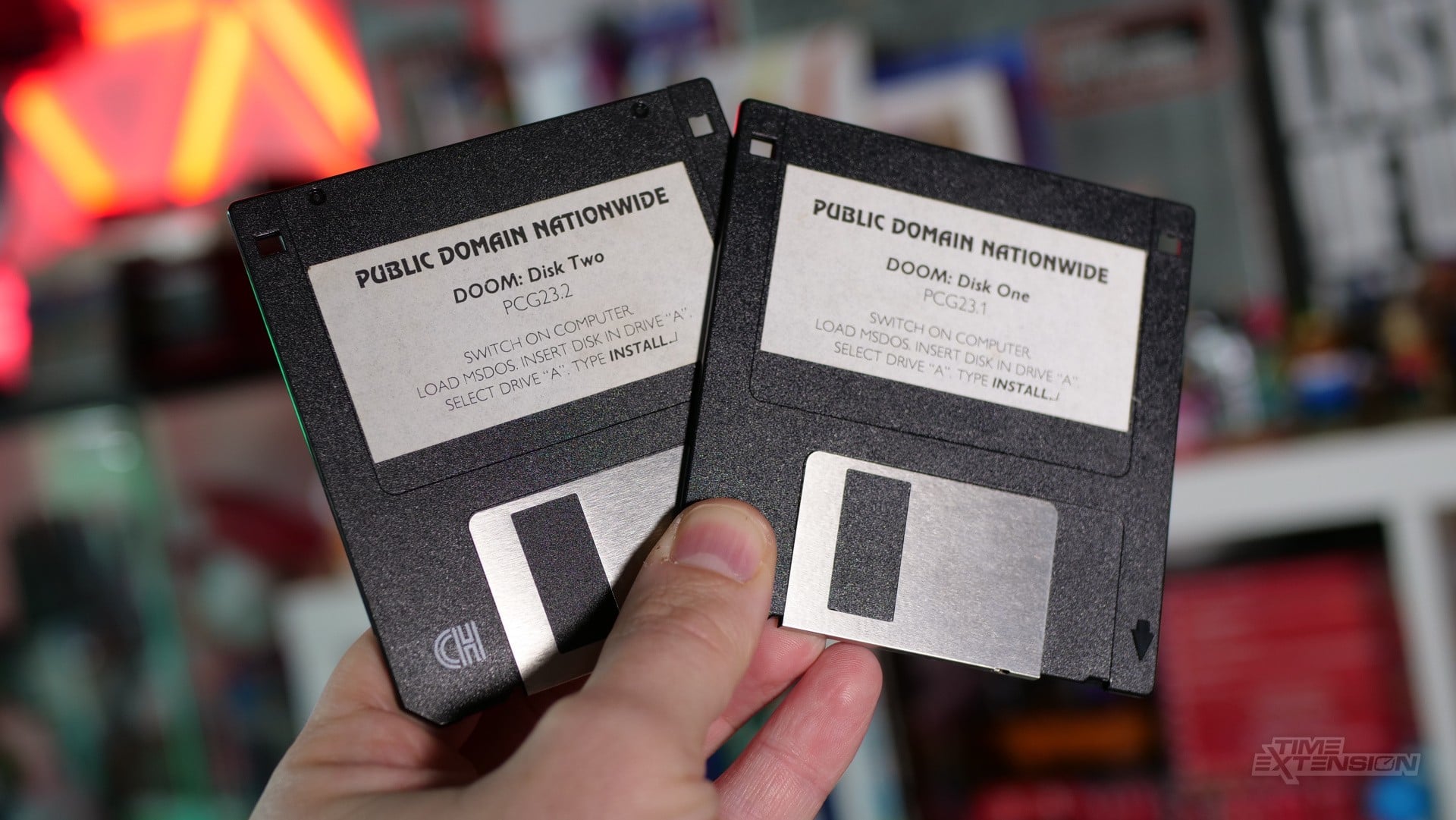
The development team at id Software, comprising technical genius John Carmack, creative director John Romero, designer Tom Hall, and artist Adrian Carmack, was known for its innovative approach to game design and distribution. They championed the "shareware" model, allowing players to download and experience a portion of the game for free, with the option to purchase the full version if they enjoyed it. This democratic distribution method, combined with direct sales, bypassed traditional publishers and retail channels, fostering a direct relationship with the burgeoning PC gaming community. This philosophy of accessibility and direct engagement laid crucial groundwork for DOOM‘s unprecedented success and its subsequent cultural penetration.
Technical Marvel and Foundational Gameplay
DOOM‘s selection on the Washington Post list is inextricably linked to its groundbreaking technical innovations. The game ran on the "id Tech 1" engine, a marvel of its time that simulated a pseudo-3D environment with unparalleled realism. Unlike its predecessor, Wolfenstein 3D, DOOM introduced features such as varying floor and ceiling heights, non-orthogonal walls, and advanced lighting effects that created dynamic shadows and atmospheric conditions. This was achieved through clever programming techniques, including binary space partitioning (BSP) for rendering complex levels efficiently and texture mapping that wrapped detailed images onto polygons, giving the illusion of a fully realized 3D world.
The first-person perspective, while not entirely new, was perfected in DOOM, immersing players directly into its hellish landscapes. The game’s fast-paced, visceral combat, combined with intricate level design that encouraged exploration and strategic engagement, set new standards for action games. Moreover, DOOM revolutionized multiplayer gaming with its pioneering deathmatch mode, allowing players to compete against each other over local area networks (LANs). This introduced a competitive social element that was hugely influential, leading to countless hours of networked gameplay in homes, offices, and especially college dorms, which were often among the first places to have robust network infrastructure. Gene Park’s assertion that DOOM was "a 3D world viewed in first person, self-published, with no gatekeepers and no retail store" precisely captures how the game democratized creation and distribution, making it a foundational pillar of modern digital entertainment.
Fostering a Community: The Rise of User-Generated Content
Perhaps one of DOOM‘s most enduring legacies, and a key factor in its inclusion on the Washington Post list, is its unparalleled contribution to the development of user-generated content (UGC). The game was designed with an open architecture that made it relatively easy for players to create and modify game levels, characters, and other assets. These custom creations, often referred to as "WADs" (standing for "Where’s All the Data?"), flooded the nascent internet, shared through bulletin board systems (BBS), FTP servers, and early online communities. This modding culture, years before platforms like YouTube or social media would popularize user-driven content, transformed DOOM from a mere product into a platform for creativity and collaboration.
John Romero, a key architect of DOOM‘s design, recognized the power of this community engagement. Park notes that the game’s "spirit of sharing and community" was firmly "rooted in the upbringing of designer John Romero, who is Native American (Yaqui, Cherokee) and Mexican." This background, emphasizing collective creation and shared experience, likely informed the decision to provide players with the tools to "build their own corners of hell," as Park humorously references. John Carmack’s technical brilliance provided the engine, but Romero’s vision ensured that the audience was not just consuming but actively participating in DOOM‘s evolving universe. This empowerment of the player base not only extended the game’s lifespan exponentially but also laid the groundwork for the modern modding scenes in games like Minecraft, The Elder Scrolls, and countless others, solidifying DOOM‘s status as a pioneer in community-driven digital content.
Unprecedented Success and Cultural Penetration
DOOM‘s success was not merely critical but also commercial and cultural, reaching an audience far beyond typical gaming circles. Gene Park’s article highlights the staggering fact that the game was "installed on more computers than Microsoft Windows 95 at the time." To contextualize this, Windows 95, released in August 1995, was one of the most anticipated software launches in history, marking a pivotal moment in personal computing. For DOOM, released nearly two years prior, to have achieved broader penetration through its shareware model and fervent word-of-mouth, speaks to its unprecedented reach. It’s estimated that the shareware version was downloaded by tens of millions of users globally, with millions more purchasing the full version.
The game’s immense popularity also had tangible, if sometimes disruptive, effects on early internet infrastructure. Park notes that "college networks buckled under the traffic" as students engaged in endless deathmatch sessions and exchanged WAD files. This phenomenon highlighted the nascent internet’s capabilities and limitations, illustrating how interactive digital entertainment was beginning to strain existing bandwidth and network protocols. DOOM‘s impact was so pervasive that it even seeped into pop culture, becoming a shorthand for intense, visceral digital action. Park makes a witty historical parallel, comparing DOOM‘s ethos to the legendary blues guitarist Robert Johnson: "Johnson may have ‘made a deal with the devil.’ ‘DOOM’ asked us to walk into hell and kill the demon with a gun." This evocative analogy encapsulates the game’s audacious, confrontational spirit and its unique place in the American cultural narrative.
The Shadow of Controversy: Columbine and the Media Firestorm
While celebrated for its innovation and cultural impact, DOOM‘s history is also marked by darker chapters, most notably its infamous association with the 1999 Columbine High School shooting in Colorado. Following the tragic events, DOOM was widely and controversially used as "a scapegoat," becoming a focal point in a heated national debate about video game violence and its perceived influence on real-world aggression. The fact that the perpetrators were known to play DOOM led to widespread media sensationalism and political rhetoric that demonized the game and, by extension, the entire video game industry.
John Romero has been remarkably candid about this period in his memoir, DOOM Guy: A Life in First Person, dedicating a specific chapter to "Columbine." He recounted watching the news unfold with horror, observing the "wanton, senseless violence and destruction." However, Romero steadfastly rejected the notion that "video game violence causes real-life violent events," articulating a clear distinction: "Playing Duck Hunt and DOOM is quite different than firing a real gun at a real human." This stance reflects a broader sentiment within the gaming community and among researchers, who have consistently found no causal link between violent video games and real-world violence. Nevertheless, the Columbine tragedy served as a catalyst for significant changes within the gaming industry, including the widespread adoption and enforcement of the Entertainment Software Rating Board (ESRB) system, which provides age and content ratings for video games, aiming to inform consumers and assuage public concerns. This period of intense scrutiny, though painful, ultimately contributed to the industry’s maturation and its efforts to engage more responsibly with public perception.
Acclaim from Creators and Institutions
The news of DOOM‘s inclusion on The Washington Post’s list elicited immediate and enthusiastic responses from its original creators. John Romero, upon learning of the honor, took to Twitter/X to express his gratitude and pride. "What an incredible honour, and DOOM is the only video game on the list!" he wrote, acknowledging the unique position his creation now holds. He extended his congratulations to "DOOM devs, players, modders, and the entire games community," emphasizing that "This one is for all of us," a testament to the collaborative spirit that defined the game’s development and its enduring community.

Tom Hall, another co-founder of id Software and a key figure in DOOM‘s early development, echoed Romero’s sentiments. "Wow! DOOM was selected by The Washington Post as one of the 25 Most Influential Works of American Culture!" he posted, adding, "Proud of id’s legacy and all the games we worked on. Congrats to @romero @ID_AA_Carmack and @ACarmackArtist." These reactions highlight the deep personal significance of such recognition for the individuals who poured their creative energy into a project that would inadvertently redefine an entire medium.
Beyond The Washington Post’s cultural survey, DOOM has also received institutional validation from other esteemed American bodies this year. Earlier, the Library of Congress selected Bobby Prince’s iconic soundtrack for the game for inclusion in its National Recording Registry. This registry preserves audio recordings that are "culturally, historically, or aesthetically significant" and is typically reserved for music, speeches, and broadcasts. For a video game soundtrack to be recognized alongside classical compositions, jazz standards, and historic spoken-word recordings underscores the unique artistic and cultural impact of DOOM‘s sonic landscape, which famously blended heavy metal riffs with atmospheric electronic elements to create an unforgettable auditory experience.
A Continuing Legacy: Modern DOOM and Industry Shifts
The influence of DOOM continues to reverberate through the gaming industry and popular culture. The franchise has seen a significant resurgence in recent years, with modern iterations that honor the spirit of the original while pushing contemporary graphical and gameplay boundaries. The latest entry in the series, DOOM: The Dark Ages, was released last year, building upon the critical and commercial success of DOOM (2016) and DOOM Eternal (2020), which revitalized the franchise for a new generation of players. Furthermore, a new expansion titled Revelations was launched as recently as this month, demonstrating the ongoing commitment to the DOOM universe.
However, this period of celebratory recognition for DOOM‘s historical significance has also coincided with challenging times for its original developer. The launch of the Revelations expansion occurred concurrently with mass layoffs at id Software, the studio behind the legendary franchise. Reports indicate that around half of the id Software team were affected by these workforce reductions, part of a broader trend of industry consolidation and restructuring that has seen thousands of employees laid off across various game development studios in recent months. This juxtaposition of DOOM‘s enduring legacy being celebrated by national institutions against the backdrop of significant internal upheaval at its creative home serves as a stark reminder of the volatile and dynamic nature of the modern entertainment industry, even for its most iconic pillars.
The Broader Significance: Gaming’s Place in American Culture
The inclusion of DOOM on The Washington Post’s list is more than just an accolade for a single video game; it is a profound statement about the evolving perception and legitimization of interactive entertainment within the broader spectrum of American culture. For decades, video games were often relegated to the periphery of cultural discourse, dismissed as mere pastimes or niche hobbies. DOOM‘s recognition, however, signifies a critical shift, acknowledging video games as potent cultural artifacts capable of shaping societal norms, driving technological innovation, and influencing generations.
By standing alongside ‘The Star-Spangled Banner’, ‘Moby-Dick’, and ‘Levi’s Jeans’, DOOM elevates the entire medium of video games, asserting its rightful place in the canon of influential American works. It underscores the fact that digital experiences, like literature, music, and fashion, are integral to understanding the American narrative, reflecting its ingenuity, its controversies, and its boundless capacity for creation. As technology continues to intertwine with daily life, the cultural footprint of video games will only grow, and DOOM will forever be remembered as a pioneering force that blazed a trail for interactive entertainment to achieve its current, and future, profound impact.