Johny Imanuel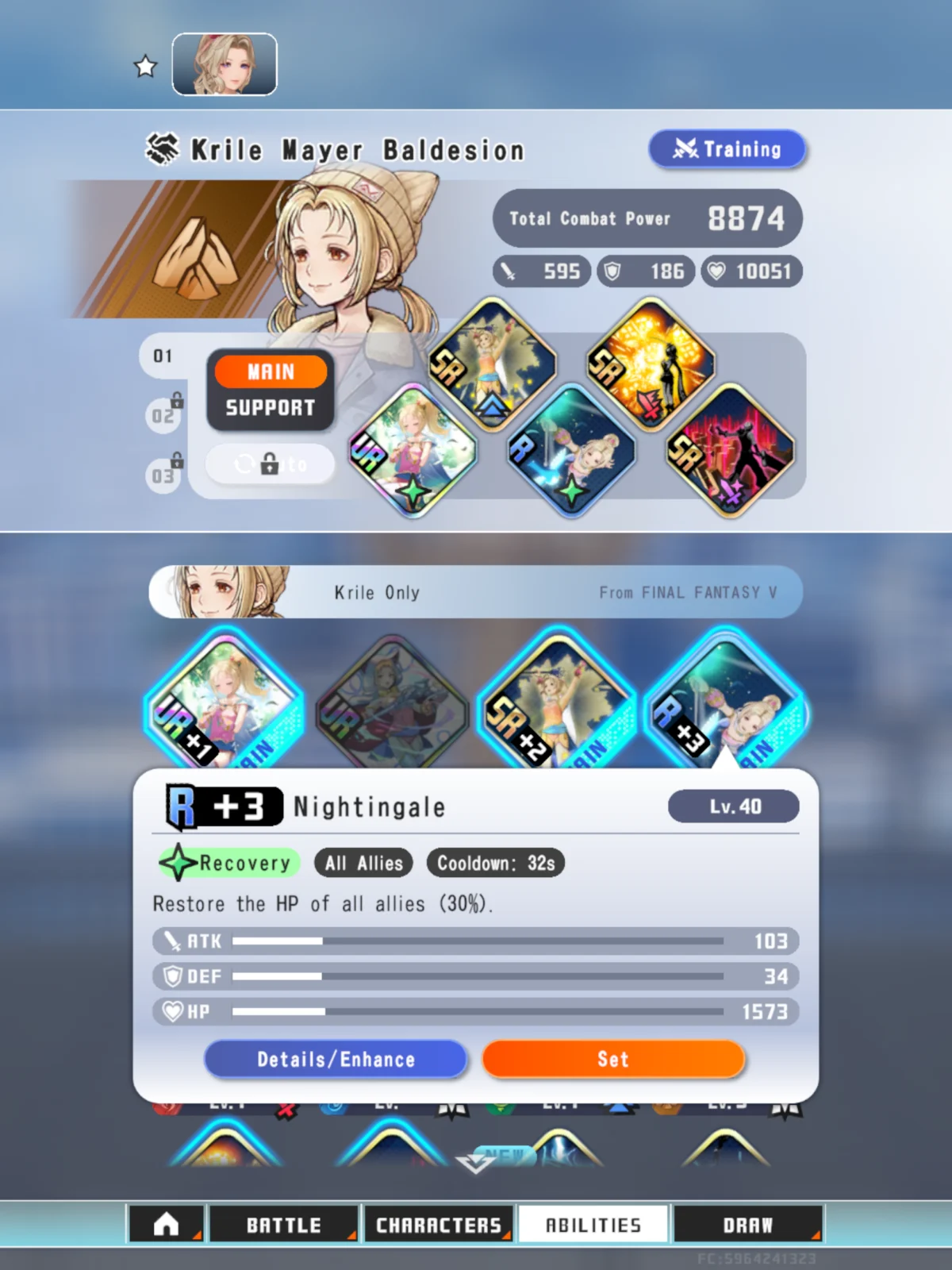
The upcoming launch of Dissidia Duellum Final Fantasy marks a significant pivot in Square Enix’s approach to its long-standing crossover fighting franchise. Set for a global release on March 24, 2026, the title moves away from the traditional 1v1 or 3v3 arena combat seen in previous console iterations and the turn-based strategy of the recently concluded Opera Omnia. Instead, it introduces a complex, team-oriented competitive environment that blends elements of real-time action, tactical deck-building, and objective-based multiplayer online battle arena (MOBA) mechanics. As the mobile gaming community moves closer to the launch date, technical previews and closed beta assessments have identified specific character roles that are expected to define the early competitive meta, with Krile Mayer Baldesion from Final Fantasy V emerging as a primary focus for high-level support play.
Core Gameplay Mechanics and Objective-Based Combat
Dissidia Duellum Final Fantasy operates on a 3v3 team-based structure that departs from the direct elimination focus of its predecessors. In this iteration, two teams of three players enter a map with the primary goal of defeating a central boss entity. However, the boss cannot be damaged through conventional means. The gameplay loop is centered on the "Bravery" system, a staple of the Dissidia series that has been adapted for a mobile-first, real-time environment.
To deal damage to the boss, players must first accumulate Bravery points. This is achieved through several avenues: defeating smaller NPC "minions," conquering minibosses scattered across the map, and engaging in direct skirmishes with the opposing team. Furthermore, teams must work to "purify" crystals located in contested zones. These actions fill a collective gauge that eventually enables a "Burst" attack. The Burst is the only mechanic capable of depleting the central boss’s health pool. This creates a multi-layered strategic environment where players must balance map control and minion farming against the necessity of defending their own members from enemy interference.
Combat interactions are handled through a combination of automated and manual inputs. A default normal attack activates when a player is within range of an opponent, and its frequency can be increased by rhythmic tapping on the device screen. However, the depth of the combat system lies in the "Ability Deck." Each character is equipped with five main active abilities and five passive traits. These abilities are governed by cooldown timers, necessitating precise timing and resource management during high-intensity encounters.
The Gacha Economy and Character Acquisition
As a free-to-play mobile title, Dissidia Duellum Final Fantasy utilizes a gacha-based monetization and progression system. Upon completing the initial tutorial, players are granted the choice of one of four iconic protagonists to serve as their starting unit: the Warrior of Light (Final Fantasy I), Terra Branford (Final Fantasy VI), Cloud Strife (Final Fantasy VII), or Lightning (Final Fantasy XIII). These characters represent the core archetypes of the game: Tank, Ranged Magic, Melee DPS, and Speedster.

Further expansion of the player’s roster is managed through "Character Tickets." These tickets can be used individually for a randomized draw, which may yield new characters or cosmetic costumes. Alternatively, a "pity" or "selector" system is in place, allowing players to save five tickets to specifically unlock a character of their choice. This mechanic is paired with an "Ability Banner" system, where players pull for specific skill cards. The efficacy of a character is heavily dependent on the rarity and synergy of the abilities equipped to their deck, with "Ultra Rare" (UR) and "Super Rare" (SR) cards offering significant statistical and utility advantages.
Analytical Focus: The Role of Krile Mayer Baldesion
While the marketing for Dissidia Duellum Final Fantasy has largely focused on heavy hitters like Cloud and Lightning, technical previews have highlighted the indispensable nature of the Support role. At the time of the game’s impending launch, the Support roster is notably lean, featuring only the Warrior of Light and Krile Mayer Baldesion. However, these two characters serve vastly different functions within a team composition.
The Warrior of Light functions as a "Frontline Support" or "Paladin" archetype. His kit is designed around damage mitigation, shielding, and offensive buffs, making him ideal for teams that intend to play aggressively and engage the enemy team directly. In contrast, Krile Mayer Baldesion serves as the game’s premiere dedicated healer. In a competitive environment where map presence is dictated by HP management, Krile’s ability to sustain her team from a distance provides a unique tactical advantage.
Data gathered from hands-on sessions indicates that Krile’s effectiveness is tied to three specific exclusive abilities:
- Nightingale (Rank: R): This is Krile’s most frequent utility tool. It features a relatively short cooldown and provides an instantaneous 30% HP restoration to all teammates, regardless of their proximity to Krile. In a 3v3 setting where teams are often split to cover different objectives, this global heal is a critical asset.
- Hopeful Cheer (Rank: SR): This ability serves as a transition tool. It provides a moderate attack buff to the entire team for 20 seconds. While the duration is brief, the fast-paced nature of Duellum matches—often lasting only a few minutes—means that a 20-second window is sufficient to secure a boss phase or win a team fight during a Burst window.
- Legend of the Deep Forest (Rank: UR): As Krile’s signature Ultra Rare ability, this move is designed for "clutch" situations. It triggers a high-potency regeneration effect for 15 seconds, capable of restoring up to 300% of a character’s total health over the duration. This effectively renders a team near-invincible for a short period, allowing them to ignore incoming damage from the boss or enemy players to focus entirely on objective completion.
Strategic Implications and Meta-Positioning
The strategic value of Krile extends beyond her healing capabilities. Because she is a ranged character, she can occupy the "backline," maintaining a safe distance from enemy assassins while monitoring the health bars of her allies. Technical analysis suggests that Krile is frequently underestimated by opponents who prioritize high-DPS targets. However, her ability to slot generic offensive skills, such as Fire or Gravity-based spells, alongside her healing deck allows her to contribute to damage totals and execute low-health enemies who overextend.
Industry analysts suggest that the reliance on RNG (Random Number Generation) for ability acquisition will create a varied meta in the weeks following the March 24 launch. Players who successfully pull Krile’s UR and SR abilities early will likely see a higher win rate in ranked play due to the lack of alternative healing sources. Square Enix has designed the game to reward team synergy over individual performance, and a team lacking a dedicated support like Krile may find it difficult to sustain the prolonged engagements required to take down higher-level bosses.
Development Chronology and Market Context
The development of Dissidia Duellum Final Fantasy began shortly after the performance plateau of Dissidia Final Fantasy NT on consoles. Square Enix sought to capture the mobile market’s appetite for competitive, short-session gaming.
- Late 2023: Internal development begins under a mandate to create a "socially competitive" Dissidia experience.
- January 2025: Square Enix announces the sunsetting of Dissidia Final Fantasy Opera Omnia, clearing the way for a new mobile flagship.
- August 2025: The first teaser for Duellum is released, showcasing the shift to 3v3 objective-based gameplay.
- November 2025 – January 2026: Multiple closed beta tests are conducted in Japan and North America to calibrate the Bravery-to-Burst damage ratios.
- February 2026: Pre-registration opens, accompanied by the reveal of the full launch roster, including Krile.
- March 24, 2026: Scheduled worldwide release on iOS and Android.
The move to a 3v3 format with MOBA-lite elements reflects a broader trend in the mobile industry, where traditional RPG franchises are being adapted into more "watchable" and "streamable" competitive formats. By emphasizing roles such as Support and Tank, Square Enix is attempting to foster a community built on cooperative strategy rather than just twitch-reflex combat.
Official Positioning and Future Outlook
While Square Enix has not released specific internal projections, the company’s PR department has emphasized the "approachable depth" of the game. In recent press materials, developers noted that the inclusion of characters like Krile was intentional to ensure that players who prefer non-combative roles have a significant impact on the outcome of a match. "The goal was to make every role feel powerful," the statement read. "A well-timed heal from a support character is just as game-changing as a high-damage Burst from a protagonist."
As the release date approaches, the community’s focus remains on the balance of the gacha system and the accessibility of high-tier abilities. If Krile remains one of the only viable healers, her "Legend of the Deep Forest" ability may become a requirement for high-level competitive play, potentially leading to a "must-pull" scenario for serious players.
Dissidia Duellum Final Fantasy stands at a crossroads for the franchise. It represents a bold experiment in merging the high-fantasy aesthetic of Final Fantasy with the rigorous demands of modern mobile e-sports. Whether the game succeeds will depend largely on how well Square Enix manages the balance between its diverse cast of characters and the inevitable power creep associated with the ability-deck system. For now, Krile Mayer Baldesion stands as a symbol of the game’s strategic depth—a reminder that in the world of Dissidia, the strongest weapon is often the one that keeps the team standing.