Cecilia Chamidah Nur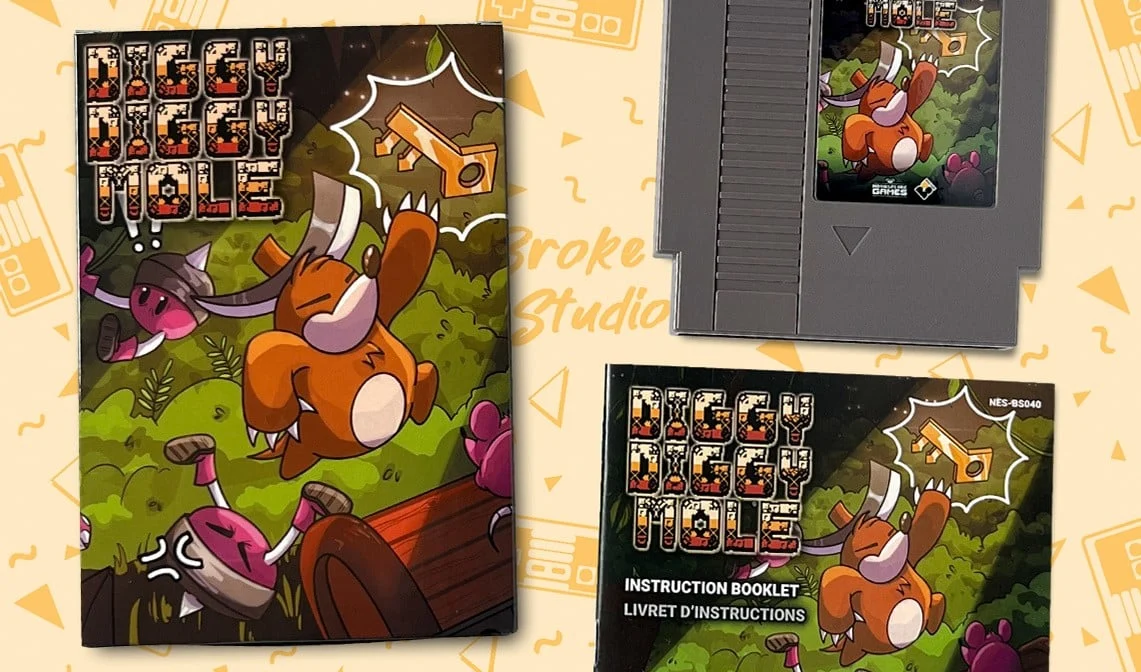
A New Subterranean Saga for the NES/Famicom
At its core, Diggy Diggy Mole introduces players to a titular mole protagonist, burdened by debt to the mafia and tasked with unearthing a lost subterranean treasure. This compelling narrative premise sets the stage for a deep dive into an underground world, where survival and success hinge on the mole’s unique abilities. The game is specifically pitched as a "Metroid-like platformer," indicating a strong emphasis on exploration, non-linear progression, and the acquisition of new abilities that unlock previously inaccessible areas—hallmarks of the ‘Metroidvania’ genre.
Players begin their adventure "dumped underground," immediately facing the challenge of navigating four distinct environments. The gameplay mechanics are described as a blend of traditional run, jump, and parkour elements, augmented by the central mechanic of digging. This allows the protagonist to tunnel through various terrains and hazards, including sharp rock formations and hostile, spiky-headed enemies. This digging mechanic is crucial for both traversal and problem-solving, distinguishing Diggy Diggy Mole from many other platformers on the console.
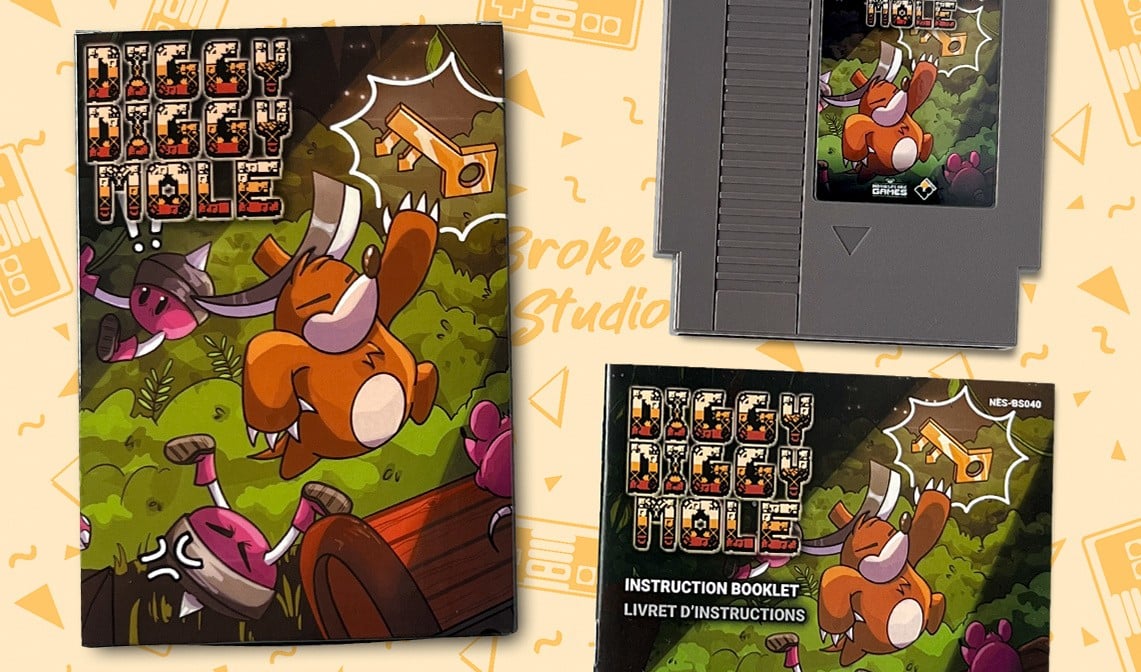
Central to the game’s progression is the collection of "picks," which serve as a currency or key to unlock new "mole abilities." These enhancements are designed to drastically alter gameplay, enabling players to "move through both air and ground with incredible agility." Such upgrades are foundational to the Metroidvania genre, empowering players to revisit earlier areas with new capabilities, uncover secrets, and overcome previously insurmountable obstacles, thereby fostering a sense of continuous discovery and character development within the 8-bit framework.
Development Prowess: Handcrafted 6502 Assembly
Diggy Diggy Mole is the brainchild of Novasplore Games, a collaborative effort by developers known as Geek_Joystick, Tumulde, and Heosphoros. What truly sets this title apart in the modern homebrew landscape is its technical foundation: it was developed with "100% handwritten 6502 Assembly code." This detail is profoundly significant within the retro gaming community. The 6502 microprocessor was the CPU at the heart of the original Nintendo Entertainment System (NES) and Famicom, as well as other iconic systems like the Apple II and Commodore 64. Programming directly in Assembly language means developers are interacting with the hardware at its most fundamental level, writing instructions that the CPU executes directly.
This approach bypasses higher-level programming languages and development kits, demanding an intimate understanding of the console’s architecture, memory limitations, and processing capabilities. The decision to use handwritten 6502 Assembly code is a testament to Novasplore Games’ dedication to authenticity and technical mastery, a challenging endeavor that often results in highly optimized and efficient code, pushing the boundaries of what the original hardware can achieve. It speaks to a commitment to replicating the development practices of the 1980s, offering an experience that is not merely retro-inspired but authentically retro in its creation. This level of craftsmanship is highly valued by purists and collectors within the homebrew community.

Timeline of Release and Community Reception
The journey of Diggy Diggy Mole to its physical release began well before today’s announcement. A playable demo was made available in January 2026 on itch.io, a popular platform for independent game developers to showcase and distribute their creations. This early access period allowed the development team to gather feedback from the community, fine-tune gameplay mechanics, and build anticipation for the full release.
The demo’s reception was largely positive, with early impressions highlighting its promising design and technical execution. Reviewers and players frequently lauded its "awesome Celeste-style platforming" and a "surprisingly funky chiptune soundtrack." The comparison to Celeste, a critically acclaimed modern precision platformer, is particularly noteworthy. It suggests that Diggy Diggy Mole achieves a level of tight control, challenging level design, and satisfying movement that resonates with contemporary platforming sensibilities, despite being constrained by 8-bit hardware. The "funky chiptune soundtrack" further enhances the retro experience, evoking the distinctive auditory aesthetic of the NES era while injecting a fresh, engaging rhythm into the gameplay.
The successful reception of the demo undoubtedly paved the way for the physical release, signaling strong market interest and confidence from both developers and publishers in the game’s quality and appeal.
The Resurgence of Retro Gaming and the Homebrew Market
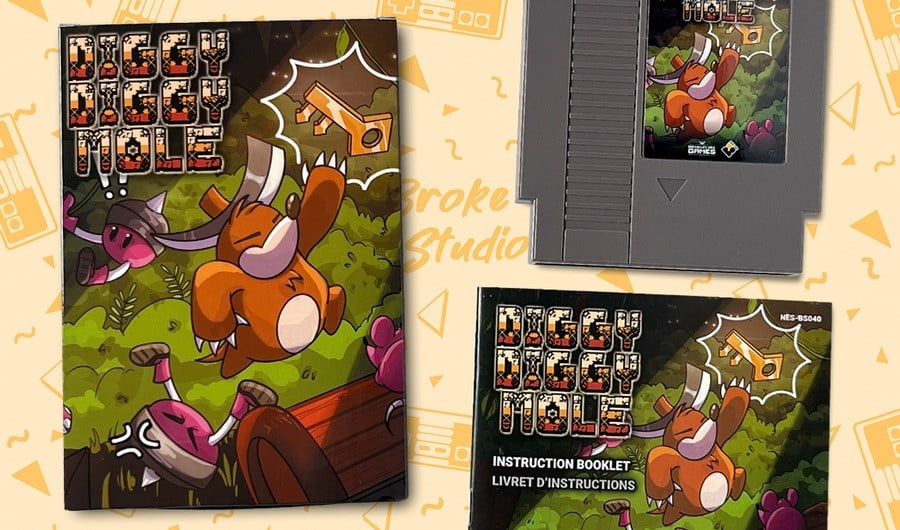
The physical release of Diggy Diggy Mole through the Homebrew Factory, a platform specializing in new games for classic consoles, underscores a broader trend in the gaming industry: the enduring appeal and commercial viability of retro gaming. While digital distribution dominates the modern landscape, a significant and growing niche market exists for physical cartridges compatible with vintage hardware. This market is driven by collectors, preservationists, and enthusiasts who cherish the tangible aspect of gaming, the tactile experience of inserting a cartridge, and the nostalgic connection to past eras.
Broke Studio, as the publisher, plays a critical role in facilitating this trend. Their partnership with Novasplore Games exemplifies the collaborative spirit within the homebrew community, where independent developers, often working with limited resources, can bring their ambitious projects to a wider audience through specialized publishers. This ecosystem ensures that innovation continues on platforms long considered obsolete by mainstream industry standards. The commitment to producing physical cartridges, complete with professional packaging, instruction manuals, and often, limited edition variants, transforms these homebrew titles into coveted collectibles.
The homebrew scene for consoles like the NES/Famicom has flourished in recent years, fueled by advancements in development tools, increased access to technical documentation, and a global network of passionate developers. These creators are not merely recreating past experiences but are actively pushing the boundaries of what was thought possible on these 8-bit machines, often incorporating modern game design principles and storytelling techniques within severe technical limitations. Diggy Diggy Mole, with its Metroidvania structure and precision platforming, stands as a prime example of this innovative spirit.
Availability, Pricing, and Technical Compatibility
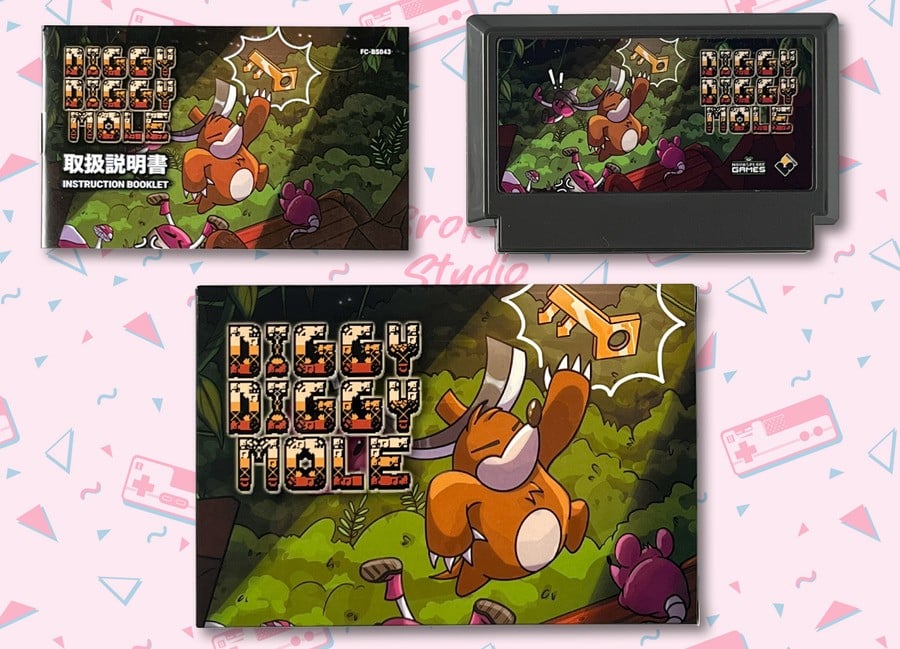
Both the NES and Famicom versions of Diggy Diggy Mole are now available for purchase, each priced at €50. This pricing reflects the significant investment in development, the niche market, and the costs associated with manufacturing new physical cartridges, circuit boards, and packaging for vintage systems. While higher than typical modern digital releases, it is consistent with the pricing model for high-quality, limited-run homebrew titles that cater to a dedicated collector base.
Crucially for international players, the NES version of Diggy Diggy Mole is designed for broad compatibility. It is equipped with "a multi-region security chip," ensuring that it can function seamlessly on both PAL (European/Australian) and NTSC (North American/Japanese) machines. This technical feature is vital for a global market, as original NES consoles from different regions had hardware locks that prevented cartridges from other regions from playing. The inclusion of a multi-region chip simplifies the user experience and broadens the game’s accessibility across different territories.
Furthermore, the game’s compatibility has been rigorously tested on "an authentic Nintendo Entertainment System, ‘front loader’ and ‘top loader.’" This assurance is important for potential buyers, confirming that the new cartridge will perform as expected on original hardware, assuaging any concerns about compatibility issues that can sometimes arise with unofficial or modern reproductions. This commitment to hardware fidelity reinforces the game’s authentic retro credentials.

Broader Implications and the Future of 8-bit Development
The release of Diggy Diggy Mole carries several broader implications for the retro gaming landscape. It serves as a compelling demonstration that the NES/Famicom, nearly four decades after its initial release, remains a fertile ground for new and engaging interactive experiences. It highlights the sustained creativity and technical prowess within the homebrew community, which continues to breathe new life into classic hardware.
The success of titles like Diggy Diggy Mole could further encourage aspiring developers to explore the unique challenges and rewards of 8-bit game creation, potentially fostering even more innovative projects for vintage consoles. Moreover, it reinforces the economic viability of the physical retro game market, demonstrating that a dedicated audience exists and is willing to invest in high-quality, meticulously crafted new releases. This ensures the continued relevance and evolution of systems that might otherwise fade into purely nostalgic memory, transforming them into platforms for ongoing artistic and technical expression.
As the lines between retro-inspired and authentically retro blur, Diggy Diggy Mole stands as a testament to the enduring appeal of foundational gaming principles—skill-based platforming, meaningful exploration, and a strong sense of progression—all delivered within the charming and challenging constraints of 8-bit technology. Its release is not just a new game for an old console; it is a celebration of gaming history, technical artistry, and the boundless creativity of the homebrew community.