Hartono Sudibyo
The retro gaming and console-modding communities have achieved a notable technical milestone following the successful porting of the Nintendo 64 classic Star Fox 64—marketed as Lylat Wars in regions such as the United Kingdom—to Sony’s PlayStation Portable (PSP). Spearheaded by independent developer Daniel Welch, the project demonstrates that the 1997 rail shooter can execute successfully on twenty-year-old handheld architecture, functioning on both native PSP hardware and emulation software like PPSSPP.
This achievement arrives during a period of renewed mainstream and community interest in the Star Fox intellectual property. Nintendo recently deployed updates for the franchise across current-generation platforms, alongside the integration of Star Fox Adventures into the Nintendo Switch Online GameCube Classics library. While ports of Star Fox 64 have previously been engineered for alternative platforms including the Sega Dreamcast and various Linux-based retro handheld devices, bringing the title to Sony’s legacy handheld represents an unexpected engineering feat given the divergent architectures of the Nintendo 64 and the PSP.
Main Facts of the Port
The newly developed port of Star Fox 64 on the PlayStation Portable currently runs at a target frame rate of 60 frames per second (FPS). According to technical details shared by Welch, the underlying game simulation remains locked at a 30Hz update rate, while intermediate frames are dynamically interpolated using methodologies typically observed in PC game modifications.
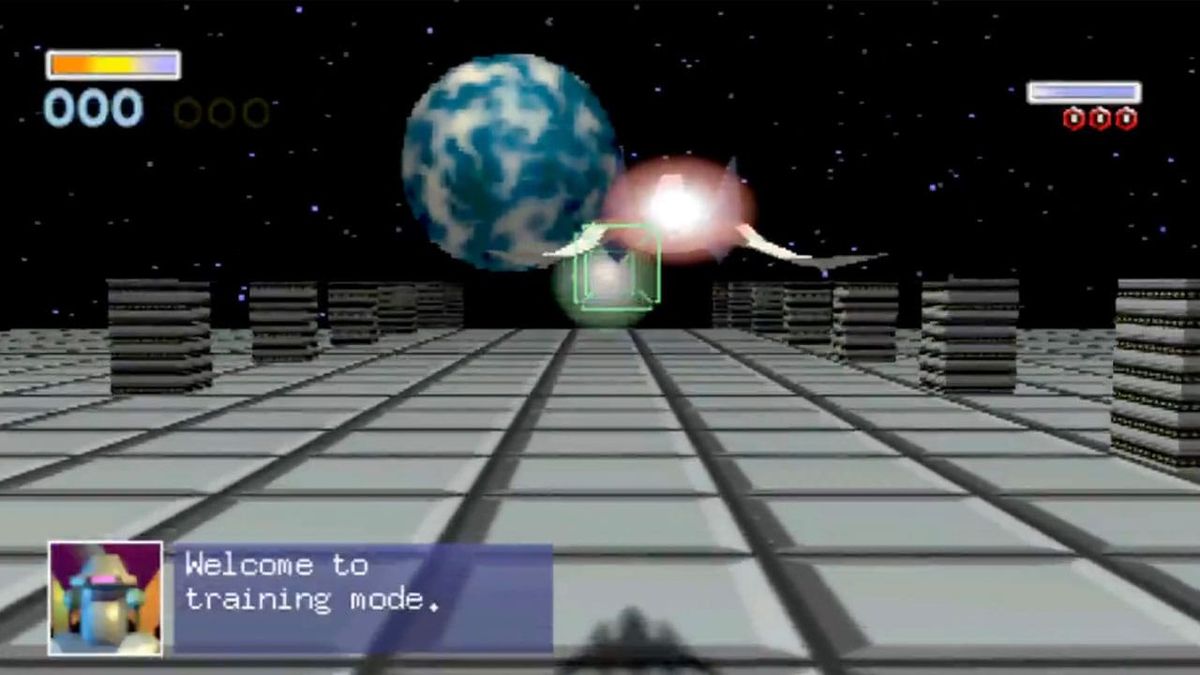
The software operates successfully across physical PSP units as well as the PPSSPP emulator. Although Welch has characterized the current release as an early-stage implementation, initial demonstrations indicate that foundational gameplay mechanics, environmental rendering, and audio integration function stably. The project relies heavily on reverse engineering principles and the optimization of the original game’s codebase to accommodate the memory constraints and hardware limitations of the PSP, which was originally released by Sony in late 2004.
Chronology of Development
The realization of Star Fox 64 on the PSP is the result of a concentrated, four-month development cycle undertaken by Welch.
- May 2026: Initial investigative work into the feasibility of rendering Nintendo 64 graphical assets within the PSP’s processing pipeline begins. Early hurdles involve memory management and translating the N64’s unique Reality Coprocessor (RCP) microcode into instructions executable by the PSP’s Media Engine and Graphics Processing Unit (GPU).
- July 2026: Preliminary builds demonstrate basic polygon rendering and rudimentary control inputs, though severe performance bottlenecks and frame-rate instability limit playability.
- August 2026: Optimization breakthroughs allow for smoother asset streaming and the implementation of frame interpolation techniques, successfully driving the visual output to 60 FPS while keeping the game logic stable at 30Hz.
- September 9, 2026: Welch publicly announces the milestone via social media channels, releasing video footage of the game running smoothly in training mode and sparking widespread discussion across retro gaming forums and news outlets.
Supporting Data and Hardware Context
To contextualize the technical complexity of this port, it is necessary to examine the hardware specifications of both the source and target systems.

The Nintendo 64, released in 1996, featured a 64-bit NEC VR4300 CPU clocked at 93.75 MHz, paired with a 62.5 MHz Reality Coprocessor handling graphics and audio, backed by 4 MB of Rambus DRAM (expandable to 8 MB via the Expansion Pak). The system relied heavily on cartridge storage, which allowed for rapid asset streaming relative to the CD-ROM technology dominant at the time.
Conversely, the PlayStation Portable, launched eight years later in 2004, utilized a custom MIPS R4000-based CPU (the Allegrex) running at clock speeds dynamically adjustable between 222 MHz and 333 MHz, alongside 32 MB of embedded DRAM (later increased to 64 MB in the Slim & Lite iterations). While the PSP possessed superior raw clock speed and RAM capacity compared to the Nintendo 64, emulating or natively porting N64 software has historically proved exceptionally difficult due to fundamental differences in how both systems handle arithmetic logic, texture mapping, and microcode execution.
The success of Welch’s project highlights the maturity of modern reverse-engineering tools and the depth of understanding that contemporary developers have acquired regarding legacy console architectures.
Community and Industry Reactions
The announcement elicited widespread attention within the retro gaming community, particularly among enthusiasts specializing in console hardware modifications. Industry observers noted that achieving 60 FPS performance on native PSP hardware via frame interpolation demonstrates an innovative approach to overcoming legacy hardware limitations.
Commentators have frequently emphasized the significance of the phrase "They said it couldn’t be done," which accompanied Welch’s initial public presentation. The sentiment underscores a prevailing ethos within the emulation and homebrew scenes, where developers routinely challenge perceived technical ceilings established by original hardware manufacturers. While neither Nintendo nor Sony has issued formal statements regarding the project—as is standard for third-party homebrew developments utilizing proprietary intellectual property—the release has driven increased traffic to community forums dedicated to PSP homebrew development and game preservation.
Broader Impact and Implications for Game Preservation
The successful porting of Star Fox 64 to the PSP carries several implications for the broader fields of game preservation, homebrew development, and community-driven software engineering.
- Advancement of Decompilation Projects: Ports of this caliber often rely on complete decompilation projects—efforts where community programmers reverse-engineer proprietary binaries into readable C or C++ source code. The maturation of these decompilation pipelines allows developers to retarget classic games to entirely new hardware architectures without traditional software emulation overhead.
- Extended Lifespan of Legacy Hardware: Despite being commercially defunct for over a decade, the PlayStation Portable continues to maintain an active development community. Milestones such as this demonstrate that enthusiast-driven optimization can push legacy devices to perform tasks far beyond their original design specifications.
- Legal and Ethical Considerations: As with many homebrew and porting initiatives, projects involving commercial intellectual property operate within a complex legal landscape. While the distribution of modified executable files containing proprietary assets remains legally contentious, these projects often stimulate academic and technical interest in software archaeology and platform interoperability.
Future Outlook
As development on the PSP port of Star Fox 64 continues past its initial public unveiling, observers anticipate further refinements to stability, audio synchronization, and control mapping. While full completion of the project will require additional debugging to address edge cases in later levels of the game, the foundational framework established by Daniel Welch ensures that the project has moved past its most formidable technical hurdles. Further progress reports and development builds are expected to be shared through Welch’s primary communication channels as the software approaches a more polished, release-ready state.