Jia Lissa
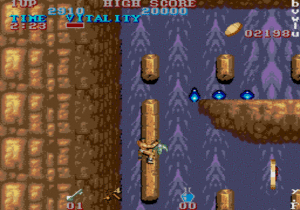
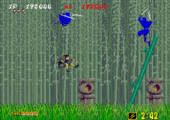
The 1987 Capcom arcade classic Black Tiger, a title that has eluded home console gamers for over three decades, is finally receiving a ground-up port for the Sega Genesis. Developed by indie programmer rester159, this project utilizes the Sega Genesis Development Kit (SGDK) to deliver a native experience that reimagines the action-adventure staple for 16-bit hardware. While the original coin-op machine was a fixture of late-1980s arcades, it never received an official home console release, a void that has persisted through multiple console generations until this current enthusiast-driven initiative.
A Legacy of Absence in the Console Market
When Black Tiger debuted in arcades in 1987, it was celebrated for its blend of platforming, combat, and exploration, featuring a distinctive dark fantasy aesthetic. Despite its popularity and critical success, Capcom never commissioned a conversion for the Nintendo Entertainment System or the Sega Master System. This was an era when arcade-to-home ports were the lifeblood of the industry, and the absence of Black Tiger remained a notable omission in the libraries of 8-bit and 16-bit consoles.
During the early 1990s, the Sega Genesis gained a reputation as the premier home for high-quality arcade conversions, particularly for titles developed by Capcom. Games such as Forgotten Worlds and Ghouls ‘n Ghosts were successfully transitioned to the hardware, often with enhancements that leveraged the Genesis’s Motorola 68000 processor. The success of those conversions led many players to expect that Black Tiger might eventually see a similar release, but the project remained dormant in the archives of Capcom’s internal development roadmap.
Technical Architecture and Re-engineering
The current project by rester159 is not a simple emulation or a ROM hack; it is a sophisticated reconstruction of the game’s logic and assets. By utilizing the SGDK, the developer has built the game from the ground up to ensure it runs as native code on the Sega Genesis hardware. This approach is necessitated by the significant architectural differences between the original arcade board—which utilized the Zilog Z80 and custom Capcom hardware—and the Sega Genesis’s unique environment.
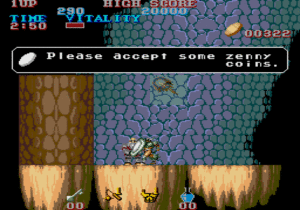
The adaptation process required careful management of the Genesis’s technical constraints. The arcade version ran on a display with specific resolution and color-depth capabilities that exceeded those of the Genesis. To resolve this, the developer converted the original art assets into native tile patterns and sprites optimized for the console’s 256×224 display area. Because the Genesis has fewer available color registers, background elements and enemy sprites have been re-indexed to ensure the game remains visually coherent despite the limitations of the hardware’s palette management.
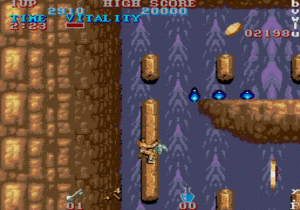
Furthermore, the game introduces features absent from the 1987 original, most notably visual parallax scrolling. This addition adds a sense of depth to the environments that the original, single-plane background failed to achieve. Additionally, the inclusion of SRAM support allows players to save high scores—a modern quality-of-life feature that acknowledges the transition from a coin-operated environment to a home console experience.
Gameplay Modes and User Customization
Understanding the difference between the arcade experience and the expectations of modern home players, the developer has implemented two distinct gameplay modes. "Arcade Mode" maintains the integrity of the original coin-op, complete with credit-based progression, initial attract sequences, and simulated DIP switch settings that allow players to adjust game difficulty and lives, just as arcade operators did in the 1980s.
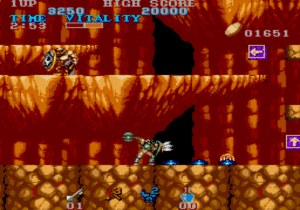
"Home Mode" offers a more contemporary approach. It removes the necessity of inserting virtual credits and provides a more streamlined, console-centric experience. This mode includes a "boss rush" gauntlet, allowing players to test their skills against every major enemy in the game in rapid succession. To assist with the notoriously difficult platforming sequences found in the seventh stage, the developer has included an optional jump-assist mechanic. Additionally, classic-style cheat codes have been integrated, providing players with access to developer tools such as invincibility and stage selection, which serve as a nod to the era of magazine-distributed gaming secrets.
Challenges in Audio and Processing
The audio translation presented one of the project’s most significant hurdles. The original arcade game utilized specialized sound hardware that generated audio signals in a manner distinct from the Yamaha YM2612 FM synthesis chip and the Texas Instruments SN76489 PSG found in the Genesis. While the developer has successfully mapped the game’s soundtrack to the Genesis audio hardware, the balance varies from the arcade source material, particularly regarding noise channels and volume scaling.
Performance analysis indicates that while the project aims for a stable 60 frames per second, the sheer density of sprites and the complexity of the combat encounters can occasionally cause minor processing bottlenecks. These hiccups are a common challenge when attempting to force 1987-era arcade logic onto the 1988-era Genesis architecture, but the developer continues to refine the code to maintain performance stability during high-action sequences.
Broader Implications for the Homebrew Scene
The release of this public beta serves as a significant case study in the longevity of retro gaming. It highlights the growing trend of community-led development, where enthusiasts take on the roles of publishers and developers to "complete" the libraries of vintage consoles. By providing a playable build compatible with flash carts, MISTer FPGA systems, and various emulators, the project creator is facilitating a broad, accessible testing phase that invites public feedback to polish the final experience.
From an industry perspective, projects like this demonstrate that the value of classic intellectual property persists long after commercial support has ceased. While Capcom has not officially commented on this specific homebrew initiative, the history of the Sega Genesis library—built on the strength of arcade ports—suggests that this project is a natural extension of the platform’s legacy. It provides a unique opportunity for players to experience a "lost" title in a format that feels authentic to the 16-bit era, while simultaneously introducing modern optimizations that lower the barrier to entry.
Future Outlook and Availability
While there is currently no confirmed release date for the final, polished version of the project, the availability of the public beta allows for real-time collaboration between the developer and the community. This iterative process is likely to resolve the remaining performance issues and audio discrepancies. The project is currently hosted on itch.io, where the developer encourages users to report bugs and suggest features.
The effort required to reconstruct Black Tiger from scratch is considerable, reflecting a high level of dedication to technical accuracy and game preservation. By prioritizing native hardware performance over simple emulation, rester159 has ensured that the resulting title will stand alongside the official Capcom ports that defined the Sega Genesis’s reputation. As the homebrew scene continues to evolve, initiatives of this caliber highlight how modern programming tools can bridge the gap between historical gaming experiences and the expectations of contemporary enthusiasts. The final product will not only satisfy a decades-old demand for a home port but also serve as a testament to the enduring technical and artistic appeal of 1980s arcade design.