Jia Lissa
Shining in the Darkness, released in 1991 for the Sega Mega Drive, stands as a foundational pillar in the history of Japanese role-playing games (JRPGs), marking the birth of a franchise that would eventually span over two dozen entries across multiple hardware generations. While Nintendo fans of the early 1990s frequently championed franchises like The Legend of Zelda and Final Fantasy, Sega’s answer arrived through a diverse lineage of titles that began with a dungeon-crawling masterpiece. Developed by the newly formed Climax Entertainment, the game introduced a unique blend of first-person exploration, high-fidelity cartoony visuals, and an intuitive icon-based menu system that would define the series for decades. The project was not merely a commercial endeavor but a calculated attempt by industry veterans to break away from the shadow of established giants and create a globally respected intellectual property.
The Departure from Chunsoft and the Birth of Climax
The DNA of the Shining series is ironically rooted in the development of Enix’s Dragon Quest, a franchise long synonymous with Nintendo’s Famicom. The architects of Climax Entertainment, Hiroyuki Takahashi and Hiroshi "Kan" Naitō, met while working at Chunsoft, the studio responsible for the early Dragon Quest titles. Takahashi, who entered the industry after a varied career in TV production and as a ski instructor, had distinguished himself at Chunsoft by creating an exhaustive, 120-page notebook of dialogue and flowcharts for Dragon Quest III. This meticulous attention to detail earned him an assistant producer role on Dragon Quest IV.
Naitō, a self-taught programming prodigy who had been modding "kusoge" (bad games) since his youth, served as the chief programmer for the Dragon Quest series. Despite their success at Chunsoft, both men felt restricted by the collaborative nature of large teams and the lack of individual recognition for developers in Japan. Takahashi was particularly motivated by his experiences during focus testing for Dragon Quest III in Seattle, where he perceived a lack of respect from American gamers toward Japanese software, which was often viewed as derivative of Western computer games.

In April 1990, Takahashi and Naitō decided to pursue independence, founding Climax Entertainment. They were joined by several colleagues, including Shinya Nishigaki. Their goal was to move away from the "copycat" culture Takahashi observed and create software that was innovative, visually distinct, and capable of earning worldwide respect.
Technical Transitions: Choosing the 16-Bit Frontier
When deciding on a platform for their debut project, Takahashi and Naitō opted to bypass the aging Famicom and the newly released Super Famicom in favor of the Sega Mega Drive. Their decision was driven by technical pragmatism. The Mega Drive had been on the market for two years, and its Motorola 68000 CPU was a well-understood architecture compared to the nascent Super Famicom. Furthermore, Naitō found Sega’s development environment, while imperfect, to be more flexible than the restrictive, proprietary tools used for Nintendo’s hardware.
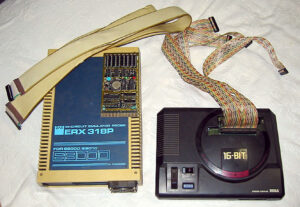
Sega, desperate to bolster its third-party library against Nintendo’s dominance, welcomed the Climax team with open arms. Sega President Hayao Nakayama personally oversaw the partnership, ensuring Climax received high-performance Hewlett-Packard workstations to speed up development. However, the transition was not without friction. Naitō famously clashed with Sega’s R&D head, Hisashi Suzuki, over the limitations of Sega’s in-circuit emulator (ICE), which did not allow developers to see real-time graphics on a television screen. This frustration led Climax to develop its own proprietary graphics tools, which allowed them to push the Mega Drive’s hardware further than many of Sega’s internal teams had at the time.
Design Philosophy and the Disney Influence
One of the most striking aspects of Shining in the Darkness was its visual departure from the traditional manga-inspired art style prevalent in JRPGs. Takahashi and Naitō sought a more universal aesthetic, drawing inspiration from early Disney features like Sleeping Beauty and Alice in Wonderland, as well as the atmospheric tension of films like Gremlins.
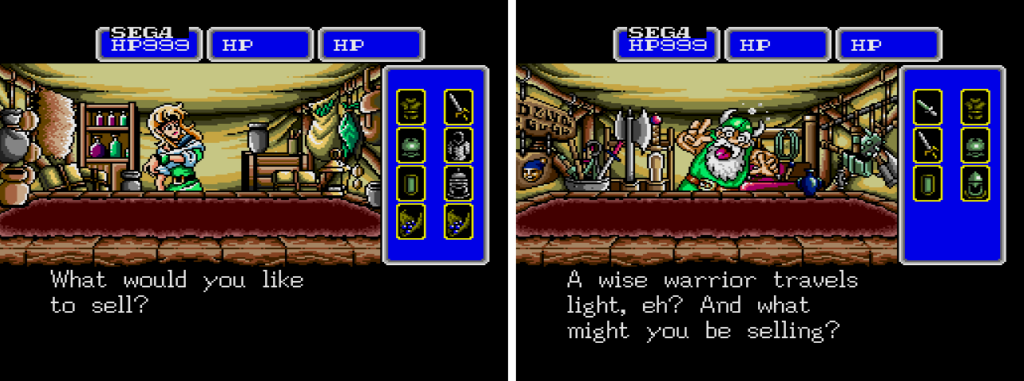
To realize this vision, they hired Yoshitaka Tamaki, a freelance artist who shared their affinity for Western-style caricatures. Tamaki’s character designs for the protagonist Max, the priest Milo, and the mage Pyra featured exaggerated expressions and a "stiff" but detailed look that complemented the first-person perspective. The team utilized a technique they dubbed "Panorama 3D," which focused on creating a sense of depth and immersion within the game’s single town (Thornwood) and its central labyrinth. This cinematic approach extended to the game’s vendors; instead of static menus, players interacted with spirited shopkeepers whose expressions changed based on the player’s actions, creating a theatrical experience that Takahashi likened to a high school stage play.
Innovation in Interaction: The Icon System and Navigation
Climax aimed to reduce the "burden" on the player, a philosophy that led to the creation of the series’ signature icon-based menu system. Recognizing that wordy, complex menus often bogged down the RPG experience, Naitō designed a system where commands were represented by animated icons arranged to correspond with the directional pad. This allowed for intuitive navigation without the need for constant reference to a manual.
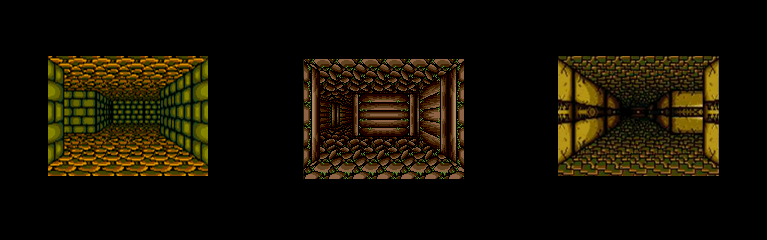
While the game’s interface was user-friendly, its core gameplay was intentionally challenging. Unlike many contemporary RPGs, Shining in the Darkness lacked an auto-mapping system. This was a deliberate design choice by Naitō, who believed that players should learn the environment through landmarks—such as torches and puddles—rather than relying on a digital guide. He argued that "spoon-feeding" the player reduced the satisfaction of mastery. To assist lost players, Climax included the "Wisdom Seed" item and the "View" spell, but these were meant as emergency measures rather than primary navigation tools.
To achieve the fluid 3D movement of the labyrinth, Climax hired Yasuhiro Taguchi as a special effects programmer. Taguchi utilized tile-based tricks and palette swapping to simulate smooth scrolling on a console that lacked dedicated 3D hardware. This technical wizardry allowed for large, animated enemy sprites and impressive magical effects, pushing the 8-megabit cartridge to its absolute limit.

Audio Identity and Atmospheric Score
The game’s atmosphere was further elevated by the score of Masahiko Yoshimura. A graduate of the Shōbi-Gakuen Junior College School of Music Business, Yoshimura had experience as an audio mixer for the pop band Dream Come True. His compositions for Shining in the Darkness established the regal, orchestral tone that would become a hallmark of the franchise.
Yoshimura worked closely with Tamaki to ensure the music matched the visual tone of each scenario, famously spending eight hours in a Denny’s debating musical themes. Although Yoshimura was reportedly frustrated by the limitations of the Mega Drive’s YM2612 sound chip, he succeeded in creating a soundtrack that provided a stark contrast between the safety of the castle and the claustrophobic mystery of the dungeon.
Launch, Reception, and Commercial Data
Shining in the Darkness debuted in Japan on March 29, 1991. It was an immediate commercial success, selling approximately 300,000 units. This represented a 16% attachment rate to the Mega Drive’s Japanese install base of 1.9 million units at the time. The game’s success was a vital proof of concept for Sega, demonstrating that the Mega Drive could host high-quality, deep RPG experiences.
In the United States, the game arrived during a pivotal moment for Sega of America. While marketing head Al Nilsen recalled that the game did not receive the massive television promotion reserved for titles like Sonic the Hedgehog, it garnered a dedicated following through print advertisements and positive word-of-mouth. Takahashi was surprised by the game’s Western success, particularly among fans of the Wizardry series, who praised the game’s technical polish and immersive perspective. Despite its high price point—due to the 8-megabit cartridge and battery backup—the game solidified the "Shining" brand as a premier RPG franchise in North America.
Legacy and the Evolution of the Franchise
The success of Shining in the Darkness paved the way for the 1992 release of Shining Force, which shifted the series toward tactical role-playing while retaining the beloved character designs and menu systems of the original. However, the relationship between Climax and Sega became strained over time. Takahashi noted that as Sega grew into a global powerhouse, the corporate environment shifted toward profit-driven management that viewed second-party developers like Climax as "unruly subsidiaries."
Budgetary constraints remained a constant struggle, yet the foundation laid by the first game endured. The "Shining" universe expanded into a complex chronology, with fans still debating the links between entries like Shining Force II, Shining Wisdom, and Shining the Holy Ark.

Ultimately, Shining in the Darkness remains a landmark achievement in game design. It proved that a small, dedicated team could challenge the status quo by prioritizing originality and technical excellence. By blending Western cinematic influences with Japanese RPG mechanics, Climax Entertainment created a "light" that continues to shine in the annals of gaming history, influencing the genre’s approach to first-person immersion and user interface design for generations to come.