Jia Lissa
The history of Sega’s role-playing game (RPG) development is often defined by a few pillar franchises that stood as counterpoints to Nintendo’s dominant Legend of Zelda and Final Fantasy series. While Phantasy Star remains the most recognizable early sci-fi entry for the platform, the Shining series holds a unique position for its diversity, longevity, and technical innovation. Beginning in 1991 with the release of Shining in the Darkness for the Mega Drive (Genesis), the franchise eventually spanned nearly two dozen entries across multiple hardware generations. Only the 32X and the Dreamcast were excluded from the series’ reach, underscoring the brand’s importance to Sega’s hardware strategy throughout the 1990s and beyond.
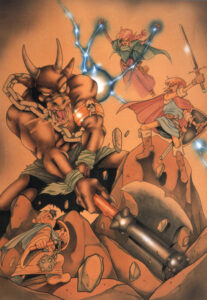
The success of the Shining series was predicated on a fundamental shift in how Japanese RPGs were designed for a global audience. While many contemporary titles relied on heavy text menus and manga-inspired aesthetics, the debut title utilized a first-person perspective, an intuitive icon-based interface, and a visual style heavily influenced by Western animation. This design philosophy was the brainchild of Climax Entertainment, a studio founded by veterans of the Dragon Quest series who sought to break away from industry trends of imitation and create a more immersive, "universal" gaming experience.
The Chunsoft Exodus and the Birth of Climax
The DNA of the Shining series originates within Chunsoft, the developer responsible for the seminal Dragon Quest titles published by Enix. Two key figures, Hiroyuki Takahashi and Hiroshi "Kan" Naito, formed the core of what would become Climax Entertainment. Takahashi, whose background included television production and corporate planning, joined Enix after a period of intense personal study where he manually mapped out every line of dialogue in Dragon Quest III to understand narrative flow. This attention to detail earned him an assistant producer role on Dragon Quest IV, where he met Naito, the chief programmer.

Naito was a self-taught programming prodigy who had been obsessed with 3D imagery since seeing wireframe graphics in the late 1970s. His early career at Ample Software and Zap Corporation was defined by a fascination with creating spatial depth on limited hardware. By the late 1980s, both men felt constrained by the development culture at Chunsoft. Takahashi was particularly frustrated by the industry’s tendency to produce "clones" of successful titles rather than innovating on gameplay mechanics.
A pivotal moment occurred during a focus-testing trip to Seattle for the North American launch of Dragon Quest III. Takahashi observed that Western gamers often viewed Japanese software as derivative of Western computer games from platforms like the Commodore 64. This perception, coupled with a desire for individual recognition in an industry that often obscured the names of creators, led Takahashi and Naito to leave Chunsoft in April 1990. Along with colleagues like Shinya Nishigaki, they formed Climax Entertainment with the explicit goal of creating software that would earn worldwide respect for its originality.

Technical Strategy Selecting the 16-Bit Frontier
While Climax had deep roots in the 8-bit Famicom (NES) ecosystem, the team made the strategic decision to bypass the aging hardware for their debut project. The Famicom lacked the processing power required to render the smooth, first-person 3D environments Naito envisioned. Although Nintendo had launched the Super Famicom, the team found the Sega Mega Drive’s 68000 CPU architecture more accessible and better documented.
Sega, desperate to build a library of high-quality third-party RPGs to compete with Nintendo, welcomed the Climax team with significant support. Sega President Hayao Nakayama personally oversaw the partnership, recognizing the value of securing talent from the Dragon Quest lineage. To facilitate development, Sega provided Climax with high-performance Hewlett-Packard workstations, which were significantly faster than the tools Naito had used at Chunsoft.

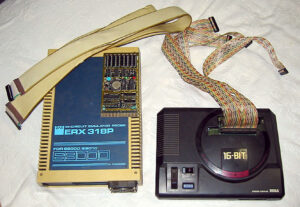
However, the transition was not without technical hurdles. The team found Sega’s standard development environment lacking for the specific visual effects they wanted to achieve. Consequently, the first "product" Climax built on the Mega Drive was not a game, but a proprietary suite of graphics tools. These tools allowed the team to manipulate tiles and sprites with greater efficiency, eventually enabling the "Panorama 3D" effect that gave Shining in the Darkness its signature fluid movement.
Narrative and Aesthetic Design A Western Influence
Shining in the Darkness was initially conceived as a real-time "haunted house" fantasy set in a first-person perspective. As development progressed, the concept evolved into a dungeon-crawling RPG to provide a more structured experience for the Japanese market. Takahashi, a fan of J.R.R. Tolkien and Robert E. Howard, crafted a story set in the Kingdom of Thornwood, focusing on a young knight’s quest to rescue Princess Jessa from the labyrinth of the evil Dark Sol.
The visual direction of the game was a deliberate departure from the manga styles prevalent in the early 1990s. Takahashi and Naito drew inspiration from classic Disney features such as Sleeping Beauty and Alice in Wonderland, as well as the 1984 film Gremlins. They hired 18-year-old freelance artist Yoshitaka Tamaki to create character designs that resembled Western caricatures. This "universal" look was intended to make the game more palatable to overseas audiences, a strategy that would later prove successful when the game reached North American and European shores.
Gameplay Innovations The Icon System and 3D Navigation
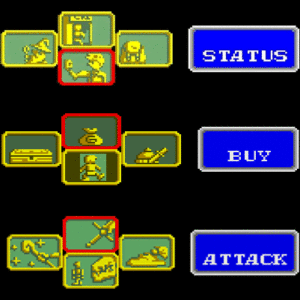
One of the most enduring legacies of Shining in the Darkness is its streamlined user interface. Climax sought to eliminate the "wordy and obstructive" menus that characterized PC-based RPGs of the era. Naito’s philosophy was that a player should never need to consult a manual to understand basic commands. The resulting icon-based system used a radial menu where each option corresponded to a direction on the D-pad.

This system, which featured animated icons for magic, items, and combat, was designed to be intuitive and fast. While some critics later compared the system to the one found in Phantasy Star III, the Climax version was significantly more detailed and responsive. This interface became a staple of the series, ensuring that subsequent titles—even those in different genres like the strategy-focused Shining Force—felt familiar to returning players.
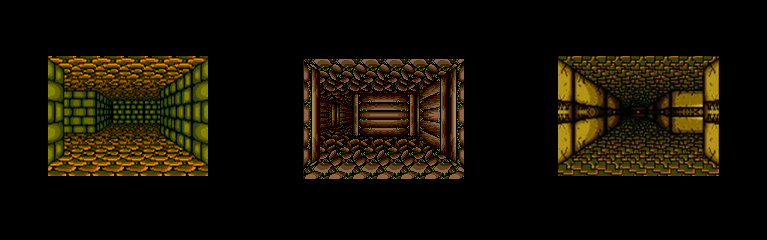
The 3D navigation was equally revolutionary for its time. Unlike the choppy, frame-by-frame movement found in many dungeon crawlers, Shining in the Darkness utilized tile-based tricks to simulate smooth scrolling. Special effects programmer Yasuhiro Taguchi worked to squeeze every possible cycle out of the Mega Drive’s CPU to ensure the transitions between corridors felt natural. Despite the lack of hardware scaling or rotation (features the Super Nintendo’s "Mode 7" provided), Climax used software-based palette shifting and scanline adjustments to create a convincing illusion of depth.

Audio Engineering and the Thornwood Atmosphere
The atmospheric depth of the game was further enhanced by the score composed by Masahiko Yoshimura. A graduate of the Shobi-Gakuen Junior College School of Music Business, Yoshimura had previously worked as an audio mixer for the pop group Dreams Come True. He collaborated closely with artist Yoshitaka Tamaki to ensure the music matched the visual tone of each environment.
Yoshimura was notoriously critical of the Mega Drive’s YM2612 sound chip, feeling it could not fully capture the richness of his orchestral arrangements. This frustration led to the production of the Sound Story of Shining & the Darkness, an arranged CD release that showcased the themes in higher fidelity. Despite the composer’s reservations, the in-game soundtrack became a benchmark for the genre, establishing a regal yet mysterious auditory identity that would persist through the 16-bit era.
Market Performance and Global Impact
Shining in the Darkness was released in Japan on March 29, 1991. It was an immediate commercial success, selling approximately 300,000 units. This represented roughly 16% of the total Mega Drive install base in Japan at the time, a significant attachment rate for a new intellectual property.
In the West, the game’s reception was surprisingly strong despite a lack of aggressive marketing. Sega of America focused its 1991 budget primarily on the launch of Sonic the Hedgehog, leaving Shining in the Darkness with minimal print advertising. However, the game found a dedicated audience among fans of first-person computer RPGs like Wizardry and Might and Magic. Al Nilsen, Sega of America’s former marketing head, noted that the title achieved "good, loyal numbers" for an RPG, proving that there was a viable market for high-quality, narrative-driven software on the Genesis.

Chronology and the Evolution of the Franchise
While Shining in the Darkness was the first game released in the series, it occupies a complex place in the franchise’s internal timeline. According to series lore and subsequent entries, the events of Darkness actually occur sixth in the chronological sequence, following the Shining Force trilogy and Shining Wisdom. This retrospective world-building helped turn a standalone dungeon crawler into a vast, interconnected universe.
The success of the first game allowed Climax to pivot toward an even more ambitious project: Shining Force. This sequel-in-spirit utilized many of the concepts cut from the original game due to memory constraints, including a larger world map and a tactical battle system. However, the relationship between Climax and Sega began to strain during this period. Takahashi noted that as Sega grew into a global powerhouse, corporate management became more profit-driven and less supportive of independent "second-party" studios.
Legacy and Conclusion
Shining in the Darkness remains a landmark title in the evolution of the console RPG. By prioritizing user interface, fluid 3D movement, and a Western-friendly aesthetic, Climax Entertainment proved that the genre could transcend regional boundaries. The game’s technical achievements, particularly its software-based 3D effects and intuitive icon menus, set a standard that many developers would follow throughout the 1990s.
Today, the title is remembered not just as a difficult dungeon crawler, but as the foundation of a franchise that dared to reinvent itself with every entry. The journey of Takahashi and Naito from the "imitative" environment of early development to the creation of a unique, "immersive RPG" remains a definitive chapter in the history of Sega’s 16-bit golden age. As the Shining series continues to evolve on modern platforms, the design principles established in the Labyrinth of Thornwood continue to resonate with fans of classic role-playing adventures.