Jia Lissa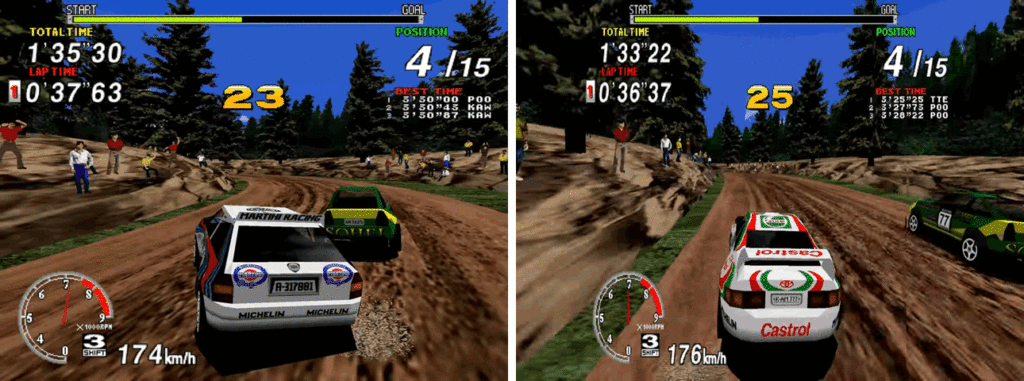
The landscape of the global video game industry during the 1990s is frequently defined by the high-stakes rivalry between Sega and Nintendo in the home console market. However, a parallel and equally fierce conflict was unfolding in the arcade sector, where Sega was locked in a technological arms race with Namco to define the future of the racing genre. While Namco’s Ridge Racer and Sega’s Daytona USA established the baseline for 3D texture-mapped environments, it was the 1995 release of Sega Rally Championship that fundamentally altered the trajectory of racing simulations. By moving away from the sterile asphalt of traditional circuits and embracing the unpredictable physics of off-road terrain, Sega’s AM3 division created a title that balanced arcade accessibility with technical sophistication, eventually spawning a multi-million-unit franchise and influencing the "sim-cade" genre for decades to come.
The Technological Frontier: From Model 1 to Model 2
The development of Sega Rally Championship was predicated on a massive leap in arcade hardware. In the early 1990s, the industry was transitioning from 2D sprite-based graphics to 3D polygons. Sega’s Model 1 board, which powered Virtua Racing (1992), was capable of rendering approximately 180,000 flat-shaded polygons per second. While revolutionary, it lacked the visual fidelity required for realistic environments. The introduction of the Model 2 board, a collaborative venture between Sega and GE Aerospace, represented a paradigm shift.
The Model 2 architecture could push up to 500,000 polygons per second and introduced advanced graphical features such as texture mapping, texture filtering, and anti-aliasing. This allowed developers to wrap 2D images around 3D shapes, creating the illusion of complex surfaces like mud, gravel, and foliage. Tetsuya Mizuguchi, the producer of Sega Rally, recognized that this technology was the key to moving beyond the "cold and precise" urban landscapes of contemporary racers. He sought to create an "emotionally moving" experience, a philosophy he developed during his early years at Sega working on large-scale virtual reality simulators like the AS-1.
A Convergence of Talent: The Formation of the AM3 Team
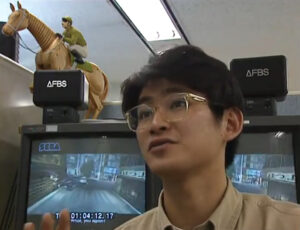
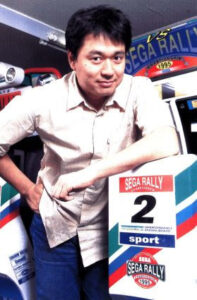
The project brought together an eclectic mix of veteran and novice talent. Mizuguchi, who lacked a traditional programming background, was appointed as the head of the "Emotion Design Lab" within Sega’s AM3 division. To provide the necessary genre expertise, Sega recruited Kenji Sasaki, who had previously served as a lead designer on Namco’s Ridge Racer. Sasaki’s transition from Namco to Sega was a significant event in the industry, marking a rare exchange of talent between the two bitter rivals.
The leadership trio was rounded out by Sohei Yamamoto, a "genius-level" programmer with experience in motion-cabinet mechanical design. This team faced the daunting task of differentiating their new project from Daytona USA, which was already a massive success for Sega’s AM2 division. The impetus for the rally theme came from Mizuguchi’s travels to Europe, where he discovered that European audiences found the NASCAR-centric Daytona USA to be overly Americanized. After witnessing a World Rally Championship (WRC) broadcast, Mizuguchi realized that the dirt, jumps, and spectator-lined tracks of rally racing offered a unique opportunity to showcase the Model 2’s texture-mapping capabilities.
The 1,200-Mile Research Expedition
To ensure the game captured a global aesthetic, the development team embarked on a two-week research trip across North America, traveling from Mexico City to Yosemite National Park. This expedition was a critical turning point for the project, which was initially titled Rally California. Mizuguchi insisted on the trip to prevent the game from looking like a Japanese interpretation of Western landscapes.
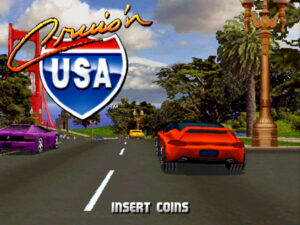
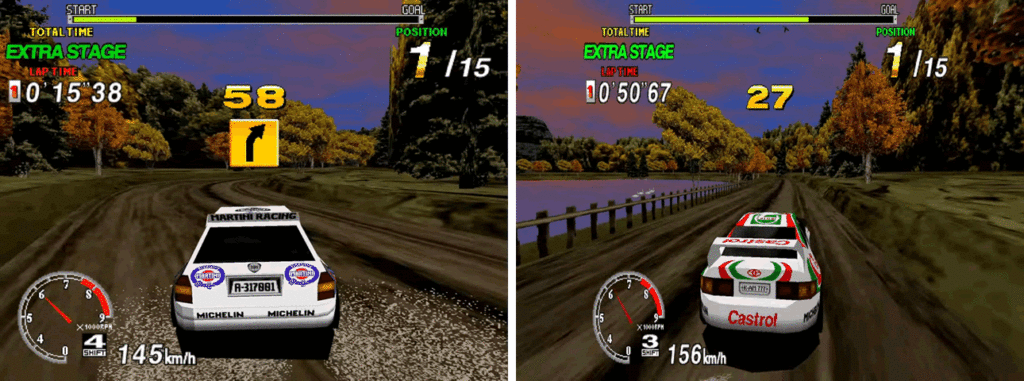
During the journey, the team took over 4,000 photographs and hours of video footage to be used as reference material for textures. This firsthand experience with the vast scale of the American West influenced the design of the game’s "Desert" and "Forest" stages. However, the project faced a significant hurdle when Midway Games announced Cruis’n USA, a title with a nearly identical cross-country premise. In response, the AM3 team pivoted, narrowing the scope to specific, highly detailed stages and renaming the project Sega Rally Championship.
Technical Innovation and Physics-Based Handling
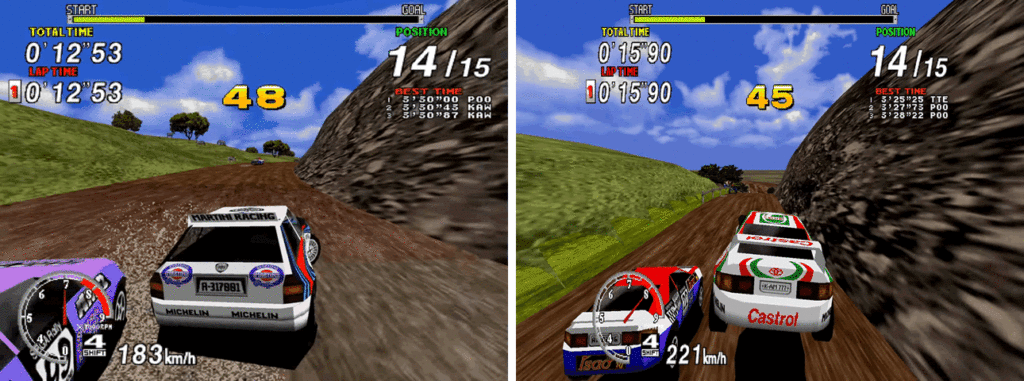
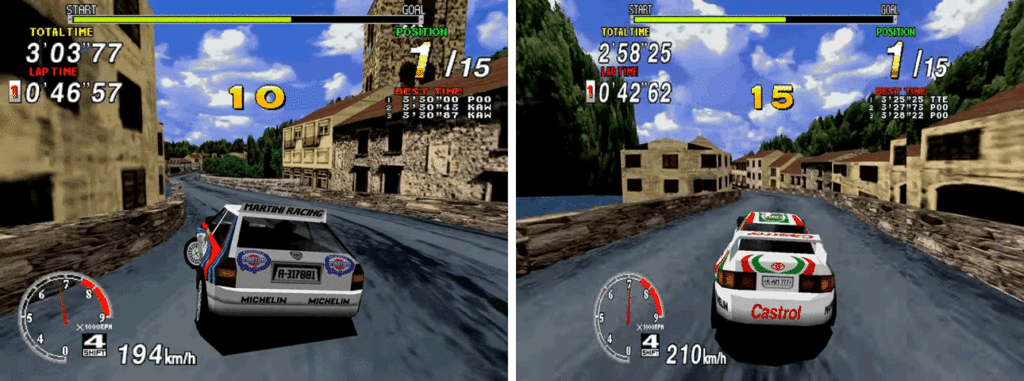
One of the most significant contributions of Sega Rally Championship was its approach to surface-dependent handling. Prior to 1995, most racing games utilized a uniform physics model regardless of the track surface. AM3 developed a system where the car’s traction and slide characteristics changed dynamically based on whether the player was driving on tarmac, gravel, or mud.
This was achieved despite the limitations of the Model 2 hardware. For example, the board did not support Gouraud shading (a technique used to create smooth lighting across surfaces). To compensate, the team used "curved-looking" textures on flat polygons to create the illusion of rounded car bodies and tires. They also implemented the Active Shock Generator (ASG), a proprietary system that used audio frequencies to trigger vibrations in the arcade cabinet’s seat and steering wheel, providing tactile feedback that corresponded to the road surface.
The Licensing Breakthrough: Toyota and Lancia
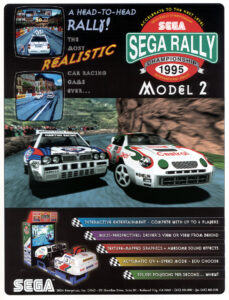
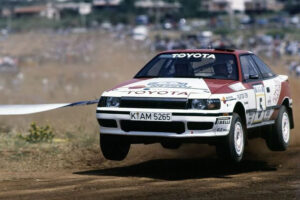
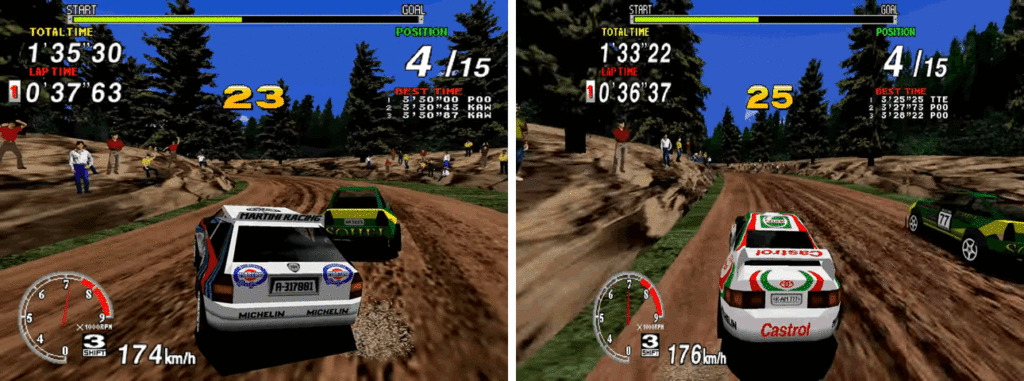
Sega Rally Championship is widely credited as one of the first video games to feature officially licensed vehicles. Mizuguchi was determined to include the Toyota Celica ST205 and the Lancia Delta HF Integrale, two icons of the WRC era. Securing these licenses was a monumental task; at the time, automotive manufacturers did not view video games as a viable marketing platform.
Toyota management initially rejected the proposal, arguing that gamers were not car buyers. Mizuguchi countered by showing them a high-fidelity 3D render of the Celica on the Model 2 hardware. The visual quality was so impressive that Toyota agreed to the license on the condition that Sega also secure a deal with their rival, Fiat (the parent company of Lancia). Mizuguchi successfully brokered the deal in Turin, Italy, by informing Fiat that Toyota had already signed on. This set a precedent for the industry, leading to the ubiquitous use of licensed cars in modern titles like Gran Turismo and Forza Motorsport.
Audio Engineering and the "Game Over" Phenomenon
The auditory experience of Sega Rally was as meticulously crafted as its visuals. The team recorded engine sounds from actual rally-spec Celicas at the Maruwa Autoland Nasu dirt track in Japan. Composer Takenobu Mitsuyoshi, famous for his work on Daytona USA, provided a high-energy soundtrack that utilized the Model 2’s improved sampling capabilities.
The game’s audio cues—"Easy right," "Maybe jump," and the iconic "Long brrridge!"—were recorded by Kenneth Ibrahim and served a functional purpose, mimicking the role of a rally co-driver. Perhaps most famously, Mitsuyoshi recorded the "GAME OVER, YEAH!" jingle. What began as a spontaneous vocal flourish during a recording session became a legendary piece of gaming culture, designed to mitigate the frustration of a lost race and encourage the player to insert another coin.
Market Impact and Arcade Configurations
Upon its debut in February 1995, Sega Rally Championship became an immediate sensation. Sega released the game in several configurations:
- Standard Upright: A compact cabinet for smaller venues.
- Twin Unit: The most popular model, allowing for two-player competitive play.
- Deluxe Cabinet: A motion-based unit featuring a replica Celica shell.
- Special Stage: An ultra-rare, six-axis motion simulator exclusive to Sega’s Joypolis indoor theme parks.
The game sold approximately 12,000 units globally in its first year. While this number was lower than the peak of the 2D era, it was considered a massive success for high-end 3D hardware. More importantly, it established a "long-tail" presence in arcades, with many machines remaining in operation for over a decade due to the game’s deep mechanics and high replayability.
The Saturn Port and Home Console Dominance
The success of the arcade version made a home port inevitable, but the Sega Saturn hardware was significantly less powerful than the Model 2 board. The porting task fell to the original AM3 team, who had to meticulously optimize the game to run on the Saturn’s dual-CPU architecture.
Released in late 1995 and early 1996, the Saturn version of Sega Rally Championship was hailed as a technical masterpiece. Although it ran at a lower resolution and a 30fps frame rate (compared to the arcade’s 60fps), it preserved the essential handling physics and included new features like a "Time Attack" mode and the unlockable Lancia Stratos. The port was a critical "killer app" for the Saturn, helping the console compete against the Sony PlayStation during the 32-bit era.
Legacy and Long-Term Implications
The influence of Sega Rally Championship extends far beyond its own sequels. Guy Wilday, the producer of the original Colin McRae Rally at Codemasters, cited Sega Rally as the primary inspiration for his team’s handling model. The game proved that there was a market for "sim-cade" racers—titles that offered realistic physics and licensed content while remaining accessible to casual players.
For Tetsuya Mizuguchi, the game was the foundation of a career defined by innovation. He would go on to create sensory-driven masterpieces like Rez and Tetris Effect, but he frequently credits Sega Rally as the project where he learned the fundamental relationship between technology and player emotion.

Today, Sega Rally Championship is remembered as a pinnacle of the 1990s arcade golden age. It represented a moment when hardware capability, creative risk-taking, and international collaboration converged to create a timeless experience. Whether through the crunch of gravel under virtual tires or the exuberant "Yeah!" at the end of a race, the game’s DNA remains a vital part of the racing genre’s history.