Farhan hamdan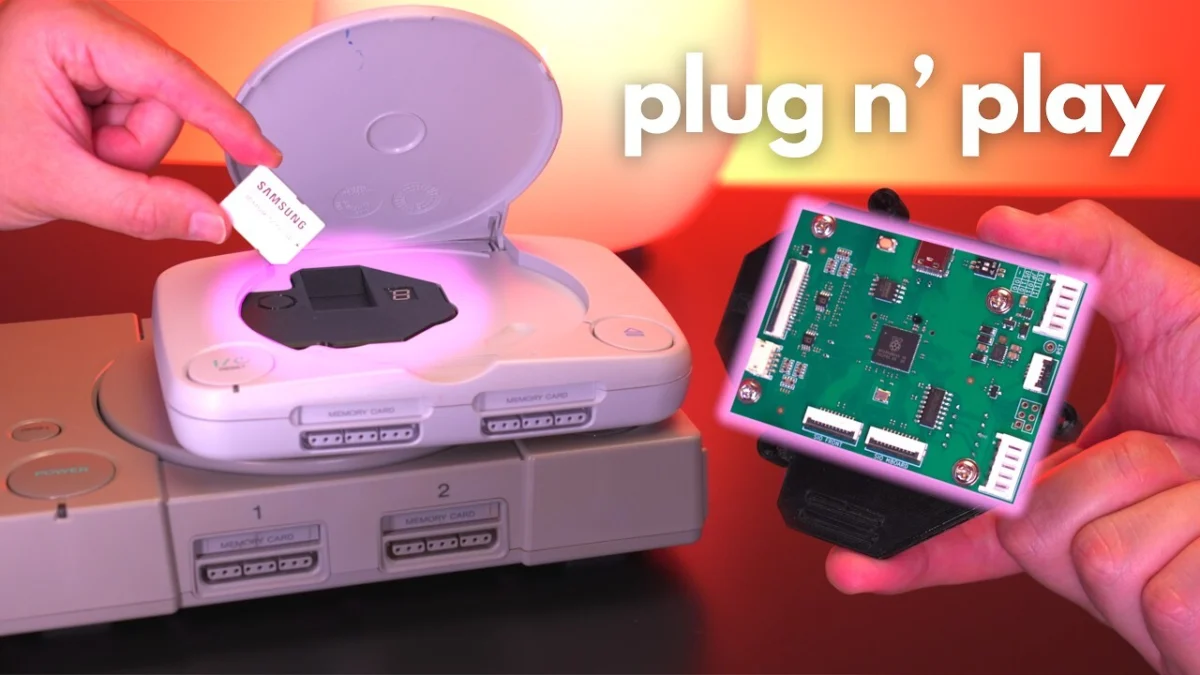
The landscape of retro gaming and console preservation has seen a significant advancement with the emergence of ArcStation, an innovative Optical Drive Emulator (ODE) designed to breathe new life into all models of the original PlayStation 1. This device distinguishes itself through its unique plug-and-play functionality, achieved by directly emulating the crucial RF signal typically generated by the console’s internal CD-ROM assembly. This technical feat promises unparalleled compatibility and a straightforward, no-solder installation process, making it an accessible solution for both seasoned enthusiasts and newcomers to console modding. The retro gaming community’s attention was recently drawn to ArcStation following a comprehensive video demonstration by Tito from Macho Nacho Productions, a respected voice in the hardware modification scene, showcasing its capabilities and ease of integration across different PS1 iterations.
Understanding the Imperative: The PlayStation 1’s Legacy and the Challenge of Aging Hardware
The Sony PlayStation 1, launched in Japan in December 1994 and globally in 1995, stands as a monumental console in gaming history, having sold over 102 million units worldwide during its impressive lifespan. It popularized CD-ROM based gaming, ushered in a new era of 3D graphics, and introduced iconic franchises that continue to resonate today. However, the passage of nearly three decades has inevitably taken its toll on these beloved machines. A primary point of failure in older consoles that rely on optical media is the CD-ROM drive itself. Lasers degrade, motors wear out, and mechanical components become brittle, leading to disc read errors, slow loading times, or complete drive failure. This mechanical fragility poses a significant threat to the long-term playability and preservation of physical game libraries.
Optical Drive Emulators (ODEs) have emerged as a vital solution to this problem. Instead of relying on the original, often failing, optical drive, an ODE allows users to load game ISOs (digital copies of games) from modern storage media, such as SD cards. This not only bypasses the failing drive but also offers numerous benefits, including faster load times, silent operation, and the convenience of storing an entire game library on a single card. While several ODEs for the PlayStation 1 already exist, such as PSIO, XStation, and Fenrir, each offering various levels of complexity and compatibility, ArcStation seeks to differentiate itself through its distinctive technical approach and user-friendly design.
ArcStation’s Technical Innovation: Emulating the RF Signal
The core innovation of ArcStation lies in its ability to emulate the Radio Frequency (RF) signal directly from the CD-ROM assembly. This is a crucial distinction from many other ODEs. The PlayStation 1’s motherboard doesn’t just read digital data from the CD drive; it also expects a specific analog RF signal generated by the laser pickup unit as it scans the disc. This signal is essential for the console’s internal diagnostics and boot sequence, and its accurate replication is key to ensuring maximum compatibility with the original hardware and software.
By mimicking this low-level RF signal, ArcStation effectively "fools" the PlayStation 1 into believing a perfectly functional CD-ROM drive with a legitimate game disc is inserted and operating correctly. This deep level of emulation ensures that the console’s internal firmware and game software behave exactly as they would with an original drive, minimizing potential compatibility issues that can sometimes arise when ODEs only intercept higher-level data signals. The promise of "full compatibility" is a significant draw for purists and those who have experienced minor glitches with other emulation methods. This technical achievement simplifies the user experience dramatically, allowing for a true "plug-and-play" installation without the need for complex soldering or intricate modifications to the console’s motherboard.
Installation and Compatibility Across PlayStation 1 Models
Tito’s video from Macho Nacho Productions provided a clear demonstration of ArcStation’s installation process, highlighting its straightforward nature. The device is designed to be compatible with all models of the PlayStation 1, encompassing both the larger "phat" SCPH-XXXX models and the more compact "slim" PSOne SCPH-10X models. This broad compatibility is a considerable advantage, as some other ODE solutions may be model-specific or require different installation kits for various console revisions.
The "no-solder" installation is a game-changer for many. Traditional console modifications often require a steady hand, specialized tools, and a degree of technical proficiency to solder delicate connections on a motherboard. This can be a barrier for entry for many potential users who lack the skills or confidence to perform such modifications, risking damage to their valuable retro consoles. ArcStation’s design eliminates this hurdle, making it accessible to a wider audience of retro gaming enthusiasts who simply want to restore their console’s functionality and enjoy their game library without invasive procedures. The installation typically involves opening the console, removing the original CD-ROM drive, and inserting the ArcStation into the existing ribbon cable and power connectors. Tito’s walkthrough on both console types confirmed this simplicity, showing the device quickly recognized and functioning, playing games seamlessly.
Virtual Memory Card Functionality and Critical Caveats
Beyond game loading, ArcStation integrates a Virtual Memory Card (VMC) function, a convenient feature that allows users to store game saves directly on the SD card used for game ISOs, eliminating the need for physical memory cards. This is particularly appealing for players who may have lost or filled their original memory cards, or simply prefer a consolidated digital solution for their saves. The VMC feature offers virtually unlimited storage for saves, a stark contrast to the original 15-block capacity of a standard PS1 memory card.

However, a crucial caveat accompanies the VMC functionality, especially for users of the "phat" PlayStation 1 models. The developers and reviewers strongly advise against inserting a physical memory card into the console’s slot when the ArcStation’s VMC feature is active on these specific models. Doing so carries a significant risk of corrupting existing save data on both the physical card and potentially the virtual card. This is likely due to potential conflicts in how the console’s memory controller addresses and writes data when both a physical and virtual memory solution are simultaneously active. To mitigate this risk, it is highly recommended that "phat" PS1 users either disable the VMC feature in ArcStation’s menu if they intend to use physical memory cards, or ensure no physical cards are inserted if the VMC is enabled. This warning underscores the importance of understanding the hardware’s interaction with new modifications.
For users of the "slim" PSOne, this particular issue is moot. The VMC functionality, as well as an in-game reset feature, is not supported on PSOne models. This limitation is likely due to differences in the PSOne’s internal hardware architecture or firmware that prevent these specific features from being implemented reliably. While this means PSOne users will still require physical memory cards, it also means they don’t face the risk of save corruption associated with the VMC on "phat" consoles.
Market Reception, Pre-Order Status, and Future Availability
The initial announcement and subsequent demonstration of ArcStation generated considerable excitement within the retro gaming community. The promise of a truly plug-and-play, high-compatibility ODE for the iconic PlayStation 1 resonated with many who seek to preserve their consoles and enjoy their classic game libraries with modern convenience. The no-solder installation, in particular, was a major selling point, lowering the barrier to entry for many potential users.
However, the journey from announcement to widespread availability has encountered a common hurdle for independent hardware developers: pre-order and payment processing issues. As of recent reports, pre-orders for ArcStation have been temporarily suspended due to undisclosed payment-related complications. This situation, while frustrating for eager customers, is not uncommon in the niche market of retro gaming hardware, where small teams often grapple with the complexities of manufacturing, logistics, and international payment systems. The original announcement by RetroRGB’s Bob confirmed that he was able to secure an early unit and intends to provide a livestream demonstration of a production version once it arrives, indicating that manufacturing is underway despite the payment gateway issues. The community eagerly awaits updates on when pre-orders will re-open, as demand for such a device remains high. The official website and shop links remain available for reference, serving as a placeholder for future announcements:
- Pre-Order Link (Currently suspended): https://shop.arcstation.net/arcstation-ode/
- Main Page: https://arcstation.net/
The Broader Impact on Retro Gaming and Preservation Efforts
ArcStation represents more than just a convenient way to play old games; it is a significant contribution to the broader movement of retro gaming preservation. As physical media degrades and original hardware components fail, devices like ODEs become increasingly vital for ensuring that classic titles remain playable for future generations. The digital preservation of games is a critical cultural endeavor, akin to preserving books, films, or music, ensuring that the history of interactive entertainment is not lost.
By simplifying the modification process and offering high compatibility, ArcStation makes retro gaming more accessible. It empowers console owners to extend the life of their cherished systems, reducing e-waste by giving old hardware a new lease on life. Furthermore, the ability to store entire game libraries digitally reduces clutter and makes classic games more portable, enhancing the overall user experience. This trend of hardware modification and emulation reflects a passionate community’s dedication to keeping gaming history alive, often stepping in where original manufacturers no longer provide support for their legacy products. The economic implications are also noteworthy; the demand for such devices supports independent developers and innovators within the retro tech space, fostering a vibrant ecosystem of specialized hardware and software solutions.
Challenges and the Future of Console Modding
While ArcStation’s prospects appear bright, the challenges faced during its pre-order phase highlight the inherent difficulties in bringing specialized hardware to market. Securing reliable payment processors, managing manufacturing scales, and navigating international distribution are complex tasks for any small enterprise. The retro gaming community, however, is generally understanding and supportive of these endeavors, recognizing the passion and technical expertise required to develop such products.
Looking ahead, the success of devices like ArcStation will likely spur further innovation in console modding. As more consoles reach the age where their optical drives or other mechanical components begin to fail, the demand for user-friendly, highly compatible ODEs and similar preservation tools will only grow. The ArcStation’s focus on deep-level signal emulation sets a high bar for future developments, emphasizing not just functionality but also authenticity and ease of installation. It reinforces the idea that retro gaming is not just about nostalgia, but about actively maintaining and evolving the ways we interact with gaming history.
In conclusion, ArcStation stands poised to become a pivotal tool for PlayStation 1 enthusiasts and preservationists. Its innovative RF signal emulation, combined with a no-solder, plug-and-play design, offers an elegant solution to the challenges of aging hardware. While current pre-order issues present a temporary hurdle, the anticipation for its full release underscores its potential to significantly impact how we experience and preserve the enduring legacy of the original PlayStation.