Vera Clarissa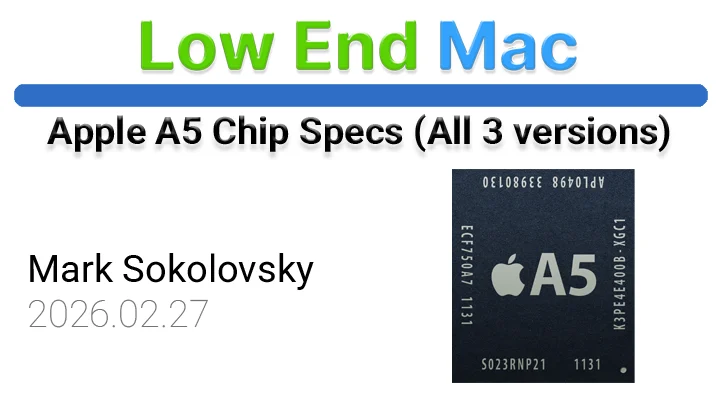
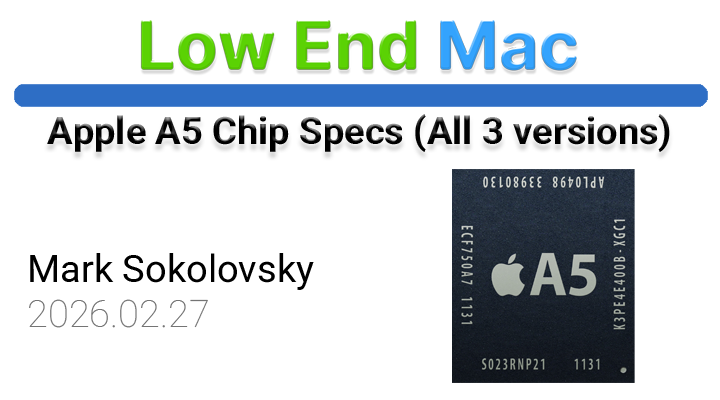
The Apple A5 chip, a dual-core processor that played a pivotal role in Apple’s mobile device strategy, is a testament to the company’s innovative approach to silicon design. This article provides a comprehensive hardware profile of the A5 series, exploring its technical specifications, manufacturing origins, and its significance within the evolution of Apple’s ecosystem.
Genesis of the A5: A Leap Forward in Mobile Performance
The Apple A5 system-on-a-chip (SoC) marked a significant advancement for Apple’s mobile devices upon its release. Manufactured by Samsung, the A5 chip was first introduced on March 11, 2011, powering the then-new iPad 2. This dual-core processor was designed to deliver enhanced performance and power efficiency, crucial for the burgeoning tablet market and the ever-increasing demands of mobile applications. Its codename, APL0498, and part number, S5L8940, point to its specific iteration within Apple’s proprietary chip development.
The fabrication process for the A5 utilized either a 45-nanometer or a more advanced 32nm High-K dielectric metal gate process. This technological leap allowed for greater transistor density and improved power management, directly translating to longer battery life and snappier user experiences. While the exact transistor count for the A5 is not publicly detailed, its dual-core architecture and advanced manufacturing process suggest a substantial increase in complexity compared to its predecessors.
Architectural Breakdown: CPU and Memory Subsystems
At the heart of the A5 chip lies its Central Processing Unit (CPU). The A5 employs an ARMv7 instruction set architecture (ISA), operating on a 32-bit system. It features two performance cores, typically clocked between 800 MHz and 1 GHz. This dual-core design was a key differentiator, enabling the A5 to handle more demanding tasks simultaneously, from multitasking between applications to rendering complex graphics.
The A5’s CPU also includes specific cache configurations. Each performance core is equipped with 32 KB of L1 instruction (L1i) cache and 32 KB of L1 data (L1d) cache, totaling 64 KB for each type of cache per core. Furthermore, a unified 1 MB L2 cache is shared between the two performance cores, facilitating faster data access and reducing latency. The absence of dedicated efficiency cores and their associated caches in the primary A5 design signifies a focus on raw performance for its target devices.
A notable variation exists in the Apple TV (3rd generation), which utilized a single-core version of the A5. This variant featured a reduced L1i and L1d cache size of 32 KB per core, indicating a specific optimization for the media consumption and streaming capabilities of the Apple TV.
The memory subsystem of the A5 is equally critical to its performance. It utilizes a 64-bit memory bus, configured with two channels, each operating at 32 bits. The memory type is LPDDR2-800, running at a clock speed of 400 MHz. This configuration provides a theoretical memory bandwidth of approximately 6.4 GB/s. The standard capacity for RAM in devices powered by the A5 was typically 512 MB, which was a substantial amount for mobile devices of that era, enabling smoother operation of iOS and its applications.
Graphical Prowess: The Integrated GPU
Complementing the CPU, the A5 chip incorporates a capable Graphics Processing Unit (GPU). This integrated graphics processor features two cores, designed to accelerate visual rendering and graphical computations. It includes 4 SIMD (Single Instruction, Multiple Data) Execution Units (EUs) and 32 FP32 (32-bit floating-point) Arithmetic Logic Units (ALUs).
The GPU operates at a clock speed of 200 MHz, delivering approximately 12.8 Gigaflops (GFLOPS) of theoretical single-precision floating-point performance. While not on par with dedicated mobile GPUs of later generations, this graphical capability was more than sufficient for the visual demands of iOS apps, games, and high-definition video playback on devices like the iPad 2 and iPhone 4S. The absence of dedicated AI cores and their associated processing power (AI OPS) in the A5 highlights its focus on general-purpose mobile computing and graphics rather than the specialized AI tasks that would become prominent in later chip designs.
The A5 in Devices: A Cornerstone of Early iOS Innovation
The Apple A5 chip powered several iconic Apple devices, cementing its legacy in the company’s product history. Its debut in the iPad 2 on March 11, 2011, was a strategic move to enhance the tablet’s performance and multimedia capabilities, differentiating it from competitors. The improved processing power allowed for a more fluid user interface, richer gaming experiences, and better multitasking.
Shortly after, the A5 found its way into the iPhone 4S, released in October 2011. This integration brought a significant performance boost to Apple’s flagship smartphone, enabling faster app loading, smoother camera operations, and the introduction of Siri, Apple’s voice assistant, which heavily relied on the chip’s processing power.

The A5 chip’s influence extended to other Apple product lines. The iPod Touch (4th and 5th generation) benefited from its graphical and processing capabilities, offering a more robust media and gaming experience. As mentioned, a single-core variant of the A5 powered the third-generation Apple TV, providing the necessary horsepower for its streaming and content delivery functions. The iPad Mini (1st generation) also utilized the A5 chip, allowing Apple to offer a powerful yet affordable smaller tablet.
Manufacturing and Supply Chain: The Samsung Connection
The manufacturing of the Apple A5 chip by Samsung was a critical aspect of its production. At the time, Samsung was a leading semiconductor manufacturer with advanced fabrication facilities. This partnership allowed Apple to leverage Samsung’s expertise and production capacity to meet the high demand for its popular devices. The dual-sourcing strategy, which Apple would later adopt with TSMC for subsequent A-series chips, was not as prominent for the A5, underscoring the significant reliance on Samsung for this particular generation of Apple Silicon. This relationship, however, also placed Apple in a complex competitive landscape, as Samsung was also a major rival in the smartphone market.
Performance and Efficiency: A Balanced Approach
The Apple A5 represented a balanced approach to performance and power efficiency for its time. The dual-core architecture, combined with the advanced fabrication process, allowed for a noticeable leap in speed and responsiveness compared to previous generations. This meant that users could run more demanding applications, engage in richer multitasking, and enjoy smoother animations and graphics.
Power efficiency was also a key consideration. The LPDDR2 memory and the power-conscious ARM architecture, coupled with Apple’s custom silicon design, contributed to extended battery life, a crucial factor for mobile devices. While the A5 was not the most power-efficient chip by today’s standards, it offered a significant improvement that enabled the portability and usability of devices like the iPad 2 and iPhone 4S for extended periods.

Analysis of Implications: Setting the Stage for Future Innovation
The success of the A5 chip had profound implications for Apple and the broader mobile technology landscape. It demonstrated Apple’s commitment to in-house silicon design, a strategy that would become a cornerstone of its product development. By controlling the hardware and software integration, Apple could optimize performance, power efficiency, and user experience to a degree that was difficult for competitors relying on off-the-shelf components.
The A5’s performance gains helped solidify Apple’s position in the tablet and smartphone markets, driving innovation in app development and user interface design. The capabilities it enabled, such as the early iterations of Siri, hinted at the future of intelligent personal assistants and AI integration in mobile devices.
Furthermore, the A5’s architecture, with its focus on dual-core processing and integrated graphics, set a precedent for future A-series chips. It laid the groundwork for more sophisticated SoCs with increased core counts, enhanced GPU performance, and specialized co-processors for tasks like neural processing, which would define Apple’s technological leadership in the years to come. The manufacturing relationship with Samsung, while instrumental, also likely informed Apple’s subsequent diversification of its supply chain to mitigate risks and secure optimal manufacturing technologies.
The A5’s Place in the Timeline of Apple Silicon
The Apple A5 chip was a crucial evolutionary step in the A-series of processors. Introduced in 2011, it followed the A4 chip, which powered the original iPad and iPhone 4. The A5’s dual-core architecture was a significant upgrade from the single-core A4. This progression established a clear trajectory of increasing performance and capability with each generation.

- A4 (2010): Single-core ARM Cortex-A8, 45nm process. Powers original iPad, iPhone 4.
- A5 (2011): Dual-core ARM Cortex-A9, 45nm or 32nm process. Powers iPad 2, iPhone 4S, iPod Touch (4th gen), Apple TV (3rd gen – single core).
- A6 (2012): Dual-core Apple Swift architecture, 32nm process. Powers iPhone 5, iPad Mini (1st gen – A5 variant used). This marked a shift to Apple’s custom-designed CPU cores.
The A5 chip, therefore, represents a pivotal moment where Apple moved beyond standard ARM cores to its own custom-designed CPU architecture, beginning with the A6. Its dual-core implementation was a key factor in the adoption and success of devices like the iPad 2 and iPhone 4S, demonstrating the tangible benefits of increased processing power for everyday users.
Conclusion: A Foundation for Mobile Computing Excellence
The Apple A5 chip, though now a generation behind in the rapid evolution of mobile processors, remains a significant component in Apple’s history. Its dual-core design, integrated graphics, and efficient manufacturing process enabled a generation of Apple devices to deliver powerful performance and a rich user experience. The A5 was instrumental in solidifying Apple’s leadership in the mobile space and laid the essential groundwork for the increasingly sophisticated and integrated Apple Silicon that powers its products today. Its technical specifications offer a fascinating glimpse into the engineering challenges and solutions that defined the early era of high-performance mobile computing.