Farhan hamdan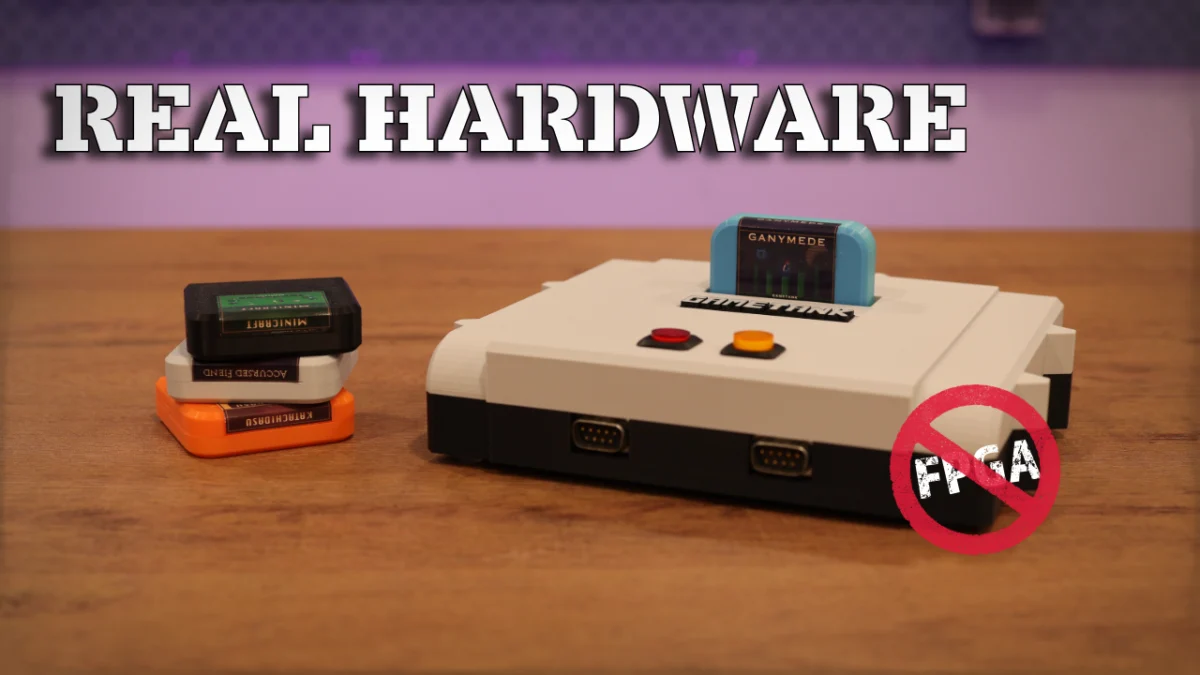
The Architectural Foundation: A Nod to Computing History
At the core of the GameTank’s design lies the venerable WDC 65C02 processor, a modern CMOS iteration of the iconic MOS 6502. The MOS 6502, first introduced in 1975, holds a revered place in computing history, having powered legendary systems such as the Apple II, Commodore 64, Atari 2600, and the Nintendo Entertainment System (NES). Its efficiency, simple instruction set, and cost-effectiveness made it a cornerstone of the 8-bit era. The WDC 65C02 variant maintains the original’s charm and compatibility while offering enhanced features like additional instructions, bug fixes, and lower power consumption, making it an ideal choice for a modern retro console aiming for authenticity.
The GameTank’s primary 65C02 CPU operates at a clock speed of 3.58MHz, a frequency carefully selected to balance performance with the aesthetic and technical constraints of an 8-bit system. This clock speed is reminiscent of many classic consoles, providing a familiar processing environment for developers. Interfacing with this central processing unit is a 65C22 Versatile Interface Adapter (VIA) chip. The 65C22 is a highly flexible peripheral chip that provides programmable input/output ports, timers, and a shift register. Its inclusion is crucial for managing various I/O operations, such as reading controller inputs, handling external cartridge communication, and general system control, much like its historical role in systems like the Apple II and BBC Micro. The choice of these discrete, historically significant components underscores the GameTank’s dedication to an authentic 8-bit hardware experience, contrasting with projects that might rely on more modern, integrated microcontrollers or System-on-Chips (SoCs).
Visual Fidelity: Pushing the Boundaries of 8-Bit Graphics
One of the most remarkable aspects of the GameTank is its approach to graphics. While the console features a seemingly modest 128×128 pixel display resolution, a figure comparable to the popular PICO-8 fantasy console, its visual output is surprisingly sophisticated. This resolution, while lower than the 256×240 pixels of the NES or the 160×144 pixels of the original Game Boy, belies a powerful and unique graphics subsystem.

The key to the GameTank’s impressive visual fidelity lies in its color capabilities. Unlike many historical 8-bit systems that were limited to a very small, fixed palette (e.g., the NES’s 56 colors, or the Game Boy’s four shades of green), the GameTank boasts the ability to render up to 200 unique colors for any pixel on the screen. This is achieved through an 8-bit indexed color palette, allowing for a far richer and more nuanced visual experience than typically associated with the 8-bit era. An 8-bit indexed palette means that each pixel’s color data refers to an index within a palette of 256 possible colors, from which 200 distinct values can be chosen for a given frame. This significantly expands the artistic possibilities for game developers, enabling more vibrant and detailed sprites and backgrounds.
What truly sets the GameTank’s graphics subsystem apart is its implementation. In an era where most custom hardware projects, especially those with complex video capabilities, rely heavily on Field-Programmable Gate Arrays (FPGAs), Complex Programmable Logic Devices (CPLDs), or dedicated microcontrollers for video generation, the GameTank eschews these programmable logic chips entirely. Instead, its entire video subsystem is meticulously crafted using discrete 74-series logic chips. The 74-series integrated circuits are a family of digital logic gates and components that have been a staple of electronics design since the 1960s. Building a video controller from these fundamental building blocks is an extraordinary feat of engineering, demonstrating a deep understanding of digital logic and a commitment to a "pure" retro hardware design philosophy. This approach eliminates any layers of abstraction, offering a direct, transparent interaction with the hardware that appeals deeply to purists and educational users interested in the fundamental principles of computing. The implications of this design choice are profound, offering a tangible connection to the origins of digital electronics and providing an unparalleled level of hardware-level insight for those who choose to delve into its schematics.
Auditory Engineering: A Dedicated Soundscape
Beyond its visual prowess, the GameTank also features a sophisticated audio architecture that further elevates its retro experience. Sound generation is managed by a dedicated audio co-processor, a second 65C02 CPU, distinct from the main processor handling game logic. This co-processor operates at a significantly higher clock speed of 14MHz, which is the maximum rated speed for the 65C02 chip. The allocation of an entire CPU to audio processing is a strategic design choice, offloading the computationally intensive task of sound synthesis from the main game processor, thereby ensuring smooth gameplay and rich audio.
The audio co-processor’s primary function is to retrieve audio data from memory, process it according to an implemented audio engine, and then output the resulting sound waves through an onboard Digital-to-Analog Converter (DAC). Because the 65C02 is a general-purpose CPU, it requires specific software—an audio engine—to perform these tasks. The GameTank project addresses this by providing a comprehensive Software Development Kit (SDK) that includes a ready-to-use audio engine.

This SDK-provided audio engine implements a 4-voice FM (Frequency Modulation) synthesizer. FM synthesis was a revolutionary sound generation technique in the 1980s and 90s, famously popularized by Yamaha’s OPL (Operator Type-L) chips, which were central to the sound of many arcade games and PC sound cards like the AdLib and early Sound Blaster series. By emulating a slimmed-down OPL-like chip, the GameTank’s audio engine can produce a wide range of complex and expressive sounds, from sharp percussive hits to rich melodic tones. This capability allows developers to compose intricate music and sound effects using the widely adopted MIDI (Musical Instrument Digital Interface) format. The ability to use MIDI for composition streamlines the audio development process and ensures a high level of fidelity and musicality, providing a robust soundscape that complements the console’s advanced graphics.
The Open-Source Ethos and Community Engagement
The GameTank project embraces an open-source philosophy, making its designs, schematics, and software freely available to the public. This approach is fundamental to its appeal, fostering a vibrant community of hobbyists, developers, and educators. The existence of a "through-hole version" of the console is a testament to this ethos. Through-hole components, characterized by their leads passing through holes in the PCB and soldered on the opposite side, are significantly easier for individuals to assemble by hand compared to surface-mount technology (SMT) components. This design choice democratizes hardware construction, allowing enthusiasts to build their own GameTank from scratch, gaining invaluable hands-on experience in electronics assembly and debugging.
The provision of an SDK further empowers the community. By offering tools, libraries, and the pre-built audio engine, the SDK lowers the barrier to entry for game development on the GameTank. This encourages experimentation, learning, and the creation of new content, enriching the console’s ecosystem. The open-source nature means that the community can contribute to the console’s evolution, suggesting improvements, developing new tools, and porting existing software, ensuring its longevity and relevance. The transparent design also serves as an excellent educational platform, allowing students and aspiring engineers to study the intricacies of an 8-bit computer system from the ground up, understanding how each component contributes to the overall functionality.
A Resurgence of Retro: Context and Trends
The GameTank arrives in a fertile period for retro computing. Over the past decade, there has been a significant resurgence of interest in vintage hardware and software, driven by nostalgia, a desire for simpler gaming experiences, and an appreciation for the technical ingenuity of early computing. This trend manifests in various forms: the thriving market for original retro consoles, the proliferation of emulation platforms, and the emergence of "new" 8-bit and 16-bit computers and consoles designed by independent engineers, YouTubers, and hobbyists.

Projects like the GameTank are part of a broader movement that seeks to either faithfully recreate or innovate upon the foundations of classic systems. While some projects focus on FPGA-based recreations that offer perfect cycle-accurate emulation, others, like the GameTank, prioritize the use of discrete logic and historically relevant CPUs to deliver an authentic hardware experience. This differentiation appeals to a segment of the retro community that values the tangibility and educational aspects of hands-on electronics. The GameTank’s commitment to using actual 65C02 processors and 74-series logic rather than modern programmable chips makes it particularly appealing to those who appreciate the raw engineering challenge and the aesthetic of visible, discrete components.
This trend is not merely about recreation; it’s also about exploration. Many developers are drawn to the constraints of 8-bit platforms, finding creative challenges in optimizing code and graphics within limited resources. The GameTank provides a fresh canvas for such endeavors, offering a unique set of capabilities that differentiate it from emulated environments or other contemporary retro platforms.
Implications and Future Outlook
The GameTank represents more than just another retro console; it is a statement on hardware design philosophy and a powerful educational tool. Its meticulous construction using discrete logic for the video subsystem offers a rare glimpse into the fundamental operations of early computer graphics, providing invaluable learning opportunities for those studying digital electronics. For educators, the GameTank could serve as an excellent teaching aid, illustrating concepts of CPU architecture, I/O management, video generation, and audio synthesis in a practical, hands-on manner.
The open-source nature of the project ensures its accessibility and potential for long-term community support. As more individuals build and develop for the GameTank, a rich library of games, tools, and modifications is likely to emerge. This community-driven development is crucial for the sustained relevance of such niche hardware platforms. Furthermore, the ability to compose audio in MIDI format simplifies content creation, potentially attracting musicians and sound designers to contribute.

From a broader perspective, the GameTank contributes to the ongoing dialogue within the retro computing community about authenticity, innovation, and the future of vintage technology. It demonstrates that there is still significant room for original hardware design within the 8-bit paradigm, even as emulation continues to advance. The positive reception and engagement from the community, as evidenced by individuals building the console and programming cartridges, underscore a strong demand for projects that combine technical depth with an accessible, open-source approach. The GameTank, with its unique blend of historical components and innovative discrete logic design, is poised to leave a lasting impression on the landscape of open-source retro hardware development.