Chalid Lutfie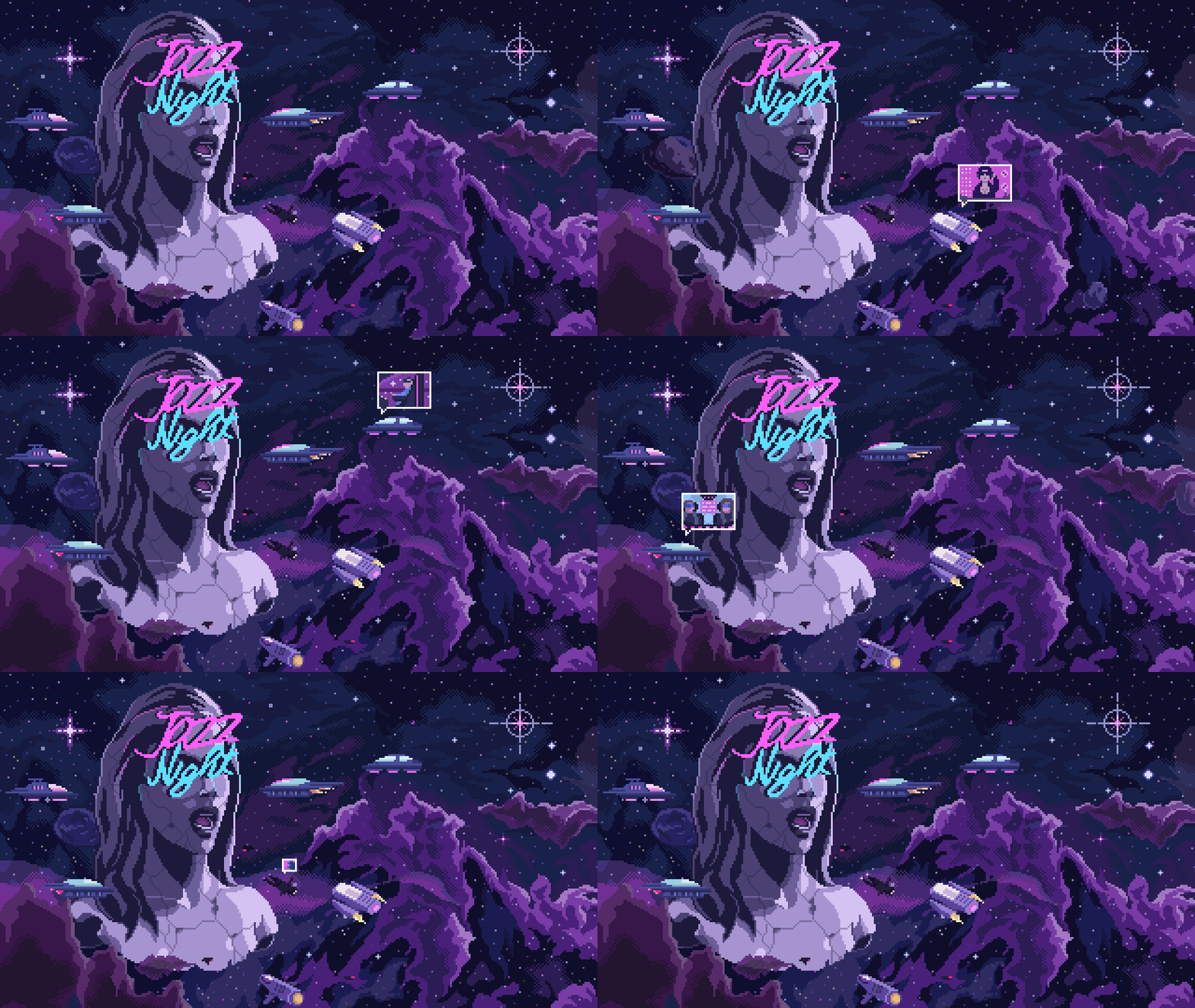
The independent music label Ubiktune has officially announced the release of The Frequency Modulators Orchestra, Vol. 1, the debut label project from Los Angeles-based producer and composer Juan Irming, performing under the moniker Amplitude Problem. Released on April 25, 2017, the album represents a significant stylistic intersection between retro-electronic synthesis and traditional jazz-funk improvisation. The project is framed as a conceptual exploration of Frequency Modulation (FM) synthesis, utilizing the perceived "coldness" of digital algorithms to replicate the "warmth" and spontaneity associated with live jazz performance. By strictly limiting the sound palette to FM synthesizers and lo-fi drum samples, Irming has produced a work that functions both as a technical exercise in sound design and a thematic tribute to the 1970s and 80s fusion era.
Technical Foundation and the Philosophy of FM Synthesis
The primary technical conceit of The Frequency Modulators Orchestra, Vol. 1 is its reliance on Frequency Modulation synthesis, a method of sound generation that became commercially dominant in the 1980s. Unlike subtractive synthesis, which filters harmonically rich waveforms, FM synthesis involves modulating the frequency of one waveform (the carrier) with another (the modulator). This process creates complex, non-harmonic overtones that are historically associated with the metallic, "glassy" textures of the Yamaha DX7 and the gritty, percussive sounds of 1990s PC gaming sound cards, such as the AdLib and Sound Blaster series.
Irming’s decision to utilize these specific textures serves a dual purpose. Historically, FM synthesis was often criticized for its clinical precision and lack of the "organic" instability found in analog synthesizers. However, by applying these digital timbres to the improvisational structures of jazz and funk, Amplitude Problem attempts to bridge the gap between human performance and mathematical sound generation. The album features intricate keyboard solos and rhythmic "grooves" that mirror the output of legendary fusion ensembles, yet the actual sound sources remain firmly rooted in the 8-bit and 16-bit digital traditions.

A Chronological Overview of Juan Irming’s Career
To understand the trajectory that led to this release, it is necessary to examine Irming’s background within the European demoscene and his subsequent transition into the North American professional music industry. The demoscene, a subculture centered around producing non-interactive audio-visual presentations that push the limits of computer hardware, served as the primary training ground for many modern electronic composers.
In the late 1980s, Irming gained recognition as a composer for the Atari ST demo crew known as SYNC. Operating during the peak of the 16-bit home computer era, SYNC was noted for its technical prowess on the Atari ST, a machine that utilized the Yamaha YM2149 sound chip. Irming’s early work in this competitive environment, where he secured several first-place finishes in music contests, established his proficiency in working within strict hardware limitations—a skill set that remains evident in the focused instrumentation of his latest album.
Following his move to the United States in the early 1990s, Irming attended the Musicians Institute in Los Angeles. This formal training in contemporary music performance and theory allowed him to integrate traditional musicianship with his technical background. Over the following two decades, his career expanded to include sound design for video games, such as VirtuaVerse and Power Drive 2000, and collaborations with prominent figures in the synthwave and "nerdcore" hip-hop scenes. Notably, his production work on YTCracker’s 2014 cyberpunk concept album, Introducing Neals, provided the creative spark for the Frequency Modulators concept.
Production Timeline and Creative Development
The development of The Frequency Modulators Orchestra, Vol. 1 spanned approximately ten months, beginning in late 2015. The impetus for the project arose during the recording of the track "Feel Like Leisure Suit Larry" for YTCracker, where Irming rediscovered the percussive potential of FM synthesis. This was followed by the track "Funky Mustache" on his 2015 independent release, Blue Bots Dots, which served as a prototype for the full-length album’s aesthetic.
Irming has stated that the production process was characterized by a commitment to improvisation. By treating the digital synthesizers as "members" of a virtual band—the titular Frequency Modulators—he sought to maintain the "spontaneous and in-the-moment" quality essential to the jazz genre. This approach required a departure from the rigid sequencing often found in chiptune and electronic dance music, favoring live keyboard takes that emphasize nuance and rhythmic "swing."
The thematic structure of the album is divided into two distinct halves. The first four tracks are described as a "deep introspective," while the final three tracks offer a "commentary on life and the universe." This narrative progression suggests that while the album is instrumental, it is intended to convey a specific emotional arc, moving from internal reflection to an outward examination of the human condition.
Mastering and Visual Identity
To ensure the album met the sonic standards of the jazz community, Irming enlisted the services of Don Grossinger, a Grammy Award-winning mastering engineer. Grossinger’s portfolio includes work with iconic figures such as Miles Davis, a fact that underscores the project’s ambition to be recognized as a legitimate entry in the jazz-funk canon rather than a mere novelty chiptune record. The mastering process was critical in balancing the sharp transients of digital synthesis with the dynamic range required for a jazz-influenced mix.
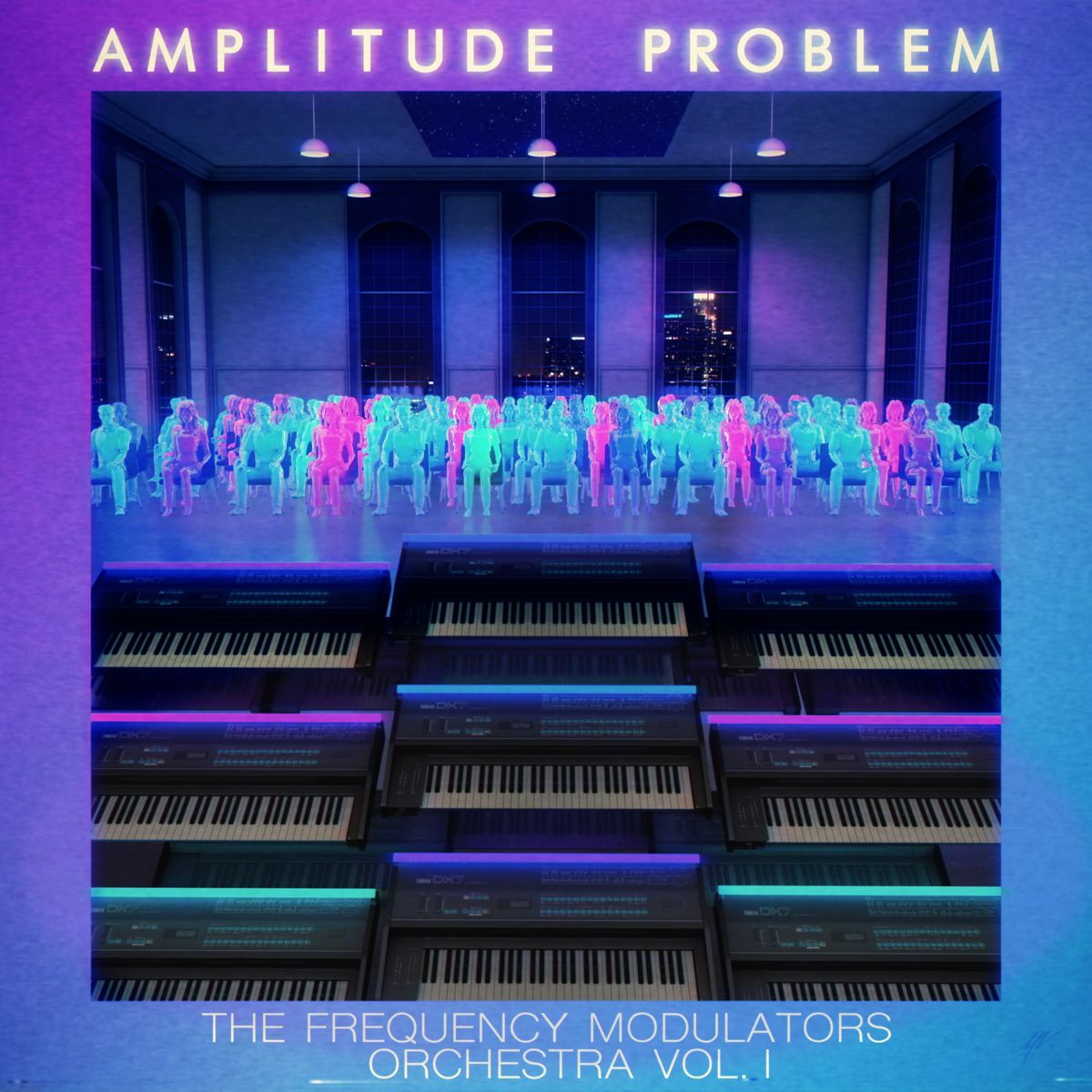
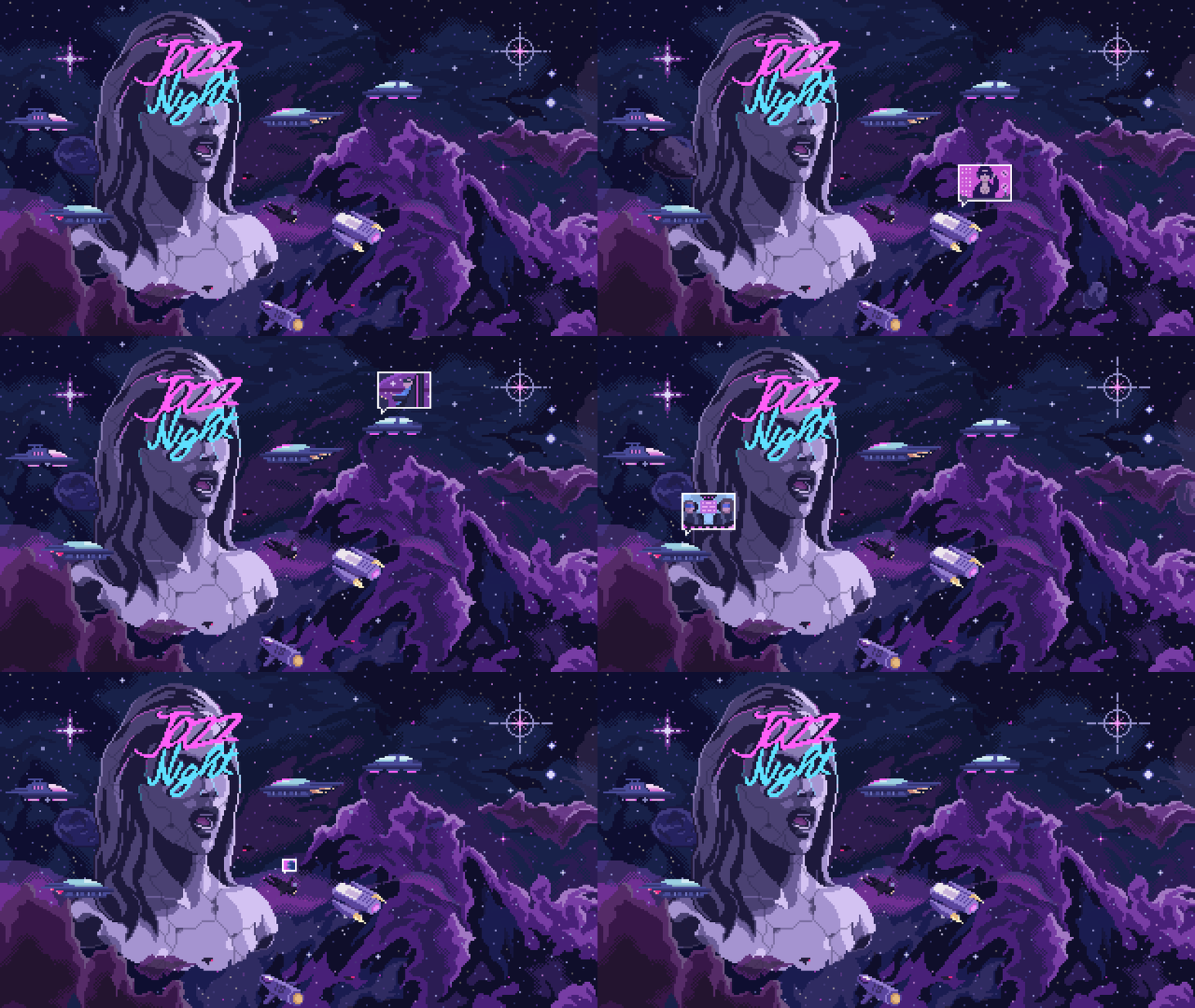
The visual presentation of the album further reinforces its retro-futuristic themes. The front cover art was created by Mythical Vigilante, while additional art and animations were provided by Valenberg. Valenberg, a well-known figure in the pixel art community, produced a "Jazz Night" animation specifically for this release. This collaboration highlights the ongoing synergy between the synthwave music scene and the pixel art aesthetic, both of which draw heavily from the visual and auditory language of the 1980s.

Industry Context and the Role of Ubiktune
The release of this album on Ubiktune is consistent with the label’s mission to curate high-quality, composer-driven electronic music. Founded in 2006, Ubiktune has established itself as a premier outlet for "progressive chiptune" and experimental soundtracks. By bringing Amplitude Problem into its roster, the label continues to expand the boundaries of what constitutes "chip-influenced" music.
The broader implications of this release reflect a growing trend in the independent music industry: the "genre-blurring" of nostalgic technology and sophisticated composition. As tools for FM synthesis become more accessible through modern software emulations and hardware reissues (such as the Yamaha Reface DX or various VST plugins), artists are increasingly using these sounds to explore genres outside of the traditional video game music sphere.
Broader Impact and Implications for the Genre
The Frequency Modulators Orchestra, Vol. 1 serves as a case study in the evolution of digital synthesis. While FM synthesis was once the sound of the pop mainstream—powering hits by Michael Jackson and Phil Collins—it eventually fell out of favor as sample-based synthesis and high-fidelity digital recording became the norm. In the current era, however, there is a distinct "revivalist" movement that seeks to reclaim these sounds.
Irming’s work suggests that the "limitations" of 80s technology are not barriers to expression but are instead unique textures that can be utilized to create complex, emotive art. By applying the improvisational language of jazz to these sounds, he challenges the listener to move past the "bizarre space adventure" novelty and engage with the music as a serious compositional effort.
Furthermore, the album’s release highlights the importance of the global "scene" infrastructure. From the European demoscene of the 80s to the Los Angeles studio circuit of the 2010s, Irming’s career trajectory demonstrates how niche subcultures can inform and enrich mainstream artistic practices. The inclusion of credits for video games like VirtuaVerse also points to the increasing crossover between the independent gaming industry and the independent music market.
Conclusion and Availability
The Frequency Modulators Orchestra, Vol. 1 is currently available across all major digital distribution platforms and streaming services. As a debut on the Ubiktune label, it stands as a testament to Juan Irming’s ability to synthesize disparate influences—ranging from Atari-era hardware to Grammy-level production standards—into a cohesive and innovative musical statement.
The project not only contributes to the ongoing resurgence of FM synthesis but also provides a roadmap for how electronic artists can integrate live performance and improvisation into a digital framework. As the lines between "human" and "digital" music continue to blur, works like those of Amplitude Problem offer a compelling look at the potential for technology to serve as a bridge to, rather than a replacement for, human creativity. Through its ten-month journey from concept to completion, the album remains a personal and technically rigorous addition to the landscape of modern electronic music.