Cecilia Chamidah Nur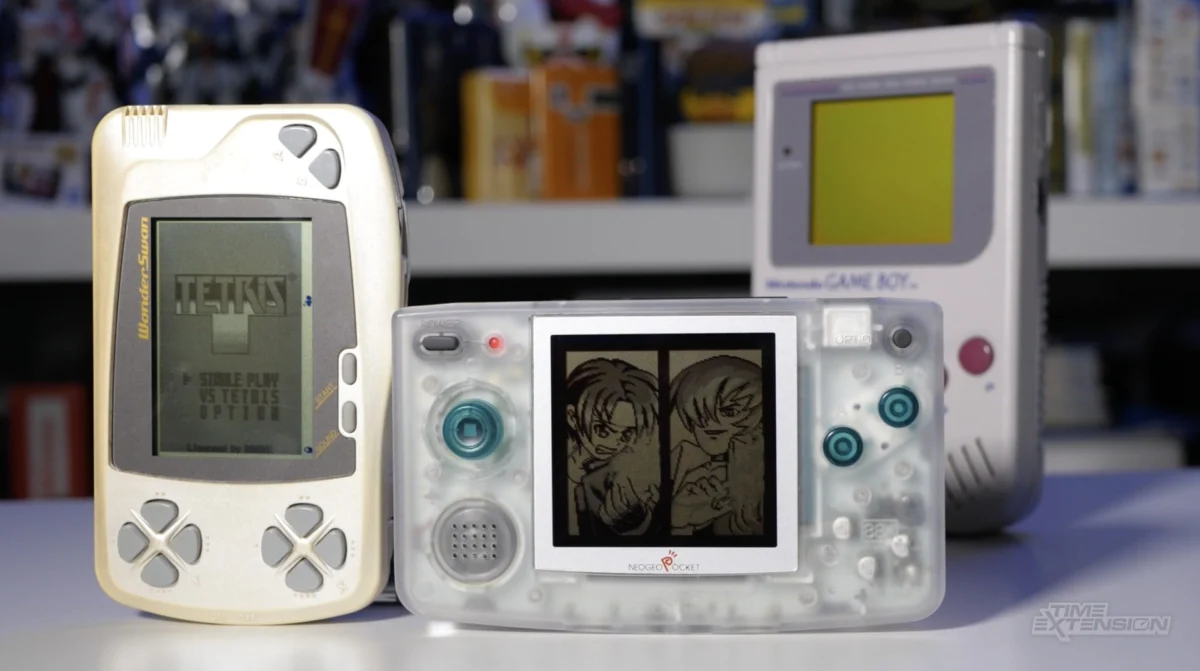
The Nintendo Game Boy stands as a monumental success in the history of consumer electronics, a handheld gaming device that captivated millions globally from its debut in 1989. Its enduring appeal stemmed from a synergistic blend of innovative portable design, a robust library of compelling games, and remarkably modest battery consumption, allowing for extended play sessions. This combination propelled the Game Boy to sell over 118 million units worldwide across its various iterations, securing an unnaturally long market lifespan. A significant catalyst for this longevity was the cultural phenomenon of Pokémon, which launched on the handheld in 1996, nearly a decade after the original Game Boy’s release, injecting new vitality into the aging hardware.
Nintendo’s Early Dominance and Competitor Missteps
Nintendo’s dominance in the handheld sector was not unchallenged. In the nascent stages of the Game Boy’s existence, several industry giants — Atari, Sega, and NEC — attempted to carve out their own market share. These competitors, armed with technologically superior machines, operated under the flawed assumption that advanced hardware, particularly backlit color displays, would automatically win over consumers. Atari’s Lynx, Sega’s Game Gear, and NEC’s TurboExpress (known as the PC Engine GT in Japan) all featured vibrant, backlit color screens that, while visually impressive for their time, came at a steep cost: exorbitant power consumption.
This technological "advantage" proved to be their Achilles’ heel. The bright color displays severely limited the portability of these devices, often draining batteries in just a few hours. In stark contrast, the Game Boy’s monochrome, non-backlit screen offered upwards of 10-15 hours of gameplay on a single set of AA batteries. This fundamental difference in battery life, coupled with the Game Boy’s lower price point and Nintendo’s superior marketing and third-party developer relations, ensured Nintendo’s handheld maintained an unassailable lead. The Lynx, Game Gear, and TurboExpress, despite their technological prowess, failed to gain significant traction, collectively selling only a fraction of what the Game Boy achieved. Their commercial potential was severely curtailed by a misreading of the core consumer need for a portable gaming experience, where battery life was paramount.
A New Wave of Challengers: SNK and Bandai Enter the Fray
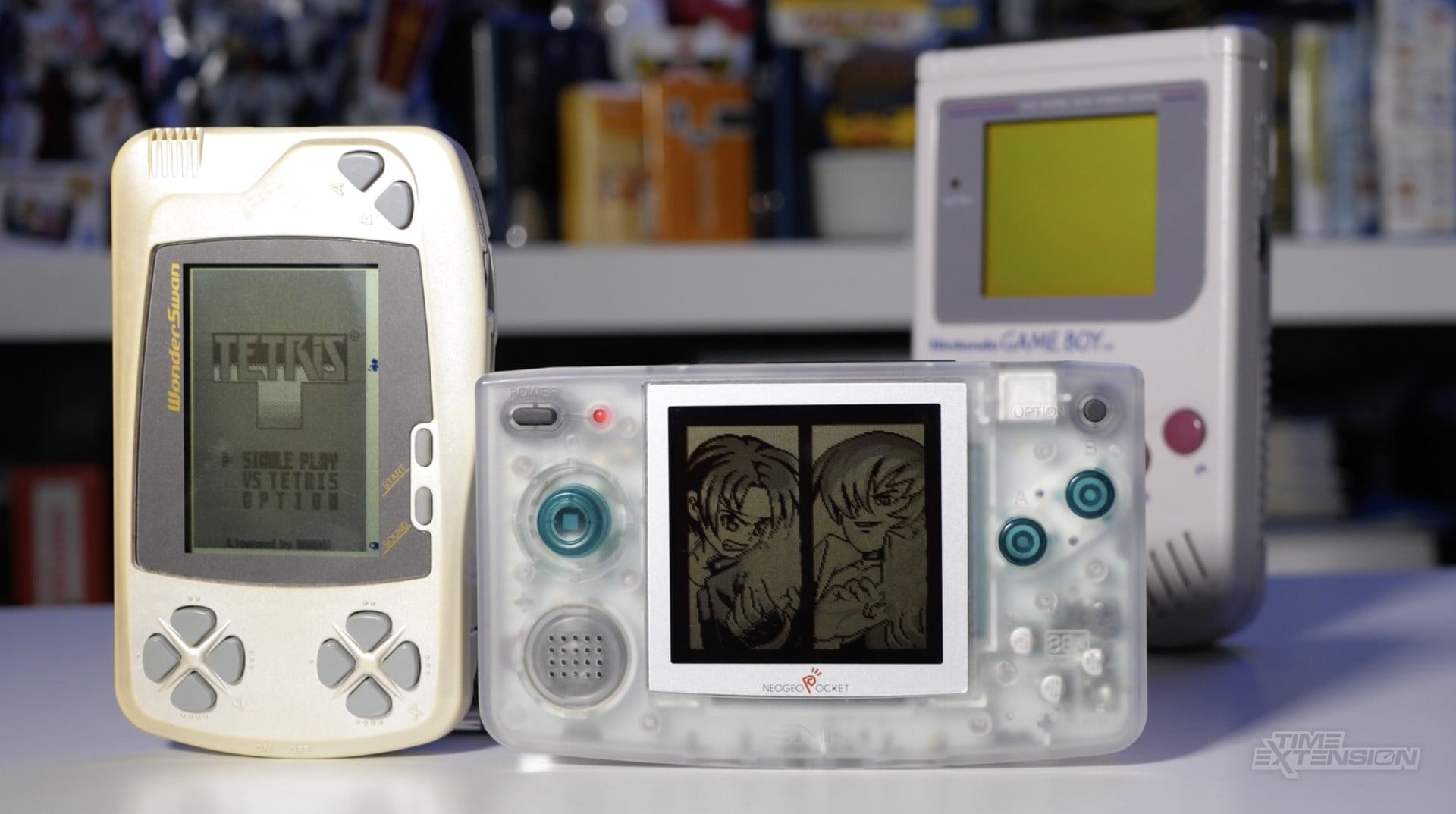
As the 1990s drew to a close, and Nintendo was preparing to refresh its handheld line with the highly anticipated Game Boy Color, two prominent Japanese companies decided the time was opportune for another assault on Nintendo’s handheld supremacy. These were SNK, renowned for its premium Neo Geo arcade and home console systems, and Bandai, a colossal toy manufacturer that had steadily expanded its footprint into the video game industry.
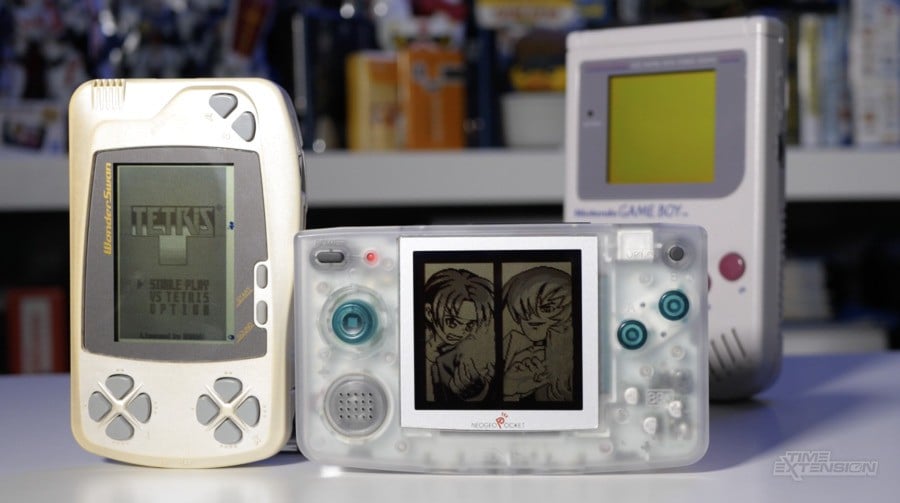
SNK unveiled the Neo Geo Pocket in October 1998. Building on its reputation for quality hardware and fighting games, SNK aimed to translate its arcade expertise into a portable format. Concurrently, Bandai, leveraging its deep understanding of the Japanese toy market and enlisting the visionary creator of the original Game Boy, Gunpei Yokoi, to design their console, introduced the WonderSwan. Yokoi, who had departed Nintendo in 1996, brought invaluable experience in designing cost-effective and innovative hardware, making his involvement a significant statement of intent from Bandai. The WonderSwan made its debut in March 1999.
The Monochrome Strategy and Nintendo’s Disruptive Innovation
Both SNK and Bandai’s initial handheld offerings, the Neo Geo Pocket and the WonderSwan, were monochrome devices. This strategic choice was a direct response to the lessons learned from the failures of earlier color-screen competitors like the Lynx and Game Gear. The prevailing wisdom within these companies was that the general public had demonstrated a clear preference for extended battery life over vibrant color graphics, as evidenced by the Game Boy’s astonishing longevity. The immense sales boost enjoyed by the Game Boy following the 1996 release of Pokémon, and the hardware refresh with the Game Boy Pocket (a slimmer, more power-efficient monochrome model), seemingly validated this monochrome-first approach. Development plans for the Neo Geo Pocket and WonderSwan would have been set in motion around this time, solidifying their commitment to low-power, black-and-white displays.
However, this carefully calculated strategy was blindsided by Nintendo’s masterful timing. In October 1998, the very same month the Neo Geo Pocket launched, Nintendo released the Game Boy Color. This new iteration employed cutting-edge reflective thin-film transistor (TFT) technology, allowing for a color screen that did not require a backlight. This innovation was a game-changer; it delivered color visuals without the crippling battery drain that had plagued earlier attempts. The Game Boy Color maintained exceptional battery life (around 10 hours) while offering a palette of 56 colors, fundamentally altering consumer expectations overnight.
The Scramble for Color: Rapid Iteration and Market Impact
Nintendo’s sudden introduction of a viable color handheld left SNK and Bandai in a precarious position. Their monochrome devices, conceived and developed over several years, were instantly rendered technologically antiquated in the eyes of the consumer. The competitive landscape had shifted dramatically.
SNK reacted with remarkable speed. Just five months after the release of its monochrome Neo Geo Pocket, the company launched the Neo Geo Pocket Color (NGPC) in March 1999. This rapid iteration showcased SNK’s agility but also highlighted the strategic miscalculation of its initial monochrome launch. Fortunately, the NGPC was backward-compatible, meaning the limited library of nine titles for the original Neo Geo Pocket could still be played in color on the new device, and many NGPC games could run in monochrome on the original.
Bandai followed a similar trajectory. Recognizing the immediate need for a color variant, they announced the WonderSwan Color in the same year they launched the original monochrome model, releasing it in December 2000. This also featured backward compatibility.
From a development perspective, creating new gaming hardware is a multi-year endeavor. The decision to go monochrome for their initial releases would have been locked in long before Nintendo’s Game Boy Color announcement. By the time Nintendo revealed its plans, it was likely too late for either SNK or Bandai to fundamentally alter their hardware designs without incurring massive delays and financial penalties. They were caught between a rock and a hard place: launch an outdated monochrome system, or delay significantly to re-engineer for color and risk missing the market entirely. They chose the former, hoping their systems’ other features—such as superior internal technology and more ergonomic designs compared to the aging original Game Boy—would suffice. However, the allure of color, combined with Nintendo’s unparalleled brand loyalty and software library, proved too strong.
Technological Underpinnings and Strategic Miscalculation Revisited
The core of SNK and Bandai’s mistake lay in their interpretation of the market’s tolerance for technological limitations. While the Game Boy’s monochrome screen was accepted for years, its success was largely due to its unprecedented portability and Nintendo’s masterful software ecosystem. Early color attempts by Atari and Sega failed not just because they were color, but because their implementations were power-hungry and expensive, undermining the core promise of portability. SNK and Bandai correctly identified the power consumption issue but incorrectly concluded that consumers would always prioritize monochrome battery life over color, especially as technology evolved.
Nintendo’s Game Boy Color, powered by Sharp’s new reflective TFT display technology, represented a critical technological leap. Unlike transmissive LCDs which require a backlight, reflective TFTs use ambient light to illuminate the screen, dramatically reducing power draw. This innovation allowed Nintendo to introduce color without sacrificing the Game Boy’s signature battery life, effectively pulling the rug out from under its competitors’ monochrome strategies.
Industry analysts at the time might have observed that SNK and Bandai, despite their respective strengths, failed to anticipate this critical technological pivot. Their planning, rooted in a past market reality, did not account for Nintendo’s ability to innovate within the constraints of portable power. It was a classic case of aiming for where the puck was, not where it was going.
Market Performance and Enduring Legacy
Despite the initial setbacks and the rapid shift to color variants, both the Neo Geo Pocket Color and the WonderSwan Color carved out niche followings.
The WonderSwan, primarily sold in Japan, managed to sell approximately 3.5 million units across its monochrome, Color, and SwanCrystal iterations. While this figure pales in comparison to the Game Boy’s colossal sales, it is a respectable achievement for a platform confined to a single market. Its success was bolstered by its ergonomic design (playable horizontally and vertically), innovative game concepts, and strong support from Bandai’s multimedia properties. The SwanCrystal, a later revision, further enhanced the screen quality, cementing its status as a beloved machine among collectors.
The Neo Geo Pocket, despite a broader global release and a software library praised for its high-quality arcade ports and fighting games (like King of Fighters R-1 and SNK vs. Capcom: Match of the Millennium), did not fare as well commercially. Reports suggest sales hovered around two million units worldwide before its discontinuation by Aruze, the Japanese pachinko manufacturer that acquired SNK after its bankruptcy in 2001. The NGPC’s distinctive clicky joystick and stylish design are still highly regarded by retro gaming enthusiasts.
On paper, both devices could be dismissed as commercial disappointments, having failed to significantly dent Nintendo’s market share. However, their legacy extends beyond mere sales figures. For many collectors and gaming historians, the Neo Geo Pocket Color and WonderSwan represent a fascinating "alternative history" of handheld gaming, offering unique experiences and hardware designs that dared to challenge the status quo. They are celebrated for their innovative features, compelling game libraries (albeit smaller), and their roles in a vibrant period of competition.
Broader Implications and Lessons Learned
The saga of SNK, Bandai, and Nintendo’s handheld competition offers several enduring lessons for the technology and gaming industries:
- Innovation and Timing are Crucial: Nintendo’s ability to introduce a color screen with excellent battery life at precisely the right moment demonstrated the power of strategic innovation and market timing. It showed that simply being "first" with color isn’t enough; the implementation must meet consumer needs.
- Understanding Core Consumer Needs: The initial success of the Game Boy highlighted portability and battery life as paramount. Competitors who focused solely on graphical fidelity without addressing these core needs struggled. SNK and Bandai learned this lesson but were then outmaneuvered by Nintendo’s ability to deliver both color and portability.
- Ecosystem Matters: Nintendo’s established developer relationships, marketing prowess, and flagship franchises (like Pokémon) created an impenetrable ecosystem that was incredibly difficult for challengers to penetrate, regardless of hardware quality.
- Adaptability in Development: The rapid release of color variants by SNK and Bandai underscores the pressures of a fast-evolving market. While commendable, it also illustrates the financial and logistical challenges of reacting to a competitor’s disruptive innovation rather than anticipating it.
- The "Good Enough" Principle: The Game Boy’s initial success demonstrated that "good enough" technology, when combined with superior design, affordability, and a strong software library, can outperform technically superior but less practical alternatives. However, Nintendo’s Game Boy Color showed that "good enough" eventually evolves, and maintaining market leadership requires continuous, well-timed innovation.
Ultimately, the attempts by SNK and Bandai to dethrone Nintendo’s Game Boy, while not commercially successful on a grand scale, contributed to a dynamic and innovative period in handheld gaming. Their efforts, despite the "mistake" of misjudging Nintendo’s technological advancements and market timing, gave rise to two fondly remembered systems that enriched the landscape of portable entertainment. It remains tempting to ponder what might have transpired had SNK and Bandai managed to bring their color handhelds to market before Nintendo, fundamentally altering the trajectory of handheld gaming history.