Cecilia Chamidah Nur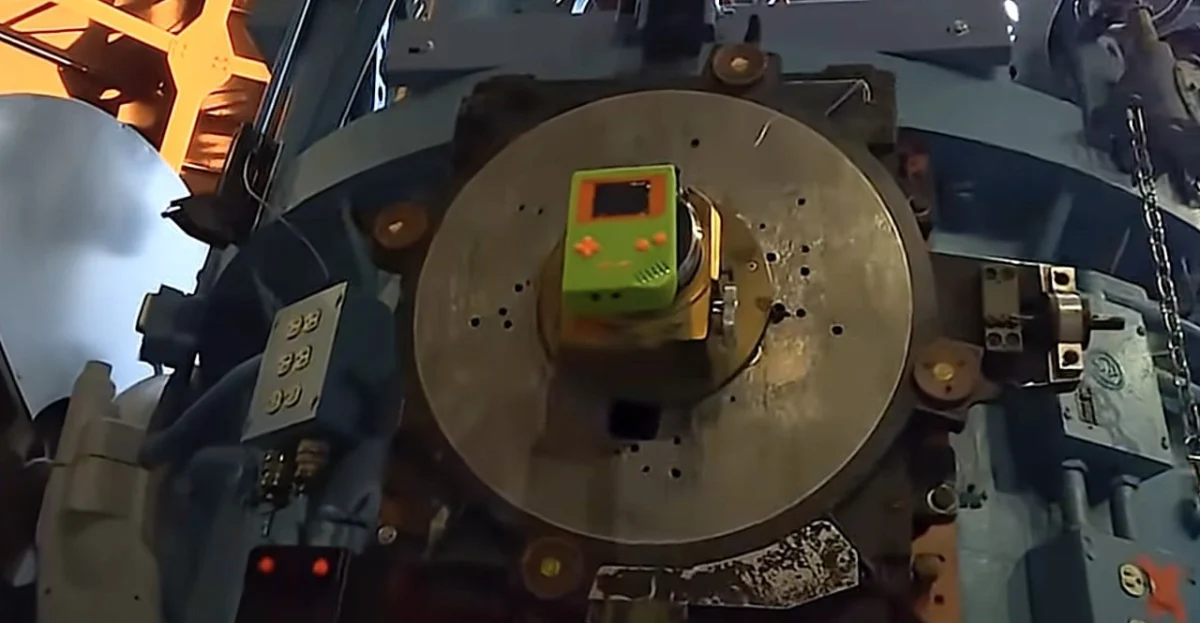
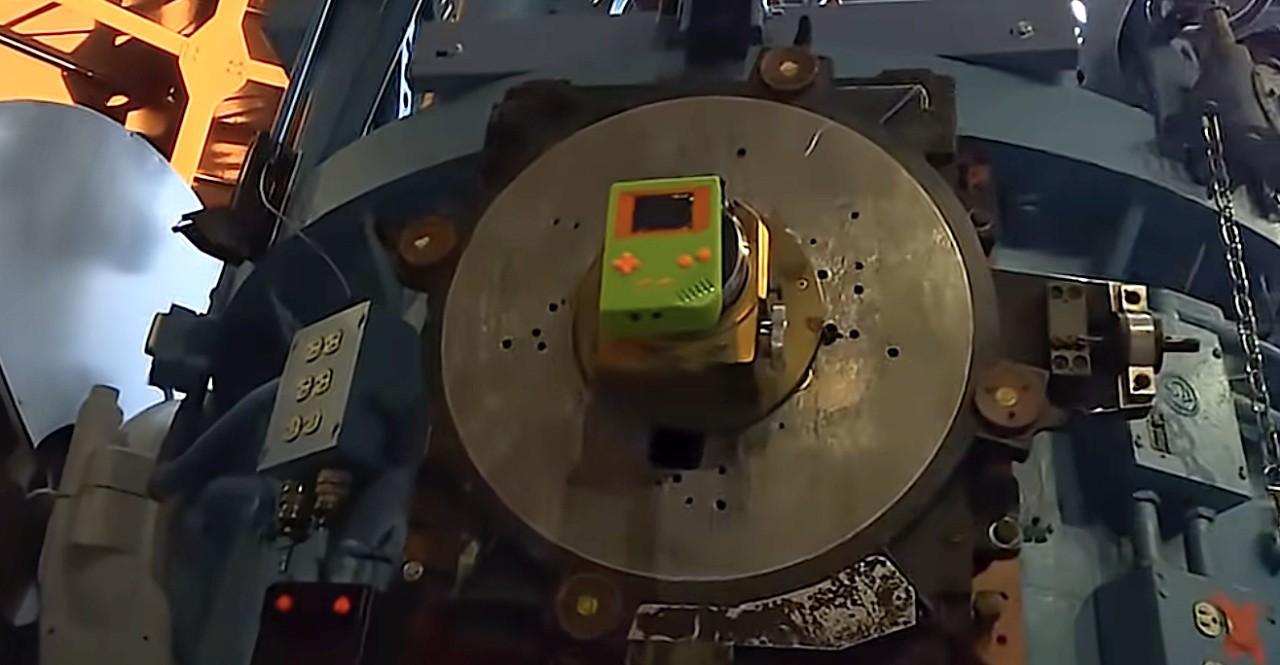
In a remarkable fusion of vintage technology and astronomical ambition, director, musician, and video game enthusiast Chris Graue has successfully photographed the planet Jupiter using a Nintendo Game Boy Camera, setting a new unofficial record within the niche Game Boy Camera Astrophotography community for the longest lens and furthest object captured with the rudimentary device. This audacious project, which involved designing and fabricating a custom telescope adapter, highlights the enduring creativity and technical ingenuity prevalent in retro-tech communities. The feat was accomplished at the historic Mount Wilson Observatory, utilizing its powerful optical instruments as the primary lens.
A New Frontier for Retro Technology
Chris Graue, known for his innovative approaches to retro gaming hardware, has once again pushed the boundaries of what is possible with antiquated technology. His latest endeavor follows previous projects, such as the SNES tripod mount, which garnered attention for its clever engineering and practical application for the Game Boy Camera. Graue’s current achievement, the capture of Jupiter, elevates the Game Boy Camera from a simple novelty accessory to an unexpected instrument of astrophotography, albeit one with significant technical limitations to overcome.
The inspiration for this project stemmed from observing other enthusiasts modifying Game Boy Cameras with larger, more advanced lenses. Graue’s thought process led him to consider the ultimate "bigger, better lens": a professional-grade astronomical telescope. This idea, seemingly outlandish at first glance, coalesced into a tangible project through collaboration with friends Sunshine Nate and Geovanni the Telescope Man, culminating in the creation of the specialized Game Boy Camera Telescope Adapter.
The Game Boy Camera: A Brief History and Technical Profile
Released in Japan in 1998 and subsequently worldwide, the Game Boy Camera (Pocket Camera in Japan) was an official Nintendo accessory for the Game Boy line of handheld consoles. Marketed as the smallest digital camera at the time, it allowed users to capture black-and-white digital images and perform basic photo editing. Its technical specifications are notably humble by modern standards: a 128×112 pixel CMOS sensor, capable of storing up to 30 images in its internal memory. The images were monochromatic, displaying in four shades of gray, mirroring the Game Boy’s screen capabilities. Despite these limitations, or perhaps because of them, the Game Boy Camera fostered a cult following, with users appreciating its unique aesthetic and the challenge of working within its constraints.
The camera’s original purpose was largely recreational, allowing children and hobbyists to experiment with digital photography in a portable format. It featured simple editing tools, mini-games, and the ability to print images via the Game Boy Printer. Its resolution, a mere 0.01-megapixels, stands in stark contrast to even the most basic modern smartphone cameras, which typically boast resolutions in the tens of megapixels. This inherent simplicity makes Graue’s achievement particularly noteworthy, demonstrating a profound understanding of light, optics, and the camera’s fundamental capabilities.
The Genesis of an Idea: From Inspiration to Innovation
Graue’s journey into Game Boy Camera astrophotography began with a simple observation: "I saw a bunch of people doing cool projects where they put bigger, better lenses on Game Boy Cameras, and thought, ‘What about the biggest, best lens of all?’" This spark of curiosity ignited a complex engineering challenge. The core problem was adapting a consumer-grade, low-resolution digital camera designed for close-up, casual photography to interface with a high-magnification astronomical telescope, optimized for gathering light from distant celestial objects.
The solution involved collaboration. Graue teamed up with his friend Drew Van Oort, known for his design expertise, to develop the crucial adapter. This component builds upon existing innovations in the retro-tech community, specifically the 2BitToy Game Boy Camera+, which provides a C-mount lens interface for the Game Boy Camera. The C-mount is a standard screw thread for lenses, commonly used in CCTV cameras and microscopy, making it a versatile platform for custom modifications. Graue’s adapter then bridges the C-mount to the telescope’s eyepiece.
Technical Ingenuity: The Telescope Adapter
The custom adapter designed by Graue and Van Oort is described as "A tube that pressure fits inside of a standard 1.25-inch eyepiece for telescopes." This standard eyepiece diameter is common across a vast range of amateur and professional telescopes, making the adapter potentially compatible with numerous setups. The design then incorporates a space to glue in a male C-mount adapter, effectively converting the Game Boy Camera into a prime-focus astrophotography tool when attached to a telescope.
This seemingly simple "tube" is a critical interface, requiring precise dimensions to ensure both a secure fit within the telescope’s eyepiece barrel and proper alignment with the Game Boy Camera’s sensor. Misalignment or an unstable connection would result in blurry, distorted, or completely unidentifiable images. The choice of a pressure fit suggests a balance between ease of use and sufficient rigidity for capturing stable images.
Understanding that other enthusiasts might wish to replicate his success, Graue has generously made the 3D-printable files for the adapter freely available. This open-source approach is a hallmark of many retro-tech and maker communities, fostering collaboration and further innovation. He also included a provision for modifying the STEP file, acknowledging that variations in 3D printers and specific telescope eyepieces might necessitate minor adjustments for optimal fit. This commitment to accessibility underscores the community-driven spirit behind such projects.
The Mount Wilson Observatory: A Historic Backdrop
The choice of Mount Wilson Observatory for this endeavor adds another layer of historical and scientific significance. Located in the San Gabriel Mountains near Los Angeles, California, Mount Wilson has been a cornerstone of astronomical research for over a century. Established in the early 20th century, it was home to some of the most powerful telescopes of its era, including the 60-inch (1.5 m) Hooker Telescope and later the 100-inch (2.5 m) Hooker Telescope.
These instruments were pivotal in groundbreaking discoveries, such as Edwin Hubble’s observations that proved the existence of galaxies beyond the Milky Way and the expansion of the universe. While the specific telescope used by Graue for his Game Boy Camera project is not detailed, the observatory’s reputation and its array of powerful telescopes provide an unparalleled environment for astrophotography. Utilizing such an esteemed astronomical facility, even with a rudimentary camera, creates a compelling juxtaposition of cutting-edge research and nostalgic hardware. The observatory’s vast light-gathering capabilities, coupled with its dark sky location, were essential in collecting enough photons from distant Jupiter to register on the Game Boy Camera’s limited sensor.
The Astrophotography Community’s Reaction and the New Record
Upon successfully capturing Jupiter, Graue submitted his findings to the "GBC Astrophotography community," confirming that such a specialized group indeed exists. Their assessment has unofficially crowned his achievement as a new record: the longest lens used and the furthest object ever photographed with a Game Boy Camera. This acknowledgment within the community validates the technical difficulty and innovative spirit of the project.
The "GBC Astrophotography community" represents a fascinating intersection of retro gaming, DIY electronics, and amateur astronomy. Members likely share a passion for pushing the limits of outdated hardware, exploring the artistic and scientific potential of the Game Boy Camera beyond its original design parameters. Their existence highlights the broader trend of "retro-futurism" or "lo-fi photography," where enthusiasts deliberately choose technologically limited tools to create unique visual aesthetics and engage in challenging projects.
Jupiter, the largest planet in our solar system, presents a compelling target for astrophotography. Located at an average distance of approximately 778 million kilometers (484 million miles) from the Sun, its sheer size (over 11 times the diameter of Earth) and distinctive features, such as the Great Red Spot and its prominent cloud bands, make it a recognizable and rewarding subject. Capturing any detail of Jupiter with a 128×112 pixel, four-shade grayscale camera is a testament to the optical power of the Mount Wilson telescopes and Graue’s meticulous setup.

Broader Implications: Bridging Eras and Inspiring Creativity
Graue’s Game Boy Camera Jupiter project is more than just a quirky stunt; it carries several broader implications for technology, education, and human ingenuity.
Firstly, it serves as a powerful reminder of the enduring potential of "obsolete" technology. In an era dominated by rapid technological obsolescence, projects like this demonstrate that older hardware can be repurposed and recontextualized to achieve new and unexpected outcomes. It challenges the notion that only the latest and most advanced tools are capable of meaningful innovation.
Secondly, it exemplifies the spirit of the "maker movement" and open-source collaboration. By sharing the 3D-printable files for his adapter, Graue contributes to a culture of knowledge-sharing and collective problem-solving. This approach democratizes access to complex projects, allowing individuals with limited resources but ample curiosity to participate in advanced technical endeavors. It fosters a learning environment where experimentation is encouraged, and failures are seen as opportunities for refinement.
Thirdly, the project has significant educational potential. It can serve as an engaging demonstration for students of all ages about optics, astronomy, and the principles of digital imaging. It can spark interest in STEM fields by showing how seemingly simple tools can be combined with creative thinking to explore complex scientific concepts. The contrast between the Game Boy Camera’s simplicity and the vastness of Jupiter creates an accessible entry point for discussions about scale, distance, and the history of astronomical observation.
Finally, Graue’s work highlights the artistic merit in embracing technical constraints. The monochromatic, pixelated image of Jupiter captured by the Game Boy Camera possesses a unique aesthetic, distinct from high-resolution color photographs. This "lo-fi" quality can evoke a sense of nostalgia while also offering a fresh perspective on familiar celestial objects, proving that artistic value isn’t solely dependent on technical perfection.
Beyond the Stars: A Musician’s Mission
While the astrophotography project is a marvel of technical ingenuity, Chris Graue, ever the multi-faceted creative, has also cleverly integrated it with his musical endeavors. He is using the buzz generated by this unique achievement to promote his band, Lo(u)ser, and their upcoming tour in Alaska. "I’ve included a little logo for my band Lo(u)ser," Graue stated, "So you can remember to check out my band while you shoot the stars."
This cross-promotional strategy is a smart move, leveraging a niche technical accomplishment to gain broader visibility for his artistic work. It reflects a modern approach to creative marketing, where creators often blend different disciplines to build a unique personal brand and connect with diverse audiences. The band’s name, Lo(u)ser, itself suggests a playful, self-aware attitude that aligns well with the unconventional nature of the Game Boy Camera project.
Conclusion
Chris Graue’s successful capture of Jupiter with a Game Boy Camera stands as a testament to the boundless potential of human creativity when combined with a passion for both technology and exploration. It is a vibrant illustration of how retro hardware, often relegated to the realm of nostalgia, can be reimagined and repurposed to achieve feats previously considered impossible. From the humble beginnings of a 1998 Nintendo accessory to photographing the gas giant from a historic observatory, this project not only sets a unique record but also inspires a broader appreciation for the intersection of technology, art, and the enduring human quest to understand our place in the cosmos. It reaffirms that sometimes, the most innovative solutions come from looking back at what was, and daring to ask, "What if?"