Cecilia Chamidah Nur
A remarkable feat of retro gaming engineering has emerged from the homebrew community, demonstrating the enduring potential of classic hardware when pushed to its absolute limits. Brendan Tobias Friedly, known within the digital realm as "Game of Tobi," has successfully developed "Minicraft 3D," a game that strikingly replicates the core experience of the globally renowned sandbox title, Minecraft, on the Nintendo Game Boy and Game Boy Color. This achievement stands as a testament to the ingenuity of independent developers, challenging long-held assumptions about the technical capabilities of a console released over three decades ago. The project, which includes features such as breakable and placeable blocks, and even an explorable rendition of the Nether, has garnered significant attention for its audacious ambition and meticulous execution.
The announcement of "Minicraft 3D" has sent ripples through both the retro gaming and modern development communities. For years, Minecraft has been synonymous with vast, procedurally generated 3D worlds, demanding considerable processing power and memory. Its official presence spans virtually every modern gaming platform, from high-end PCs and consoles to mobile devices, each iteration leveraging contemporary hardware advancements to render its blocky, expansive landscapes. The idea of translating such an experience to the 8-bit architecture of the Game Boy or the slightly enhanced 16-bit color capabilities of the Game Boy Color was widely considered an impossibility, a technical paradox given the severe constraints of these venerable handhelds. Yet, Friedly’s dedication has transformed this theoretical impossibility into a tangible reality, offering a playable, albeit optimized, version of the beloved block-building genre.
The Technical Frontier: Game Boy’s Unlikely Canvas for 3D Worlds
To fully appreciate the scope of Friedly’s accomplishment, it is crucial to understand the inherent limitations of the Nintendo Game Boy and Game Boy Color. The original Game Boy, released in 1989, was powered by a Sharp LR35902 CPU, an 8-bit processor running at a mere 4.19 MHz. It featured a monochrome LCD screen with a resolution of 160×144 pixels and possessed only 8 KB of internal RAM, alongside 8 KB of VRAM. The Game Boy Color, launched in 1998, offered an incremental upgrade, doubling the CPU speed to 8.4 MHz, increasing RAM to 32 KB, and most notably, introducing a color palette capable of displaying up to 56 colors simultaneously from a total of 32,768.
Neither system was designed with 3D graphics in mind. Mainstream games on these platforms relied almost exclusively on 2D sprites and tile-based rendering techniques, where pre-drawn images (sprites) and repeating background patterns (tiles) were manipulated to create the illusion of movement and depth. True 3D rendering, which involves projecting geometric shapes onto a 2D screen and managing complex lighting, textures, and depth buffering, was computationally prohibitive. Modern systems achieve this through dedicated graphics processing units (GPUs), vast amounts of RAM, and multi-core processors. The Game Boy’s CPU lacked floating-point arithmetic capabilities, and its limited memory made storing complex 3D models or large texture maps an insurmountable challenge. The concept of a "vast terraformable 3D world" like Minecraft, where every block is a discrete entity that can be interacted with, would typically demand dynamic memory allocation and real-time calculations far beyond the Game Boy’s specifications. It is against this backdrop of severe technical limitations that "Minicraft 3D" truly shines as an engineering marvel.
A Legacy of Ingenuity: The Homebrew Scene and Retro Hardware Pushing
Brendan Friedly’s work is not an isolated incident but rather a significant contribution to a vibrant and long-standing tradition within the retro gaming community: the homebrew scene. This global collective of hobbyist developers, reverse engineers, and enthusiasts dedicates itself to creating new software, hardware modifications, and technical demonstrations for vintage gaming consoles. The motivations are diverse, ranging from a desire to extend the lifespan of beloved systems, to explore the untapped potential of old hardware, or simply to satisfy the intellectual curiosity of solving complex technical puzzles.
Historically, the homebrew scene has produced numerous "impossible" ports and technical showcases. From Doom running on various unconventional devices to complex operating systems crafted for obscure hardware, these projects often serve as proof-of-concept demonstrations, pushing the boundaries of what was once thought feasible. Developers in this space frequently employ highly optimized assembly language programming, custom rendering techniques, and ingenious memory management strategies to coax performance out of underpowered systems. The Game Boy, in particular, has been a popular target for such experimentation due to its widespread popularity, relatively well-documented architecture, and the nostalgic appeal it holds for many developers. "Minicraft 3D" stands as a contemporary pinnacle of this tradition, joining the ranks of projects that redefine the capabilities of retro hardware.
Brendan Friedly: A Chronology of Pushing Boundaries
Brendan Tobias Friedly, known by his online moniker "Game of Tobi," has established himself as a prominent figure within this homebrew ecosystem. His YouTube channel serves as a platform for documenting his ambitious projects, offering insights into the complex development processes involved in adapting modern gaming experiences to vintage hardware. His work on "Minicraft 3D" is not an isolated endeavor but rather the culmination of a series of increasingly complex challenges he has undertaken.
Earlier in his career, Friedly gained recognition for his efforts in porting Super Mario 64 to the Game Boy Advance (GBA). While the GBA, released in 2001, boasted a more powerful 32-bit ARM processor and significantly more RAM than its Game Boy predecessors, porting a full-fledged 3D Nintendo 64 title remained a monumental task. Friedly’s project involved intensive optimization and sophisticated memory management techniques to render the iconic 3D platformer on the GBA’s hardware. This project, among others, highlighted his proficiency in low-level programming and his deep understanding of hardware-specific optimizations. Prior to "Minicraft 3D," Friedly had also tackled a Game Boy Advance port of Minecraft, further demonstrating his expertise in adapting the voxel-based game to handheld systems. This chronological progression of increasingly challenging projects underscores Friedly’s methodical approach and his unwavering commitment to exploring the limits of retro hardware. Each project has likely served as a learning experience, refining his techniques and preparing him for the seemingly insurmountable challenge of bringing a Minecraft-like experience to the Game Boy.
Minicraft 3D: An In-Depth Look at its Remarkable Features
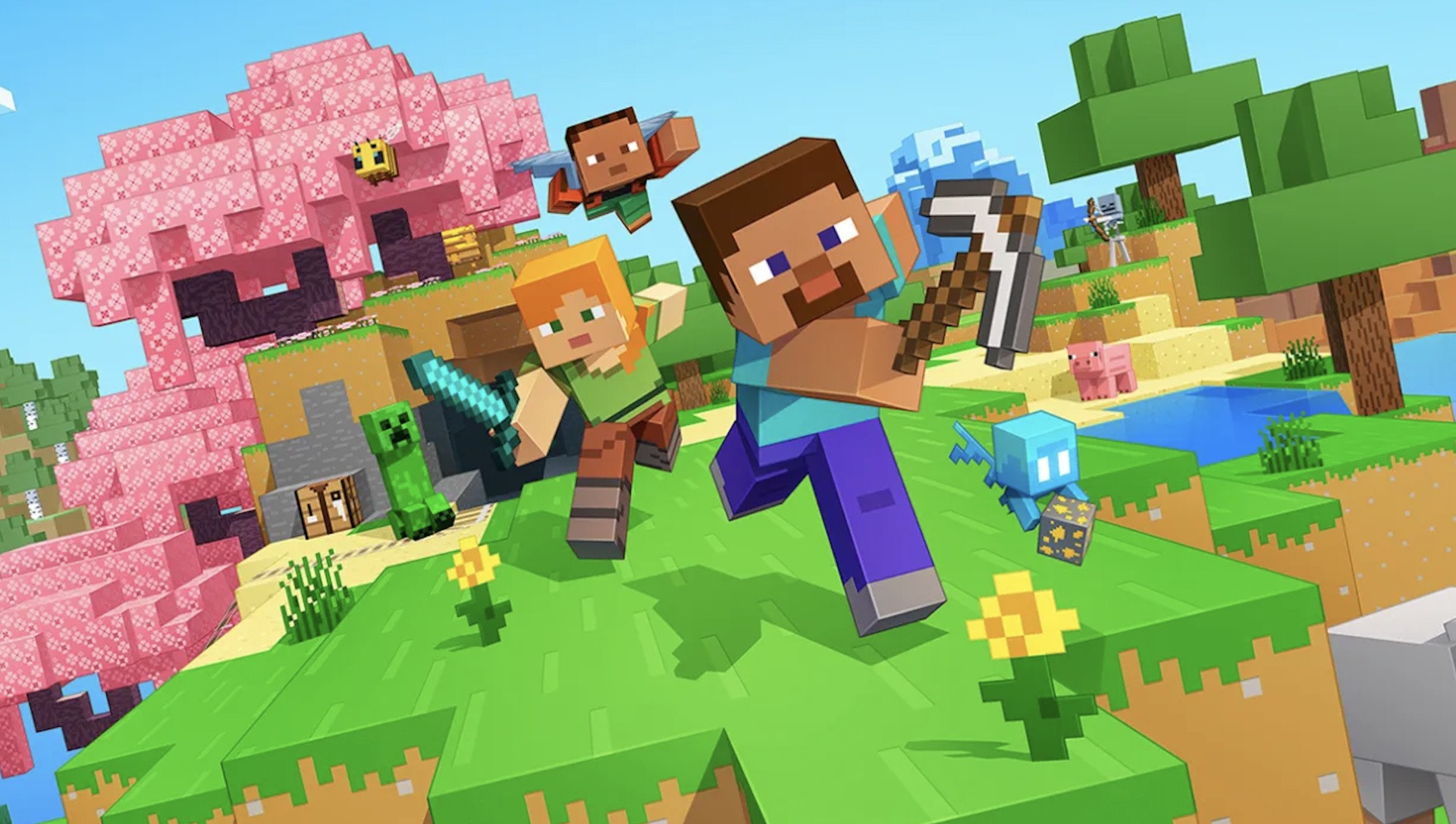
"Minicraft 3D" goes beyond a mere technical demonstration; it offers a genuinely playable experience with core gameplay mechanics intact. The game successfully implements the fundamental interaction of breaking and placing blocks, which is central to Minecraft’s creative freedom. Players can navigate a procedurally generated 3D world, manipulating the environment block by block. A particularly astonishing inclusion is an "explorable Nether," a dimension in Minecraft characterized by its unique terrain and challenging environment. Replicating this on the Game Boy required significant ingenuity in asset simplification and rendering.
Friedly’s project currently offers two distinct game modes: a randomly generated world, providing the exploration and discovery central to the Minecraft experience, and a flat terrain option, designed for easier building and creative expression. This thoughtful inclusion caters to different playstyles, enhancing the game’s appeal beyond its technical novelty. Furthermore, "Minicraft 3D" includes an option to enable textures, a feature that, while visually appealing, significantly impacts performance due to the Game Boy’s limited VRAM and processing power. As Friedly himself advises, playing without textures offers the optimal performance, a necessary compromise to maintain playability on such constrained hardware.
In his public statements about the project, Friedly expressed his initial skepticism, stating, "Honestly, I wasn’t sure if it was even possible to have something like this on the Game Boy," and acknowledging the severe resource limitations: "we are not working with a lot" on the system. This candid admission highlights the extraordinary challenges he faced. He further described the current iteration as "the best I could do – for now at least," indicating a desire to continue refining and optimizing the project as he learns more about the hardware’s intricacies. This commitment to continuous improvement suggests that "Minicraft 3D" may evolve further, potentially pushing even deeper into the Game Boy’s untapped capabilities.
The Engineering Marvel: Deconstructing the Optimization Challenge
Achieving a 3D environment, however rudimentary, on the Game Boy required an intricate tapestry of advanced optimization techniques. While Friedly has not publicly detailed every single technical trick employed, experts in retro game development can infer several key strategies that would have been essential:
- Simplified Rendering Pipeline: Traditional 3D engines use complex pipelines involving vertex transformation, clipping, rasterization, and texture mapping. For the Game Boy, Friedly likely implemented a highly simplified, possibly custom-built, rendering algorithm. This could involve techniques like fixed-point arithmetic instead of floating-point for calculations, extremely low polygon counts for models (each block is essentially a cube), and a very limited draw distance to minimize the number of objects rendered simultaneously.
- Aggressive Memory Management: With only 32 KB of RAM on the GBC, every byte counts. This necessitates incredibly efficient data structures for world storage, player position, and game logic. Procedural generation would have to be highly optimized to generate world chunks on the fly without consuming excessive memory. Asset compression for block textures and other visual elements would also be critical.
- Custom Low-Level Programming: Leveraging assembly language or highly optimized C code with direct hardware access would be paramount. This allows for fine-grained control over the CPU and memory, ensuring that every clock cycle is utilized as efficiently as possible.
- Creative Use of Hardware: While not designed for 3D, the Game Boy’s sprite and tile capabilities might have been cleverly repurposed. For instance, specific sprites could be used for UI elements or potentially even for rendering distant, simplified block representations. The GBC’s color capabilities, while limited, would have been carefully managed to create a discernible visual hierarchy and differentiate block types.
- Voxel-Based Optimization: Minecraft’s voxel-based nature, where the world is composed of discrete blocks, lends itself to certain optimizations. Instead of rendering complex meshes, the game can focus on rendering visible block faces. Techniques like frustum culling (not rendering objects outside the player’s view) and back-face culling (not rendering faces that point away from the camera) would be essential to reduce the rendering workload.
These techniques, when combined, allow for the creation of a believable 3D world on hardware that was never intended for such a purpose. The result is not a hyper-realistic simulation but a remarkably functional and recognizable "Minecraft-like" experience that respects the limitations of its host platform.
Broader Implications: Innovation, Preservation, and the Future of Retro Gaming
The development of "Minicraft 3D" carries significant implications that extend beyond its immediate technical achievement.
- Innovation and Hardware Pushing: Projects like Friedly’s continually redefine our understanding of what is possible on vintage hardware. They inspire a new generation of developers to explore creative solutions to technical challenges, fostering innovation in resource-constrained environments. This knowledge can even be transferable to modern embedded systems or low-power computing.
- Preservation and Documentation: Homebrew efforts contribute significantly to the preservation of gaming history. By creating new software and deeply analyzing the hardware, developers inadvertently document the intricacies of these systems, ensuring that knowledge about their architecture and programming remains accessible for future generations.
- Community Engagement and Education: The open nature of the homebrew scene, often shared through platforms like YouTube and Patreon, fosters a strong sense of community. It provides educational resources and inspiration for aspiring developers, showcasing real-world problem-solving and optimization strategies. Friedly’s willingness to share his process contributes to this valuable knowledge exchange.
- Intellectual Property and Fan Projects: While "Minicraft 3D" is an unofficial, fan-made recreation, it exists within a complex grey area of intellectual property. Historically, companies like Nintendo and Mojang (the creators of Minecraft) have often tolerated such projects, especially when they are non-commercial and primarily serve as technical demonstrations or tributes. This allows for creative expression within the community without directly competing with official products or commercializing intellectual property without permission. The availability of the GBC file via Patreon for Friedly’s supporters is a common model for homebrew developers to sustain their efforts while generally avoiding direct commercial infringement.
"Minicraft 3D" is more than just a game; it is a cultural artifact that celebrates the ingenuity of the human mind and the enduring appeal of pushing boundaries. It serves as a reminder that creativity and technical prowess can transcend hardware limitations, breathing new life into forgotten consoles.
Community Engagement and Accessibility: Experiencing Minicraft 3D
For those interested in witnessing this technical marvel firsthand, Brendan Tobias Friedly has made the Game Boy Color file for "Minicraft 3D" accessible through his Patreon page. This distribution model is common within the homebrew community, allowing developers to receive support for their time-intensive projects while offering their creations to an eager audience. Playing "Minicraft 3D" provides a unique opportunity to experience a familiar gameplay loop through an entirely new, retro lens. It allows players to appreciate the core mechanics of Minecraft stripped down to their most essential elements, constrained by the technical realities of the late 20th century.
The project not only serves as a remarkable technical achievement but also as a powerful educational tool, showcasing the principles of extreme optimization and resource management in software development. As Friedly himself has expressed a desire to continue learning about the Game Boy hardware and push the project even further, the future holds potential for additional refinements, new features, or even more profound optimizations. "Minicraft 3D" is not just a game running on an old console; it is a vibrant testament to the passion, skill, and collaborative spirit that defines the global homebrew community, ensuring that the legacy of classic gaming hardware continues to inspire and evolve.