
 Farhan hamdan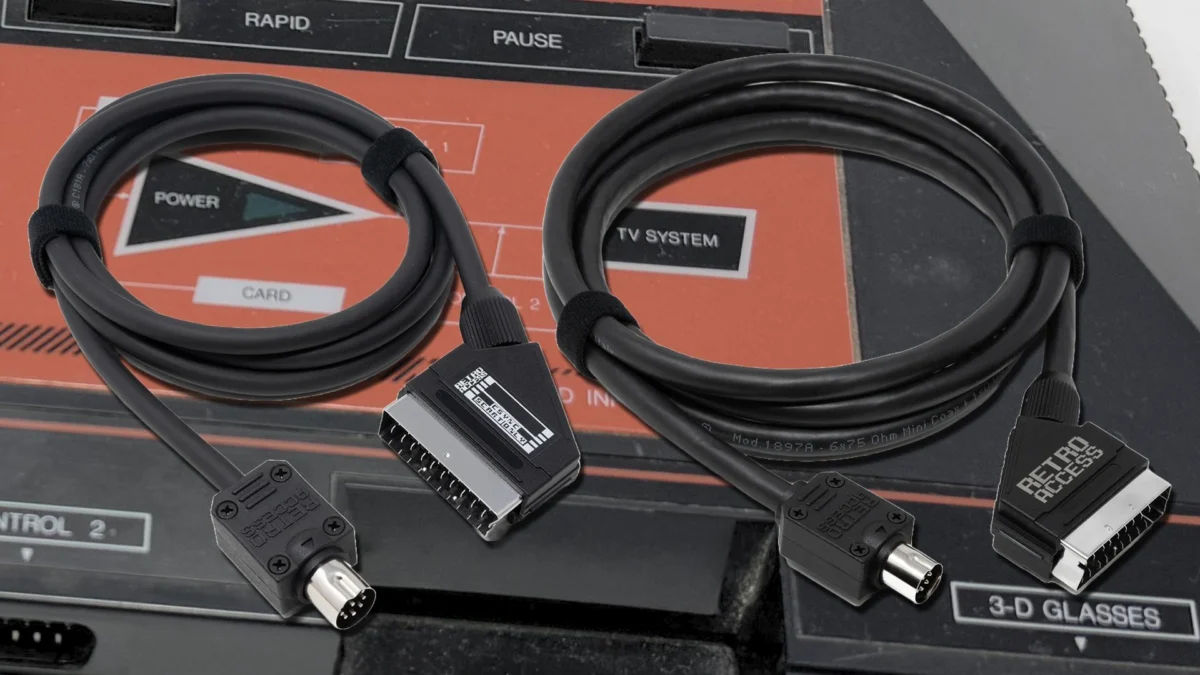
In a significant development for the retro gaming community, Retro-Access, a renowned specialist in high-quality vintage console peripherals, has announced the immediate availability of new RGB SCART cables specifically designed for the Sega MK-2000. These specialized cables, offered in both Fortraflex and 75 Ohm Coaxial versions, are poised to fill a critical void for enthusiasts seeking optimal video fidelity from their Japanese Sega Master System variant, the MK-2000. The release comes at a crucial time, as existing sources for these unique cables had recently ceased production, leaving owners of the distinctive console without essential connectivity options. The necessity of these bespoke cables stems from a peculiar design choice by Sega, where the MK-2000 uniquely integrates video signal conditioning components directly onto its motherboard, diverging from standard Sega Master System and Genesis/Mega Drive models which typically house these critical resistors and capacitors within the cable itself. This distinction renders generic RGB SCART cables incompatible and potentially damaging to either the console or the connected display device, underscoring the importance of Retro-Access’s timely intervention in the market.
The availability of these specialized cables is a testament to the ongoing dedication within the retro gaming community to preserve and enhance the experience of vintage hardware. For years, the Sega MK-2000 has presented a unique challenge to enthusiasts aiming for the highest quality video output, primarily due to its non-standard RGB signal configuration. The reintroduction of readily available, purpose-built cables is expected to significantly improve accessibility and safety for collectors and players alike.
The Sega MK-2000: A Unique Console’s Legacy
To fully appreciate the significance of these new cables, it is essential to understand the Sega MK-2000’s place within the pantheon of classic gaming consoles. The Sega Master System, originally launched in Japan as the Sega Mark III in 1985, was Sega’s valiant entry into the burgeoning 8-bit console market, designed to compete directly with Nintendo’s dominant Famicom (NES). The Mark III underwent several revisions and rebranding efforts as it expanded globally. The Sega Master System 1 and Master System 2 were the more widely recognized iterations in North America and Europe, respectively.
The MK-2000, often referred to as the Japanese Master System, holds a distinct position. While functionally similar to its international counterparts, it often featured unique casing designs and, critically for this discussion, internal hardware configurations. Released in 1987, it was an evolution of the Mark III, aiming for a more streamlined and perhaps cost-optimized design for the Japanese market. Despite its relatively modest commercial success against the Famicom in Japan, the Master System line cultivated a dedicated following globally, celebrated for its unique game library, vibrant graphics, and robust hardware.
For modern retro gamers, the allure of the MK-2000 lies not just in its collectibility but also in its potential for high-fidelity video output. Unlike many consoles of its era that primarily offered composite video, the Master System series, including the MK-2000, was capable of outputting a superior RGB signal. This capability has become a cornerstone for enthusiasts seeking to display these vintage games on modern displays with the clearest possible picture, free from the color bleeding and signal degradation inherent in composite video. The challenge, however, has always been how to correctly interface the MK-2000’s unique RGB output with contemporary display technologies, a challenge now mitigated by Retro-Access’s new offerings.
The Critical Role of RGB Signal Integrity
The pursuit of pristine video quality in retro gaming often leads enthusiasts to RGB (Red, Green, Blue) connectivity, which separates the primary color signals for a sharper, more accurate image compared to composite video or S-video. However, the successful transmission of an RGB signal from a console to a display or upscaler is highly dependent on proper signal conditioning, which involves specific electronic components like resistors and capacitors.
Understanding the MK-2000’s Video Output Anomaly
In the vast majority of Sega Master System 1 and Sega Genesis/Mega Drive (Model 1) consoles, Sega implemented a design choice where the necessary resistors and capacitors for the RGB video and sync lines were placed within the console’s output cable itself. This design decision, often speculated to be a cost-saving measure by reducing the bill of materials for each console unit, meant that standard, off-the-shelf cables were equipped with these passive components. These components serve crucial functions: resistors help with impedance matching to prevent signal reflections and regulate voltage levels, while capacitors block DC voltage components, allowing only the AC video signal to pass, and can also help filter noise.
For reasons that remain a subject of historical debate and speculation, the Sega MK-2000 diverged from this standard. For this specific Japanese variant, Sega opted to place these critical video signal conditioning components—resistors and capacitors—directly onto the console’s motherboard, adjacent to the video encoder chip. This internal placement fundamentally alters the requirements for an RGB SCART cable for the MK-2000. Unlike its siblings, the MK-2000 requires a "passthrough" cable, meaning a cable that does not contain its own set of resistors and capacitors. Any such components in the cable would be redundant and, more importantly, detrimental to the signal.
The Dangers of Incompatible Cabling
The unique internal configuration of the MK-2000 makes using an incorrect RGB SCART cable a significant risk, potentially leading to suboptimal image quality or even permanent damage to hardware. The two primary scenarios illustrating this danger are:

- Using a Standard SMS1 RGB Cable on an MK-2000: If a cable designed for a standard Master System 1 (which includes its own resistors and capacitors) is connected to an MK-2000, the video signal will effectively pass through two sets of conditioning components. This "doubling of the load" significantly attenuates the video signal, resulting in an image that is noticeably too dim. More critically, it places undue stress on the console’s video encoder chip (such as the Sony CXA1145P, commonly used in these consoles). Over time, this excessive load can degrade the chip’s performance or, in extreme cases, lead to its failure, rendering the console’s RGB output non-functional.
- Using an MK-2000 RGB Cable on a Standard SMS1 or Genesis/Mega Drive 1: Conversely, connecting a passthrough MK-2000 cable to a standard Master System 1 or Genesis/Mega Drive Model 1 console presents an equally severe, if not more immediate, danger. Since these consoles expect the conditioning components to be in the cable, a passthrough cable will send an unfiltered and excessively high voltage RGB signal directly to the connected SCART device (e.g., a retro CRT television, an OSSC, or a RetroTINK upscaler). This over-voltage can critically damage the input circuitry of the display or upscaler, potentially leading to costly repairs or rendering the device unusable.
It is crucial to note that these warnings apply exclusively to RGB video signals. Composite video output, which utilizes a different signal path and standard, remains unaffected by these component differences, making it a safe, albeit lower-quality, alternative for those without the correct RGB cable.
Retro-Access’s Cable Solutions: Fortraflex and Coax
Retro-Access has introduced two distinct versions of their MK-2000 RGB SCART cable, catering to different user preferences and priorities for signal integrity and durability:
- Fortraflex Version: The Fortraflex cables are renowned in the retro gaming community for their exceptional flexibility and robust construction. They typically employ high-quality, multi-strand conductors, which contribute to their durability and ease of use in various setups. This option is ideal for general users who prioritize a reliable, long-lasting cable that can withstand frequent handling and reconfigurations without compromising signal quality. The inherent flexibility of Fortraflex cabling also makes it easier to manage cable runs in tight spaces behind entertainment centers.
- 75 Ohm Coaxial Version: The 75 Ohm Coaxial cables represent the pinnacle of signal purity. Each individual RGB line (and often the sync line) is encased in its own miniature coaxial shield. This advanced shielding minimizes electromagnetic interference (EMI) and crosstalk between the different video signals, ensuring the cleanest possible picture, especially crucial for discerning enthusiasts or for longer cable runs. The "75 Ohm" specification refers to the impedance matching, which is critical for high-frequency video signals to prevent reflections and signal loss, thus preserving the integrity of the video waveform. While typically less flexible than Fortraflex, the coaxial construction offers unparalleled performance for those seeking the absolute best video quality from their MK-2000.
Both options from Retro-Access provide the essential passthrough design required for the MK-2000, ensuring that the console’s internal video conditioning is properly utilized without introducing redundant or harmful components.
Addressing a Market Void: The Supply Chain for Vintage Peripherals
The retro gaming market, while vibrant, is often characterized by its niche nature and the challenges associated with sourcing components and manufacturing peripherals for hardware that has long been out of production. Historically, specialized cables like those for the MK-2000 were primarily available through a handful of dedicated custom cable makers, small-batch producers, or enthusiastic hobbyists selling their creations via online forums. These avenues, while valuable, often came with limitations in terms of consistent availability, production volume, and standardized quality control.
In recent months, the situation for MK-2000 owners became particularly precarious. Reports indicated that the only two regular sellers of these highly specialized cables had ceased production or sales. The reasons for such cessations are varied but often include factors like the dwindling availability of specific raw materials, the economic viability of producing low-volume, specialized items, or a shift in focus by the vendors themselves. This cessation created a significant void in the market, leaving MK-2000 enthusiasts in a difficult position, struggling to find reliable and safe connectivity solutions. Without these cables, owners were either forced to risk damaging their consoles or displays with incorrect alternatives, or settle for lower-quality composite video, undermining the very reason many invest in retro hardware.
Retro-Access’s decision to step into this void is therefore not just a commercial endeavor but a crucial service to the retro gaming community. Known for their meticulous craftsmanship and commitment to technical accuracy, Retro-Access has built a strong reputation for producing some of the highest quality cables and accessories for vintage consoles. Their intervention ensures that a consistent, high-quality, and technically correct solution is once again available. This demonstrates the critical role that specialized manufacturers play in sustaining the retro gaming ecosystem, where larger, mainstream companies have long since abandoned support for their legacy products. Their responsiveness to community needs underscores the collaborative spirit that often defines the retro gaming hobby.
Community Reaction and Expert Endorsement
The news of Retro-Access’s new MK-2000 cables has been met with significant relief and appreciation across the retro gaming community. Forums, social media groups, and dedicated websites are abuzz with positive reactions from collectors and players who had previously faced frustration and uncertainty regarding their MK-2000 setups. The ability to purchase a professionally made, correctly specified cable from a trusted vendor eliminates guesswork and reduces the risk of costly mistakes. This move by Retro-Access is seen as a vital contribution to the ongoing health and accessibility of the hobby.
Adding further weight to this release is the endorsement from prominent figures within the retro gaming technical community. Bob from RetroRGB, a highly respected authority on retro gaming hardware and video technology, was instrumental in disseminating the news and providing detailed technical explanations. RetroRGB serves as a crucial educational platform, regularly publishing in-depth articles, guides, and warnings about the intricacies of vintage hardware. Bob’s emphasis on the unique requirements of the MK-2000 and the potential dangers of using incorrect cables highlights the importance of such specialized products. His vocal support and technical breakdown reinforce the credibility of Retro-Access’s offering and help to educate a broader audience on these specific technical nuances. Such expert endorsement is invaluable in a niche market where misinformation can lead to significant hardware damage.
The Broader Implications for Retro Gaming Preservation
The introduction of these specialized cables by Retro-Access carries broader implications for the retro gaming preservation movement. It highlights several key aspects that are crucial for the continued vitality and accessibility of vintage gaming:
- Hardware Longevity: Properly designed cables are not just about optimal performance; they are fundamental to the longevity of vintage hardware. By preventing electrical damage from incompatible accessories, these cables ensure that rare and beloved consoles like the MK-2000 can continue to function for future generations of enthusiasts. This proactive approach to preservation goes beyond simply owning the hardware; it’s about making it safely usable.
- Enhanced User Experience: For many, the appeal of retro gaming lies in experiencing classic titles as authentically as possible, often with modern enhancements like high-quality video output. These cables enable MK-2000 owners to unlock the console’s full visual potential, providing a superior gaming experience that truly showcases the artistry of 8-bit graphics. This elevates the hobby beyond mere nostalgia to a genuine appreciation of historical technology.
- Support for Niche Markets: The retro gaming landscape is diverse, encompassing a myriad of consoles, regional variants, and unique hardware configurations. Larger manufacturers have no incentive to support these legacy products. The existence and success of specialized businesses like Retro-Access underscore the vital ecosystem of small, dedicated companies and artisans who cater to these specific, often technically demanding, needs. Without their expertise and commitment, many niche consoles would remain inaccessible or improperly utilized.
- Prevention of Costly Damage: Vintage gaming hardware, particularly rare regional variants, can be expensive and difficult to replace. The financial and sentimental cost of damaging a console or a high-end display/upscaler due to an incorrect cable is significant. By providing safe and correct solutions, these vendors help protect enthusiasts’ investments and preserve valuable pieces of gaming history.
- Accessibility and Education: The availability of clear, correct information and purpose-built accessories lowers the barrier to entry for newcomers to the retro gaming hobby. It empowers enthusiasts to enjoy their collections with confidence, knowing they are using the right tools and preventing common, costly mistakes. Educational platforms like RetroRGB, combined with reliable product providers, form a crucial symbiotic relationship in this regard.
In conclusion, Retro-Access’s release of RGB SCART cables for the Sega MK-2000 is more than just a product launch; it is a critical contribution to the ongoing preservation and enjoyment of vintage gaming hardware. By meticulously addressing a long-standing technical challenge and filling a recent market void, Retro-Access has reinforced its position as a vital player in the retro gaming ecosystem. This initiative not only ensures optimal video quality for MK-2000 owners but also underscores the importance of specialized manufacturing, expert guidance, and community collaboration in sustaining the vibrant world of retro gaming for years to come.








