
 Farhan hamdan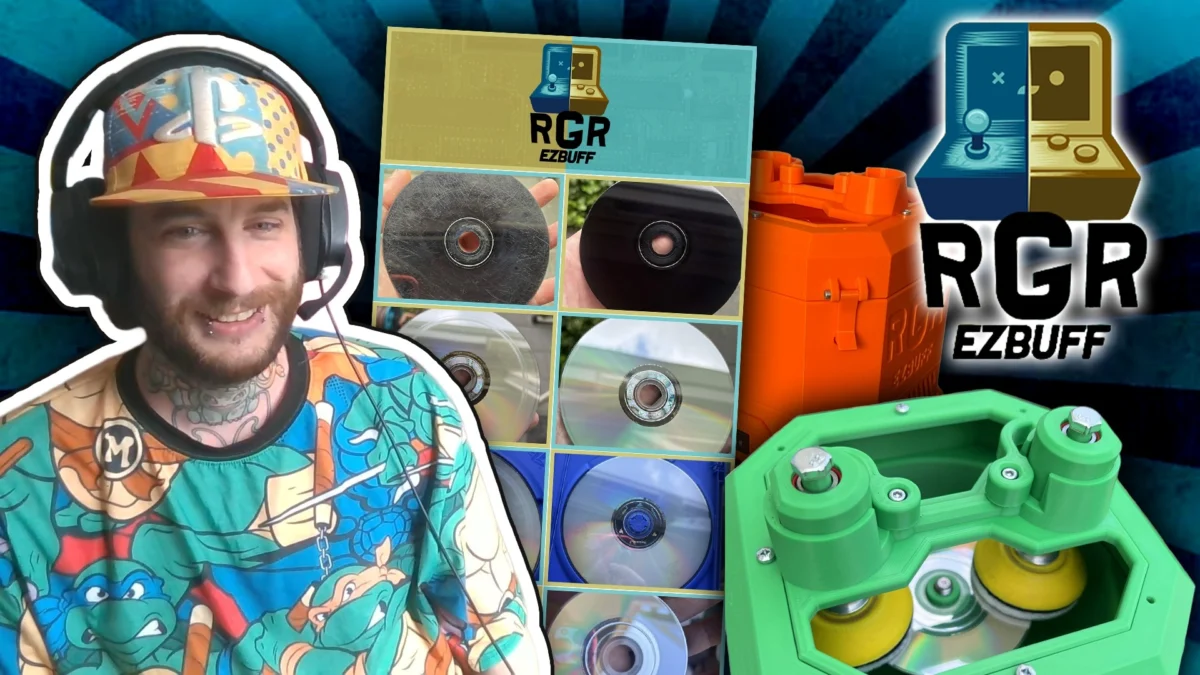
The esteemed retro gaming platform RetroRGB recently published a comprehensive podcast interview featuring Dennis van den Broek, widely recognized in the enthusiast community by his moniker, Pointer Function. This discussion delved into a range of his innovative projects, with a particular emphasis on his latest endeavor: the RGR EZBuff, an open-source disc polisher and resurfacer. The interview, hosted by RetroRGB’s founder, Bob, offers significant insights into the challenges faced by retro gamers in preserving optical media and presents a community-driven solution. The conversation is readily available across all major podcast services, easily discoverable by searching "RetroRGB Dennis" within preferred audio applications, and the full video segment is embedded for visual reference.
Introduction to the Interview and Key Figures
Dennis van den Broek, known online as Pointer Function, has established himself as a prominent figure within the retro gaming hardware modification and preservation scene. His work often focuses on practical, open-source solutions to common problems encountered by collectors and enthusiasts of vintage video game systems. His reputation stems from a deep technical understanding and a commitment to empowering the community through shared knowledge and accessible designs. The interview on RetroRGB serves as a testament to his influence and the community’s interest in his contributions.
RetroRGB, founded by Bob, is a cornerstone resource for the retro gaming community, specializing in high-quality video output, hardware modifications, and technical deep dives into classic consoles. The platform consistently provides detailed guides, reviews, and interviews that cater to a discerning audience of retro gaming aficionados. Bob’s interviews are known for their technical depth and ability to extract valuable information from experts, making the conversation with Dennis van den Broek a highly anticipated event for those following hardware developments. The podcast format, in particular, allows for extended discussions that often uncover nuances not typically found in shorter articles or social media posts.
The core subject of the interview, the RGR EZBuff, represents a significant step forward in addressing a pervasive issue within the retro gaming landscape: the degradation and damage of optical disc media. As retro gaming continues its exponential growth, with an increasing number of enthusiasts seeking to preserve and play games from generations past, the longevity of physical media becomes a critical concern. The EZBuff, as an open-source solution, embodies the collaborative spirit and ingenuity often found at the heart of the retro gaming community.
The Genesis of a Solution: Addressing Disc Deterioration
The inspiration behind the RGR EZBuff stems directly from long-standing frustrations within the retro gaming community regarding the maintenance of disc-based games. Unlike cartridge-based systems, which often exhibit remarkable resilience over decades, optical discs are susceptible to a range of environmental and handling damages, primarily scratches and scuffs. These imperfections can lead to read errors, freezing, and ultimately render a game unplayable.
The Ubiquitous Challenge of Optical Media
Optical media, encompassing formats like CDs, DVDs, and later Blu-ray discs, became the dominant storage medium for video games from the mid-1990s through the 2000s. Consoles such as the Sony PlayStation, PlayStation 2, Sega Dreamcast, Nintendo GameCube, Microsoft Xbox, and Nintendo Wii all relied heavily on optical discs. While revolutionary for their storage capacity and cost-effectiveness at the time, their physical vulnerability poses a significant challenge for modern-day preservationists and players. A casual scratch, a fingerprint, or even prolonged exposure to certain environments can compromise the data layer, leading to playback issues.
The retro gaming market has seen substantial growth in recent years. Reports indicate that the global retro gaming market size was valued at over $2 billion in 2022 and is projected to continue expanding. This growth is fueled by nostalgia, the desire for unique gaming experiences, and the collectibility of vintage titles. Many disc-based games, particularly rare or highly sought-after titles, can fetch hundreds or even thousands of dollars on the secondary market. The economic value attached to these physical artifacts underscores the urgent need for effective and accessible preservation methods. A damaged disc not only loses its playability but also its market value, creating a strong incentive for repair solutions.
Traditional methods of disc repair, ranging from rudimentary home remedies like toothpaste (which often do more harm than good) to professional-grade machines, have existed for decades. However, each has presented its own set of limitations, particularly when viewed through the lens of a dedicated retro gaming enthusiast or small-scale collector.
Limitations of Current Disc Repair Technologies
The market for disc resurfacing solutions has historically been bifurcated into two main categories: inexpensive, often consumer-grade devices and high-end, commercial-grade machines. Both, as highlighted in the RetroRGB interview, come with significant drawbacks that the RGR EZBuff aims to circumvent.
Consumer-Grade Polishers: Many cheaper disc polishers have flooded the market over the years, often advertised as simple, household solutions for scratched discs. These units, while initially appealing due to their low purchase price, frequently suffer from several critical flaws. Their construction often involves proprietary components that are difficult or impossible to replace when they wear out. As discussed by Dennis and Bob, these devices become "expensive to repair" not necessarily due to complex mechanics, but due to a lack of available parts or the high cost of replacement consumables that might be tied to specific brands. This results in a short lifespan for the machine itself, effectively turning them into disposable items once a critical component fails or the proprietary pads are exhausted and discontinued. Furthermore, their effectiveness can be inconsistent, often merely buffing minor scratches rather than truly resurfacing deeper imperfections.
Professional-Grade Resurfacers (e.g., ELM units): At the other end of the spectrum are robust, industrial-grade disc resurfacing machines, such as those manufactured by ELM USA (e.g., the Ecopro2 mentioned in the interview). These units are designed for high-volume environments like video rental stores (a once-thriving business), libraries, or large used game retailers. They are highly effective, capable of restoring severely damaged discs to near-new condition. However, their primary barrier to entry for individual enthusiasts is their prohibitive cost. With initial investments often exceeding $1,500, these machines are simply out of reach for the vast majority of hobbyists. Beyond the initial purchase, many professional units operate on a "per-disc" charging model, requiring the use of expensive, proprietary consumables or subscription-based licenses that track usage. This model, while economically viable for businesses processing hundreds or thousands of discs annually, becomes financially punitive for a collector who might only need to repair a handful of discs each month or year. The interview specifically highlights this "per-disc" cost as a significant point of contention for the community.
These limitations collectively created a void in the market: a demand for an effective, affordable, and sustainable disc resurfacing solution that empowers the end-user rather than locking them into expensive proprietary ecosystems. This void is precisely what Dennis van den Broek’s RGR EZBuff seeks to fill.
The RGR EZBuff: An Open-Source Paradigm Shift
The RGR EZBuff distinguishes itself by embracing the open-source hardware philosophy, a principle that champions transparency, user empowerment, and community collaboration. Unlike its commercial counterparts, the EZBuff’s design specifications, bill of materials (BOM), software, and firmware are intended to be freely accessible, allowing users to understand, build, modify, and repair their own machines.
Design Philosophy and Community Empowerment
Dennis van den Broek’s motivation for developing the EZBuff is rooted in a desire to provide a sustainable and economically viable solution for retro gamers. The open-source nature means that users are not beholden to a single manufacturer for parts or repairs. Should a component fail, users can source replacements from generic suppliers or even fabricate them using 3D printing, which is often a core component of such open-source hardware projects. This drastically reduces the long-term cost of ownership and extends the machine’s lifespan indefinitely, contrasting sharply with the planned obsolescence often seen in consumer electronics.
The name "RetroGameRevival," which is also the name of Dennis’s Ko-fi and Printables pages, clearly articulates the overarching mission: to revive and preserve retro games. The EZBuff is a direct manifestation of this mission, offering a practical tool for physical media preservation. By making the design open, Dennis invites the global community to contribute improvements, share insights, and collectively advance the technology. This collaborative model has proven highly effective in other niche hardware communities, leading to rapid innovation and robust, well-supported projects.
The target audience for the EZBuff includes not only individual collectors but also small-scale game stores, community archives, and local libraries that may not have the budget for high-end commercial machines but still require effective disc repair capabilities. The ability to build, customize, and maintain the device provides a level of control and flexibility unmatched by proprietary systems.
Technical Principles of Disc Resurfacing
At its core, disc resurfacing involves carefully removing a microscopic layer of plastic from the disc’s surface to eliminate scratches and imperfections. This process typically utilizes abrasive pads and specialized polishing compounds. The RGR EZBuff, like other effective resurfacers, relies on precise mechanical action to ensure an even and controlled abrasion.
The process usually involves:

- Cleaning: Initial removal of dirt and grime from the disc.
- Abrasive Step: Using a coarse abrasive pad with a specific liquid compound to grind down the damaged surface layer. The precision of the machine is crucial here to ensure an even removal without creating new distortions.
- Polishing Step: Transitioning to finer abrasive pads and polishing compounds to smooth out the surface, restoring its optical clarity.
- Finishing: A final buffing stage to achieve a mirror-like finish, ensuring optimal laser readability.
The challenge in designing such a machine, especially an open-source one, lies in sourcing readily available, cost-effective components that can achieve the necessary precision and durability. The interview likely touches upon Dennis’s design choices regarding motors, rotational mechanisms, and the interface for applying compounds and pads. The modularity inherent in an open-source design would allow for experimentation with different types of consumables, offering users flexibility beyond proprietary solutions.
Chronology of Development and Community Engagement
While the interview itself marks a public announcement of the RGR EZBuff’s advanced stage, the development of such a complex piece of hardware is a multi-stage process. Dennis van den Broek’s journey likely began with identifying the market gap and the technical feasibility of an open-source solution.
The initial phase would involve research into existing disc repair technologies, understanding their mechanisms, and identifying their shortcomings. This would be followed by conceptual design, where basic mechanical and electronic principles are laid out. Prototyping, often involving 3D printing and off-the-shelf electronics, would then allow for iterative testing and refinement. Feedback from early testers within the retro gaming community would be invaluable in this stage, helping to iron out design flaws and improve user experience.
The publication of the RGR EZBuff as an open-source project on platforms like Printables.com (where Dennis maintains his main page under @RetroGameRevival) signifies a crucial milestone. This means that the designs, instructions, and potentially the software are now available for others to download, build, and contribute to. This collaborative model accelerates development and ensures that the project benefits from a wider pool of expertise. Social media channels like Twitter (@PointerFunction) and Bluesky (@pointerfunction.bsky.social) serve as critical conduits for ongoing communication, updates, and community support, allowing Dennis to share progress and engage directly with interested parties.
The timeline for such a project typically involves:
- Problem Identification & Ideation: Recognizing the need for an accessible disc repair solution.
- Research & Conceptualization: Studying existing technologies and drafting initial designs.
- Prototyping & Iteration: Building initial versions, testing, and refining based on performance.
- Open-Sourcing & Documentation: Releasing the designs, BOM, and instructions to the public.
- Community Engagement & Support: Ongoing interaction with users, facilitating improvements, and troubleshooting.
The mention of Bob from RetroRGB looking forward to testing a unit live suggests that the project is nearing a stage of broader public availability or at least advanced prototype testing, which is an exciting development for potential adopters.
Broader Implications for the Retro Gaming Ecosystem
The introduction of the RGR EZBuff has significant implications that extend beyond mere disc repair, touching upon economic accessibility, sustainability, and the future of open-source hardware in niche markets.
Economic Accessibility and Sustainability
The most immediate impact of the EZBuff is its potential to democratize disc repair. By offering an open-source design, it drastically lowers the barrier to entry for effective disc resurfacing. Enthusiasts can build their own machines at a fraction of the cost of commercial alternatives, sourcing components as needed. This shift from an expensive service or proprietary product to a build-it-yourself solution represents a significant economic advantage for collectors.
Furthermore, the emphasis on repairability and non-proprietary parts contributes to a more sustainable hobby. Instead of discarding a malfunctioning unit, users can diagnose and replace individual components, reducing electronic waste. This aligns with a growing global trend towards repair rights and sustainable consumption, making retro gaming a more environmentally conscious pursuit. The availability of schematics and parts lists encourages users to understand their machines better, fostering a deeper connection with their hobby and reducing reliance on external service providers.
Fostering Innovation in Open-Source Hardware
The RGR EZBuff serves as a powerful case study for the viability and impact of open-source hardware development within specialized communities. Its success could inspire other creators to tackle niche problems with collaborative, open-source solutions. This model promotes innovation by allowing rapid iteration and collective problem-solving. As the project matures, community contributions could lead to enhanced features, improved efficiency, and adaptations for different types of optical media or damage.
The project also highlights the power of platforms like RetroRGB in amplifying such initiatives. By providing a platform for detailed discussions and demonstrations, RetroRGB helps bridge the gap between technical innovators and the broader retro gaming audience, facilitating adoption and fostering a supportive ecosystem around open-source projects.
The Road Ahead: Testing, Adoption, and Support
The interview concludes with a forward-looking perspective, notably Bob’s anticipation of testing the RGR EZBuff himself, potentially in a live stream environment with Dennis. This public demonstration would be a critical step in validating the machine’s performance and building trust within the community. Live testing allows for real-time problem-solving and offers transparency regarding the device’s capabilities and limitations.
For the RGR EZBuff to achieve widespread adoption, ongoing support will be crucial. While the open-source model encourages community-led support, Dennis van den Broek’s active presence on platforms like Ko-fi (where users can support his work at https://ko-fi.com/retrogamerevival), Printables, Twitter, and Bluesky will be vital for guiding new builders, addressing common issues, and facilitating further development. The success of the project will depend on a robust documentation process, clear assembly instructions, and an active community forum where users can share their experiences and solutions.
The availability of components, especially for those in different geographical regions, will also be a factor influencing adoption. As an open-source project, the reliance on standard, easily procurable parts is a key advantage, mitigating supply chain issues often associated with proprietary hardware.
Conclusion: A Collaborative Vision for Preservation
The RetroRGB interview with Dennis van den Broek, aka Pointer Function, marks a significant moment for the retro gaming community. The RGR EZBuff is not merely another gadget; it represents a philosophical shift towards empowering enthusiasts with the tools and knowledge needed to preserve their cherished game collections. By directly addressing the shortcomings of existing disc repair solutions—namely the high cost and proprietary nature of commercial units, and the unreliability of cheap alternatives—the EZBuff offers a sustainable, accessible, and community-driven path forward.
This project underscores the vibrant innovation within the retro gaming scene, where passion for classic games translates into practical, often open-source, solutions for modern-day challenges. As Bob prepares to put the RGR EZBuff through its paces, the community eagerly awaits the opportunity to embrace a future where scratched discs are no longer a death knell for beloved retro titles, but rather a solvable problem through collaborative ingenuity. The RGR EZBuff stands as a testament to the power of open-source development and the enduring spirit of preservation within the retro gaming world.








