Indra Gunadi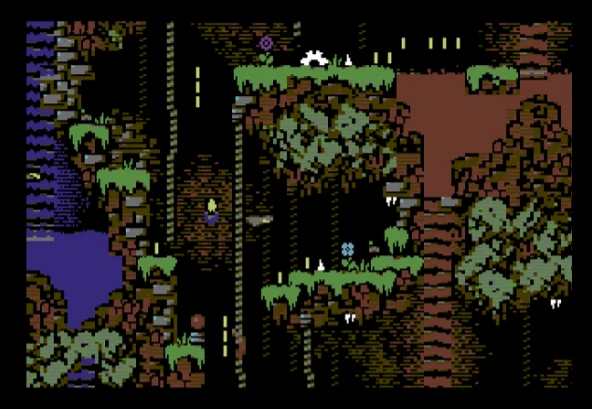
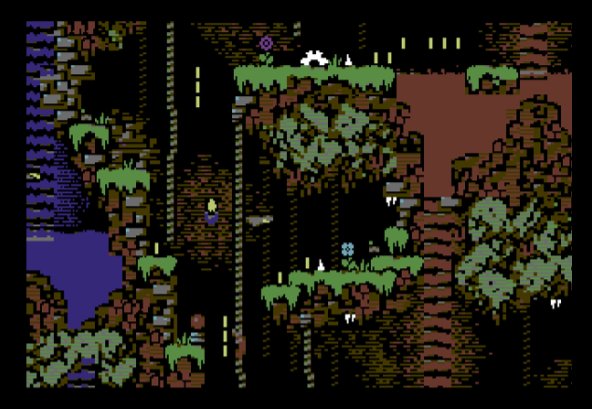
The Commodore 64 platform, despite being over four decades old, continues to receive new software releases, with the latest entry being "Adrian and a Friend in Need (2026)" developed by ntpr. The game, a new platformer described as featuring "large worlds, lots of enemies and nasty falling spikes," was officially noted on July 4, 2026, on the prominent retro gaming news site pdroms.de. This release underscores the enduring vitality of the C64 homebrew community and its capacity to deliver fresh experiences for vintage hardware. Players are invited to test their reflexes and assist the character Crystian through challenging environments, with the game available for direct access via ntpr’s official itch.io page: https://ntpr.itch.io/adrian-and-a-friend-in-need.
The Enduring Legacy of the Commodore 64 in 2026
The release of a new title for the Commodore 64 in the year 2026 is not an isolated incident but rather a testament to the unparalleled longevity and cultural impact of the 8-bit home computer, first introduced in 1982. The C64, often cited as the best-selling single computer model of all time with estimated sales between 17 and 22 million units, dominated the personal computing landscape throughout the 1980s. Its appeal stemmed from a potent combination of advanced graphics (VIC-II chip), superior sound capabilities (SID chip), and an accessible price point, making it a gateway to computing and gaming for millions worldwide.
Decades after its discontinuation, the C64 maintains a remarkably vibrant and active community. This ecosystem comprises enthusiasts, collectors, hardware modders, software preservationists, and, crucially, a dedicated cadre of homebrew developers. These developers, often driven by passion and nostalgia, continue to push the boundaries of the C64’s original hardware, crafting new games, demos, and applications. The sustained interest can be attributed to several factors: the machine’s iconic status, the challenge of programming within its technical constraints, the unique aesthetic of its pixel graphics and chiptune music, and a strong sense of community fostered through online forums, conventions, and digital distribution platforms. The existence of pdroms.de as a hub for new C64 releases highlights the ongoing demand for fresh content, demonstrating that the platform is far from a relic, but rather a dynamic canvas for ongoing creative endeavors.
ntpr and the Modern Homebrew Development Landscape
The developer, ntpr, represents the contemporary spirit of retro game development. While specific historical details regarding ntpr’s prior projects were not immediately detailed in the initial announcement, their contribution of "Adrian and a Friend in Need" positions them within a growing movement of independent developers who specialize in creating new content for vintage systems. These developers typically operate outside traditional commercial frameworks, relying on digital distribution platforms like itch.io to reach their niche audience directly.
Developing for the Commodore 64 in the modern era presents a unique set of challenges and opportunities. Developers often utilize modern cross-development toolchains, allowing them to write code on powerful contemporary PCs and compile it for the C64’s MOS 6510 CPU. This often involves assembly language programming or C with specialized compilers, requiring deep technical understanding of the C64’s memory map, graphics routines, and sound registers. The limitations of 64KB RAM, a 1MHz processor, and a fixed color palette compel developers to employ ingenious optimization techniques and creative design choices to maximize the hardware’s potential.
Statements from developers within the homebrew scene, though not directly available for ntpr in this immediate context, often reveal a common motivation: a desire to create the games they wished they had played on their C64s as children, or to explore what was technically possible given today’s advanced understanding of the hardware. The community-driven nature of this development often leads to collaborative efforts, sharing of tools, and extensive beta testing, ensuring a high level of polish and authenticity to the retro experience. Platforms like itch.io further empower these developers by providing an easy-to-use storefront, handling payment processing, and enabling direct engagement with players through comments and forums, fostering a direct relationship that bypasses traditional publishing hurdles.
Gameplay Mechanics and Design Philosophy
"Adrian and a Friend in Need" is characterized as a "nice platformer with large worlds, lots of enemies and nasty falling spikes." This description immediately evokes the golden age of 8-bit platforming, while hinting at modern design sensibilities applied to classic constraints. The mention of "large worlds" suggests a departure from strictly linear level progression, implying potential for exploration, hidden areas, and a sense of scale often challenging to achieve on older hardware. This design choice demands careful level construction, potentially leveraging horizontal and vertical scrolling techniques, and efficient memory management to store extensive level data.
"Lots of enemies" indicates a focus on combat and varied challenges. Players can anticipate encountering a diverse array of adversaries, each with distinct movement patterns, attack methods, and vulnerabilities, requiring strategic engagement rather than simple brute-force approaches. The design of enemy AI within the C64’s memory and processing limits is a significant undertaking, often relying on state machines and simple yet effective behavioral patterns to create engaging encounters.
The inclusion of "nasty falling spikes" is a quintessential platformer trope, emphasizing precision jumping, timing, and environmental hazards. This element typically contributes to a higher difficulty curve, demanding players master intricate movement mechanics and learn level layouts through trial and error. The narrative hook, "Can your reflexes save the day… and can you help Crystian?", further solidifies the game’s adherence to classic action-adventure themes, providing a clear objective for the player beyond mere survival. The integration of a specific character to be saved, Crystian, suggests a narrative component, however minimal, that gives context to Adrian’s perilous journey. Such elements are crucial in providing player motivation and imbuing the gameplay with a sense of purpose.
Release and Distribution Chronology
The official announcement and listing of "Adrian and a Friend in Need (2026)" occurred on July 4, 2026, on pdroms.de. This platform serves as a vital nexus for the retro gaming community, regularly featuring news, reviews, and direct download links for new homebrew releases across various classic platforms, particularly the Commodore 64. The date marks the public availability and formal introduction of the game to the wider retro gaming audience.
The distribution model via itch.io (https://ntpr.itch.io/adrian-and-a-friend-in-need) is a standard practice for contemporary indie and homebrew developers. Itch.io offers a flexible and developer-friendly platform for digital distribution, allowing creators to set their own prices (including "pay what you want" options), manage their storefronts, and directly interact with their player base. This direct-to-consumer model bypasses traditional publishing gatekeepers and allows niche titles like C64 homebrews to find their audience efficiently.
While the primary release is digital, the C64 homebrew scene also frequently sees physical releases. Successful digital titles often transition to limited edition cartridge or floppy disk releases, catering to collectors and those who prefer playing on original hardware. These physical editions often include elaborate packaging, manuals, and other memorabilia, transforming the game into a collectible artifact. While not confirmed for "Adrian and a Friend in Need" at the time of its initial digital release, such a trajectory would be consistent with the broader trends in the C64 enthusiast market. The journey from initial concept to public release for a C64 homebrew game typically involves extensive development, often spanning months or even years, followed by rigorous beta testing within the community to ensure compatibility and bug-free operation across various C64 models and emulators. The July 4th announcement on pdroms.de signifies the culmination of this development cycle and the formal entry of the game into the public domain.
Broader Impact and Implications: The Retro Gaming Renaissance
The continuous flow of new releases like "Adrian and a Friend in Need (2026)" for platforms such as the Commodore 64 has significant broader implications for the gaming industry and cultural preservation. It underscores a powerful "retro gaming renaissance" where vintage hardware is not merely preserved but actively revitalized with new content. This phenomenon challenges the conventional wisdom that old technology becomes obsolete; instead, it demonstrates that well-designed systems can inspire creativity across generations.
Economically, while the C64 homebrew market is niche, it contributes to a vibrant sub-economy. Sales through platforms like itch.io, combined with demand for physical releases and related merchandise, support independent developers and specialized manufacturers. This micro-economy thrives on passion and community, fostering a sustainable model for creative output that is distinct from the mainstream AAA gaming industry.
From a preservation standpoint, new homebrew games play a crucial role. They ensure that interest in the original hardware and its capabilities remains high, encouraging the maintenance and repair of vintage computers. Furthermore, these games contribute to the ongoing digital archive of C64 software, showcasing evolving development techniques and design philosophies for the platform. They serve as a living history, demonstrating how a 1980s machine can still be pushed to its limits by 21st-century developers.
The community aspect is perhaps one of the most significant implications. The development and reception of games like "Adrian and a Friend in Need" foster a strong sense of camaraderie among C64 enthusiasts. Online forums buzz with discussions, players share tips and strategies, and streamers showcase new releases, creating a dynamic and engaging environment. This active community ensures the continued relevance of the C64, making it more than just a piece of historical technology but a platform for ongoing interaction and shared experience. This phenomenon also has an educational dimension, inspiring new generations of programmers and designers to explore the fundamentals of game development within constrained environments, often leading to a deeper understanding of computer architecture and optimization.
Technical Analysis: Leveraging C64 Capabilities
Developing a platformer with "large worlds, lots of enemies, and nasty falling spikes" for the Commodore 64 demands a sophisticated understanding of its technical architecture. The C64’s MOS 6510 CPU, running at approximately 1 MHz, and its 64 kilobytes of RAM present significant challenges for modern game design. Efficient memory management is paramount, often requiring developers to compress graphics data, use procedural generation elements, or stream level segments from disk or cartridge.
The VIC-II graphics chip, responsible for the C64’s distinctive visual style, supports up to eight hardware sprites per scanline and offers a palette of 16 colors. Creating "large worlds" often involves advanced scrolling techniques, such as multi-directional scrolling or parallax scrolling, which require precise timing and CPU cycles to avoid visual artifacts like flicker or tearing. The character set and bitmap modes are carefully leveraged to create detailed backgrounds and foreground elements, often employing color cycling or raster effects to add visual dynamism without incurring significant CPU overhead.
The SID (Sound Interface Device) chip, a true synthesizer, provides three independent voices, each capable of generating various waveforms, controlling volume, and filtering sounds. For "Adrian and a Friend in Need," ntpr would have harnessed the SID chip to create an engaging soundscape, including atmospheric music, distinct sound effects for Adrian’s movements, enemy actions, and environmental hazards like falling spikes. The SID chip’s unique analog filter capabilities contribute significantly to the C64’s iconic chiptune sound, which remains a key draw for many retro enthusiasts. The skillful integration of these technical elements is what allows games like "Adrian and a Friend in Need" to not only function but to thrive within the C64’s constraints, delivering an experience that feels authentic to the era while potentially pushing the boundaries of what was thought possible.
Conclusion
The release of "Adrian and a Friend in Need (2026)" by ntpr for the Commodore 64 on July 4, 2026, marks another significant entry in the ongoing narrative of the C64’s enduring appeal. This new platformer, with its promise of expansive environments, numerous adversaries, and challenging obstacles, serves as a powerful testament to the creativity and dedication of the modern homebrew community. It exemplifies how classic hardware continues to inspire innovative game design and provides a platform for both nostalgic reflection and contemporary artistic expression. As the retro gaming renaissance continues its ascent, titles like "Adrian and a Friend in Need" reinforce the notion that true gaming legacy is not merely about preserving the past, but actively contributing to its future. Players seeking a challenging and authentic 8-bit experience are encouraged to explore Adrian’s adventure and contribute to the vibrant ongoing life of the Commodore 64.