Indra Gunadi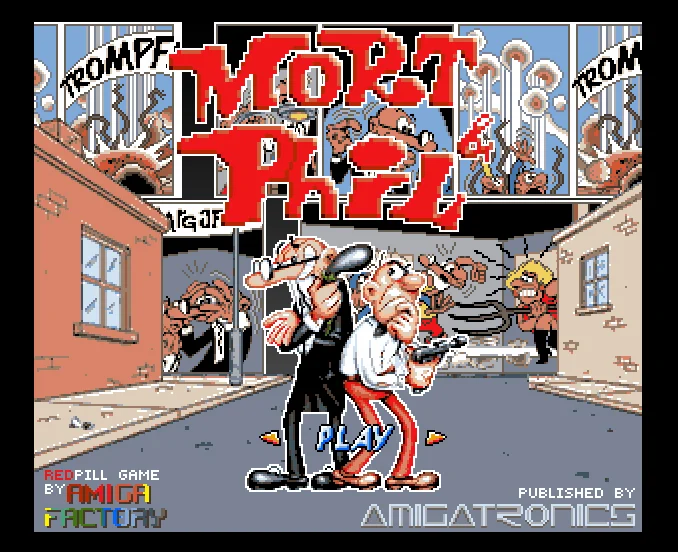
A significant development for aficionados of classic computing and iconic comic book characters is underway as a new unofficial game for the Commodore Amiga, starring Mort & Phil – known globally as Mortadelo y Filemón and in Germany as Clever & Smart – approaches its final stages of development. This upcoming adventure game is explicitly designed as a poignant tribute to the late Spanish comic legend Francisco Ibáñez Talavera, who passed away in July 2023 at the age of 87, leaving behind an unparalleled legacy in the world of graphic storytelling. The game promises to revive the zany escapades of the two bumbling secret agents on a platform cherished by many for its historical significance and ongoing vibrant homebrew community.
The Enduring Legacy of Francisco Ibáñez Talavera
Francisco Ibáñez Talavera, born in Barcelona in 1936, was a titan of Spanish comics, often regarded as one of the most prolific and influential cartoonists in the country’s history. His career, spanning over six decades, saw him create a pantheon of beloved characters, but none achieved the global recognition and enduring popularity of Mortadelo y Filemón, who first debuted in 1958 in the weekly comic magazine Pulgarcito. The series, initially titled Mortadelo y Filemón, agencia de información, quickly captivated readers with its distinctive blend of slapstick humor, intricate visual gags, and satirical commentary on everyday life and political events, all delivered through the chaotic missions of two incompetent secret agents working for the T.I.A. (Técnicos de Investigación Aeroterráquea, a clear parody of the CIA).
Ibáñez’s artistic style, characterized by its dynamic expressiveness and meticulous detail, made his comics instantly recognizable. He was a master of visual storytelling, often packing panels with numerous sub-plots and background jokes that rewarded careful re-reading. Over the decades, the series evolved, incorporating more complex narratives and expanding its cast of eccentric characters, including the perpetually exasperated Superintendent Vicente, the brilliant but often disastrous Professor Bacterio, and the formidable secretary Ofelia. By the time of his passing, Ibáñez had created nearly 200 albums of Mortadelo y Filemón, alongside numerous other successful series like Rompetechos, El botones Sacarino, and Pepe Gotera y Otilio. His work has been translated into over fifty languages and distributed across five continents, cementing his status as a global cultural icon. The international appeal is evident in the myriad of names given to Mortadelo and Filemón: from Clever & Smart in Germany and Norway, Flip & Flap in Germany, Paling & Ko in the Netherlands, Mortadelo e Salaminho in Portugal and Brazil, Flink och Fummel in Sweden, Mortadella e Filemone in Italy, Dörtgöz ve Dazlak in Turkey, to the universally adopted Mort & Phil in English-speaking territories. This widespread recognition underscores the profound impact Ibáñez had on generations of readers worldwide, and this Amiga adaptation serves as a fitting digital homage to his creative genius.
From Mobile Screen to Amiga Classics: A Digital Reimagining
The new Amiga title, also simply titled Mort & Phil, is an adaptation of a mobile game originally released in 2006. That mobile iteration was developed by M-solutions and B.R.B. Internacional, leveraging the widespread popularity of Ibáñez’s characters on portable devices during the burgeoning era of mobile gaming. While mobile gaming platforms of 2006 offered simpler graphics and controls compared to today’s sophisticated smartphones, they provided a new avenue for beloved franchises to reach a broader audience. The decision to adapt this specific mobile title for the Amiga speaks volumes about the enduring appeal of the original source material and the dedication of the retro gaming community to preserve and reimagine classic intellectual properties on vintage hardware.
The Amiga adaptation is being meticulously crafted using REDPILL, a development framework or set of tools designed to facilitate game creation on the Amiga platform. While specific details about REDPILL’s full capabilities or its broader adoption within the Amiga homebrew scene are not widely publicized, its utilization highlights the ongoing innovation and resourcefulness of developers working with classic systems. The choice of REDPILL suggests a commitment to optimizing the game for Amiga hardware, ensuring a smooth and authentic experience that aligns with the platform’s technical specifications and nostalgic charm. This port represents not just a technical endeavor but a cultural translation, bringing a modern (by 2006 standards) interpretation of classic characters back to a retro computing environment.
Gameplay Mechanics and Narrative: A Blend of Wit and Whimsy
At its core, Mort & Phil for the Amiga is described as a clever amalgamation of adventure, strategy, disguises, and a healthy dose of humor, faithfully mirroring the essence of Ibáñez’s original comics. The central narrative thrust sees the player embark on a critical mission to rescue the Superintendent, who has been unceremoniously kidnapped – a classic predicament for the T.I.A.’s most hapless agents.
Players are afforded the unique flexibility of choosing between Mortadelo and Filemón, with the added strategic advantage of being able to switch between the two characters at any point during gameplay. This mechanic is crucial, as the game’s level design is tailored to leverage the distinct abilities and personality quirks of each agent. Certain challenges will be exclusively surmountable by the intrepid Mortadelo, whose signature ability to don a myriad of disguises (ranging from animals to inanimate objects, often with hilarious and unexpected consequences) will be essential for infiltration, evasion, and puzzle-solving. Conversely, other obstacles will be specifically designed for the confident yet often clumsy Filemón, requiring his brute force, misguided logic, or perhaps simply his unique brand of persistence to overcome. This dual-character system promises to add significant depth to the gameplay, encouraging players to think strategically about which agent is best suited for a given situation, all while maintaining the lighthearted and unpredictable tone characteristic of the source material. The blend of puzzle-solving, stealth, and character-specific abilities positions Mort & Phil as a compelling entry in the Amiga adventure game library, appealing to fans of both the comics and classic point-and-click or action-adventure genres.
Technical Deep Dive: Navigating Amiga Hardware Architectures
Developing a game for the Amiga platform in the modern era presents a unique set of technical challenges, particularly when aiming for broad compatibility across its various hardware iterations. The Amiga line, released by Commodore from 1985 onwards, evolved significantly over its lifespan, primarily categorized into three main chipsets: OCS (Original Chip Set), ECS (Enhanced Chip Set), and AGA (Advanced Graphics Architecture).
- OCS (Original Chip Set): Found in early models like the Amiga 1000, 500, and 2000, OCS offered a palette of 4096 colors, typically displaying 32 colors on screen in standard resolutions (e.g., 320×200 pixels). It was revolutionary for its time, providing hardware-accelerated sprites, blitter, and copper coprocessor, enabling smooth animation and impressive graphics.
- ECS (Enhanced Chip Set): Introduced with models like the Amiga 500 Plus and 600, ECS provided minor enhancements over OCS, including more video modes and the ability to display 64 colors on screen in EHB (Extra Half-Bright) mode or 256 colors in HAM (Hold-And-Modify) mode, though HAM mode had specific pixel limitations and color fringing artifacts.
- AGA (Advanced Graphics Architecture): A significant leap forward, featured in the Amiga 1200 and 4000, AGA expanded the palette to 16.8 million colors (24-bit) and could display up to 256 colors from that palette in standard modes, or 262,144 colors in HAM8 mode. It also supported higher resolutions and faster graphics operations.
The developer’s initial ambition for Mort & Phil was universal compatibility across all Amiga models (OCS, ECS, and AGA), which led to the decision to utilize a 32-color palette. This choice is a pragmatic one, as 32 colors are natively supported by all OCS Amigas, ensuring the widest possible reach. However, the plan encountered a significant technical hurdle concerning parallax backgrounds. Parallax scrolling, a visual technique that creates an illusion of depth by moving background layers at different speeds than foreground layers, is highly desirable for enhancing the visual fidelity and immersion of platformers and adventure games. For OCS/ECS Amigas, a common limitation for parallax backgrounds is a 64-pixel width, which the developer found aesthetically unacceptable, fearing it would result in a "terrible" visual experience. This technical constraint led to the difficult decision to abandon the parallax background feature for the initial release, prioritizing visual quality over universal implementation of a specific effect.
The developer has, however, expressed openness to creating a separate version for OCS/ECS Amigas without a parallax background and without HAM screens during gameplay, should there be sufficient demand from the community. This demonstrates a responsiveness to the diverse Amiga user base and an understanding of the compromises sometimes necessary to deliver a quality experience on older hardware. The lack of HAM screens in such a version would simplify color management and potentially reduce CPU overhead, making the game more stable on less powerful OCS/ECS machines. This strategic approach underscores the challenges inherent in retro game development, where balancing technical aspirations with hardware realities and community expectations is paramount.
A Developer’s Dedication: Crafting Authenticity Through Meticulous Detail
The creation of Mort & Phil for the Amiga is clearly a labor of love, driven by a profound respect for Francisco Ibáñez’s original work. The developer has gone to extraordinary lengths to ensure that the game not only plays well but also looks and feels like an authentic extension of the comic books. This commitment to visual fidelity and artistic integrity is evident in the meticulous process of material adaptation.
All static screens within the game – including the introduction, menu interfaces, and game over screens – have been directly transferred from the original comic panels to the Amiga. This process typically involves scanning or capturing images from the physical comics, followed by their import into Amiga graphics software like Personal Paint. Once imported, each screen has undergone painstaking pixel-by-pixel retouching. This level of detail is critical to adapting high-resolution, full-color comic art to the Amiga’s specific color palettes and pixel resolutions, ensuring that the final output on an Amiga display looks as polished and true to the source material as possible. Such manual retouching is an art form in itself, requiring a keen eye and deep understanding of color theory and pixel art techniques to avoid visual artifacts or a "cheap" appearance.
Even more impressive is the effort invested in the animated menu background. Recognizing that the original mobile game’s animated background was of low quality and limited to just two colors, the developer embarked on an exhaustive search through Ibáñez’s vast catalogue of Mortadelo y Filemón comics – nearly 200 titles strong. The objective was to find suitable panels that could be adapted to create a visually rich and dynamic animated sequence. Once identified, these panels were meticulously adapted to the Amiga format, likely involving resizing, cropping, and color reduction to fit the target 16-color palette (a common choice for efficient animation on Amiga, especially for OCS/ECS compatibility). Following this adaptation, each frame was subjected to the same rigorous pixel-by-pixel retouching as the static screens. This dedication, ensuring that even the subtle animated elements resonate with the original comic’s aesthetic, exemplifies the project’s core mission: to immerse the player in a game that genuinely feels like an interactive comic book, a testament to Ibáñez’s enduring artistry. The developer’s decision to make all materials used in this creation publicly available further underscores this commitment to community and preservation.
The Amiga Homebrew Renaissance and Broader Implications
The release of Mort & Phil is more than just another game; it is a vibrant testament to the enduring power of the Amiga homebrew scene. Decades after Commodore’s bankruptcy in 1994, the Amiga platform continues to foster a passionate community of developers, artists, and enthusiasts who actively create new software, hardware upgrades, and games. This "retro renaissance" is driven by nostalgia, a love for classic computing architectures, and a desire to explore the creative possibilities of these machines with modern tools and insights. New Amiga games are frequently released, often pushing the boundaries of what was thought possible on the original hardware, or, as in this case, breathing new life into beloved franchises.
This particular project holds significant implications. Firstly, it provides a crucial tribute to Francisco Ibáñez Talavera, ensuring his characters continue to entertain on diverse platforms, bridging generations of fans. Secondly, it enriches the Amiga software library with a new, high-quality adventure game, contributing to the platform’s ongoing relevance. For the retro gaming community, such releases are vital, demonstrating the continued viability and creative energy within the scene. They also offer a unique opportunity to experience beloved characters in a different, nostalgic context, often with a level of dedication and craftsmanship that rivals commercial releases. The detailed account of the development process also serves as an educational resource, inspiring aspiring retro developers and showcasing the intricate work involved in platform adaptation.
Development Status and Future Outlook
The development of Mort & Phil is currently in its final stages, a promising update for eager fans. The crucial phase of level design has been completed, indicating that the core gameplay structure and challenges are in place. The developer is now primarily focused on rigorous internal testing, systematically searching for any lingering bugs or unforeseen issues that might have slipped through earlier iterations. This bug-hunting phase is critical for ensuring a stable and enjoyable user experience.
Following the successful eradication of bugs, the next significant step will be the integration of music and sound effects. Audio design plays a pivotal role in establishing atmosphere and enhancing gameplay, and the careful selection and implementation of sound will be essential to capture the comedic and adventurous spirit of Mort & Phil. Finally, the game will be handed over to a team of beta testers. This external testing phase is invaluable, as beta testers, with their fresh perspectives and diverse hardware configurations, often uncover bugs and usability issues that might be missed by the primary developer. Their feedback will be instrumental in refining the game to its highest possible standard before its eventual release.
The future outlook for Mort & Phil appears bright, with a clear path to completion. The developer’s transparent communication about the technical challenges, particularly regarding Amiga hardware compatibility and the potential for an OCS/ECS-specific version, demonstrates a thoughtful and community-oriented approach. This game is poised to be a cherished addition to the Amiga library, a heartfelt tribute to a master cartoonist, and a testament to the enduring creativity of the retro computing community.