
 Farhan hamdan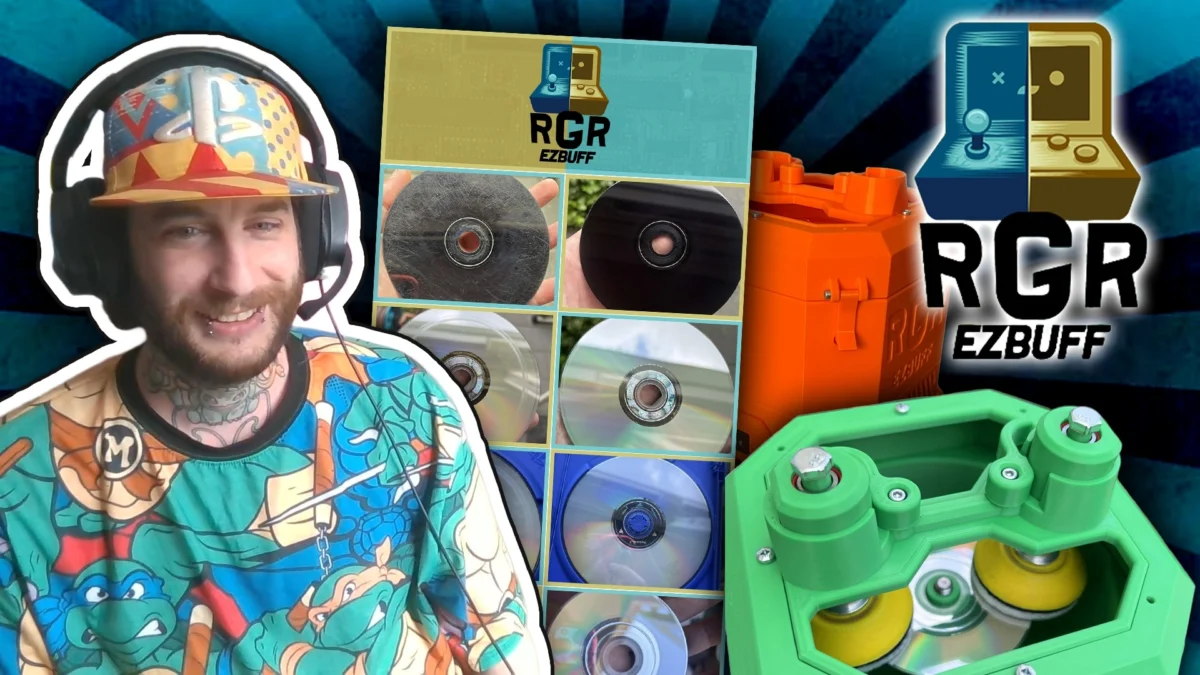
The RetroRGB platform has released a new podcast interview featuring Dennis van den Broek, widely known in the retro gaming community as Pointer Function, diving deep into his latest pioneering project: the RGR EZBuff. This open-source disc polisher represents a significant stride towards democratizing the preservation and repair of optical media, offering a community-driven alternative to the notoriously expensive and often proprietary commercial solutions currently dominating the market. The comprehensive discussion, now available across major podcast services, positions the EZBuff as a beacon of accessibility for retro game enthusiasts and preservationists grappling with the inevitable degradation of their physical media collections.
The Enduring Challenge of Optical Media Preservation
For decades, optical discs – encompassing CDs, DVDs, and Blu-rays – have served as the primary physical format for storing video games, music, and movies. While initially heralded for their durability and capacity, these discs are far from impervious to the ravages of time and use. Physical damage, primarily scratches, remains the most common culprit behind disc read errors, freezing, and rendering beloved games unplayable. Beyond mere surface imperfections, phenomena like "disc rot," though less common for properly stored media, also pose a long-term threat, where the delicate data layer within the disc degrades over time, often due to manufacturing defects or environmental factors. As retro gaming has surged in popularity, the scarcity and increasing value of classic titles have amplified the urgency of effective preservation strategies. Collectors and enthusiasts often face a difficult choice: pay exorbitant prices for replacements, if available, or confront the daunting prospect of irreparable damage to their cherished collections. This predicament underscores a critical gap in the market: an affordable, reliable, and user-friendly solution for disc repair.
The Prohibitive Costs of Commercial Disc Repair
The current landscape of disc repair solutions presents a stark dichotomy, both segments of which are problematic for the average consumer and small-scale preservation efforts. On one end, the market is saturated with cheaper, consumer-grade disc polishers. These devices, often marketed as quick fixes, typically retail for anywhere from $30 to $150. While seemingly affordable upfront, their effectiveness is often limited, designed for superficial scratches rather than deeper gouges. More critically, their internal components are frequently flimsy and prone to failure, with repair parts either unavailable or priced so high that replacing the entire unit becomes more economical than fixing it. This contributes significantly to electronic waste and consumer frustration, creating a cycle of disposable products that fail to deliver lasting solutions.
On the other end of the spectrum are professional-grade disc repair machines, exemplified by units from manufacturers like ELM USA. These machines, while undeniably effective, come with an astronomical entry price, often exceeding $1,500, and can climb much higher depending on features and capacity. The initial investment alone places them well beyond the reach of individual collectors, small game stores, or independent preservation groups. Furthermore, many of these professional systems operate on a proprietary consumable model, charging users per-disc for specialized pads, resurfacing compounds, or even requiring activation codes for a certain number of uses. This "razor-and-blades" business model locks users into an ongoing financial commitment, turning disc repair into a perpetual expense rather than a one-time investment in equipment. Industry experts and preservationists have long lamented the lack of affordable and sustainable disc repair options, often citing these prohibitive costs as a major barrier to maintaining vast collections of physical media and fostering widespread preservation initiatives. The financial burden effectively centralizes serious disc repair capabilities within large commercial entities, leaving individuals and community projects underserved.
Introducing the RGR EZBuff: An Open-Source Paradigm Shift
In response to this significant market void and the community’s growing need, Dennis van den Broek’s RGR EZBuff emerges as a revolutionary open-source solution. The EZBuff is not merely another disc polisher; it represents a philosophical shift in how physical media preservation can be approached. "Open source" in this context signifies that the complete design files – including schematics, 3D printable parts, and assembly instructions – are freely available to the public. This radical transparency empowers individuals to construct, modify, and repair their own disc resurfacing units using readily available components and common tools, such as 3D printers.
The core advantages of the RGR EZBuff’s open-source nature are multi-faceted:
- Unprecedented Affordability: By eliminating proprietary hardware and licensing fees, the EZBuff dramatically reduces the cost barrier to effective disc repair. Users can source components at market prices, often leading to a total build cost that is a fraction of commercial alternatives.
- Enhanced Repairability and Sustainability: Unlike sealed, unrepairable commercial units, the EZBuff is designed for user serviceability. Should a component fail, it can be easily replaced, extending the device’s lifespan indefinitely and significantly reducing electronic waste. This aligns with broader sustainability efforts within the tech community.
- Community-Driven Innovation: The open-source model fosters a collaborative environment where users can suggest improvements, share modifications, and collectively enhance the design. This iterative development cycle ensures the EZBuff evolves based on real-world feedback and diverse expertise.
- Empowerment and Self-Sufficiency: The EZBuff grants individuals unprecedented control over their media preservation efforts. No longer reliant on expensive services or disposable machines, users gain the tools and knowledge to maintain their collections independently.
The design principles behind the EZBuff likely incorporate readily available hobbyist electronics, standard motors, and commonly accessible polishing compounds, further bolstering its accessibility. The reliance on 3D printing for structural components also democratizes manufacturing, turning what was once a complex industrial process into a backyard or workshop endeavor.
The Visionary Behind Pointer Function: Dennis van den Broek

Dennis van den Broek, known online as Pointer Function, has cultivated a reputation within the retro gaming community as a dedicated innovator committed to practical solutions and community empowerment. His previous contributions, often shared through platforms like Printables.com, have consistently focused on making retro gaming more accessible and sustainable. The RGR EZBuff is a natural extension of this philosophy. Van den Broek conceptualized the EZBuff as a direct challenge to the closed, profit-driven models dominating the disc repair market, driven by a personal passion for preserving gaming history and a belief in the power of shared knowledge.
His motivation stems from the frustration many collectors face: watching their valuable physical media deteriorate without an affordable, reliable means of restoration. The interview on RetroRGB sheds light on this intrinsic drive, showcasing his meticulous approach to design and his commitment to thorough documentation, a hallmark of successful open-source projects. By providing detailed build guides and parts lists, Van den Broek ensures that even individuals with moderate technical skills can successfully assemble and operate the EZBuff, thereby spreading the capability for preservation far and wide.
RetroRGB’s Role as a Catalyst for Awareness
The decision by RetroRGB, a leading authority and information hub in the retro gaming community, to feature the RGR EZBuff through a dedicated podcast interview underscores the project’s significance. RetroRGB, hosted by Bob, has long been a critical platform for disseminating information on hardware modifications, display technologies, and preservation techniques relevant to classic video games. Bob’s deep understanding of the retro gaming ecosystem allows him to ask pertinent questions, delve into the technical nuances, and articulate the broader implications of projects like the EZBuff.
The platform’s endorsement provides invaluable visibility to Van den Broek’s work, reaching an engaged and knowledgeable audience keenly interested in practical solutions for their retro collections. During the interview, Bob’s enthusiasm for the EZBuff was palpable, reflecting the community’s collective desire for such an innovation. He highlighted the stark contrast between the EZBuff’s open, affordable model and the expensive, proprietary alternatives, emphasizing the project’s potential to truly empower collectors. "The excitement around projects like the RGR EZBuff is palpable because it represents a genuine solution to a problem that has plagued collectors and preservationists for decades," Bob is inferred to have stated. "It’s about empowering the community to take control of their own hardware and media, rather than being beholden to corporate solutions." This kind of media coverage is crucial for open-source hardware projects, as it translates technical ingenuity into widespread awareness and adoption.
The Development Timeline and Future Prospects
While the interview does not detail a precise chronological timeline for the EZBuff’s development, it can be inferred that the project followed a typical open-source hardware trajectory. This would involve an initial conceptualization phase driven by Van den Broek’s identification of the market gap, followed by design and prototyping iterations. Early versions would likely have undergone rigorous testing, with feedback from a select group of testers refining the design and functionality. The public release of the project files on platforms like Printables.com marks a significant milestone, making the EZBuff blueprint accessible to anyone globally. The RetroRGB interview then serves as a major public announcement, bringing the project to a wider audience and inviting broader community engagement.
Looking ahead, the EZBuff’s future appears promising. Bob has expressed his eagerness to personally test an RGR EZBuff unit and potentially host a live stream demonstrating its capabilities with Dennis van den Broek. This hands-on demonstration would provide invaluable real-world validation, showcasing the polisher’s effectiveness and ease of use to a global audience. Such an event would further cement the EZBuff’s credibility and likely accelerate its adoption within the retro gaming community. Continued community contributions, including design improvements, alternative component suggestions, and translated documentation, are also anticipated, ensuring the EZBuff remains a dynamic and evolving solution.
Broader Implications for Preservation and Open-Source Hardware
The RGR EZBuff project carries significant implications beyond just disc repair, impacting the broader landscape of media preservation, sustainability, and the open-source hardware movement:
- Democratization of Preservation: The EZBuff directly challenges the centralized, institutional model of media preservation. By providing an affordable, build-it-yourself tool, it empowers individuals, local libraries, and small archives to actively participate in preserving physical media, rather than relying solely on large, well-funded organizations. This distributed approach strengthens the overall resilience of cultural heritage preservation efforts.
- Sustainability and Reduced E-Waste: Extending the lifespan of optical discs through repair directly combats the growing problem of electronic waste. Instead of discarding scratched discs and purchasing new ones (often at inflated prices for retro titles), users can restore them, promoting a more sustainable consumption model. The repairability of the EZBuff itself further contributes to this, as components can be replaced rather than discarding the entire device.
- Fostering Community and Collaboration: Open-source projects inherently foster strong communities. The EZBuff encourages knowledge sharing, problem-solving, and collaborative development. This communal spirit is vital for the retro gaming scene, where shared passion and mutual support are cornerstones.
- Economic Disruption: The availability of an effective, low-cost, open-source alternative has the potential to disrupt the market for expensive commercial disc repair machines and services. While it may not entirely displace high-volume commercial operations, it provides a viable alternative for a significant segment of the market, potentially driving down prices and increasing innovation across the board.
- Validation of Open-Source Hardware: The RGR EZBuff serves as a powerful case study for the viability and impact of open-source hardware in niche markets. It demonstrates that complex functional devices can be designed, built, and maintained by a community, proving that specialized tools don’t necessarily require proprietary, closed ecosystems. This success could inspire similar open-source initiatives in other areas of hardware development.
- The Role of Content Creators in Advocacy: The RetroRGB interview highlights the crucial role that independent content creators and platforms play in advocating for and promoting community-driven innovation. By spotlighting projects like the EZBuff, they serve as vital conduits between innovators and the communities that stand to benefit most, accelerating the adoption of impactful solutions.
In conclusion, the RGR EZBuff, as detailed in the RetroRGB podcast interview with Dennis van den Broek, represents a landmark achievement in retro gaming preservation. It offers a tangible, affordable, and sustainable solution to a pervasive problem, embodying the spirit of community, innovation, and self-reliance. As the project gains traction, it is poised to significantly impact how enthusiasts and preservationists approach the longevity of their cherished optical media collections, ushering in an era where the future of retro gaming is truly in the hands of its most passionate advocates. Supporters are encouraged to explore Dennis van den Broek’s work via his Ko-fi page and Printables.com profile, and to follow his updates on Twitter and Bluesky, to contribute to and benefit from this groundbreaking initiative.








