
 Jia Lissa
The transition from the 16-bit Genesis era to the 32-bit Saturn period remains one of the most scrutinized chapters in the history of the interactive entertainment industry. For Sega, a company that once commanded over 50% of the North American console market, the mid-1990s were characterized by internal philosophical divides, technical friction, and a shifting global landscape. New insights from Mike Fischer, a former executive who served at both Sega Enterprises in Japan and Sega of America, provide a rare perspective on the operational mechanics that defined the company’s rise and eventual withdrawal from the hardware business.
Fischer’s tenure, which began in Tokyo in 1990, spanned the release of the Game Gear, the birth of Sonic the Hedgehog, and the turbulent launch of the Saturn. His experiences offer a nuanced counter-narrative to the common industry trope of a "bitter rivalry" between the Japanese and American branches, suggesting instead that the friction was the result of differing corporate philosophies and the pressures of an export-driven business model.

The Tokyo Foundation: Frugality and the 16-Bit Peak
Mike Fischer joined Sega Enterprises on April 1, 1990, entering the Overseas Consumer Products Business Division during a pivotal moment. While the Mega Drive (known as the Genesis in North America) had launched in Japan in 1988, it had struggled to gain significant traction against the dominant Nintendo Famicom. However, the Western markets were beginning to surge.
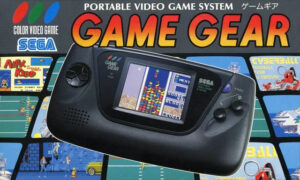
Fischer’s early role was as a "utility player," performing tasks ranging from translating technical repair documents to naming consumer peripherals, such as the "Gear-to-Gear" cable for the Game Gear. This period highlighted a stark contrast in corporate culture. While Sega of America, under the leadership of Tom Kalinske, began to adopt the high-spending, aggressive marketing tactics of a Silicon Valley giant, the Tokyo headquarters remained deeply frugal. Fischer recalls a culture where paper was recycled as scratch pads and every yen was accounted for, a byproduct of a company that had not yet seen the massive financial windfall of the 16-bit era.
During this time, Fischer was also a first-hand witness to the "cool" factor that defined Sega’s brand. He served as a translator for Michael Jackson during the pop star’s visits to Sega’s Otorii office and the Roppongi GIGO arcade. These interactions were more than mere celebrity sightings; they represented Sega’s strategy of integrating gaming with broader pop culture, a move that would eventually propel the Genesis to the top of the U.S. charts.

The Pico Incident: A Case Study in Ignored Expertise
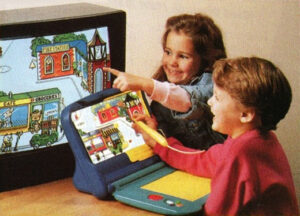
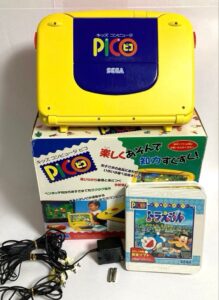
By 1994, Fischer transferred to Sega of America as a product manager, specifically focused on the Sega Pico, an "edutainment" system. This period revealed the growing disconnect between the Japanese headquarters and the American subsidiary.
The most telling example of this friction occurred during a high-level meeting involving Sega President Hayao Nakayama and Tom Kalinske. Kalinske, a former Mattel CEO with unparalleled expertise in the toy industry, argued that the Pico needed to be priced at $99 to be competitive in the U.S. market. Japanese engineers and middle managers, however, had ignored these directives, resulting in a product that cost significantly more due to over-engineered hardware, such as unnecessarily heavy-duty handles and excessive plastic in the cartridges.
Fischer recalls Nakayama’s legendary temper flaring not at the Americans, but at his own Japanese staff. Nakayama reportedly berated his team for ignoring the "most knowledgeable person in the world" regarding toy marketing. This incident underscores a critical theme in Sega’s history: while the top leadership often respected the American division’s success, the middle management in Japan often felt a sense of resentment or "the tail wagging the dog," leading to a systematic breakdown in communication.
The Saturn Transition and Technical Miscalculations
The shift to the 32-bit era is often cited as the beginning of Sega’s decline. The Saturn, launched in Japan in late 1994 and the U.S. in 1995, was a complex machine that featured dual Hitachi SH-2 processors. While powerful for 2D sprite manipulation, the architecture was notoriously difficult for developers to program for, especially as the industry pivoted toward 3D polygons.
Fischer notes that the decision to use Hitachi chipsets over a potential successor to the Motorola 68000 (the heart of the Genesis) may have been influenced by Japanese domestic industrial pressures rather than pure technical merit. This lack of continuity, combined with poor technical documentation, hindered Western developers.
Comparative Hardware Sales Data (Approximate Units):
- Sega Genesis/Mega Drive: 30.75 million
- Super Nintendo (SNES): 49.1 million
- Sega Saturn: 9.26 million
- Sony PlayStation: 102.49 million
The data illustrates the precipitous drop Sega experienced. Fischer suggests that the American team wanted to continue milking the Genesis, which was still profitable, while Japan was eager to move on to the Saturn to erase the Mega Drive’s failure in its home territory. This misalignment led to the "32X" stop-gap hardware, which further confused consumers and diluted the brand’s focus.
The Export Model and Financial Pressures
A significant factor in the financial strain on Sega of America (SOA) was the company’s export-driven accounting model. Sega Japan functioned as the primary manufacturer, selling hardware and software to SOA. This meant that the Japanese headquarters often "pushed" inventory onto the American subsidiary to bolster its own profit and loss (P&L) statements.
When the market cooled or a product underperformed, SOA was left holding the inventory and the associated costs of price protection and retail returns. This structural arrangement meant that even when the Genesis was successful, the American branch was often under immense pressure to meet escalating and sometimes unrealistic sales forecasts set by Tokyo.
The Legacy of Sonic and the Myth of the "Lone Creator"
Fischer’s insights also extend to the creative history of the company, specifically the creation of Sonic the Hedgehog. While Yuji Naka is often credited as the sole creator of the icon, Fischer emphasizes the critical roles played by character designer Naoto Ōshima and level designer Hirokazu Yasuhara.
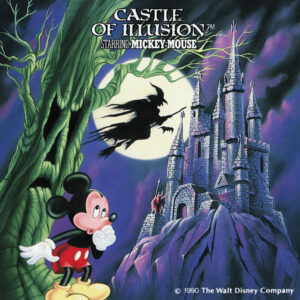
According to Fischer, Naka’s reputation for difficult leadership and his later attempts to "rewrite history" created internal friction. Ōshima’s original inspiration for Sonic—a combination of the head of Felix the Cat and the body of Mickey Mouse (later clarified as Doraemon for Japanese audiences)—was the true spark for the mascot. The success of Sonic was a collaborative effort of the "Sonic Team," a fact often obscured by Naka’s more dominant public persona.
The Shift to Third-Party and the Peter Moore Era
By the early 2000s, the failure of the Dreamcast to achieve the necessary market share to sustain hardware manufacturing led to a radical transformation. Under the leadership of Peter Moore, Sega began the painful process of transitioning into a multi-platform software developer.
Fischer, who returned to Sega during this period after a stint at Namco, describes the transition as a necessary evolution. He was tasked with delivering the "Gamer’s Manifesto" to the Japanese teams, explaining that the U.S. market had matured. The demand for M-rated content, multiplayer longevity, and a move away from simple arcade ports was essential for survival. This message was met with resistance, most notably from Yuji Naka, but was embraced by forward-thinking creators like Toshihiro Nagoshi, who would go on to create the highly successful Yakuza (Like a Dragon) series.
Broader Impact and the Modern Sega
Today, Sega exists as a subsidiary of Sega Sammy Holdings. The company has moved away from its hardware roots to become a powerhouse in the PC and console publishing space, owning major Western studios like Creative Assembly and Relic Entertainment (until recently), and maintaining strong Japanese franchises like Persona and Sonic.
The current leadership under Shuji Utsumi appears to be leaning into a "New Sega" philosophy—respecting the legacy IP while demanding modern innovation. The recent success of Sonic Mania (a project led by fans-turned-developers) and the global growth of the Yakuza franchise suggest that the company has finally found a balance between its Japanese creative roots and Western market demands.
Fischer’s reflections serve as a reminder that the "Console Wars" were not just fought on retail shelves, but within the boardrooms and R&D labs of a company trying to bridge two very different worlds. As Sega continues to revitalize its classic brands for a new generation, the lessons of the 1990s—the importance of listening to local expertise, the necessity of developer-friendly architecture, and the danger of corporate silos—remain as relevant as ever.








