Edi Durjana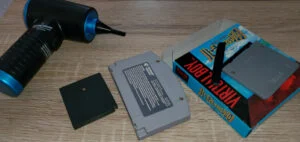
Libretro, a prominent force in the retro gaming emulation scene, has unveiled a groundbreaking utility core designed to address the pervasive issue of digital data degradation in game ROMs. Developed by the esteemed Jesse Talavera, known for his significant contributions to the melonDS DS core, McSoftServe, and various enhancements to RetroArch, this new offering, dubbed "ROM Cleaner," promises to maintain the integrity and playability of digital game backups. This announcement marks a unique expansion of RetroArch’s capabilities, moving beyond traditional emulation to active digital preservation.
The Genesis of ROM Cleaner: A Developer’s Vision
Jesse Talavera has long been a pivotal innovator within the Libretro ecosystem. His work on the melonDS DS core significantly improved the emulation of Nintendo DS titles, offering robust performance and feature parity for enthusiasts. Concurrently, his development of McSoftServe provided essential server-side utilities, streamlining operations and enhancing the overall user experience for RetroArch users. Talavera is also credited with implementing crucial improvements to RetroArch itself, including refined microphone support for various emulated systems and the integration of XDelta softpatching, a feature invaluable for applying unofficial patches or translations to game ROMs without altering the original files. These previous endeavors consistently showcased his commitment to enhancing both the technical fidelity and user accessibility of retro gaming experiences.
The development of ROM Cleaner, which Talavera admits was a clandestine project, underscores a deeper commitment to the longevity of digital cultural heritage. While RetroArch’s primary design ethos revolves around the emulation of historical gaming platforms, Talavera recognized a critical unmet need: the active maintenance of the digital assets themselves. His track record of identifying and solving complex technical challenges within the emulation community positioned him uniquely to tackle the abstract yet very real problem of digital file degradation. This new utility core is a testament to his proactive approach, aiming to ensure that the digital artifacts of gaming’s past remain as pristine and functional as possible for future generations.
Addressing the Scourge of Digital Degradation
The concept of data degradation is a familiar, albeit often overlooked, adversary for digital archivists and retro gamers alike. While physical media such as flash memory, magnetic tapes, and optical discs are visibly susceptible to decay—losing charge, decomposing, or suffering from "disc rot"—digital files stored on modern storage devices are far from immune. This phenomenon, often referred to as "bit rot" or "data decay," describes the gradual, undetectable corruption of data over time due to various factors. These can include:
- Media Deterioration: Even solid-state drives (SSDs) and hard disk drives (HDDs) have finite lifespans. SSDs can lose data integrity if left unpowered for extended periods, as the electrical charges holding data in NAND flash cells dissipate. HDDs, with their moving parts, are subject to mechanical failure, head crashes, and magnetic domain instability.
- Environmental Factors: While less direct than for physical media, extreme temperatures or humidity can affect storage hardware, leading to errors.
- Software Glitches and Firmware Bugs: Errors in operating systems, file systems, or storage device firmware can inadvertently corrupt data during read/write operations.
- Cosmic Rays and Alpha Particles: Extremely rare but documented cases show that high-energy particles can flip individual bits in memory or storage, leading to single-bit errors.
- Human Error: Accidental deletion, improper shutdowns, or flawed backup procedures contribute significantly to data loss.
The cumulative effect of these factors means that a digital ROM file, no matter how carefully stored, can eventually become corrupted, leading to issues ranging from minor graphical glitches to complete failure to boot. For the retro gaming community, where the authenticity and integrity of game data are paramount, this represents a significant threat to the long-term playability and historical accuracy of their collections. Traditional solutions often involve maintaining multiple backups, using checksums to verify file integrity, and periodically refreshing data to new storage media. However, these methods are largely reactive or preventative; ROM Cleaner proposes a more proactive, almost restorative, approach.
ROM Cleaner: A Novel Approach to Digital Preservation
ROM Cleaner distinguishes itself from conventional data integrity tools through its unique methodology and user interaction. Talavera conceptualizes "digital dust" as the metaphorical accumulation of these tiny, often imperceptible, data corruptions that eventually render a ROM unplayable. Unlike standard checksum utilities that merely identify corruption, ROM Cleaner purports to actively "rid it of the dust that’s accumulated over the years." The most striking and unconventional aspect of this utility is its activation method: "All you need is a microphone and a set of lungs."
This seemingly whimsical requirement, a direct nod to the classic ritual of blowing into dusty Nintendo Entertainment System (NES) cartridges to make them work, masks what is intended to be a sophisticated internal process. In a journalistic context, this "blowing" action should be understood as an unorthodox, user-initiated trigger for a complex digital diagnostic and repair sequence. It implies an active engagement from the user, transforming a passive file into an interactive object of maintenance.
While the exact technical details of how a vocal input initiates a "cleaning" process on a digital file are proprietary to Libretro and Talavera, one can infer several potential mechanisms that such a utility might employ in a realistic scenario, interpreting the "blowing" as a symbolic act of initiation:
- Advanced Error Detection and Correction Algorithms: Beyond simple checksums (like MD5 or SHA-256), ROM Cleaner could employ more sophisticated algorithms capable of identifying common patterns of corruption or deviations from expected data structures within specific ROM formats. This might involve statistical analysis of bit sequences or machine learning models trained on vast datasets of both pristine and known-corrupted ROMs.
- Reference Database Integration: A robust system might connect to an online database of verified, pristine ROMs. When a user "cleans" a file, the utility could compare the corrupted file against its canonical counterpart, identifying discrepancies and attempting to patch or repair sections using data from the verified version. This would be particularly effective for common ROMs where multiple verified copies exist.
- Heuristic Repair Mechanisms: For less common ROMs without readily available verified references, ROM Cleaner might employ heuristic methods. This could involve reconstructing missing or corrupted data based on surrounding intact data, or applying general repair techniques common to specific file types, such as header reconstruction or checksum recalculation based on reconstructed data.
- User-Initiated Scan and Repair: The "microphone and lungs" input could simply be an unconventional user interface element that initiates a deep scan and repair process. Instead of clicking a button, the user performs a physical action that signals their intent to "cleanse" the digital file. This adds a tactile and memorable dimension to digital maintenance, bridging the gap between physical and digital preservation rituals.
This innovative approach positions ROM Cleaner not just as another utility, but as a conceptual bridge between the tangible past of physical media and the ethereal realm of digital data. It acknowledges the emotional and habitual connections gamers have with their hardware while applying advanced digital solutions to modern preservation challenges.
Broader Implications for Game Preservation and Emulation
The introduction of ROM Cleaner carries significant implications for the broader field of digital game preservation and the retro gaming community. Its potential impact extends to several key areas:
- Extended Lifespan of Digital Collections: By offering an active repair mechanism, ROM Cleaner could significantly extend the effective lifespan of digital game collections. Instead of simply backing up potentially corrupted data, users could periodically "clean" their ROMs, ensuring their continued playability. This is crucial for rare or obscure titles that might not have easily accessible pristine backups.
- Empowering Individual Archivists: While large institutions like the Internet Archive undertake monumental digital preservation efforts, ROM Cleaner empowers individual users to actively participate in the maintenance of their own digital heritage. This decentralized approach can foster a more resilient and robust network of preserved game data.
- Enhancing Trust in Emulation: One of the criticisms leveled against emulation is the potential for inaccurate or corrupted game experiences. A tool like ROM Cleaner, by ensuring the integrity of the source ROMs, could bolster confidence in the fidelity and authenticity of emulated gameplay, ensuring that players experience games as they were originally intended.
- Addressing Abandonware Challenges: Many classic games fall into a legal gray area known as "abandonware," where copyright holders no longer support or sell the titles, yet their legal status remains ambiguous. Preservation efforts often rely on community archiving. A tool that helps maintain the quality of these archived files is invaluable, although it does not resolve the underlying legal complexities of copyright and distribution.
- Inspiring Further Innovation: ROM Cleaner’s unique user interface and problem-solving approach could inspire other developers to think outside traditional paradigms for digital preservation and utility design. It highlights that even abstract digital problems can be approached with creative, user-centric solutions.
Libretro and RetroArch’s Commitment to Legacy Content
Libretro and its flagship project, RetroArch, have always been at the forefront of the mission to keep yesterday’s games playable and fun for generations. Their platform is built on the principle of universal emulation, offering a unified interface for a vast array of emulator "cores" that span decades of gaming history. ROM Cleaner aligns perfectly with this overarching mission by adding a layer of proactive maintenance to the existing framework.
The distribution mechanism for ROM Cleaner—via RetroArch’s core downloader on supported platforms—underscores Libretro’s commitment to accessibility and ease of use. This integration means that millions of RetroArch users can seamlessly access and deploy this new utility, making digital preservation a more integral part of their gaming routine. It reinforces the idea that maintaining digital archives is not just for specialists but for every enthusiast. Libretro’s ongoing development efforts, often driven by volunteer contributors like Talavera, continually push the boundaries of what is possible in digital heritage, ensuring that the software and hardware legacies of gaming are not lost to the passage of time.
Developer’s Perspective and Community Reception
Jesse Talavera, in his announcement, expressed his personal dedication to this cause, stating, "Our mission is to keep yesterday’s games playable and fun for generations, and ROM Cleaner is my latest contribution to that effort." This sentiment resonates deeply with the retro gaming community, which often views game preservation as a cultural imperative.
The initial reception from the community is anticipated to be a mix of intrigue, excitement, and practical curiosity. Many users will likely be eager to test the efficacy of ROM Cleaner on their own collections, particularly those with long-standing ROMs that may exhibit subtle signs of degradation. Discussions are expected to emerge on forums and social media regarding the technical interpretation of the "microphone and lungs" requirement, and empirical results from users who have tried the cleaning process. This community engagement is vital, as it provides real-world testing and feedback that can further refine and validate the utility’s effectiveness.
Moreover, the release of ROM Cleaner might spark broader conversations within the community about best practices for digital archiving, the role of checksumming, and the continuous evolution of tools needed to combat bit rot. It serves as a reminder that digital preservation is an ongoing battle, requiring constant innovation and vigilance.
The Future of Digital Archiving: Beyond Traditional Methods
ROM Cleaner represents a significant conceptual leap in the field of digital archiving. For decades, preservation efforts have largely focused on preventative measures: creating multiple backups, migrating data to new formats, and storing information in environmentally controlled data centers. While these methods remain crucial, ROM Cleaner introduces the idea of active, user-initiated digital restoration for individual files.
This paradigm shift encourages thinking beyond merely copying data to actively "repairing" it when corruption occurs. It opens the door for future utility cores that might target other forms of digital media degradation, or even integrate more advanced AI-driven repair mechanisms. The playful yet profound approach taken by Talavera with ROM Cleaner highlights that the future of digital preservation may not lie solely in industrial-scale data centers, but also in empowering individuals with accessible, innovative tools that make the maintenance of digital heritage an engaging and achievable task. As digital collections continue to grow in size and importance, tools like ROM Cleaner will become increasingly vital in ensuring that the digital memories of our past remain vibrant and accessible for generations to come.