Indra Gunadi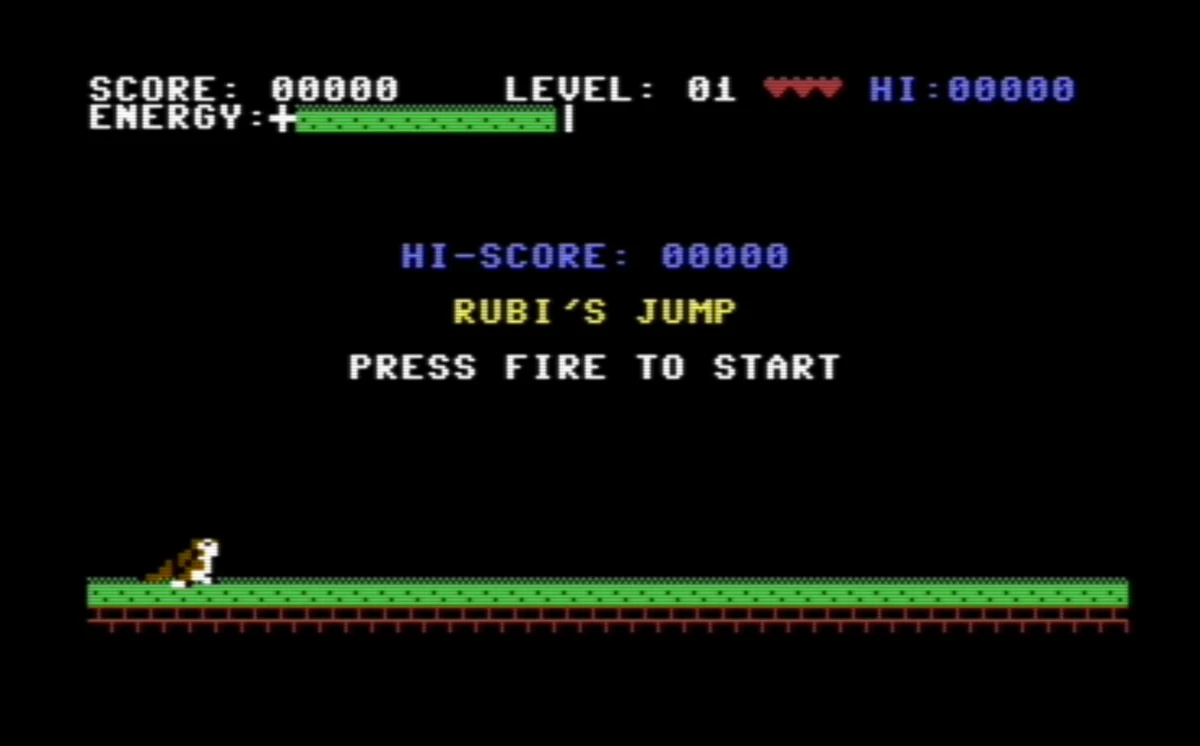
The announcement of "Rubi’s Jump," slated for a 2026 release, signals a heartwarming new addition to the vibrant and continually expanding library of games for the venerable Commodore 64 home computer. Developed by Cristian Cubillos, this title stands out not only as a testament to the enduring appeal and active homebrew scene surrounding the 8-bit classic but also for its deeply personal inspiration: a dedication to a cherished pet. The game challenges players to collect as many "Churus" as possible within a tight one-minute timeframe, controlled via a joystick in Port 2, and notably offers support for four languages: English, Spanish, French, and German. This blend of nostalgic platform, personal narrative, and accessible, competitive gameplay positions "Rubi’s Jump" as a potentially significant release within the retro gaming community.
A Pet-Inspired Pixel Adventure Takes Shape
"Rubi’s Jump" is poised to deliver a focused, arcade-style experience, characteristic of many beloved titles from the Commodore 64 era. The core objective—collecting Churus—is simple yet compelling, designed to encourage repeated play in pursuit of high scores. Churus, a popular brand of creamy cat treats, immediately contextualize the "beloved pet" dedication, suggesting the game’s namesake, Rubi, is likely a feline companion. This detail imbues the game with an immediate sense of warmth and relatability for pet owners and animal lovers worldwide.
The game’s one-minute time limit harks back to classic arcade cabinet design, where short, intense bursts of gameplay were crucial for attracting players and encouraging coin drops. On the Commodore 64, this design philosophy translates into an ideal pick-up-and-play experience, perfect for quick sessions or competitive rounds among friends. The choice of joystick control in Port 2 is standard for the C64, ensuring compatibility with the vast majority of existing peripherals and offering an authentic retro feel.
Perhaps one of the most remarkable features for a game developed for a vintage platform is its comprehensive multi-language support. Offering English, Spanish, French, and German versions significantly broadens the game’s potential audience, acknowledging the global nature of the Commodore 64’s original reach and its current enthusiast community. This level of localization is a considerable undertaking for any indie developer, particularly within the constraints of 8-bit programming, and speaks volumes about Cubillos’s dedication to accessibility and reaching a diverse player base.
The Enduring Legacy of the Commodore 64
The continued creation of new games for the Commodore 64, over four decades after its initial release in 1982, is a phenomenon that underscores the platform’s indelible mark on computing history and popular culture. The C64 holds the Guinness World Record as the best-selling single computer model of all time, with an estimated 12.5 million units sold. Its distinctive features, including the powerful MOS Technology 6510 CPU, the sophisticated SID (Sound Interface Device) chip for unparalleled audio capabilities, and its vibrant color palette, fostered a generation of programmers, artists, and musicians.
A Thriving Developer Community
Today, the C64 is supported by a remarkably active and passionate homebrew community. This community is a crucible of innovation, where seasoned veterans and new enthusiasts alike push the boundaries of the hardware. Forums, demoscene events, and dedicated websites like itch.io and CSDB (Commodore Scene Database) serve as hubs for sharing tools, tutorials, and, crucially, new game releases. Developers are driven by a mix of nostalgia, the challenge of programming within strict hardware limitations, and the camaraderie found in creating for a shared passion. Releases like "Rubi’s Jump" are not mere novelties but integral contributions to this ongoing cultural legacy.
The Allure of Retro Development
Developing for the Commodore 64 presents a unique set of challenges that appeal to a particular kind of programmer. Unlike modern platforms with gigabytes of RAM and multi-core processors, the C64 offers a mere 64 kilobytes of RAM (of which much is consumed by the Kernal and BASIC interpreter), a 1 MHz CPU, and a resolution of 320×200 pixels with a limited color palette. These constraints necessitate extreme optimization, clever coding tricks, and a deep understanding of the hardware. The process is often likened to crafting intricate clockwork, where every byte and CPU cycle counts. This environment fosters immense creativity and problem-solving skills, making the successful completion of a C64 game a significant achievement.
Cristian Cubillos: A Passionate Visionary
While specific details about Cristian Cubillos’s background are not extensively publicized, his decision to develop for the Commodore 64 and to imbue "Rubi’s Jump" with such a personal narrative suggests a profile common among contemporary retro game developers. He likely possesses a profound appreciation for the C64’s golden era, potentially having grown up with the machine or discovering its charm later through emulation and the homebrew scene. His commitment to multi-language support also hints at an international perspective, possibly hailing from a Spanish-speaking region, which would further explain the inclusion of Spanish alongside other major European languages.
The Genesis of "Rubi’s Jump"
The inspiration drawn from a beloved pet, Rubi, forms the emotional core of this project. It’s a testament to how personal experiences can translate into universal themes within creative works. For Cubillos, the creation of "Rubi’s Jump" might serve as both a loving tribute and a creative outlet to channel personal affection into a tangible, interactive form. This type of heartfelt dedication often resonates deeply with players, adding an extra layer of meaning beyond mere gameplay mechanics. It transforms the game from a simple high-score chaser into a more intimate experience.
Technical Hurdles and Creative Solutions
The development process for "Rubi’s Jump" would have involved several stages. Initially, conceptualization and design would focus on translating the "collect Churus" idea into concrete gameplay elements, considering the C64’s sprite limitations, scrolling capabilities, and collision detection. Graphical assets—sprites for Rubi, Churus, and environmental elements—would need to be meticulously crafted pixel by pixel, often using specialized retro graphics tools. Sound effects and background music, if present, would be programmed using the SID chip, a notoriously complex but rewarding process.
Integrating four languages is a particularly challenging aspect. This requires careful management of text strings within the C64’s limited memory, potentially using techniques like character set swapping or dynamic loading of text data to accommodate different alphabets and longer phrases. The efficiency of the code, likely written in assembly language or a C-like language compiled for the 6502 family processor, would be paramount to ensure smooth gameplay and responsive controls within the C64’s operational constraints. Testing across different C64 models and emulators would also be crucial to ensure broad compatibility and stability.
Gameplay Mechanics and Accessibility
"Rubi’s Jump" exemplifies a trend in modern retro game development: crafting accessible experiences that cater to both seasoned C64 enthusiasts and newcomers. The one-minute time limit ensures that sessions are brief and engaging, minimizing the barrier to entry often associated with more complex, longer retro titles.
The Charm of "Churus" and Personal Dedication
The choice of "Churus" as the collectible item is a clever touch. It directly reinforces the game’s dedication to a pet, likely a cat, given the product’s association. This specific, real-world item grounds the fantastical pixel world in a relatable, endearing way. It’s these small, personal details that often elevate homebrew games beyond mere technical exercises, fostering a stronger connection between the player and the developer’s vision. The objective is clear and immediate, making it easy for players of all skill levels to understand and jump into the action without extensive tutorials.
Broadening Horizons with Multi-Language Support
The inclusion of English, Spanish, French, and German is a significant differentiator. While many commercial C64 games from the 1980s saw localized releases, it is less common for modern homebrew titles to offer such extensive language options. This decision by Cristian Cubillos not only demonstrates a commitment to a global audience but also reflects the international composition of the retro computing community. It ensures that players from diverse linguistic backgrounds can fully appreciate the game’s instructions, any narrative elements (however minimal), and the developer’s personal message. From a technical standpoint, implementing multiple language sets efficiently within the C64’s memory footprint is a testament to skilled programming, often requiring creative solutions to store and retrieve text data without compromising performance.
Anticipation and Community Engagement
The announcement of "Rubi’s Jump" for 2026 places it in a forward-looking context within the retro gaming scene. While many new C64 games are released annually, those with a clear development roadmap and a unique hook, like a personal dedication and multi-language support, tend to generate significant buzz.
The Future of C64 Homebrew
The 2026 release date, whether indicative of a formal launch or a target for completion, suggests that the homebrew scene for the Commodore 64 is not merely maintaining but actively planning for the future. This longevity is supported by various factors, including the availability of modern development tools that streamline coding, graphics, and sound design; platforms like itch.io that provide easy distribution channels; and a dedicated fan base eager for new experiences on their beloved machines or emulators. Games like "Rubi’s Jump" serve as proof that the C64 remains a viable and inspiring platform for creative expression.
Fostering Inclusivity in Retro Gaming
The multi-language aspect is particularly important for fostering inclusivity. The retro gaming community, while globally connected, can sometimes be fragmented by language barriers. By actively supporting multiple languages, Cubillos is making a deliberate effort to welcome a broader segment of the C64’s international fan base, allowing more players to engage with "Rubi’s Jump" in their native tongue. This approach not only enhances user experience but also promotes a more diverse and interconnected retro gaming culture.
Broader Implications: Retro Gaming’s Enduring Appeal
"Rubi’s Jump" is more than just another game for a vintage computer; it is a micro-reflection of broader trends in the digital preservation movement and the enduring human desire for creative expression. Its very existence in 2026 highlights that digital history is not static but a living, evolving landscape.
Bridging Generations Through Pixels
For many, the Commodore 64 represents a bygone era of computing, yet titles like "Rubi’s Jump" demonstrate how these platforms continue to bridge generational gaps. Younger players, perhaps introduced to retro gaming through emulation or modern console compilations, can experience the foundational aesthetics and gameplay mechanics that shaped the industry. For veterans, it offers a fresh, new reason to revisit a cherished part of their past, reminding them of the joy and simplicity of early digital entertainment.
The Human Element in Digital Creation
The personal dedication to Rubi underscores a crucial aspect of independent game development: the human element. In an industry increasingly dominated by large studios and vast budgets, projects like "Rubi’s Jump" remind us that games can also be intimate expressions of love, memory, and personal passion. This emotional connection can often resonate more profoundly with players than high-fidelity graphics or expansive open worlds. It transforms the act of playing into an act of sharing a developer’s personal journey.
In conclusion, Cristian Cubillos’s "Rubi’s Jump" for the Commodore 64, with its anticipated 2026 release, is shaping up to be a noteworthy entry into the C64 homebrew scene. Its dedication to a beloved pet, accessible one-minute "Churu" collecting gameplay, and pioneering multi-language support (English, Spanish, French, and German) collectively position it as a charming, inclusive, and deeply personal tribute. It not only celebrates the enduring legacy of the Commodore 64 but also exemplifies the vibrant creativity and global connectivity of the modern retro gaming community, proving that even decades later, the 8-bit wonder continues to inspire new stories and challenges.