Cecilia Chamidah Nur
Hamster Corporation has officially announced the upcoming release of Taito’s Space Cyclone across a broad spectrum of modern gaming platforms, including Nintendo Switch, the anticipated Switch 2, PlayStation 4, PlayStation 5, and Xbox Series X|S. This significant re-release will be distributed under Hamster’s esteemed Arcade Archives and Arcade Archives 2 banners, marking a notable return for a title often overshadowed by its legendary predecessor, Space Invaders. The digital launch is slated for Thursday, June 18th, 2026, offering both standard and next-generation versions with varying price points and an upgrade path for existing console owners.
A Glimpse into Taito’s Post-Invaders Innovation
Originally hitting arcades in 1980, a mere two years after the global phenomenon of Space Invaders, Space Cyclone emerged from the creative mind of Tomohiro Nishikado, the visionary designer behind the original alien invasion classic. Built upon the same foundational arcade board as Space Invaders, Space Cyclone naturally shares a considerable amount of its DNA, presenting players with a familiar yet distinctly evolved shoot ’em up experience. Its relative obscurity compared to Space Invaders‘ monumental success has long made it a subject of fascination for arcade historians and enthusiasts, who recognize it as an important, albeit lesser-known, chapter in Taito’s pioneering history.
Space Invaders, released in 1978, was not merely a game; it was a cultural watershed. It single-handedly ignited the golden age of arcade gaming, driving unprecedented coin-drop revenues, causing a shortage of 100-yen coins in Japan, and captivating players worldwide with its simple yet addictive gameplay loop. Its success was so profound that it established Taito as a global force in the nascent video game industry and cemented Nishikado’s status as a foundational figure. Developing a follow-up to such an iconic title presented a unique challenge, and Space Cyclone represents Nishikado’s attempt to innovate within the framework he had so successfully established.
Gameplay Evolution: Terrestrial Threats and Tactical Twists
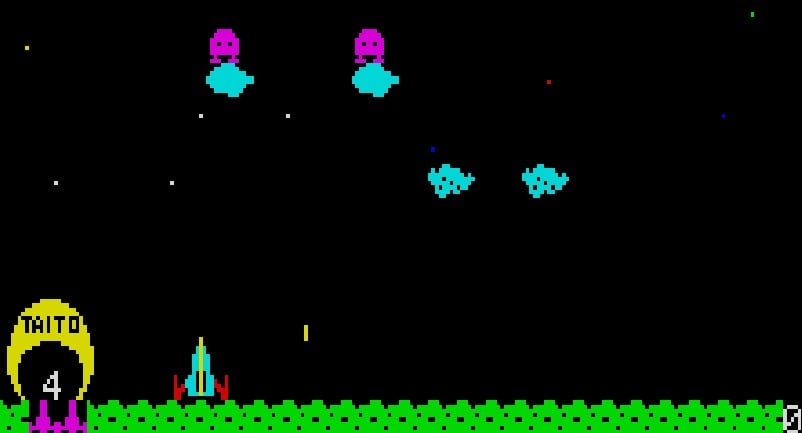
At its core, Space Cyclone retains the fundamental gameplay mechanics that made Space Invaders so compelling. Players command a lone starship, positioned at the bottom of the screen, tasked with strafing left and right to unleash a barrage of projectiles against an advancing alien threat. However, this is where the similarities begin to diverge, as Nishikado introduced several ingenious twists that set Space Cyclone apart and offered a fresh tactical challenge.
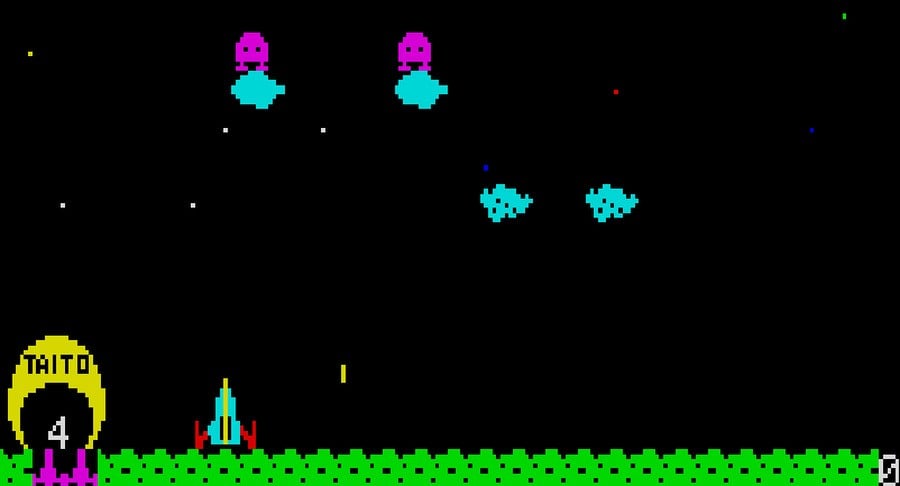
The most immediate and striking departure is the setting. While Space Invaders immersed players in the cold vacuum of space, Space Cyclone relocates the conflict to the vibrant, albeit perilous, surface of an alien planet. This change in environment is not merely cosmetic; it fundamentally alters the dynamics of the enemy approach. The antagonists, chillingly described as "insect cyborgs" and collectively known as BEMS, do not descend in the rigid, uniform rows and columns characteristic of the Space Invaders armada. Instead, these biomechanical threats materialize from the skies, travelling on ephemeral clouds and executing aggressive diving maneuvers towards the planetary surface.
The player’s primary objective remains the same: to prevent the alien forces from reaching their destination safely. However, Space Cyclone introduces a compelling risk-reward mechanic tied to this objective. Every BEM alien that successfully bypasses the player’s defenses and lands on the ground contributes to the construction of a formidable robotic adversary on the left side of the screen. As more BEMS land, this robot gradually takes shape, culminating in its activation. Once complete, this menacing automaton launches into the sky and unleashes its devastating "deadly Cyclone Shots" directly at the player, significantly increasing the challenge and creating a multi-front battle. This mechanic forces players to prioritize targets and maintain meticulous control over the battlefield, adding a layer of strategic depth absent in its predecessor. The visual and audible cues associated with the robot’s construction and subsequent attack also served to heighten tension and urgency in the arcade environment of 1980.
Technical Pedigree and Arcade Innovation

The decision to build Space Cyclone on the same arcade board as Space Invaders was both a practical and strategic choice for Taito. In the early 1980s, arcade hardware development was costly and time-consuming. Reusing a proven, successful architecture allowed developers like Nishikado to iterate on existing concepts, leverage familiar tools, and bring new titles to market more efficiently. This shared technical foundation meant that Space Cyclone benefited from the robust, monochrome graphics (often enhanced with colored cellophane overlays in the cabinet) and distinctive sound design that characterized Space Invaders. While the original Space Invaders board utilized an Intel 8080 microprocessor running at 2MHz, often paired with discrete sound circuitry, Space Cyclone would have pushed these capabilities, demonstrating how developers could extract more varied experiences from existing hardware.
Taito itself was at the forefront of arcade game development during this period. Beyond Space Invaders, the company was responsible for a string of hits and innovations, including Gun Fight (1975), Balloon Bomber (1980), and later, titles like Elevator Action (1983) and Bubble Bobble (1986). Their willingness to experiment with game mechanics and themes, even within established genres, was a hallmark of their early success. Space Cyclone, with its unique environmental shift and dynamic enemy consequence system, stands as a testament to this spirit of innovation.
Hamster’s Arcade Archives: A Commitment to Preservation
The re-release of Space Cyclone is part of Hamster Corporation’s critically acclaimed "Arcade Archives" series, a monumental effort dedicated to digitally preserving and making accessible a vast library of classic arcade games. Since its inception, the Arcade Archives initiative has become a cornerstone of video game preservation, offering meticulously emulated versions of arcade cabinet originals. Hamster’s commitment extends beyond simple ROM dumps; each release typically includes various display options (scanlines, screen filters), customizable controls, and crucially, online leaderboards, allowing modern players to compete globally as if they were still standing in an arcade in the 1980s.
The series has already brought hundreds of titles to modern consoles, ranging from universally recognized classics like Pac-Man and Donkey Kong to more obscure gems that might otherwise be lost to time. The inclusion of Space Cyclone underscores Hamster’s dedication to presenting a comprehensive historical record of arcade gaming, including titles that, while historically significant, may not have achieved the same commercial or cultural penetration as their blockbuster counterparts. This allows both seasoned retro gamers and new audiences to discover the evolutionary pathways of game design and appreciate the diverse output of pioneering developers like Taito.
Release Strategy and Platform Accessibility
The upcoming release strategy for Space Cyclone reflects the evolving landscape of console gaming, particularly with the inclusion of the hypothetical "Switch 2." The game will be available on Thursday, June 18th, 2026, with a tiered pricing structure. The "Arcade Archives" edition, targeting current-generation platforms, will be priced at $7.99 for both PlayStation 4 and Nintendo Switch. Meanwhile, the "Arcade Archives 2" version, designed for the more powerful next-generation consoles—PlayStation 5, the rumored Switch 2, and Xbox Series X|S—will retail for $9.99.
To facilitate cross-generational accessibility, Hamster will also offer a digital upgrade option for $2.99. This allows players who purchase the game on Nintendo Switch to upgrade to the Switch 2 version, and similarly for PlayStation 4 owners transitioning to PlayStation 5. This flexible pricing model acknowledges the existing install base of current-gen consoles while also providing a pathway for players to experience potentially enhanced versions on newer hardware, signaling a forward-looking approach to game distribution. While specific enhancements for the "Arcade Archives 2" versions are typically subtle, they often include improved emulation accuracy, faster loading times, or support for higher resolutions, leveraging the increased processing power of the latest consoles.
A Rare Re-Emergence: Historical Context of Availability
For many years, Space Cyclone remained a largely inaccessible title for the average player. Unlike Space Invaders, which has seen countless ports, sequels, and compilations across nearly every gaming platform imaginable, Space Cyclone‘s re-release history has been notably sparse. Prior to this Arcade Archives announcement, its most significant modern appearance was as part of the Space Invaders Invincible Collection for the Nintendo Switch. This collection, primarily celebrating the Space Invaders franchise, offered a curated selection of related titles, and Space Cyclone‘s inclusion there was a welcome, but limited, opportunity for fans to experience it.
This scarcity underscores the importance of Hamster’s latest initiative. By making Space Cyclone widely available as a standalone digital title, it removes the barrier of needing to purchase a larger collection and places the game directly into the hands of a global audience. This accessibility is crucial for game history, ensuring that titles that might have been overlooked in their time, or were simply difficult to acquire later, can now be properly evaluated and appreciated by a new generation of players and historians alike. The game’s re-emergence allows for a re-evaluation of its design choices, its place in Nishikado’s oeuvre, and its contribution to the evolution of the shoot ’em up genre in the early 1980s.
Broader Implications for Retro Gaming and Cultural Heritage
The revival of Space Cyclone through the Arcade Archives program carries significant implications for the broader retro gaming community and the ongoing efforts in digital cultural heritage preservation. In an era where many classic games face the threat of obsolescence due to decaying hardware and inaccessible software, initiatives like Hamster’s provide a vital lifeline. They ensure that the foundational works of video game history are not only preserved but also made playable and enjoyable on contemporary systems, bridging the gap between past innovations and future audiences.
Furthermore, these re-releases contribute to a more nuanced understanding of video game development during its formative years. By bringing lesser-known titles like Space Cyclone back into the spotlight, they challenge narratives that might solely focus on the biggest blockbusters, revealing the rich tapestry of experimentation and creativity that defined the early arcade scene. Players can now directly experience how designers like Tomohiro Nishikado experimented with successful formulas, pushing boundaries and introducing new mechanics in real-time, influencing the countless games that would follow.
The availability of Space Cyclone on modern platforms also serves to highlight the enduring appeal of classic arcade gameplay. Its simple, yet challenging mechanics, combined with its historical context, offer a distinct counterpoint to the complexity and graphical fidelity of contemporary titles. For many, it will be an opportunity to connect with a piece of gaming history, experiencing firsthand the challenges and innovations that captivated players over four decades ago. As the digital release date approaches, anticipation will build for what is more than just a game launch; it is a historical re-entry.