Cecilia Chamidah Nur
In a remarkable convergence of retro gaming innovation and modern hardware hacking, developer and enthusiast Yombo has unveiled "Motecast," a groundbreaking device that bridges the technological gap between Sega’s iconic Dreamcast console and Nintendo’s revolutionary Wii Remote. This ingenious interface allows the motion-sensing capabilities of the Wii Remote to be translated for use with the Dreamcast, offering a tantalizing glimpse into a "what if" scenario that once stirred within the halls of Sega itself. The project, brought to wider attention by "The Sega Guru," not only celebrates the enduring legacy of the Dreamcast but also underscores the vibrant and persistent creativity of the console’s dedicated homebrew community.
The Dreamcast’s Vision: A Glimpse into the Future that Almost Was
The significance of Motecast extends beyond mere novelty; it resonates with a long-unfulfilled vision from Sega’s own past. In 2024, Kenji Tosaki, who served as a peripheral development manager at Sega during the Dreamcast era, revealed a fascinating piece of gaming history. According to Tosaki, Sega had internally explored and developed a prototype controller for the Dreamcast that was remarkably similar in concept and functionality to the Wii Remote, years before Nintendo brought motion controls to the mainstream. This revelation painted a picture of a Dreamcast that, much like its actual retail iteration, was poised to be ahead of its time, potentially offering immersive motion-controlled experiences alongside its already innovative features like online connectivity and the Visual Memory Unit (VMU).
The Dreamcast, launched in Japan in November 1998 and globally in 1999, was Sega’s final foray into the console hardware market. It was a console brimming with ambition, designed to reclaim market share from the dominant PlayStation. Its technological prowess included a powerful Hitachi SH-4 CPU, a NEC PowerVR2 GPU, and a built-in modem for internet access, a feature that was revolutionary for home consoles at the time. Games like Phantasy Star Online demonstrated the potential of online multiplayer, while its graphical capabilities delivered stunning visuals for its era. However, despite its technical merits and a strong library of critically acclaimed games, the Dreamcast ultimately struggled against intense competition from Sony’s PlayStation 2 and Nintendo’s GameCube, leading to its discontinuation in March 2001.
Tosaki’s disclosure in 2024 sparked considerable discussion among retro gaming enthusiasts. It suggested that Sega had accurately predicted a significant shift in controller design, envisioning a more intuitive, physical interaction with games. The internal prototype, described as "pretty close to the Wii Remote," likely faced numerous hurdles, from manufacturing costs and technical complexities to market readiness and the company’s overall financial pressures, which ultimately prevented its release. The Dreamcast’s brief but impactful lifespan, therefore, left many innovations on the cutting room floor, a void that projects like Motecast now, in part, seek to fill.
The Wii Remote Revolution: Redefining Interaction
Fast forward to November 2006, and Nintendo launched the Wii, forever altering the landscape of console gaming with its iconic Wii Remote. This device, often referred to as a "Wiimote," utilized accelerometers and optical sensors to detect motion and position in 3D space, translating physical gestures into on-screen actions. The Wii Remote, coupled with the console’s accessible software and innovative marketing, appealed to a broad demographic beyond traditional gamers, bringing millions of new players into the fold. Its success validated the concept of motion control as a viable and engaging form of gameplay, influencing subsequent controller designs across the industry.
The Wii Remote’s impact was profound. It popularized games that required players to swing, point, and gesture, from the immersive tennis matches of Wii Sports to the precise aiming of The Legend of Zelda: Twilight Princess. Its intuitive nature made gaming more approachable, fostering family play and casual gaming sessions. The technology behind it, while seemingly simple, represented a significant leap from traditional button-and-stick inputs, opening up new design paradigms for developers.
The Genesis of Motecast: Yombo’s Ingenuity Bridges Eras
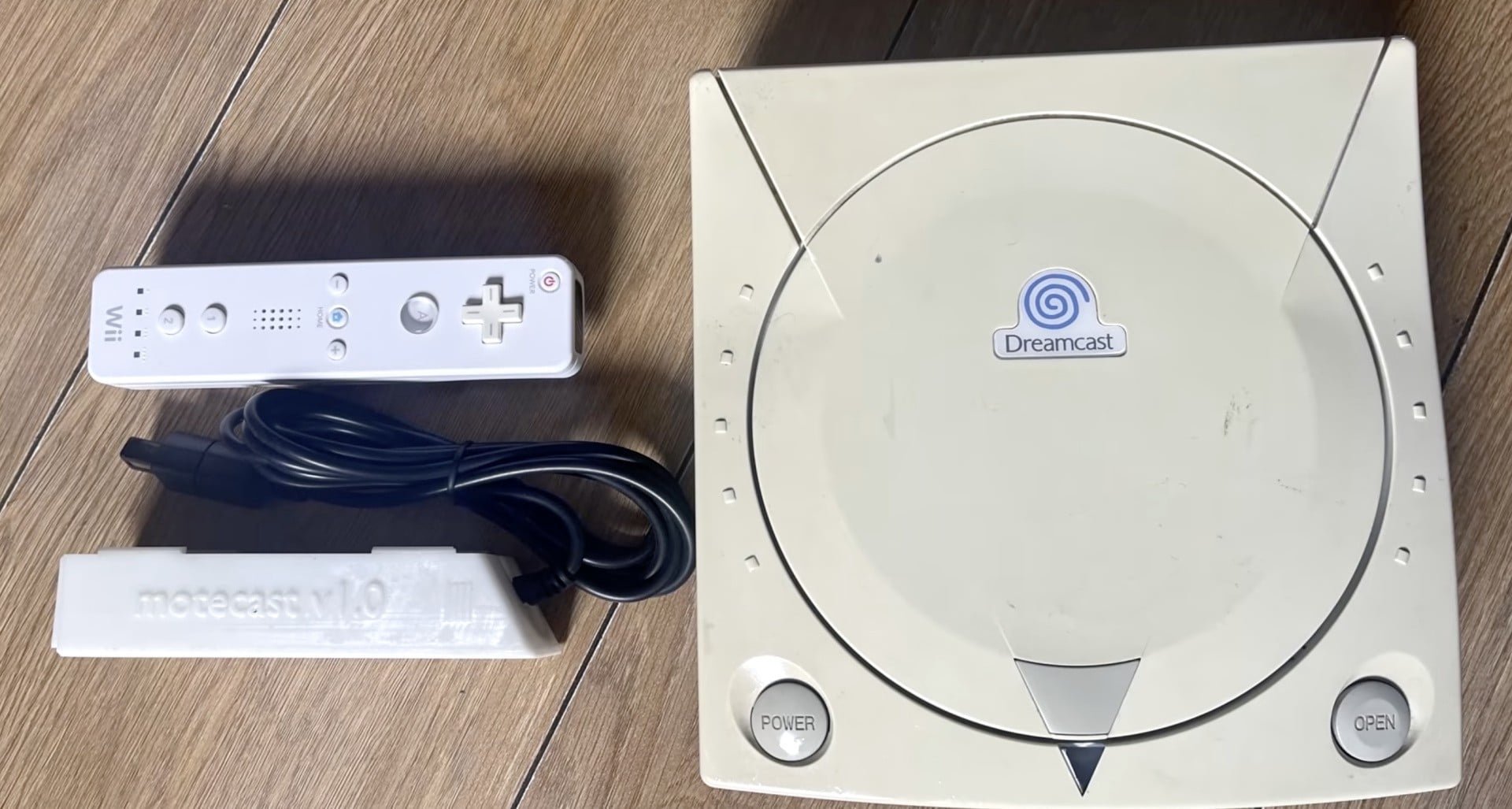
It is against this rich historical backdrop that Yombo’s Motecast emerges as a particularly poignant development. As chronicled by "The Sega Guru" on YouTube, Motecast is a bespoke hardware solution designed to integrate the Wii Remote with the Sega Dreamcast. The device connects directly to a Dreamcast controller port, establishing a Bluetooth connection with a Nintendo Wii Remote. Its primary function is to translate the Wii Remote’s input signals into a format that the Dreamcast can understand and utilize, effectively allowing a modern motion controller to interact with a classic console.
Yombo, a developer known within the homebrew community for his innovative projects, explains that Motecast originated as a "simple homebrew experiment." This spirit of exploratory development is a hallmark of the retro gaming hardware scene, where enthusiasts push the boundaries of what older consoles can achieve with contemporary technology. The creation of Motecast involved a significant understanding of both the Dreamcast’s controller protocols and the Wii Remote’s communication methods, requiring intricate coding and hardware design to establish a reliable bridge between the two.
The project is not merely a proof-of-concept; Yombo has made the necessary instructions and code openly available on Codeberg, empowering other technically inclined individuals to construct their own Motecast devices. This open-source approach is critical to the vitality of the homebrew community, fostering collaboration and further experimentation. The documentation likely includes circuit diagrams, firmware, and assembly guides, detailing the components required, such as a microcontroller to handle the translation logic, a Bluetooth module for Wii Remote communication, and appropriate connectors for the Dreamcast.
Technical Deep Dive: Bridging Two Eras with Realistic Expectations
While Motecast represents a significant technical achievement, Yombo is transparent about its current performance capabilities and limitations. He explicitly states that the device currently yields "8 to 12 readings per second." To understand the implication of this, it’s essential to consider typical polling rates for modern controllers. Many contemporary controllers report input at rates of 125 Hz (125 readings per second) or even 250 Hz, ensuring minimal latency and highly responsive gameplay. Even the original Wii Remote, for its time, offered a respectable polling rate to ensure smooth motion tracking.
The relatively low polling rate of 8 to 12 readings per second means that Motecast, in its current iteration, does not provide the real-time, high-fidelity motion tracking necessary for a seamless adaptation of Wii-style games. This limitation would result in noticeable input lag and a less fluid experience, making it unsuitable for direct "ports of Wii games to the Dreamcast" that rely heavily on precise, instantaneous motion input. For example, a game requiring rapid sword swings or delicate aiming would feel unresponsive and imprecise with such a low update rate.
Yombo’s candid assessment highlights the technical challenges inherent in retrofitting advanced control schemes onto older hardware not originally designed for them. Factors contributing to this limitation could include the processing power of the microcontroller used in Motecast, the bandwidth available through the Dreamcast’s controller port, or the inherent latency in the Bluetooth communication stack. Despite these technical constraints, Yombo’s decision to release Motecast and submit it to the DreamDisc’25 jam edition demonstrates his commitment to sharing his work and inviting further community engagement and development. DreamDisc’25, an event celebrating Dreamcast homebrew creations, provides an ideal platform for showcasing such innovative projects and inspiring others to build upon them.
Community Reception and Collaborative Spirit

The unveiling of Motecast has been met with considerable enthusiasm within the retro gaming community, particularly among Dreamcast aficionados. The Sega Guru’s spotlight on the project on YouTube helped disseminate the news to a broader audience, illustrating the critical role of content creators in amplifying homebrew achievements. Community reactions often reflect a mix of awe at the technical prowess, nostalgia for the Dreamcast, and excitement over the potential for new ways to interact with classic games.
The Dreamcast homebrew scene has always been particularly vibrant and resilient, a testament to the console’s enduring appeal and the passion of its fanbase. Unlike many consoles that faded into obscurity after their commercial lifespan, the Dreamcast has maintained an active community dedicated to developing new games, emulators, and hardware modifications. Projects like Motecast contribute significantly to this ecosystem, keeping the console relevant and inspiring new generations of enthusiasts to explore its capabilities. This collaborative spirit, where developers share their knowledge and tools, is a defining characteristic of the homebrew movement, ensuring that the legacy of beloved systems continues to evolve.
Beyond the Limitations: Future Prospects and Implications
While the current technical limitations prevent Motecast from enabling direct, high-fidelity Wii game ports, its potential implications are still substantial.
Firstly, it opens avenues for experimental control schemes in existing Dreamcast games or new homebrew titles. Imagine a Dreamcast game that uses the Wii Remote’s tilt functionality for steering a vehicle or its pointer for simple menu navigation. While not a direct port, it could inspire developers to create experiences specifically tailored to Motecast’s capabilities, focusing on gestures and less precise movements.
Secondly, Motecast could serve as an accessibility tool. For players who find traditional controllers challenging, the alternative input method of a Wii Remote might offer a more comfortable or intuitive way to engage with certain Dreamcast titles.
Thirdly, the project could spur further development. Yombo’s release of the project as a homebrew experiment and submission to DreamDisc’25 encourages other hackers and developers to refine the hardware, optimize the code, or explore alternative approaches to improve polling rates and responsiveness. Future iterations might incorporate more advanced microcontrollers or different communication protocols to overcome current bottlenecks.
Moreover, Motecast reinforces the broader trend of hardware hacking and console preservation within the retro gaming sphere. As technology advances, enthusiasts are increasingly finding ways to modernize classic consoles, extending their usability and offering novel experiences. This movement is crucial for preserving gaming history, allowing new generations to appreciate the innovations of the past through fresh perspectives. The Dreamcast, with its legacy of forward-thinking design, is a prime candidate for such endeavors.
The Enduring Legacy of Sega’s Last Console
The Sega Dreamcast, though commercially short-lived, holds an indelible place in video game history as a console that was, in many respects, ahead of its time. Its innovations, from online gaming to its unique VMU controller integration, laid groundwork that future consoles would build upon. Kenji Tosaki’s revelation about a Wii Remote-like prototype only adds another layer to this narrative, highlighting Sega’s forward-thinking approach to controller design.
Yombo’s Motecast is more than just a clever hack; it’s a living testament to the Dreamcast’s enduring appeal and the boundless creativity of its community. By physically connecting two disparate eras of gaming technology, Motecast symbolically fulfills a long-dormant potential, allowing players to experience a fragment of what might have been. It celebrates the ingenuity of hackers like Yombo and the collaborative spirit of the homebrew scene, ensuring that the Dreamcast continues to inspire, innovate, and captivate enthusiasts decades after its official discontinuation. As instructions for building one’s own Motecast are readily available, the door is open for a new wave of experimental gameplay on Sega’s final, beloved console.