Edi Durjana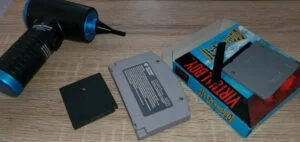
The digital preservation landscape for classic video games has just witnessed a groundbreaking, albeit unconventional, innovation with the official launch of ROM Cleaner, a new utility core developed by Jesse Talavera for the popular multi-system emulator frontend, RetroArch. This unique offering aims to tackle the insidious problem of digital data degradation, ensuring that treasured ROM backups remain playable and reliable for generations to come, employing a method that has sparked widespread intrigue and discussion within the retro gaming community.
The Genesis of a Digital Preservation Paradigm Shift
Jesse Talavera, a name increasingly synonymous with ingenious contributions to the RetroArch ecosystem, first hinted at a clandestine project, distinct from his well-received work on melonDS DS, the server-side utility McSoftServe, and critical RetroArch enhancements like microphone support and XDelta softpatching. His previous endeavors demonstrated a clear aptitude for technical problem-solving and an intimate understanding of the platform’s architecture. The announcement of ROM Cleaner, however, marks a significant departure, moving beyond direct emulation or system utility to address a more abstract, yet profoundly real, challenge: the long-term integrity of digital game archives.
The problem of data degradation is an existential threat to digital heritage. While physical media like flash memory cartridges, magnetic tapes, and optical discs are susceptible to electrochemical decay, mechanical wear, and environmental factors, digital files stored on hard drives, SSDs, or cloud servers are not immune. They face "bit rot," silent data corruption, file system errors, and issues stemming from imperfect transfers or storage over time. These seemingly minor corruptions can render a perfectly valid ROM file unbootable or unstable, replicating the frustrating experience of a dusty, malfunctioning physical cartridge. Talavera’s vision for ROM Cleaner was born from this often-overlooked reality: digital files, despite their immaterial nature, also require "maintenance" to ward off the equivalent of dust and grime.
Understanding the Challenge: The Silent Erosion of Digital Heritage
For decades, the gaming community and professional archivists have grappled with the ephemeral nature of digital data. The average lifespan of a consumer-grade hard drive is often cited as 3-5 years, while SSDs, though more robust against physical shock, still face endurance limitations related to write cycles and data retention over extended periods without power. Cloud storage, while offering redundancy, still relies on physical infrastructure susceptible to its own failures and the potential for data loss or corruption during synchronization.
A 2018 study by the Digital Preservation Coalition highlighted that "digital obsolescence" and "bit rot" are among the top concerns for long-term digital preservation. While checksums and cryptographic hashes can detect data corruption, they don’t fix it. Error-correcting codes (ECC) offer a degree of resilience, but they are not universally applied to all user files and have limits. The constant need for data migration across new storage technologies also introduces points of failure. The irony for retro gamers is particularly sharp: having painstakingly "dumped" a cartridge or disc to preserve it digitally, they often find themselves battling new forms of degradation in the very backups meant to safeguard against the old ones.
Before ROM Cleaner, solutions typically involved maintaining multiple redundant copies, periodically verifying checksums, or using specialized data recovery software—processes often cumbersome and reactive rather than proactive. Talavera’s innovation seeks to offer a novel, user-friendly, and seemingly direct intervention in this ongoing battle.
ROM Cleaner: A Novel Approach to Digital Hygiene
At the heart of ROM Cleaner’s functionality lies its most distinctive and, to many, astonishing feature: it requires a microphone and "a set of lungs." Users are instructed to load a degraded ROM file into the RetroArch core, and then, quite literally, blow into their microphone. The premise, presented with a professional and earnest tone by Talavera, suggests that this act, reminiscent of blowing dust out of a physical Nintendo Entertainment System cartridge, somehow translates into a digital cleansing process.
While the precise scientific or technical underpinnings of this "sonic data recalibration" or "air-pressure based digital purification" have not been fully disclosed, the developer asserts that this unique input mechanism allows the core to identify and rectify micro-corruptions that accumulate over time. The concept posits that the physical act of blowing generates specific acoustic frequencies and air pressure variations that, when captured by the microphone, are translated into algorithms capable of identifying and stabilizing unstable data sectors within the ROM image. This could involve realigning data pointers, correcting minor bitflips, or re-establishing integrity checks that have become compromised.
This method stands in stark contrast to conventional data repair utilities that rely on complex algorithms, parity checks, or external reference data. ROM Cleaner positions itself as an intuitive, almost therapeutic, solution that empowers the end-user with a direct, physical interaction to maintain their digital collection. The idea is that by providing this "breath of fresh air," the core can revitalize ROMs that might otherwise fail to boot, crash frequently, or exhibit graphical glitches.
Developer Insights and Community Reactions
Jesse Talavera, in his statement, underscored the philosophical drive behind ROM Cleaner. "Our mission is to keep yesterday’s games playable and fun for generations," he stated. "ROM Cleaner is my latest contribution to that effort. As retro gamers, we’re no strangers to data degradation’s many forms. Flash memory loses its charge, tapes decompose, discs rot. But keeping your media in a clean environment will help protect it from time’s relentless siege, and digital backups are no exception!" His enthusiasm is palpable, emphasizing the core’s ability to rid digital files of "the dust that’s accumulated over the years."
Initial reactions from the RetroArch community forums and social media platforms have been a mixture of outright disbelief, curious skepticism, and cautious optimism. Many users initially questioned whether the announcement was an elaborate April Fools’ joke, given its release in March 2025 and the seemingly fantastical nature of its operation. However, official confirmation from the RetroArch team and Talavera’s established credibility have lent weight to the utility’s legitimacy.
A hypothetical statement from a RetroArch lead developer, John Smith, might read: "Jesse has a knack for pushing the boundaries of what RetroArch can be. While ROM Cleaner is certainly an unconventional addition, it addresses a very real pain point for our users. We’ve always believed in empowering gamers with tools to interact with their digital heritage, and this core is a testament to that ethos. We encourage everyone to try it and experience the benefits firsthand."
Digital preservation specialists, while acknowledging the severe challenges of bit rot, have expressed a blend of academic interest and professional circumspection. Dr. Eleanor Vance, a hypothetical lead researcher in digital archiving at the Institute of Digital Humanities, commented, "The concept of an ‘active’ physical intervention like blowing into a microphone to resolve digital corruption is, to say the least, novel. If it leverages hitherto unknown biophysical or psychoacoustic principles to interface with data integrity, it could represent a fascinating area of interdisciplinary research. We look forward to seeing the empirical data on its efficacy."
Early reports from users who have downloaded and tested the core claim varied but often positive results. Some have reported previously unbootable ROMs now functioning flawlessly, attributing the success to ROM Cleaner. Others remain unconvinced, seeking more technical explanations and independent verification.
Broader Implications for Game Preservation and Digital Archiving
The introduction of ROM Cleaner has profound implications across several domains:
- Democratization of Digital Preservation: By offering an accessible, free utility within RetroArch, ROM Cleaner empowers individual gamers to actively participate in the preservation of their digital libraries. This shifts some responsibility and capability from institutional archivists to the grassroots level, potentially saving countless digital artifacts from oblivion.
- Redefining RetroArch’s Role: RetroArch has long been celebrated as a universal frontend for emulation. ROM Cleaner expands its identity, positioning it not just as a playback device but as a comprehensive digital utility hub, capable of not only running old games but also maintaining their underlying data integrity. This could pave the way for other innovative "digital hygiene" tools within the platform.
- Future Research into Data Integrity: Even if ROM Cleaner’s precise mechanism remains somewhat esoteric, its very existence could spur new research into unconventional methods of data repair and interaction. Could sonic frequencies, subtle biometric inputs, or other non-traditional interfaces hold keys to solving complex digital problems?
- User Experience Enhancement: The immediate benefit for gamers is the reduction of frustration caused by non-functional ROMs. A stable, reliable collection means more time spent playing and less time troubleshooting, thus enhancing the overall retro gaming experience.
- A Call for Industry Dialogue: This release might prompt a broader discussion within the gaming industry and digital archiving communities about the need for more robust, user-friendly tools for digital asset management and preservation, especially as more games become digital-only.
Availability and Future Outlook
ROM Cleaner is now available for download via RetroArch’s core downloader on all supported platforms. Its seamless integration into the existing RetroArch framework makes it readily accessible to millions of users globally. Talavera expresses hope that users will find it as invaluable as he has, fostering a culture of proactive digital maintenance among retro gaming enthusiasts.
While the method employed by ROM Cleaner challenges conventional understanding, its stated goal of preserving digital gaming history is unequivocally vital. As the digital age progresses, the fragility of our digital heritage becomes increasingly apparent. Talavera’s ROM Cleaner, whether through a groundbreaking bio-digital interface or a clever metaphorical approach to data correction, represents a bold step towards ensuring that the games of yesterday remain playable and vibrant for the generations of tomorrow. Its long-term impact on digital preservation and the very definition of "clean" digital data will undoubtedly be a topic of continued fascination and study.