Cecilia Chamidah Nur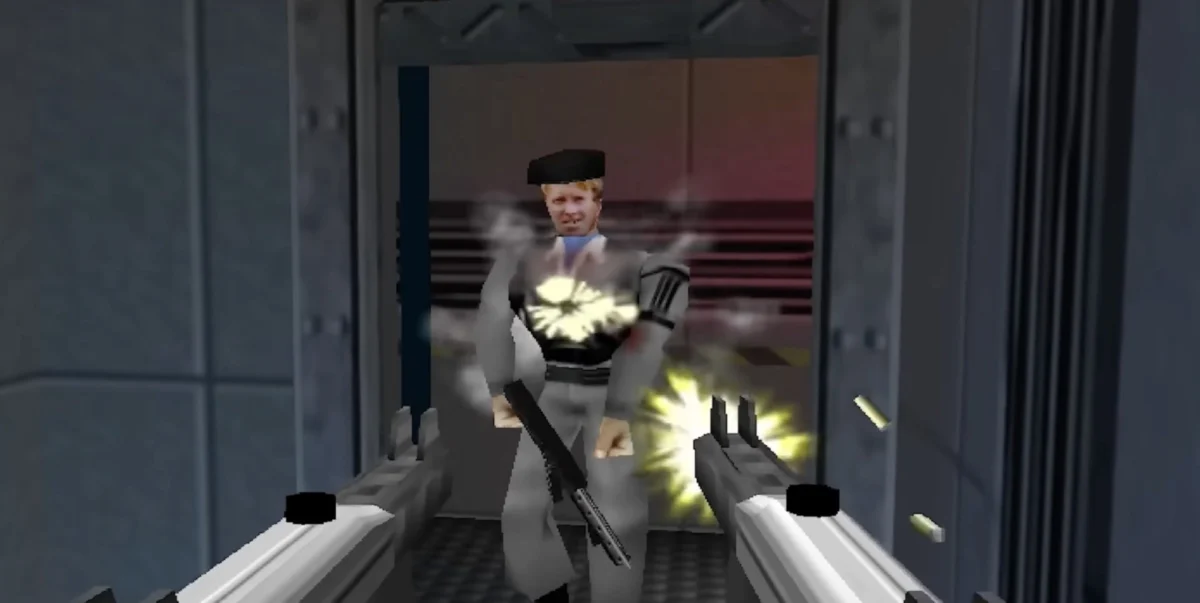
The legendary status of GoldenEye 007 on the Nintendo 64 is unequivocally cemented in video game history, lauded for its revolutionary blend of mission-based objectives, precise control scheme, and groundbreaking split-screen multiplayer mode that fundamentally reshaped the console first-person shooter (FPS) genre. Decades after its 1997 release, players continue to dissect the game’s enduring appeal, often highlighting the visceral satisfaction derived from engaging enemies. David Doak, a pivotal designer on the game whose likeness and name were even immortalized as an NPC within the title, has recently offered a profound insight into the mechanics behind this acclaimed gunplay, tracing its roots back to an unlikely arcade inspiration. His revelations shed light on the meticulous design choices that cultivated GoldenEye‘s distinct and empowering combat rhythm, a legacy that continues to resonate with gamers and developers alike.
The Anatomy of Satisfaction: Deconstructing GoldenEye’s Gunplay
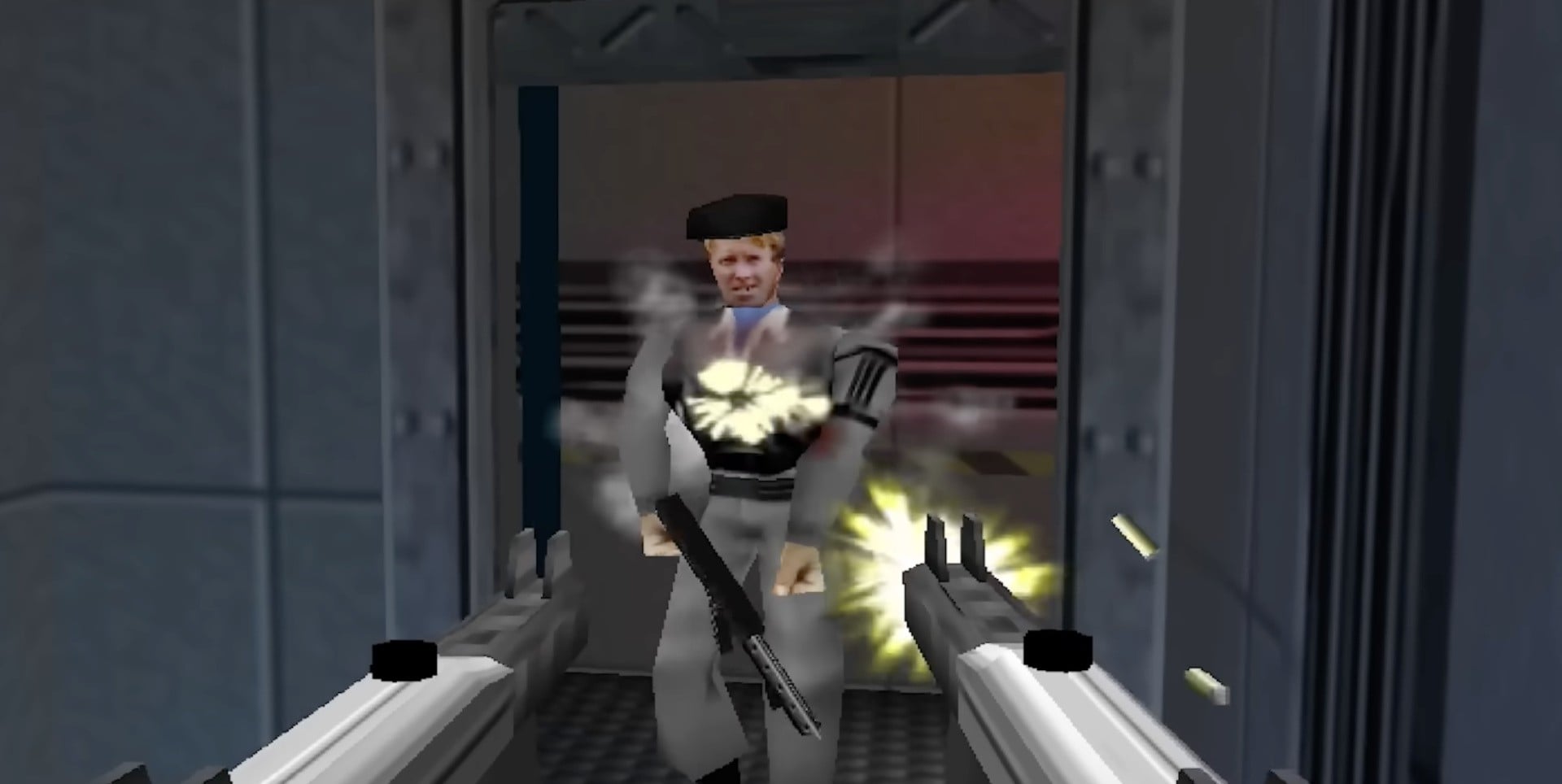
Doak’s explanation, shared via social media, delves into the specific elements that make dispatching foes in GoldenEye 007 so gratifying. He posits that a significant portion of the game’s unique "hit react / ‘stun’ timing and rhythmic cadence of the gun play" owes its existence to Virtua Cop, a pioneering light-gun arcade shooter. This connection is not merely anecdotal; Doak asserts that Virtua Cop served as the initial conceptual blueprint for GoldenEye 007, influencing core aspects of its enemy design and player interaction. This foundational influence, initially championed by project lead Martin Hollis, envisioned GoldenEye 007 as an "on-rails" shooter, a format that would have drastically altered the final product but left an indelible mark on its underlying combat system.
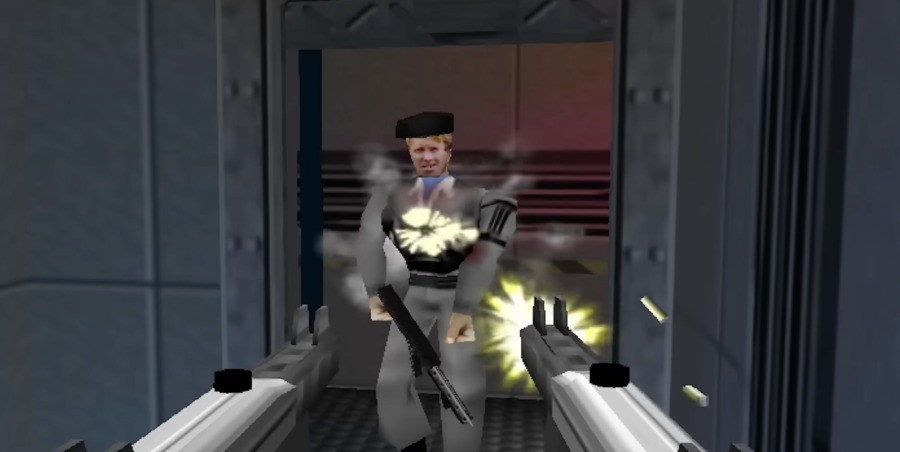
From this early conceptual phase, specific enemy behaviors were adopted and adapted. Doak elaborates, "NPC animation in Virtua Cop will look very familiar to GE007 players – enemies run to position, telegraph their attacks and have location-specific hit reacts." This observation highlights a critical design decision: enemies in GoldenEye 007 are not mere bullet sponges but dynamic entities whose reactions are integral to the combat flow. Upon being hit, enemies enter a "stunned" state, characterized by distinct animations that momentarily incapacitate them and prevent them from attacking. This crucial window of vulnerability is where the game’s strategic depth truly emerges.
From Arcade Rails to Free-Roaming Excellence: The Virtua Cop Inspiration
The mid-1990s gaming landscape was a dynamic blend of burgeoning 3D console experiences and established arcade giants. Sega’s Virtua Cop, released in 1994, stood out for its innovative use of polygon graphics and responsive light-gun mechanics. Its enemies, often described as "Virtua Police," exhibited clear movement patterns, took cover, and reacted realistically to being shot, often with location-specific animations that conveyed impact. This level of enemy feedback was groundbreaking for its time and created a sense of tactile engagement previously unseen.
Martin Hollis, the project leader for GoldenEye 007 at Rare, recognized the potential of these arcade mechanics. His initial vision for the game, before its evolution into a free-roaming FPS, was indeed an on-rails shooter, much like Virtua Cop or Namco’s Time Crisis. While the game ultimately pivoted away from this restrictive format to embrace the open-ended level design that became its hallmark, the core principles of enemy engagement—specifically the detailed hit reactions and the resulting ‘stun’ mechanic—were retained. This decision proved instrumental in shaping GoldenEye‘s unique identity. The developers at Rare, under Hollis’s guidance, meticulously crafted enemy animations that communicated damage and vulnerability, translating the arcade’s instantaneous feedback into a more strategic console experience.
The "Magic Sauce": Player Choice and Rhythmic Cadence
Doak succinctly encapsulates the essence of this design philosophy, labeling the cumulative effect as the "magic sauce." He explains that the ‘stunned’ state afforded by hit animations empowers the player with valuable opportunities for strategic decision-making. During this brief respite, players can "reprioritise threats, re-aim, move, reload, etc." This isn’t merely a cosmetic effect; it’s a core gameplay loop that encourages thoughtful engagement rather than frantic spraying of bullets. As players accumulate experience, their familiarity with the duration and nature of these hit animations grows, allowing them to intuitively "juggle" enemies in tense situations and cultivate "effective and empowering flow responses." This rhythmic interplay between player action and enemy reaction creates a deeply satisfying, almost dance-like, combat experience.
Another subtle yet significant component Doak highlights is the "obvious ‘tell’ of the small delay when the enemy selects a new attack animation (which always tweens through the stand pose) – it’s a little beat that is always there." This seemingly minor detail provides players with a predictable rhythm, a subtle auditory and visual cue that allows for anticipation and precise counter-action. It’s this confluence of transparent enemy behavior, reactive animations, and player agency that elevates GoldenEye‘s gunplay beyond simple point-and-shoot mechanics, transforming it into an engaging and skill-based art form. Doak clarifies that while he "leaned into it in enemy placement in the level setups," this fundamental design choice was already established when he joined the Rare team, underscoring its foundational importance to the game’s overall vision.
A Clash of Visions: Miyamoto’s Pacifist Predilection
The development of GoldenEye 007 was not without its internal creative tensions, most famously involving Shigeru Miyamoto, the legendary creator of Mario and Zelda and a key figure at Nintendo. It is a well-documented anecdote that Miyamoto, known for his preference for non-violent gameplay and fostering positive player interactions, expressed reservations about the game’s focus on shooting and killing. According to various accounts from the development team, Miyamoto famously suggested that GoldenEye 007 should conclude with players making friends with their enemies in a hospital, a stark contrast to the climactic showdowns and explosive finales typical of the James Bond franchise and the FPS genre.
This suggestion highlights a philosophical divide between the Western development sensibilities at Rare, which embraced a more mature and action-oriented approach, and Nintendo’s often family-friendly ethos. While Miyamoto’s input was undoubtedly considered, the Rare team ultimately pursued their vision for an authentic James Bond experience, replete with espionage, gadgets, and, crucially, intense combat. The decision to retain the satisfying gunplay and enemy elimination, despite Miyamoto’s preference for a "murder-free" experience, speaks volumes about Rare’s conviction in their creative direction and their understanding of the target audience for a Bond game. This friction, though ultimately resolved in favor of Rare’s design, underscores the complex interplay of creative freedom, corporate oversight, and cultural differences in game development.
Rare’s Golden Touch: The Development Journey
The genesis of GoldenEye 007 was a challenging yet ultimately triumphant endeavor. Rare, a British developer known for its high-quality titles across various genres, was entrusted with the James Bond license, a property ripe with potential but also burdened by high expectations. The game’s development began shortly after the release of the 1995 film GoldenEye, with the initial concept of an on-rails shooter gradually evolving into the groundbreaking free-roaming FPS.
The Genesis of a Console FPS Benchmark
The transition from an on-rails concept to a full-fledged 3D FPS was a monumental undertaking, especially on the Nintendo 64. At the time, console FPS games were a relatively unproven commodity. While titles like Doom 64 and Turok: Dinosaur Hunter had made inroads, none had fully captured the fluidity and strategic depth of PC equivalents. Rare’s team, comprising a relatively small group of talented individuals, faced the daunting task of translating a genre largely dominated by keyboard and mouse controls to a console gamepad, specifically the N64’s unique three-pronged controller.
The innovative control scheme, which allowed players to use the analog stick for movement and the C-buttons for aiming (or a dual-controller setup for advanced users), was a key factor in GoldenEye‘s success. This adaptation made the complex maneuvers of an FPS accessible and intuitive on a console, setting a new standard for future titles. The game also pioneered objective-based missions in an FPS, moving beyond simple kill counts to incorporate stealth, gadget usage, and intricate level design that encouraged exploration and tactical planning.
Overcoming N64 Hardware Limitations
Developing for the Nintendo 64 presented its own set of technical hurdles. The console, while powerful for its era, had limited texture memory and relied on cartridge-based storage, which restricted overall data size. Rare’s engineers and artists worked tirelessly to optimize the game, implementing techniques like aggressive culling (rendering only what was visible) and clever texture compression to maintain a playable frame rate and visual fidelity. The game’s iconic multiplayer mode, which allowed up to four players to compete on a single screen, was a particular technical marvel, pushing the N64 hardware to its absolute limits. The ability to play with friends in the same room, without the need for additional consoles or network connections, fostered a social gaming experience that became legendary and a benchmark for all subsequent console multiplayer titles.
The Enduring Legacy and Impact on Console FPS
Upon its release, GoldenEye 007 was met with universal critical acclaim. Reviewers lauded its innovative gameplay, immersive atmosphere, and revolutionary multiplayer. It quickly became a commercial juggernaut, selling over 8 million copies worldwide and becoming one of the best-selling games on the N64. Its impact, however, extended far beyond sales figures.
A Blueprint for Future Generations
GoldenEye 007 served as a veritable blueprint for the console FPS genre. Its control scheme, objective-based missions, and particularly its robust split-screen multiplayer mode, became standard features that developers would emulate for years to come. Games like Perfect Dark (also by Rare) and the Halo series openly acknowledged GoldenEye‘s influence, building upon its foundations to further refine the console FPS experience. The game proved that an FPS could thrive on a console, challenging the long-held notion that the genre was exclusively the domain of PC gaming.
The "magic sauce" of its gunplay, as described by Doak, became a subtle but profound lesson in game design. The emphasis on clear enemy feedback, strategic stun mechanics, and rhythmic combat flow demonstrated how seemingly small details could coalesce to create a deeply engaging and satisfying player experience. This attention to granular design elements contributed significantly to the game’s longevity, ensuring that even today, players can pick up GoldenEye 007 and still find its combat engaging and rewarding.
Critical Acclaim and Commercial Triumph
Beyond its technical and design innovations, GoldenEye 007 captured the essence of the James Bond universe. The inclusion of iconic gadgets, familiar locations, and an original score that evoked the cinematic experience contributed to its immersive quality. The game’s critical success was a testament to Rare’s ability to not only deliver a compelling gameplay experience but also to faithfully adapt a beloved intellectual property. It redefined what a licensed game could be, moving beyond simple movie tie-ins to become a standalone masterpiece.
The enduring appeal of GoldenEye 007 underscores the importance of thoughtful game design, where even seemingly minor details like enemy hit reactions contribute significantly to the overall player experience. David Doak’s recent insights provide a fascinating glimpse into the creative process at Rare and highlight how a foundational inspiration from an arcade shooter, skillfully adapted and expanded, ultimately forged one of gaming’s most celebrated and influential titles. The game’s "little beat that is always there" continues to echo through the annals of gaming history, a testament to the timeless appeal of well-crafted interactive entertainment.