Edi Durjana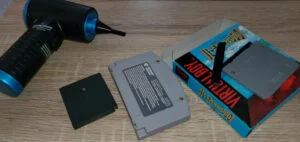
Jesse Talavera, a prominent developer known for his impactful contributions to the RetroArch ecosystem, has officially announced the release of ROM Cleaner, a unique utility core designed to address the often-overlooked challenges of digital game preservation. This innovative tool, now available via RetroArch’s core downloader on supported platforms, represents a departure from traditional emulation cores, focusing instead on maintaining the integrity and reliability of digital ROM backups through a novel, user-interactive approach.
Introduction of ROM Cleaner: Bridging the Physical and Digital Divide
The announcement by Talavera introduces ROM Cleaner as a distinct utility core for RetroArch, a widely used open-source frontend for emulators, game engines, and media players. While RetroArch’s primary function has historically been the faithful recreation of classic gaming experiences through emulation, ROM Cleaner pushes the boundaries by offering a solution to a problem often associated with physical media: degradation. Talavera posits that even digital backups, despite their seemingly immutable nature, can suffer from a form of "data degradation" akin to the physical wear and tear seen in cartridges, discs, and tapes. The core’s purported function is to "rid [ROMs] of the dust that’s accumulated over the years," a metaphorical yet evocative description of its purpose. Its most peculiar and interactive feature requires users to utilize a microphone and their own breath, a mechanism that has already sparked considerable discussion within the emulation community. This novel approach underscores a broader philosophical statement about the care and attention required for preserving digital artifacts.
Jesse Talavera: A Legacy of Innovation in Emulation
Jesse Talavera is not a new name to the RetroArch community, having established a reputation for developing high-quality and innovative solutions. His previous works include significant contributions such as the melonDS DS core, which brought robust Nintendo DS emulation to RetroArch users, enhancing the platform’s versatility. Another notable project, McSoftServe, demonstrated Talavera’s capacity for creating unique tools that extend beyond pure emulation, often incorporating playful yet functional elements. Furthermore, his work on fundamental RetroArch improvements, such as enhanced microphone support and XDelta softpatching, has streamlined user experience and expanded the frontend’s capabilities. These prior achievements underscore a consistent pattern of Talavera identifying niche needs within the emulation landscape and developing creative, often technically sophisticated, solutions. The development of ROM Cleaner, therefore, aligns with his established trajectory of pushing the boundaries of what a RetroArch core can achieve, moving beyond direct game playback to encompass broader utility and maintenance functions.
The RetroArch Ecosystem: A Hub for Digital Heritage
To fully appreciate the significance of ROM Cleaner, it is essential to understand the context of RetroArch and the broader Libretro ecosystem. RetroArch, maintained by the Libretro team, is a powerful, modular, and cross-platform frontend that uses the Libretro API to run various "cores." These cores are typically emulators, game engines, or media players that adhere to a standardized interface, allowing users to consolidate their retro gaming and media experiences under one unified application. The platform boasts an extensive user base, ranging from casual gamers to dedicated preservationists and developers. Its mission extends beyond mere entertainment; it actively promotes the preservation of video game history by providing accessible and accurate means to play classic titles.
The Libretro project emphasizes open-source development, community collaboration, and the continuous improvement of emulation accuracy and features. This environment fosters innovation, allowing developers like Talavera to contribute specialized tools that benefit the entire community. The inclusion of a utility core like ROM Cleaner within this framework highlights Libretro’s evolving vision, where the platform serves not only as a playback device but also as a comprehensive suite for managing and maintaining digital game collections. This expansion into utility functions marks a maturation of the platform, recognizing that preservation involves more than just accurate emulation; it also encompasses the health and longevity of the digital assets themselves.
The Relentless March of Data Degradation: From Disc Rot to Bit Rot
The concept underpinning ROM Cleaner touches upon a critical concern in digital preservation: data degradation. While the physical deterioration of media like vinyl records, VHS tapes, and optical discs (often referred to as "disc rot") is readily observable and well-documented, the degradation of digital files presents a more subtle, yet equally pervasive, threat. Physical media suffers from material decay; flash memory loses its charge over time, magnetic tapes demagnetize, and CD/DVD layers separate. These phenomena necessitate the creation of digital backups, often in the form of ROMs (Read-Only Memory images), ISOs, or other archival formats.
However, the act of digitization does not render data immune to degradation. Digital files, while not subject to physical rot, can experience "bit rot" – a term used to describe the silent corruption of data bits over time. This can occur due to various factors: storage media errors (hard drive failures, SSD wear), transmission errors, software bugs, or even cosmic rays causing single-event upsets in memory. While these events are statistically rare for individual bits, over vast quantities of data and extended periods, they can accumulate, leading to corrupted files, unbootable games, or glitches within applications.
Traditional methods to combat bit rot and ensure data integrity include redundant backups, checksum verification (e.g., MD5, SHA-1, SHA-256 hashes to detect changes), and error-correcting codes. ROM Cleaner’s premise of "ridding [ROMs] of the dust" serves as a metaphorical bridge between the tangible problem of physical degradation and the intangible threat of digital corruption. It personifies the often abstract concept of data integrity, framing it in terms of something physically cleanable, thereby making the preservation effort feel more immediate and user-centric. This unique framing, while whimsical, encourages users to actively engage with the health of their digital archives, rather than passively hoping for their longevity.
ROM Cleaner’s Unique Approach: The Metaphor of Digital "Dust"
The most distinctive and, perhaps, perplexing aspect of ROM Cleaner is its operational mechanism: requiring a microphone and a user’s lungs. Talavera’s description suggests that by "blowing" into the microphone, users can metaphorically "cleanse" their digital ROMs of accumulated "dust." This method, while seemingly fantastical from a purely technical standpoint, carries profound metaphorical and psychological implications for digital preservation.
In the physical world, blowing dust off a cartridge or cleaning a disc is a ritualistic act of care, a direct interaction that signifies an attempt to restore functionality. ROM Cleaner translates this human impulse into the digital realm. The act of "blowing" into a microphone, while not directly manipulating bits on a hard drive, serves as a user-initiated command within the RetroArch environment. This unique interface could be interpreted as an allegorical representation of various underlying digital maintenance processes. For instance, upon receiving the "blowing" input, the core might trigger internal validation routines:
- Checksum Verification: The core could re-calculate the ROM’s checksum and compare it against a known good value (if available), identifying potential corruption.
- Header Reconstruction/Validation: Many ROMs rely on specific header information for proper emulation. The core might validate or attempt to repair common header issues.
- Metadata Refresh: It could ensure that associated metadata within RetroArch’s database is accurate and up-to-date, potentially resolving loading issues.
- File System Scan (Metaphorical): The "dust" could represent minor file system inconsistencies or fragmentation that the core, in its "cleaning" process, symbolically addresses.
The genius of this approach lies in its ability to engage users on an emotional and tactile level with a problem that is otherwise abstract. It transforms the often mundane task of data maintenance into an interactive, almost playful, experience. By providing a tangible, albeit metaphorical, action for "cleaning" digital files, Talavera fosters a greater sense of ownership and responsibility among users for their digital collections. This human-computer interaction, blending physical action with digital outcome, creates a memorable and thought-provoking utility that challenges conventional notions of software functionality.
The Philosophy of Preservation: Keeping Yesterday’s Games Alive
Talavera explicitly states his mission: "to keep yesterday’s games playable and fun for generations." This statement encapsulates the core philosophy driving much of the retro gaming and emulation community. Video games are increasingly recognized as a significant cultural and historical art form, and their preservation is crucial for future generations of historians, researchers, and enthusiasts. However, the transient nature of technology, proprietary hardware, and the fragility of physical media pose immense challenges to this endeavor.
Projects like Libretro and developers like Talavera contribute significantly to this mission by creating open-source, accessible, and robust tools that circumvent obsolescence. ROM Cleaner, in this context, serves as more than just a utility; it is a commentary on the ongoing battle against entropy in the digital age. By drawing attention to the subtle forms of "digital dust" that can accumulate, it reinforces the message that active, continuous effort is required to maintain digital archives. It encourages users to be proactive stewards of their collections, reminding them that digital assets, while seemingly permanent, require care just as much as their physical counterparts. This proactive stance is vital in an era where digital content is often taken for granted, highlighting the fragility of even seemingly robust data.
Availability and Integration within RetroArch
ROM Cleaner is immediately available through RetroArch’s built-in core downloader. This seamless integration ensures that millions of RetroArch users globally can easily access and experiment with the new utility. The core downloader simplifies the process of installing new emulators and tools, making ROM Cleaner as accessible as any other gaming core. This ease of access is critical for broad adoption and community engagement, allowing users across various supported platforms to implement this unique preservation tool into their routines. The availability across multiple operating systems and devices, a hallmark of RetroArch, further amplifies the potential reach and impact of ROM Cleaner.
Beyond Emulation: The Expanding Role of Utility Cores
The introduction of ROM Cleaner signals a potential expansion in the types of cores that can be integrated into RetroArch. Traditionally, cores have been almost exclusively focused on emulation or game engine playback. ROM Cleaner, as a "utility core," opens the door for a new category of tools that might address other aspects of the retro gaming experience, such as:
- Digital Asset Management: Cores for organizing, tagging, and cataloging large ROM libraries.
- Metadata Enhancement: Tools for automatically fetching or correcting game information.
- Save State Management: Advanced utilities for managing and backing up save files across different cores.
- Performance Diagnostics: Cores that analyze system performance and suggest optimal settings for specific games or emulators.
This shift underscores RetroArch’s evolution from a mere frontend into a comprehensive digital heritage platform. By embracing utility cores, Libretro acknowledges that the user experience extends beyond simply playing games to encompass the entire lifecycle of managing a digital game collection. This broader vision could attract a new wave of developers and users interested in contributing to and benefiting from these expanded functionalities.
Implications for the Retro Gaming Community and Digital Archiving
The launch of ROM Cleaner carries several significant implications for the retro gaming community and the broader field of digital archiving. Firstly, it sparks a crucial conversation about the nature of digital preservation itself. By personifying data corruption as "dust," Talavera compels users to think more critically about the abstract concept of file integrity. It challenges the common misconception that digital files, once created, are inherently eternal and incorruptible.
Secondly, the playful and interactive nature of ROM Cleaner could serve as an educational tool. For many users, the intricacies of checksums, bit rot, and data validation remain complex and intimidating. By offering a simplified, engaging interface, ROM Cleaner demystifies these concepts, making the act of "preservation" more approachable. It could encourage users to adopt better backup practices, understand the importance of verified ROM sets, and generally take a more active role in safeguarding their digital heritage.
Finally, ROM Cleaner reinforces the vibrant, innovative spirit of the open-source emulation community. It demonstrates that creativity and technical ingenuity can be combined to address serious issues in a lighthearted yet effective manner. The utility core’s novelty is likely to generate significant discussion, debate, and potentially inspire further unique contributions from other developers within the RetroArch ecosystem. While the exact technical mechanisms behind ROM Cleaner’s "cleaning" remain open to interpretation and metaphor, its immediate impact is undeniable: it has put the spotlight back on the enduring challenge of keeping digital history alive, one "cleaned" ROM at a time.