
 Jia Lissa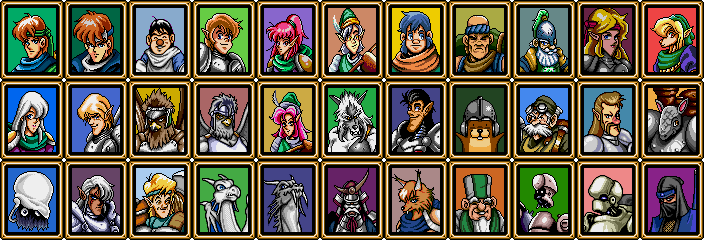
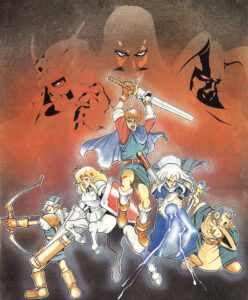
Following the commercial success of Shining in the Darkness in March 1991, the Japanese development studio Climax found itself at a pivotal crossroads. While the debut title had solidified the studio’s reputation as a premier RPG developer for Sega’s 16-bit Mega Drive hardware, its successor, Shining Force, would represent a radical departure in gameplay mechanics and narrative scope. This transition not only expanded the lore of the burgeoning franchise but also established a new benchmark for the strategy-RPG subgenre on home consoles. Despite its eventual status as a seminal title in the Sega library, the development of Shining Force was marked by internal creative divisions, technical memory constraints, and an increasingly fractured relationship between Climax and Sega’s corporate management.
The Foundation of Sonic Co. and the Sega Partnership
By the early 1990s, the role-playing game (RPG) market in North America was a secondary priority for Sega, which focused primarily on arcade ports and sports titles. However, the unexpected success of Phantasy Star II and Shining in the Darkness prompted a shift in strategy. Sega of Japan sought to capture the growing RPG audience by investing in dedicated development units. Hiroyuki Takahashi, the visionary behind Climax, recognized that the increasing complexity of RPGs—which were growing in both narrative depth and technical requirements—demanded a more robust infrastructure.
In June 1991, this realization led to the formation of Sonic Co., Ltd., a joint venture between Sega and Climax. Sega provided 85 percent of the 40 million yen investment, while Climax and Takahashi held the remaining shares. The company was named after Sega’s new mascot, Sonic the Hedgehog, following a trend set by Nintendo’s internal affiliates like Ape Inc. and Mario Inc. The mandate for Sonic Co. was to streamline the planning, market research, and production of software for the Genesis and Game Gear, effectively acting as a creative hub that could recruit specialists from the manga and anime industries to enrich game narratives.
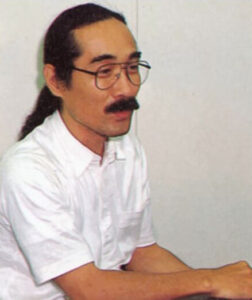
Kenji Orimo, a director at Sonic Co. with deep roots in the manga industry, spearheaded the recruitment of artists and storytellers. Orimo’s philosophy was to treat game development as a collaborative production agency, integrating external creative talent directly into the design process rather than merely licensing existing intellectual properties. This approach allowed Shining Force to benefit from a high degree of artistic cohesion and world-building.
Breaking the Monotony: The Design Philosophy of Hiroyuki Takahashi
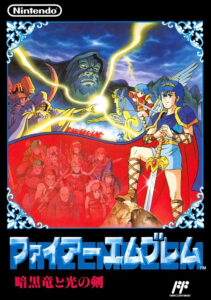
While fans expected a direct sequel to the dungeon-crawling Shining in the Darkness, Takahashi had been ruminating on a different concept for years. He sought to evolve the RPG genre by moving away from what he perceived as the "tired" monotony of turn-based combat. Takahashi’s dissatisfaction with contemporary strategy games, including Nintendo’s Fire Emblem—which he criticized for its slow tempo—led him to seek a more dynamic alternative.
The primary inspiration for Shining Force came from the 1988 PC88 title Silver Ghost, developed by Kure Software Koubou. Unlike other strategy titles that felt like digital board games, Silver Ghost required players to manage multiple characters in real-time-inflected scenarios. Takahashi aimed to combine this tactical depth with the robust character drama of the Dragon Quest series.
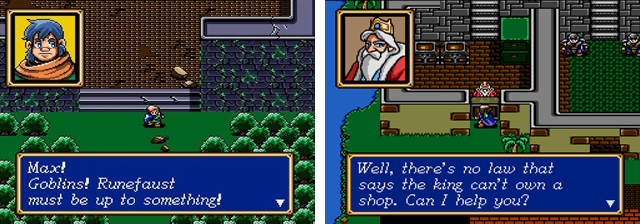
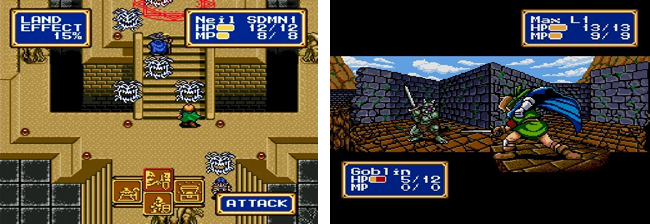
His breakthrough involved the introduction of spatial tactics. By incorporating distance, terrain advantages, and formations into combat, Takahashi expanded the player’s choices beyond simple menu commands. This shift turned every encounter into a tactical puzzle. To maintain the series’ identity, Climax retained traditional RPG elements for non-combat sequences, allowing players to explore towns, interact with NPCs, and manage inventories in a familiar overworld format.
Technical Ambition and the 12-Megabit Hurdle
The development of Shining Force was an immense technical undertaking. Initially conceived as a smaller project for the Game Gear, the scope quickly ballooned, necessitating a move to the Mega Drive in March 1991. The team faced a significant challenge: how to fit a massive cast of characters, complex AI, and high-quality animations into a single cartridge.
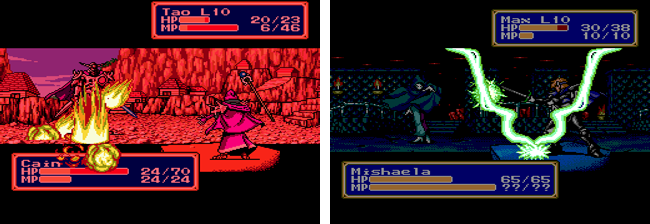
Sega eventually granted the project 12 megabits (Mb) of memory, the largest allocation for any Mega Drive game at that time. Even with this expanded capacity, the team’s ambitions threatened to exceed technical limits. The animated battle scenes, which Takahashi insisted be cinematic and fluid, required a staggering amount of data. Unlike other RPGs that used small, static sprites, Shining Force featured large, detailed characters with unique attack patterns and directional animations.
To solve this, the programming team, led by Yoshinori Tagawa, developed sophisticated compression routines. While typical industry compression rates hovered around 50 percent, the Climax team refined their tools to achieve an impressive 22 percent compression rate. This "compression magic" allowed the developers to include nearly 30 unique battle maps and dozens of playable characters without sacrificing visual fidelity.
Artistic Direction and Character Diversity
Graphic designer Yoshitaka Tamaki was tasked with creating a cast that felt distinct from the "Disney-like" caricatures of Shining in the Darkness. For Shining Force, the art style shifted toward a more realistic, albeit still fantastical, aesthetic. The game featured over 30 recruitable characters across 10 different races, including centaurs, giants, and birdmen.
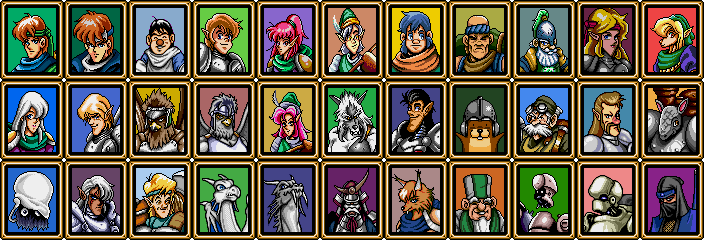
Tamaki’s creativity was often born of necessity. The prevalence of centaurs in the game—such as the Royal Knights Ken and Mae—originated because Tamaki found it difficult to draw human riders on horseback. His solution was to design half-man, half-horse hybrids, which became a signature element of the series.
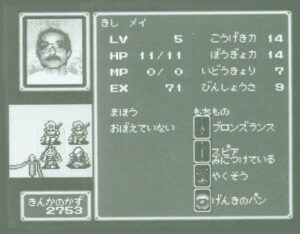
The team also incorporated "inside jokes" that became fan favorites. The character Jogurt, a hamster-like creature who deals only one point of damage, began as a graphics test using a doodle Tamaki had made while the programmers were using staff photos as placeholders. Despite his lack of combat utility, Jogurt’s inclusion added a layer of levity to an otherwise dark narrative centered on global warfare and the resurrection of the Dark Dragon.
Sound Design and the Enigma of Masahiko Yoshimura
The auditory landscape of Shining Force was crafted by Masahiko Yoshimura, who had previously scored Shining in the Darkness. Yoshimura’s score was noble and orchestral, utilizing the Genesis’s FM synthesis to create themes that felt both grand and intimate. However, Yoshimura was reportedly dissatisfied with the hardware’s ability to replicate his compositions, leading him to later record orchestrated versions for a standalone CD release.
Following the completion of Shining Force, Yoshimura largely vanished from the video game industry. Subsequent titles in the franchise were scored by Motoaki Takenouchi. Yoshimura’s departure remains a point of speculation among enthusiasts, though his work on the first two Shining titles is still regarded as some of the finest music of the 16-bit era.

Marketing, Launch, and Global Reception
The road to the game’s release was marked by a period of intense "crunch." The Climax staff worked under a state of emergency to meet the December 1991 ROM submission deadline, often spending nights in the office. This effort culminated in a high-profile marketing campaign in Japan, including a television commercial produced by Vis Inc. that featured live-action miniatures and professional models.
Shining Force launched in Japan on March 27, 1992, to critical acclaim. It arrived in North America and Europe over a year later, where it was hailed as a breakthrough for the strategy-RPG genre. While internal Sega data suggested the game sold approximately 200,000 units—a figure some consider low given its cultural impact—it nonetheless solidified the franchise’s future.
Implications and the Fracture with Sega
Despite the success of the Shining series, the relationship between Climax and Sega began to deteriorate. Hiroyuki Takahashi later noted that as Sega grew into a massive corporation, the creative autonomy of smaller subsidiaries like Climax was curtailed. Budgetary constraints and changes in Sega’s management led to a sense of alienation within the development team.
This friction eventually led to the "fragmentation" of the series. While Shining Force spawned sequels on the Game Gear, Sega CD, and Saturn, the Dreamcast famously became the only major Sega platform not to host a mainline entry in the franchise. The trilogy of scenarios in Shining Force III for the Saturn was also notoriously cut to a single chapter for its Western release, further evidence of the strained partnership.
Legacy and Modern Significance
Shining Force remains a cornerstone of the Sega Genesis library. By merging the accessibility of traditional RPGs with the tactical depth of simulation games, Climax created a formula that influenced decades of game design. The title has been preserved through numerous re-releases on platforms ranging from the PlayStation 3 to iOS, and it continues to be cited as one of the greatest RPGs of all time.
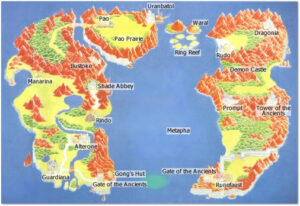
The game’s legacy is defined not just by its mechanics, but by the world it built. The continent of Rune, with its mixture of medieval fantasy and ancient technology, provided a rich canvas for future storytellers. Though the relationship between Climax and Sega eventually ended, the "Shining" world they co-created remains a vibrant part of gaming history, proving that even under the most rigorous constraints, innovative design can leave a lasting glow.








