Vera Clarissa
The latest iteration of Apple’s ultraportable laptop, the M5 MacBook Air, was unveiled on March 3rd, 2026, marking a significant leap forward in mobile computing. While its exterior design remains largely consistent with its predecessor, the true revolution lies within, powered by the advanced M5 chip. This new silicon is not merely an incremental upgrade; it fundamentally alters the capabilities and workflows achievable on the MacBook Air platform, bridging the gap between ultraportability and professional-grade performance.
A New Era of Apple Silicon Performance
The introduction of the M5 chip heralds the fifth generation of Apple Silicon for Macs, and the transformation from the original MacBook Air to this latest model is nothing short of dramatic. Gone are the days when the MacBook Air was limited by underpowered CPUs and comparatively weak graphics capabilities. The M5 MacBook Air now stands as a testament to Apple’s relentless pursuit of performance optimization without compromising its signature fanless design.
Even without active cooling, the M5 MacBook Air demonstrates remarkable thermal efficiency and sustained performance, positioning it as a formidable contender even against its more powerful MacBook Pro counterparts. In rigorous benchmarking, specifically a Cinebench GPU test, the M5 MacBook Air achieved approximately 92% of the performance of the M5 MacBook Pro. While the M5 MacBook Pro clocked in around 24,000 points, the M5 Air closely followed with approximately 22,000 points. This is a substantial achievement, especially considering the typical year-over-year incremental improvements seen in chip architectures. The M5’s GPU, in particular, represents a massive advancement over the previous M4 generation, offering significantly enhanced graphical prowess for demanding tasks.
Enhanced Storage, Connectivity, and Power Management
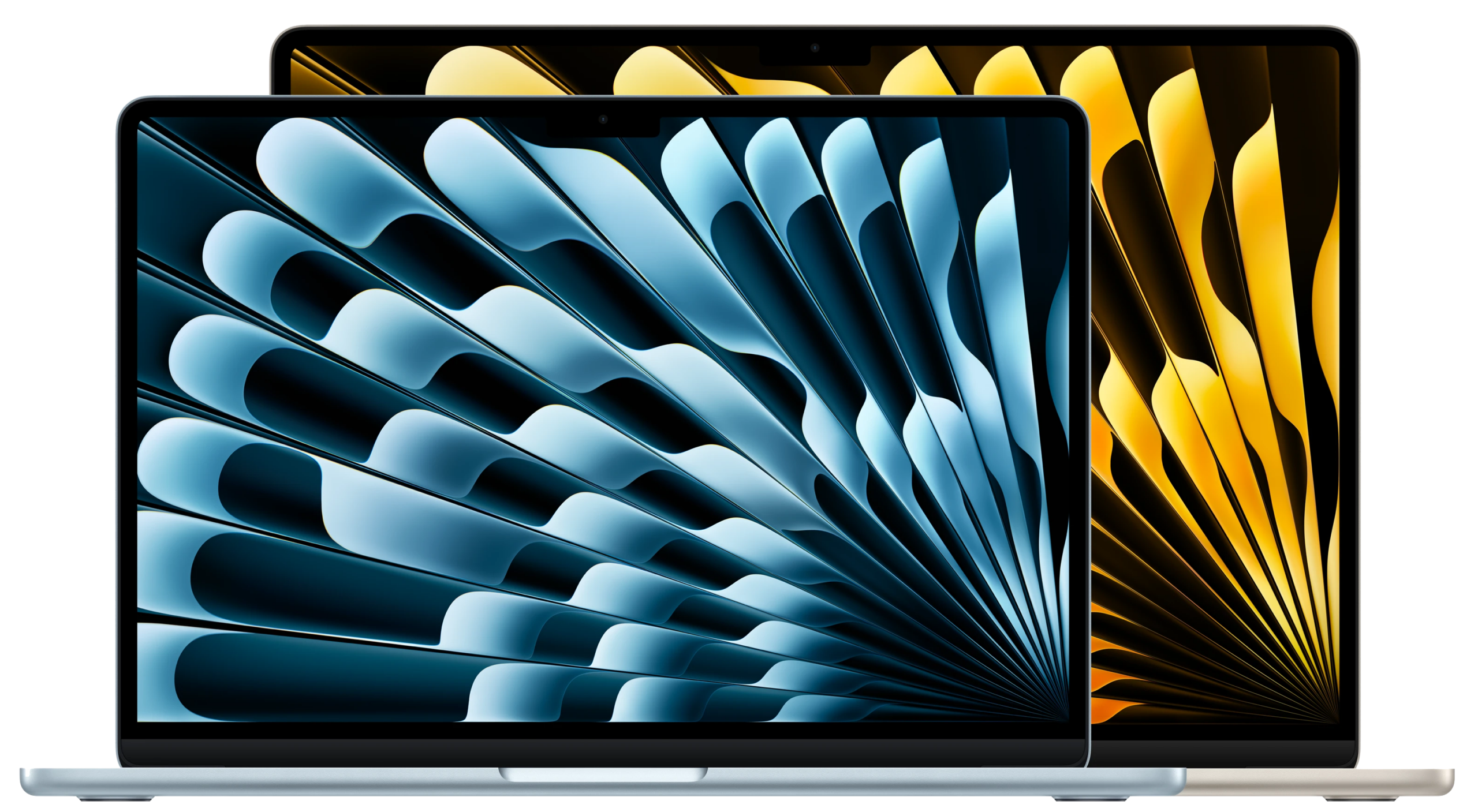
Beyond the core processing power, Apple has also made substantial upgrades to the storage and connectivity options on the M5 MacBook Air. The base storage configuration has been significantly increased to 512GB, providing users with ample space for their applications, projects, and media. For those requiring even more capacity, the M5 MacBook Air can now be configured with up to a staggering 4TB of internal storage, albeit with a significant price increase of $1200 for the top-tier option.
A notable addition is Apple’s proprietary N1 wireless networking chip. This new component integrates Wi-Fi 7, Bluetooth, and Thread capabilities, offering a streamlined and more power-efficient wireless experience. The N1 chip’s focus on reducing battery consumption, particularly during location tracking operations, is a crucial aspect for mobile users. Furthermore, the introduction of Wi-Fi 7 technology promises theoretical data transfer speeds of up to 46 Gb/s, a figure that can rival or even surpass the performance of Thunderbolt 4, opening up new possibilities for high-speed data transfer and seamless connectivity.
The memory subsystem has also seen a considerable upgrade. The M5 chip boasts an increased memory bandwidth of 153 GB/s, facilitated by the adoption of cutting-edge mobile memory technology: 4800 MHz LPDDR5X-9600. This enhanced memory architecture contributes to the overall responsiveness and performance of the system, allowing for smoother multitasking and quicker access to data.

Accompanying these internal upgrades is a new 40-Watt dynamic charger, with a maximum output of 60W. This replaces the previous 35-Watt Dual USB-C compact adapter, offering a more robust charging solution that can potentially deliver power more efficiently, particularly when the device is under heavy load.
A Performance Leap Measured in Generations
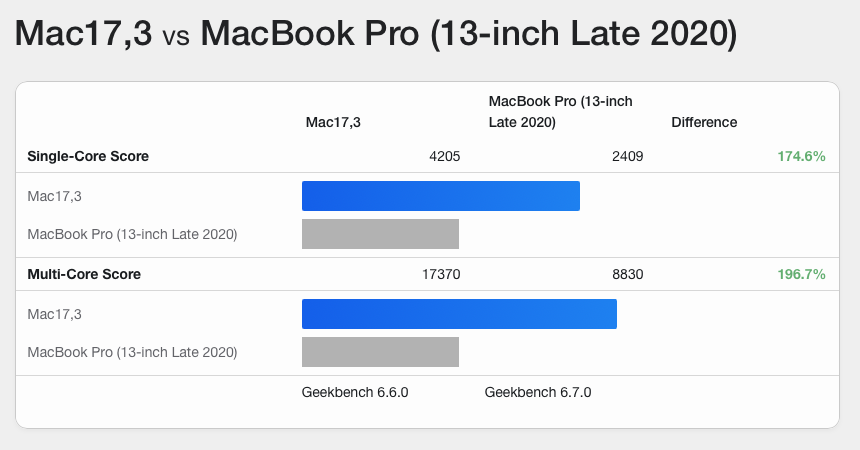
The performance gains achieved by the M5 chip are best illustrated by comparing it to earlier generations of Apple Silicon. The M5 MacBook Air delivers performance that is roughly equivalent to two M1 chips combined. This metric, while not quite reaching the 200% mark, is an astounding testament to the rapid evolution of Apple’s custom silicon over the past five years. When comparing a 13-inch M5 MacBook Air to a 13-inch M1 MacBook Pro, the performance differential is stark, highlighting the dramatic improvements in both CPU and GPU capabilities.

This leap in performance means that tasks previously confined to more powerful desktop or Pro-tier laptop machines are now readily achievable on the ultraportable MacBook Air. From intensive video editing and complex graphic design to demanding software development and even light 3D rendering, the M5 MacBook Air is equipped to handle a much broader spectrum of professional workloads than its predecessors.
Apple Intelligence Integration
A significant aspect of the M5 MacBook Air’s capabilities is its full support for Apple Intelligence, Apple’s suite of intelligent features and AI-powered tools. This advanced functionality is accessible on any Mac equipped with Apple Silicon, including the new M5 MacBook Air. Furthermore, Apple Intelligence is also integrated into compatible iPad models with M-series chips and iOS devices running iOS 18 and later, provided they feature an A17 Pro chip or a newer equivalent. This broad compatibility ensures that users can leverage the power of AI across their Apple ecosystem.
Apple Intelligence aims to enhance user experience through features like personalized writing tools, image generation, and more sophisticated Siri capabilities. The integration of these AI features directly into the hardware and operating system allows for on-device processing, prioritizing user privacy and security while delivering powerful and intuitive assistance.
Key Features and Technical Specifications
The M5 MacBook Air continues to offer a compelling blend of portability, performance, and user-centric features.

Closed Lid Mode: Maximizing External Display Utility
A notable feature that remains a staple of the MacBook Air lineup is "closed lid" or "clamshell" mode. This functionality allows users to operate the MacBook Air with its built-in display off, dedicating all unified memory and processing power to one or two external displays. To enable this mode, the MacBook Air must be connected to AC power, an external display, and an external USB or Bluetooth keyboard and mouse. Upon successful setup, the Mac boots to the external display, and closing the lid keeps the internal display inactive. This setup is ideal for users who prefer a desktop-like experience with larger monitors while maintaining the portability of their MacBook Air. To return to the standard configuration, the external display needs to be disconnected, the Mac put to sleep, and the lid reopened.
Battery Life and Charging
Apple claims impressive battery life for the M5 MacBook Air, offering up to 15 hours of wireless web browsing and an extended 18 hours for video streaming. This extended longevity is a critical factor for mobile professionals and students who rely on their devices throughout the day. The new 40-Watt dynamic charger, with its 60W peak capability, ensures that users can quickly replenish the battery, minimizing downtime.
Core System and Cache Architecture
The M5 chip’s CPU incorporates a sophisticated cache hierarchy designed for optimal performance and efficiency. The architecture includes:
- L1 Instruction Cache (L1i): Dedicated to storing frequently accessed instructions for rapid retrieval.
- L1 Data Cache (L1d): Designed for quick access to data that the CPU is currently processing.
- System Level Cache (SLC): A larger, shared cache that benefits all cores, reducing the need to access main memory for frequently used data.
All M5 chips feature a standardized memory configuration for their CPU caches, ensuring consistent performance across different models and configurations.
Memory and Storage Enhancements
The increased memory bandwidth of 153 GB/s, coupled with the use of 4800 MHz LPDDR5X-9600 memory, significantly boosts the MacBook Air’s ability to handle large datasets and complex applications. The expanded base storage of 512GB, with options reaching up to 4TB, addresses the growing need for local storage for professional workflows and extensive media libraries.
Connectivity and Expansion
The inclusion of Wi-Fi 7 via the new N1 wireless chip represents a significant upgrade in wireless networking speeds and reliability. This technology is poised to become the new standard for high-speed wireless internet, offering a substantial improvement over previous Wi-Fi generations. While the specific Thunderbolt 4 port count is not detailed, the emphasis on high-speed wireless connectivity suggests that wired data transfer capabilities remain robust.

Broader Impact and Future Implications
The launch of the M5 MacBook Air with its integrated M5 chip has several significant implications for the personal computing landscape.
Firstly, it continues to democratize high-performance computing. Features that were once exclusive to high-end workstations or professional laptops are now accessible in an ultraportable form factor, making powerful computing tools available to a wider audience. This can foster innovation by enabling more individuals to engage in demanding creative and technical work without the need for substantial hardware investments.

Secondly, Apple’s continued focus on in-house silicon development, exemplified by the M5 chip, reinforces its vertical integration strategy. This allows for tighter control over hardware and software integration, leading to optimized performance, enhanced power efficiency, and a more seamless user experience. The success of Apple Silicon also puts pressure on competitors to accelerate their own chip development efforts.
Thirdly, the advancements in wireless technology, particularly Wi-Fi 7, signal a shift towards even faster and more reliable wireless connectivity. This will likely drive the development of new applications and services that rely on high-bandwidth wireless data transfer, such as cloud-based gaming, real-time collaborative workflows, and immersive augmented and virtual reality experiences.
The M5 MacBook Air’s ability to seamlessly integrate Apple Intelligence further positions it as a device that is not just about raw power but also about intelligent assistance and enhanced productivity. As AI continues to evolve, devices like the M5 MacBook Air will be at the forefront of delivering these advanced capabilities to everyday users.

In conclusion, the M5 MacBook Air is more than just an updated laptop; it represents a significant evolution in portable computing. By combining groundbreaking performance, enhanced connectivity, and intelligent features, Apple has once again raised the bar for what users can expect from an ultraportable device, setting a new benchmark for the industry.