Cecilia Chamidah Nur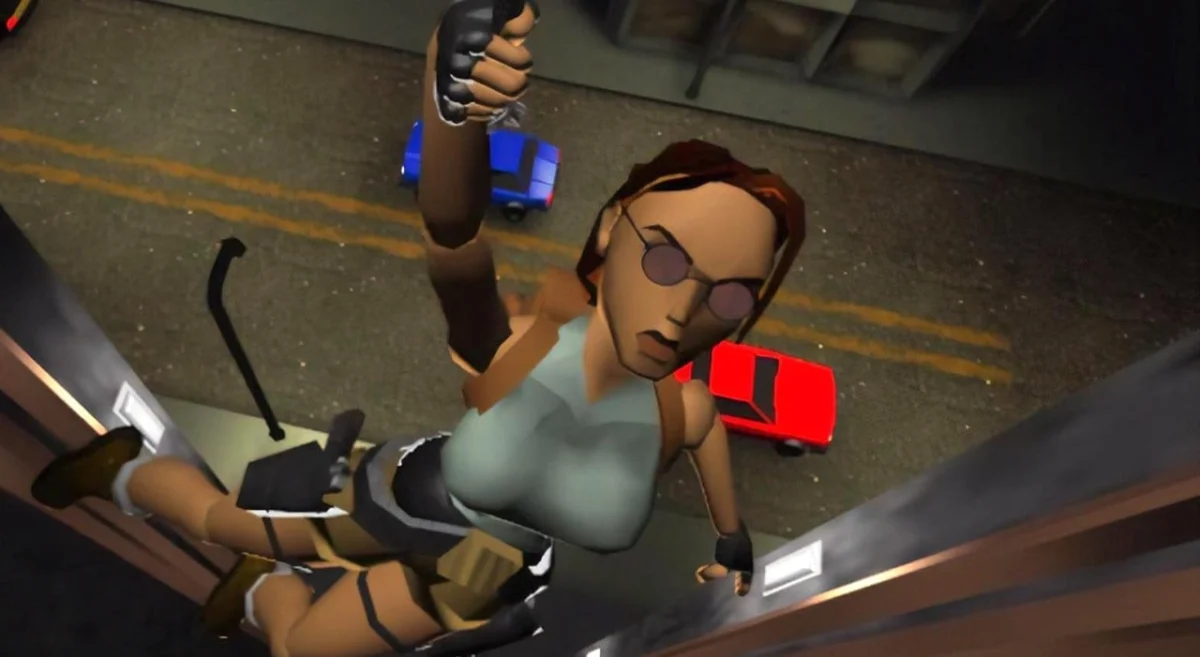
The Unveiling of a Digital Archeological Find
On April 13th, 2026, a YouTube user identified only as "Snake" uploaded compelling footage that immediately captivated retro gaming enthusiasts and preservationists alike. The nearly five-minute video demonstrates a functional, albeit unfinished, Nintendo 64 port of the original Tomb Raider. The footage, captured running on an Analogue 3D console with its "Unleashed" overclock setting enabled, showcases significant progress. Viewers are guided through the game’s iconic opening titles, the main menu, and an extended exploration of Croft Manor, Lara’s ancestral home and the game’s training ground. Following this, Snake delves into some of the game’s earliest levels, including the atmospheric "Caves" section and the intricately designed "Palace Midas," proving the core gameplay mechanics and environment rendering are largely operational. This public demonstration marks a significant milestone in the ongoing efforts by the homebrew community to adapt classic titles to unintended platforms, particularly those with a rich history like the Nintendo 64.
Technical Foundations: Decompilation and Modern Homebrew Tools
The developer, Snake, has clarified that this ambitious port is rooted in the "TRX decompilation" project, an open-source re-implementation of Tomb Raider I and Tomb Raider II spearheaded by the Lost Artefacts team. Decompilation, in this context, refers to the process of reverse-engineering compiled software (like a game’s executable) back into human-readable source code. This allows hobbyists and developers to understand, modify, and port games more effectively than working with binary files alone. The TRX project, currently at version 1.5, is lauded for its numerous enhancements and bug fixes over the original games, providing a stable and improved foundation for further development.
For the N64 specific implementation, Snake is leveraging "Tiny3D," a specialized 3D microcode and library designed for the Nintendo 64, built upon "libdragon." Libdragon itself is a popular open-source development kit for the N64, enabling modern C/C++ programming for the console’s unique architecture. The use of Tiny3D suggests an effort to optimize rendering for the N64’s distinct Reality Coprocessor, which handles both graphics and audio through microcode. This sophisticated toolchain underscores the technical prowess required to undertake such a project, far exceeding simple emulation or ROM hacking.
Snake’s progress report indicates that the port is "pretty much entirely implemented at this point," impressively including all the original music and the majority of the full-motion video (FMV) sequences, a feature that could have been a significant hurdle given the N64’s cartridge-based storage and memory limitations. Perhaps most remarkably, the entire game, in its current state, "fits on an N64 cartridge," a testament to efficient coding and asset management. However, the developer openly acknowledges that the project is not without its challenges. "Numerous bugs, rendering, and performance issues" persist, with performance notably "tanking in levels with large areas." This highlights the intensive optimization work still required to achieve a consistently smooth experience on the N64’s hardware, particularly in environments with complex geometry or extensive draw distances. The intrinsic architectural differences between the N64 and the PlayStation or Sega Saturn, on which Tomb Raider originally debuted, necessitate careful tuning of graphics pipelines and memory management.
Tomb Raider’s Genesis and a Console Generation Divided
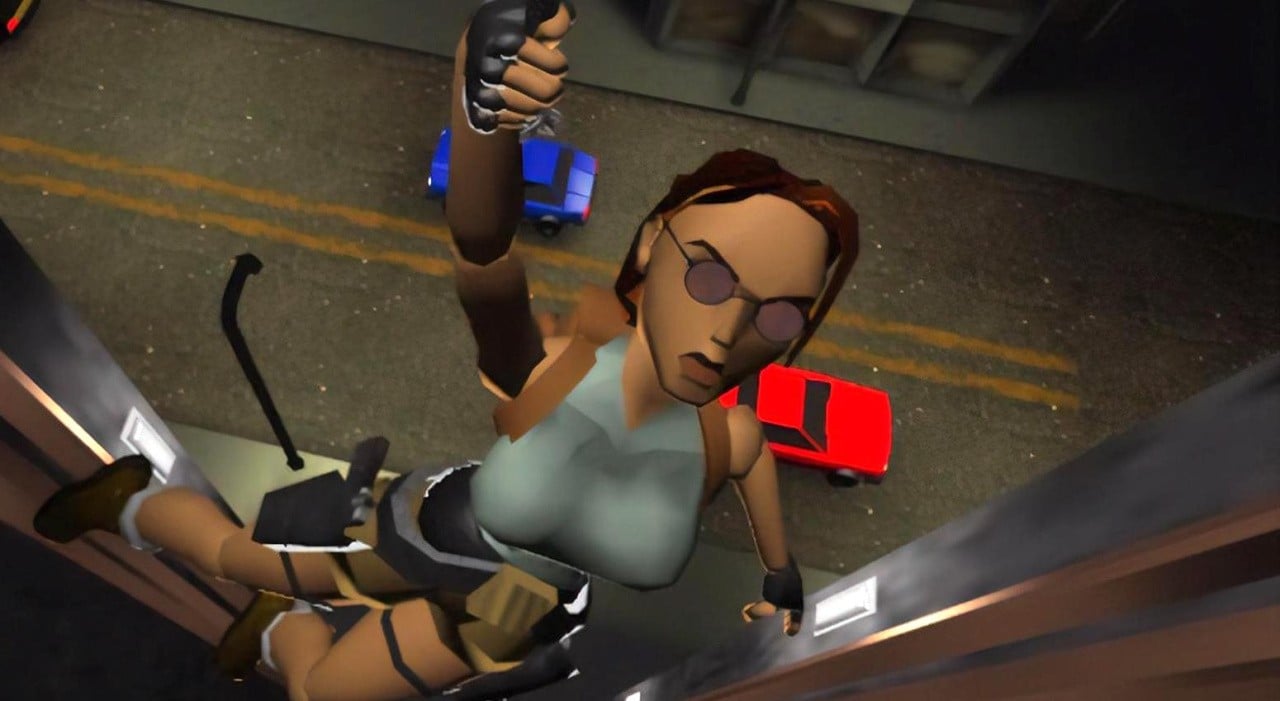
To fully appreciate the significance of this unofficial port, one must revisit the mid-1990s, a pivotal era in video game history marked by the fierce "console wars" between Nintendo’s N64, Sony’s PlayStation, and Sega’s Saturn. Tomb Raider, developed by the UK-based Core Design and published by Eidos Interactive, made its debut on the Sega Saturn in October 1996, quickly followed by releases on the PlayStation and MS-DOS in November of the same year. The game was an instant phenomenon, celebrated for its innovative 3D platforming, puzzle-solving, and the introduction of its iconic protagonist, Lara Croft. Lara swiftly transcended the gaming world to become a global pop culture icon, symbolizing strength, intelligence, and adventure.
The Nintendo 64, launched in June 1996 in Japan and September 1996 in North America, boasted superior raw polygonal rendering capabilities and introduced true 3D analog control with its revolutionary joystick. However, it relied on cartridge-based media, which, while offering faster loading times and discouraging piracy, imposed strict storage limitations (typically 4MB to 64MB) and higher manufacturing costs compared to the PlayStation’s CD-ROMs (650MB). CD-ROMs allowed for vast amounts of storage for FMVs, high-quality audio, and expansive game worlds, which the original Tomb Raider utilized extensively. This fundamental difference often dictated which third-party titles found a home on each console.
Core Design’s N64 Consideration: A Missed Opportunity
Historical accounts and interviews with former Core Design developers have long circulated rumors of an official Tomb Raider port being considered for the Nintendo 64. According to these developer testimonies, the prospect was indeed explored internally. However, several factors ultimately prevented its realization. A primary impediment cited was the delay in Core Design receiving official Nintendo development kits. The N64’s unique architecture, particularly its reliance on specialized microcode for graphics and audio processing, meant that developing for it required specific hardware and software tools that were not readily available to all developers, especially those without established relationships with Nintendo. By the time adequate development resources might have become available, another crucial factor intervened: an exclusivity deal for Tomb Raider II.
Eidos Interactive, recognizing the PlayStation’s burgeoning market dominance and the commercial success of the first Tomb Raider on Sony’s console, entered into an exclusivity agreement with Sony for the sequel. This deal effectively cemented Tomb Raider‘s strong association with the PlayStation brand for years to come and effectively closed the door on any potential N64 port of the original game, let alone its follow-ups. The commercial imperative outweighed the technical curiosity, leaving Nintendo 64 owners without the opportunity to experience Lara Croft’s initial adventures on their preferred console. This historical context underscores the significance of Snake’s unofficial project; it’s not merely a fan port but a rectification of a historical omission, albeit through unofficial channels.
The Homebrew Renaissance: Preservation and Innovation
The phenomenon of fan-made ports and enhancements for classic consoles like the N64 is a testament to the enduring passion of the retro gaming community and the capabilities of modern reverse-engineering. Projects like TRX and tools like Tiny3D and libdragon are at the forefront of this "homebrew renaissance." They not only serve to preserve gaming history by making source code accessible but also empower enthusiasts to push the boundaries of what was thought possible on vintage hardware.
Previous attempts to bring Tomb Raider to the N64 using projects like "OpenLara," another open-source re-implementation, have been documented within the N64 homebrew community. While these efforts often fell by the wayside, they demonstrated the persistent desire for such a port and laid some groundwork. Snake’s success in achieving a seemingly more complete and functional build, leveraging the advancements in the TRX decompilation and N64 development tools, represents a significant leap forward.

The N64 homebrew scene itself is vibrant, regularly producing new games, utilities, and ports that extend the life and legacy of the console. These projects often involve deep dives into the N64’s technical specifications, optimizing code to squeeze every ounce of performance from its 93.75 MHz MIPS R4300i CPU and its Reality Coprocessor. The ability to fit a game originally designed for CD-ROM onto an N64 cartridge, while retaining most features, is a prime example of the ingenuity prevalent in this community.
Implications and the Future Outlook
The emergence of this Tomb Raider N64 port carries several significant implications for the retro gaming community, intellectual property holders, and the broader discussion surrounding game preservation.
Firstly, it highlights the power of fan-driven initiatives in filling historical gaps and enriching the legacy of classic games. Where commercial interests and technical constraints once prevented a title from appearing on a specific platform, dedicated fans are now able to leverage open-source tools and collective knowledge to realize these long-lost possibilities. This contributes immensely to game preservation, allowing more people to experience seminal titles on original hardware, albeit through unofficial means.
Secondly, the project sparks renewed discussion about the legal and ethical landscape of fan-made ports. While "Snake" has not announced plans for a public release or monetization, such projects often operate in a grey area. Intellectual property (IP) for Tomb Raider is currently held by Square Enix, with development now handled by Crystal Dynamics. Historically, IP holders have taken varied stances on fan projects; some issue cease-and-desist orders, while others adopt a more permissive approach, especially if the projects are non-commercial and seen as enhancing brand loyalty. The community eagerly awaits any potential official reactions, though often, well-executed and non-profit fan projects are quietly tolerated.
Finally, the port raises the intriguing question of performance and fidelity. While the N64 boasted powerful 3D capabilities for its time, its texture filtering often resulted in a distinct, blurry aesthetic compared to the PlayStation’s sharper, but often pixelated, textures. The Analogue 3D, a modern FPGA-based console, combined with overclocking, offers a "best-case scenario" for N64 performance, potentially mitigating some of the original hardware’s limitations. However, the reported "tanking" performance in large areas suggests that even with modern tools and optimal conditions, pushing Tomb Raider‘s complex environments through the N64’s pipeline remains a formidable technical challenge.
As Snake continues to refine the port, the retro gaming world watches with bated breath. While no timeline or definitive plans for a public release have been announced, the mere existence of this work-in-progress port is a triumph of dedication and technical skill. It not only offers a fascinating "what if" scenario for N64 enthusiasts but also underscores the vibrant, innovative spirit of a community committed to preserving and reimagining the classics of gaming history. The journey of Lara Croft, it seems, is far from over, with new pathways continually being forged by dedicated fans.