Farhan hamdan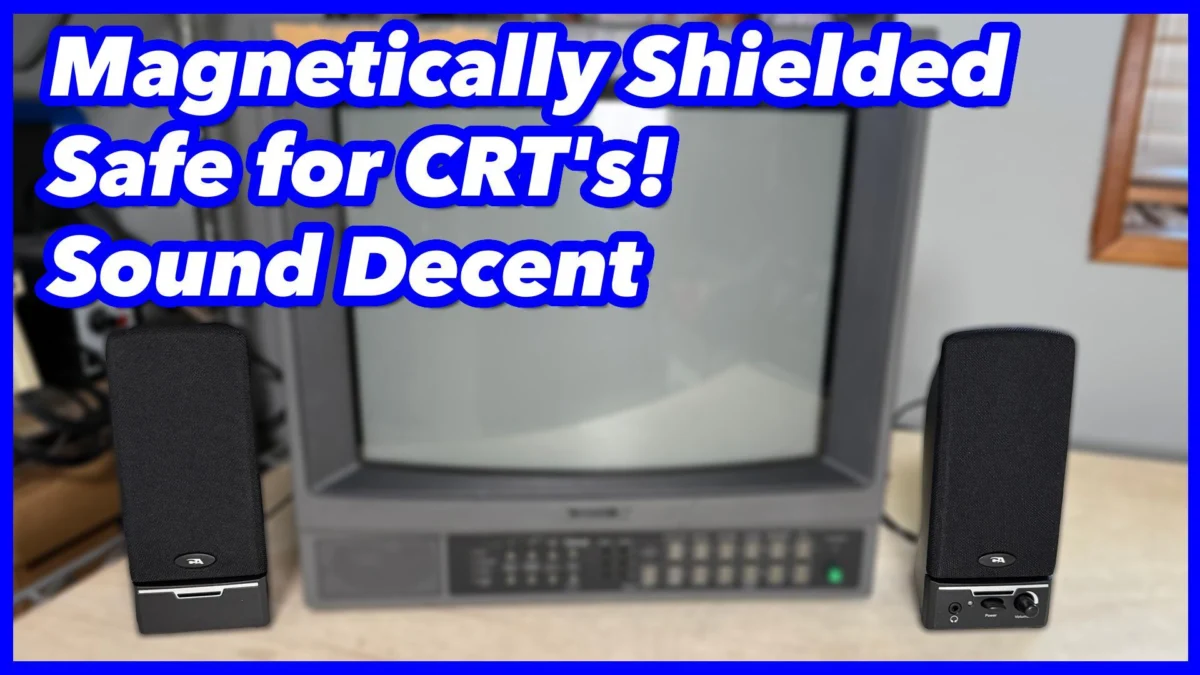
In an increasingly digital and flat-panel dominated display landscape, the niche community dedicated to Cathode Ray Tube (CRT) monitors continues to face unique challenges, particularly concerning peripheral compatibility. A recent assessment of the Cyber Acoustics CA-2014 speakers has positioned them as a notable, budget-friendly option for individuals seeking magnetically shielded audio solutions for their CRT setups. This development is significant given the dwindling availability of new speakers designed with the specific magnetic shielding necessary to prevent interference with CRT displays, a technological requirement largely rendered obsolete by modern screen technologies.
The Enduring Relevance of Magnetic Shielding for CRT Displays
The fundamental principle behind the necessity of magnetically shielded speakers for CRT displays lies in the inherent operational mechanism of CRTs. Unlike contemporary LCD or OLED screens, which generate images using liquid crystals or organic light-emitting diodes, CRTs rely on electron beams deflected by magnetic fields to illuminate phosphors on the screen. The integrity of these electron beams is highly susceptible to external magnetic interference. Standard speakers, which contain powerful permanent magnets within their drivers, produce external magnetic fields. When an unshielded speaker is placed in close proximity to a CRT monitor, these external magnetic fields can disrupt the trajectory of the CRT’s electron beams.
The visual manifestation of this interference is typically observed as color distortion, often appearing as patches of incorrect color or discoloration (known as "color purity issues"), or geometric distortions where the image appears warped, stretched, or skewed. While CRTs incorporate internal degaussing coils designed to neutralize residual magnetic fields that build up over time or from external influences, these systems are generally not sufficient to counteract the continuous magnetic output from unshielded speaker magnets. Consequently, for any enthusiast aiming to achieve optimal picture quality on a CRT, particularly in retro gaming or computing scenarios where visual fidelity is paramount, magnetically shielded speakers are not merely a preference but a technical imperative.
The Cyber Acoustics CA-2014: A Timely Entry-Level Contender
The Cyber Acoustics CA-2014 speakers, characterized as basic "PC Speakers," have been confirmed to possess the critical magnetic shielding required for CRT compatibility. This verification addresses a significant pain point for the retro community, which frequently grapples with the difficulty of sourcing suitable new equipment. The CA-2014 model offers a straightforward 3.5mm headphone jack input, making it compatible with a wide array of audio sources, including older computer sound cards, game consoles via appropriate adapters (such as RCA to 3.5mm), and other legacy audio devices. Their "entry-level" designation suggests an accessible price point, which is crucial for a community often operating within budget constraints while maintaining vintage hardware.
The availability of a new, affordably priced, and confirmed-shielded speaker like the CA-2014 fills a distinct void in the market. As consumer electronics transitioned away from CRTs in the late 1990s and early 2000s, the demand for magnetically shielded peripherals plummeted. Manufacturers, responding to market forces, gradually phased out the additional design and material costs associated with shielding, rendering most modern speaker offerings unsuitable for CRT environments. This shift has forced CRT users to rely heavily on the secondary market for older, often untested, and potentially unreliable shielded speakers.
Historical Context: The Rise and Fall of Shielded Peripherals
The need for magnetic shielding in computer peripherals, including speakers, was a standard design consideration throughout the 1980s and 1990s, when CRT monitors were ubiquitous. During this era, computer desks often housed a CRT monitor flanked by a pair of speakers. Manufacturers consciously integrated shielding into their speaker designs, typically through methods such as enclosing the magnet within a steel casing or employing a "bucking magnet" design where a second magnet is strategically placed to cancel out the external field of the primary driver magnet. This engineering practice was so commonplace that many "PC speakers" from that era were implicitly shielded, even if not explicitly advertised as such.
However, the rapid ascent of Liquid Crystal Display (LCD) technology in the early 2000s marked the beginning of the end for the CRT’s dominance. LCDs, being non-magnetic display technologies, are entirely impervious to external magnetic fields from speakers. This fundamental difference removed the necessity for speaker manufacturers to incur the extra cost and complexity of magnetic shielding. Consequently, as LCDs became the prevailing display technology, magnetic shielding quickly became an obsolete feature in mainstream audio product development. This historical trajectory explains the current scarcity: the market adapted to new display technologies, leaving a niche segment of CRT enthusiasts with a significant hardware gap.
The Challenges of Sourcing Shielded Speakers in the Modern Era
For years, the primary recommendation for CRT users seeking shielded speakers was to scour second-hand markets, thrift stores, and online auction sites for vintage models. While this approach can yield results, it comes with inherent risks. Older speakers may suffer from degraded components, such as dried-out capacitors or deteriorated speaker surrounds, impacting audio quality and longevity. More critically, verifying the magnetic shielding of a used speaker without direct testing near a CRT is often impossible. Many older listings or manuals, while historically accurate, may not reflect the current state of a speaker, or the shielding might have been less effective than required for today’s discerning retro enthusiast.

Furthermore, the original article highlights a critical modern paradox: "I’ve personally tested MANY models that are listed as shielded in the listing/manual, but are definitely no longer shielded." This observation underscores a significant manufacturing shift where even if a product line historically featured shielding, subsequent revisions or cost-cutting measures may have eliminated this feature without updating product documentation. This makes the verification process for consumers incredibly difficult and reinforces the value of confirmed reviews, such as the one for the Cyber Acoustics CA-2014.
Beyond Entry-Level: Higher-End Alternatives and the Role of Niche Manufacturers
While the Cyber Acoustics CA-2014 serves as an excellent entry-level or backup solution, the market for magnetically shielded speakers, albeit niche, does offer higher-end options for those seeking superior audio fidelity and features. Prominent among these are the Kanto Ora speakers, and their newer, larger line, which have garnered significant attention within the retro technology community.
The Kanto Ora series represents a more premium offering, designed with both modern connectivity (e.g., USB-C, Bluetooth) and the crucial magnetic shielding for CRT compatibility. These speakers cater to enthusiasts who are willing to invest more for enhanced sound quality, greater power output, and a more robust feature set while still addressing the fundamental requirement of CRT integration. The existence of products like the Kanto Ora demonstrates that a specialized market for shielded speakers, though small, is viable enough to attract dedicated manufacturers. This signifies a growing recognition of the retro computing and gaming community’s specific needs, moving beyond mere nostalgia to demand high-quality, purpose-built peripherals.
However, the significant price difference between the Kanto Ora series and the Cyber Acoustics CA-2014 underscores the importance of having options across various budget tiers. Not every CRT user requires audiophile-grade sound, and for many, the primary concern is simply preventing image distortion without breaking the bank.
The Role of Community and Expert Reviews
In this highly specialized and underserved market, the contributions of independent reviewers and community experts become invaluable. Individuals like Bob from RetroRGB, who dedicate time and resources to testing and verifying hardware compatibility, play a critical role in disseminating accurate information. Their meticulous testing, particularly in confirming the presence and effectiveness of magnetic shielding, empowers consumers to make informed purchasing decisions and avoid costly mistakes. Without such rigorous verification, the task of finding suitable peripherals would be significantly more challenging for the average enthusiast.
This phenomenon highlights a broader trend in niche technology communities: as mainstream manufacturers pivot away from older technologies, the burden of product testing, compatibility verification, and community support often falls to passionate individuals and specialized platforms. These efforts not only benefit individual users but also contribute to the long-term preservation and enjoyment of vintage hardware.
Implications for the Retro Computing and Gaming Community
The confirmation of the Cyber Acoustics CA-2014’s magnetic shielding carries several important implications for the retro computing and gaming community:
- Accessibility: It provides an accessible, budget-friendly entry point for new enthusiasts or those needing a reliable backup solution without resorting to uncertain second-hand purchases.
- Preservation of Experience: By mitigating magnetic interference, these speakers help ensure that users can enjoy their CRT displays with optimal color purity and geometry, preserving the authentic visual experience intended by original game developers and software designers.
- Market Signal: The sustained demand for products like the CA-2014 and the Kanto Ora series sends a signal to manufacturers, indicating that a viable, albeit niche, market exists for new, purpose-built peripherals for vintage hardware. This could potentially encourage more innovation in this space.
- Reduced Frustration: The certainty provided by a tested and confirmed product significantly reduces the frustration associated with trial-and-error purchases, which often result in incompatible equipment.
Conclusion: A Small Victory for a Dedicated Niche
The identification of the Cyber Acoustics CA-2014 as a reliably shielded speaker is more than just a product review; it represents a small but significant victory for the dedicated community of CRT enthusiasts. In an era dominated by rapidly evolving display technologies, the commitment to preserving and enhancing the experience of older hardware requires specific, often hard-to-find, solutions. The CA-2014 fills a critical gap by offering an affordable and effective means to address the unique magnetic interference challenges posed by CRTs. Its availability, coupled with the continued efforts of community experts to test and inform, ensures that the vibrant world of retro computing and gaming can continue to thrive with the authentic visual and audio fidelity that CRTs uniquely offer. As the retro movement continues to gain momentum, such findings are instrumental in sustaining the longevity and enjoyment of these cherished vintage technologies.