Farhan hamdan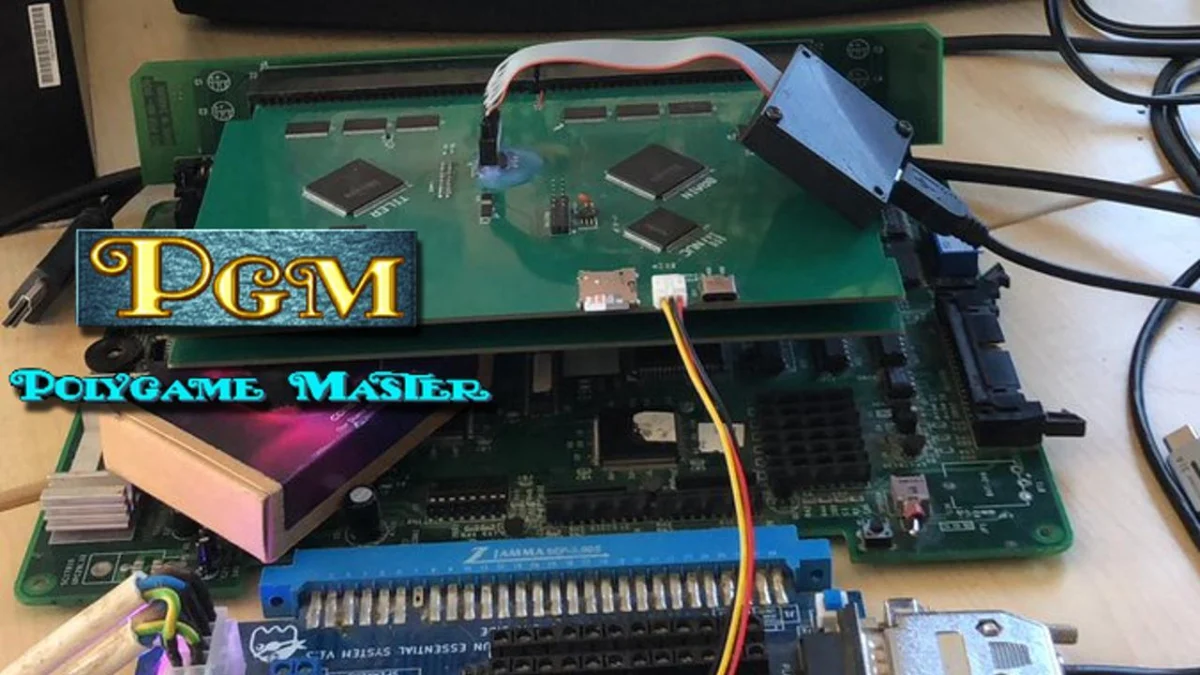
The retro gaming community is abuzz with the recent preview from James of RetroHQ, showcasing an innovative Game Drive solution designed for the International Games System (IGS) PolyGame Master (PGM) arcade hardware. This development marks a significant step towards modernizing and preserving access to a highly regarded, albeit niche, arcade platform. The preview, delivered via a compelling video demonstration, highlights the device’s capability to run multiple PGM titles seamlessly with notably fast load times, promising to revolutionize how enthusiasts interact with this classic system. While an official price and release date remain unconfirmed, RetroHQ is targeting a late-year launch, with pricing expected to align with similar high-end ROM carts already on the market. Adhering to a direct-to-consumer model, the Game Drive will be available for standard orders once stock is ready, eschewing pre-orders to ensure a smooth and reliable distribution process.
The IGS PolyGame Master: A Glimpse into Arcade History
To fully appreciate the significance of RetroHQ’s Game Drive, one must first understand the context of the IGS PolyGame Master system. Launched in 1997 by the Taiwanese company International Games System (IGS), the PGM was designed as a cartridge-based arcade system board, positioning itself as a competitor to established giants like SNK’s Neo Geo MVS and Capcom’s CPS-2 and CPS-3 systems. Unlike many contemporary arcade boards that relied on expensive, dedicated PCBs for each game, the PGM adopted a modular design, allowing operators to swap game cartridges on a universal motherboard. This approach offered a more cost-effective and flexible solution for arcade owners, mirroring the successful model pioneered by the Neo Geo.
The PGM system boasted a Motorola 68000 CPU as its main processor, a Zilog Z80 for sound, and a custom IGS ASIC for graphics and sound processing, providing a robust platform capable of rendering vibrant 2D graphics and delivering compelling gameplay experiences. Its technical specifications included a main CPU clock speed of 20 MHz, a significant leap from some older systems, enabling more complex sprite manipulation and detailed backgrounds. Despite its technical prowess and competitive design, the PGM never achieved the widespread global recognition of its Japanese rivals. Its primary market penetration was largely concentrated in East Asia, particularly Taiwan, mainland China, and parts of Southeast Asia, where IGS had a strong presence. This geographical focus contributed to its relative obscurity in Western markets.
Consequently, while its library is not as extensive as the Neo Geo’s, comprising around 50 distinct titles, it houses a collection of highly respected games that have garnered a dedicated cult following among retro arcade enthusiasts. Among the PGM’s most celebrated games are titles from the Knights of Valour series, a popular beat ’em up franchise known for its intricate combat systems and multiple playable characters, and Oriental Legend, another highly regarded beat ’em up. The system is also notable for hosting several acclaimed shoot ’em up (shmup) games developed by the legendary Japanese studio Cave, including DoDonPachi II: Bee Storm (though this was primarily developed by IGS with Cave’s license and input) and Espgaluda. Other notable titles include Demon Front, often dubbed "Neo Geo Killer" due to its similar run-and-gun gameplay style reminiscent of Metal Slug, and Martial Masters, a well-regarded fighting game. The relative scarcity of these original PGM cartridges outside of their core market, coupled with the aging nature of the hardware and the complex copy protection mechanisms, has made collecting and playing these games a challenging and often expensive endeavor for many fans, highlighting the critical need for preservation and accessibility solutions like the Game Drive.
The Evolution of Flash Carts and Game Preservation
The development of the RetroHQ PGM Game Drive is part of a broader, increasingly vital trend within the retro gaming community: the proliferation of "flash carts" or "ROM carts." These devices are modern hardware solutions designed to interface with original retro game consoles and arcade boards, allowing users to load game ROMs (digital copies of game cartridges) from an SD card or similar storage medium. This technology has revolutionized game preservation and accessibility for numerous platforms, from classic home consoles like the Nintendo Entertainment System and Super Nintendo to more obscure arcade systems.
Flash carts serve multiple crucial functions in the modern retro gaming landscape. Firstly, they act as powerful tools for game preservation. As original game cartridges and arcade PCBs age, they become susceptible to degradation, battery rot (for save files), and component failure. The physical media of the late 20th century was not designed for indefinite longevity. Digital ROMs, when properly archived and verified, offer a more stable and enduring form of preservation. Flash carts provide a means to play these digital archives on authentic hardware, maintaining the original gaming experience that software emulators, while invaluable for broad access, cannot always perfectly replicate due to timing inaccuracies or subtle hardware nuances.
Secondly, they significantly enhance accessibility. Many classic games, particularly for less common or older systems, are incredibly rare and command exorbitant prices on the secondary market. The cost of acquiring even a modest collection of original PGM cartridges, for example, could easily run into thousands of dollars. A single flash cart can potentially grant access to an entire system’s library for a fraction of the cost of collecting even a handful of original titles. This democratizes retro gaming, allowing a wider audience to experience historically significant or simply enjoyable games that would otherwise remain out of reach due to financial or logistical barriers.
The evolution of flash cart technology has seen continuous advancements, from simple devices capable of loading a single game to sophisticated systems supporting complex bank switching, saving features, and even FPGA-based recreations of custom chips for accurate hardware emulation on the fly. Developers like Krikzz (EverDrive series for various consoles), Terraonion (NeoSD for Neo Geo), and now RetroHQ, have pushed the boundaries of what these devices can achieve, often overcoming significant technical hurdles related to proprietary hardware, custom protection mechanisms, and unique memory mapping schemes. The PGM Game Drive stands as a testament to this ongoing innovation, tackling a system known for its robust anti-piracy measures and unique hardware configurations, often requiring specific cryptographic keys or ASIC interactions to function.
RetroHQ’s Proven Track Record and Technical Acumen
James, the driving force behind RetroHQ, has cultivated a strong reputation within the retro gaming hardware community for his consistent innovation and dedication to quality. While specific details of his previous projects might not be exhaustively listed in the initial announcement, the mention of "a long history of consistent firmware updates and feature additions" speaks volumes about RetroHQ’s commitment to product longevity and customer satisfaction. This track record is particularly crucial in the niche market of retro hardware, where devices often require ongoing refinement to ensure compatibility with a diverse range of games and system revisions, sometimes even years after their initial release. RetroHQ’s established reputation for post-launch support instills confidence among potential buyers that their investment will continue to evolve and improve over time.
Developing a flash cart for an arcade system like the PGM presents unique technical challenges. Unlike many home consoles, arcade boards were often designed with robust copy protection mechanisms and custom ASICs (Application-Specific Integrated Circuits) that make reverse-engineering and replicating their functionality complex. The PGM, with its various ASIC27A revisions (Type 1, 2, and 3) and custom IGS022 + IGS025 chips, is no exception. These components are integral to how games boot, manage memory, and handle graphical/audio processing, meaning any flash cart solution must accurately emulate or bypass these protections to ensure full game compatibility without introducing glitches or instability. The PGM’s security measures were particularly advanced for its time, involving encryption and hardware-specific checks that have historically made full compatibility a significant hurdle for emulation and reproduction efforts.

RetroHQ’s success in demonstrating multiple PGM games running flawlessly, including those utilizing different ASIC revisions and the IGS022/025 chips, underscores James’s deep technical understanding and meticulous engineering approach. The "fast load times" highlighted in the demo are also a significant achievement. In arcade environments, rapid game switching and minimal loading delays are paramount to maintaining the immersive experience. Achieving this on a flash cart implies sophisticated data transfer mechanisms and efficient integration with the PGM’s memory architecture, preventing the typical bottlenecks sometimes seen in less optimized solutions. This focus on performance and compatibility from the outset suggests a product designed with both the purist, who demands accuracy, and the casual enthusiast, who values convenience, in mind.
Deep Dive into Game Drive Specifications and Compatibility
The RetroHQ PGM Game Drive is designed to be a comprehensive solution for the IGS PolyGame Master, aiming for broad compatibility across its diverse game library. While the full list of supported titles is yet to be confirmed, James has explicitly stated that the device currently supports Type 1, 2, and 3 ASIC27A games, as well as titles utilizing the IGS022 + IGS025 chips. This detailed specification is highly significant for PGM enthusiasts, as these designations refer to different hardware revisions and protection schemes employed by IGS throughout the PGM’s lifecycle.
The ASIC27A chip, for instance, was a custom ASIC used for various functions including copy protection, memory management, and potentially even specific graphical operations. Different "types" (1, 2, 3) indicate variations in its internal logic or programming, each potentially requiring a distinct approach for compatibility. Some PGM games were tied to specific ASIC versions, meaning a universal solution must account for these variations. Similarly, the IGS022 and IGS025 chips often housed additional copy protection routines or specific hardware functionalities crucial for certain games to operate correctly, often involving decryption or specialized I/O. By confirming support for these diverse configurations, RetroHQ is signaling its intent to offer a near-universal solution for the PGM library, a feat that requires extensive reverse engineering and sophisticated hardware design.
The challenge in developing such a device lies in accurately interfacing with these proprietary chips and circumventing their protection without altering the core game code or introducing emulation inaccuracies. This often involves a combination of custom hardware (like Field-Programmable Gate Arrays or specialized microcontrollers), carefully crafted firmware that can dynamically adapt to different game requirements, and extensive reverse engineering of the original system’s boot process and memory access patterns. The "fast load times" are a direct benefit of this advanced engineering, ensuring that switching between games or booting up a title is nearly instantaneous, mimicking the experience of an original arcade board rather than a slow, emulated environment. This is particularly important for an arcade system where quick play and minimal downtime are part of the original design philosophy, aiming for an authentic arcade experience in a home setting.
Furthermore, James’s commitment to "consistent firmware updates" is a crucial aspect of the Game Drive’s long-term viability. Given the complexities of arcade hardware and the potential for undiscovered game variations or protection nuances, a flash cart rarely achieves 100% compatibility on day one. The promise of ongoing updates reassures users that any unsupported titles at launch have a strong chance of being added later, further solidifying the device’s value proposition and ensuring its relevance as new discoveries or workarounds emerge within the community. This iterative development process is a hallmark of high-quality retro hardware projects.
Market Impact and Economic Implications for PGM Enthusiasts
The introduction of the RetroHQ PGM Game Drive carries substantial market implications, particularly for collectors and enthusiasts of the IGS PolyGame Master. The PGM, despite its quality library, has always been a more challenging system to collect for due to its regional focus and the inherent scarcity of its original cartridges outside of East Asia. This scarcity has naturally driven up prices for popular titles, making entry into PGM collecting an expensive endeavor.
Consider the cost analysis: acquiring a single, sought-after PGM title like Demon Front or one of the Cave shooters can often cost hundreds of dollars, sometimes even exceeding the price of the PGM motherboard itself. A full collection of the PGM’s best games could easily run into the thousands of dollars, making it prohibitively expensive for most enthusiasts. The Game Drive offers a dramatically more affordable alternative. While the exact price is yet to be announced, RetroHQ’s statement that it will be "about the price of similar styled ROM Carts" suggests a price point likely in the range of $300-$500 USD, consistent with other high-end flash carts for niche arcade systems like the NeoSD for the Neo Geo MVS/AES. For a single investment, users could potentially gain access to the entire PGM library, representing immense savings and making the platform accessible to a much wider audience.
Beyond cost, the Game Drive addresses several practical challenges. Original arcade cartridges are bulky, fragile, and require specific storage conditions to prevent component degradation. They also consume more power and generate more heat than a modern flash cart. The Game Drive streamlines the process, allowing users to store hundreds of game ROMs on a single SD card, making it incredibly convenient for home arcade setups or for those with limited physical space for collecting. This shift from physical collection to digital convenience on original hardware is a driving force behind the flash cart market, balancing authenticity with practicality.
The device also plays a critical role in the democratization of retro gaming. By lowering the financial and logistical barriers to entry, the Game Drive enables new generations of gamers and preservationists to experience the PGM’s unique contributions to arcade history. This can foster new communities, inspire technical exploration, and ensure that the legacy of IGS’s innovative arcade platform endures for decades to come. The initial investment in the Game Drive and a PGM motherboard could unlock an entire library, a far more appealing prospect than the piecemeal, expensive process of collecting original PCBs, many of which are becoming increasingly rare and prone to failure.
Pricing Strategy and Availability: A Measured Approach
RetroHQ’s proposed pricing and availability strategy for the PGM Game Drive reflects a pragmatic and user-focused approach, distinguishing it from common practices in the retro hardware market. The decision to forgo pre-orders in favor of "standard orders of available stock when ready" is particularly noteworthy.