
 Hartono Sudibyo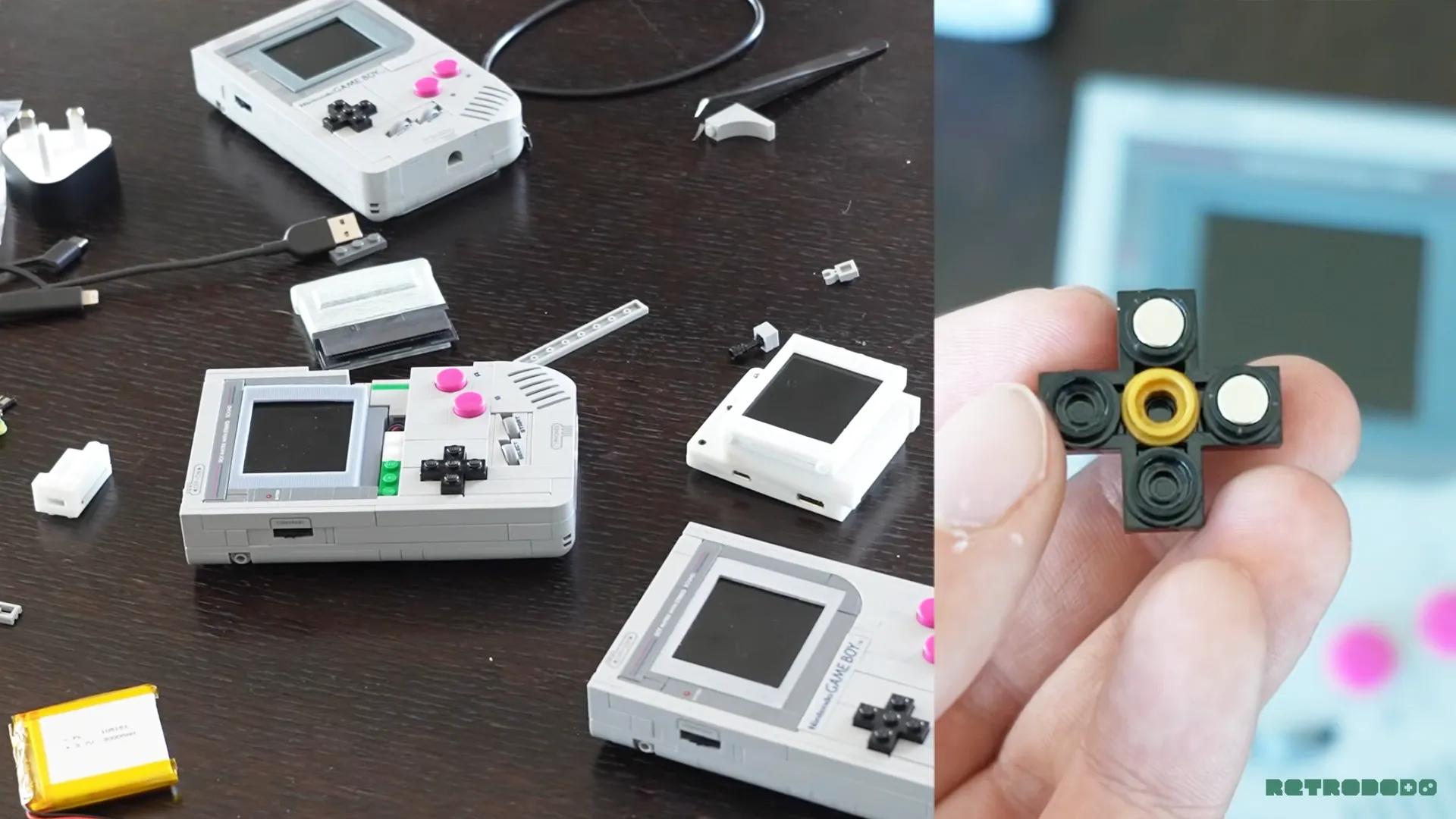
The immensely popular LEGO Game Boy set, released last year, captured the imaginations of both LEGO enthusiasts and gamers alike. Its innovative design, which allowed builders to construct a recognizable replica of the iconic handheld console, resonated widely, leading to significant sales for The LEGO Group. However, the true potential for this build extended beyond mere display. The retro gaming and modding community has long anticipated the possibility of breathing functional life into the plastic bricks. Now, a new company, BrickBoy, has stepped forward to fulfill that anticipation, unveiling a sophisticated modification kit that transforms the LEGO Game Boy into a fully operational retro gaming device.
The BrickBoy project recently achieved a significant milestone, surpassing $1,000,000 in funding through its Kickstarter campaign. This overwhelming financial backing underscores the strong market demand and the community’s excitement for such an innovation. The Kickstarter page remains open for late pledges, with a projected release date in May or June, a timeline that co-founder Thomas has confirmed the team is on track to meet.
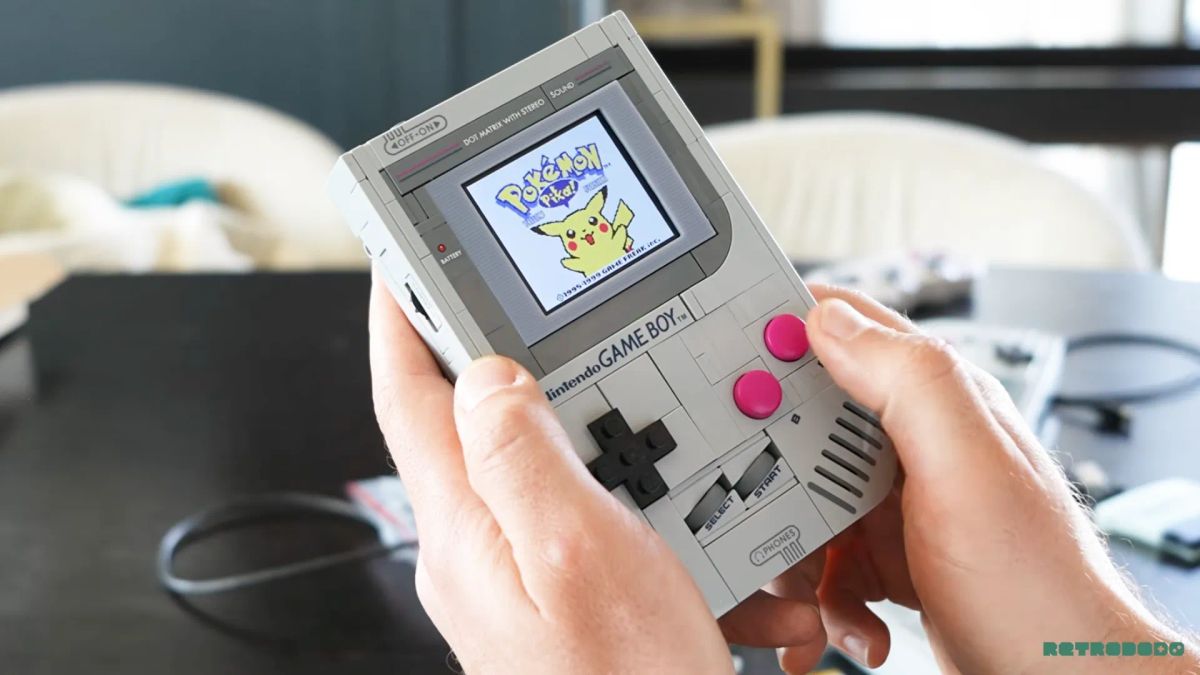
Retro Dodo was granted an exclusive, hands-on preview of the BrickBoy prototype in London, offering an in-depth look at its capabilities, development process, and the technological ingenuity behind its creation. While the prototype represents a near-final iteration before mass production, significant refinements are expected. The unit presented, constructed from 3D-printed plastic, features magnetic buttons that, while functional, are not yet as precise as the final customer-ready versions. Despite these minor imperfections, the prototype is estimated to be 80% complete, providing a clear vision of the finished product.
The Console Itself: Integrating Technology within the Iconic Build
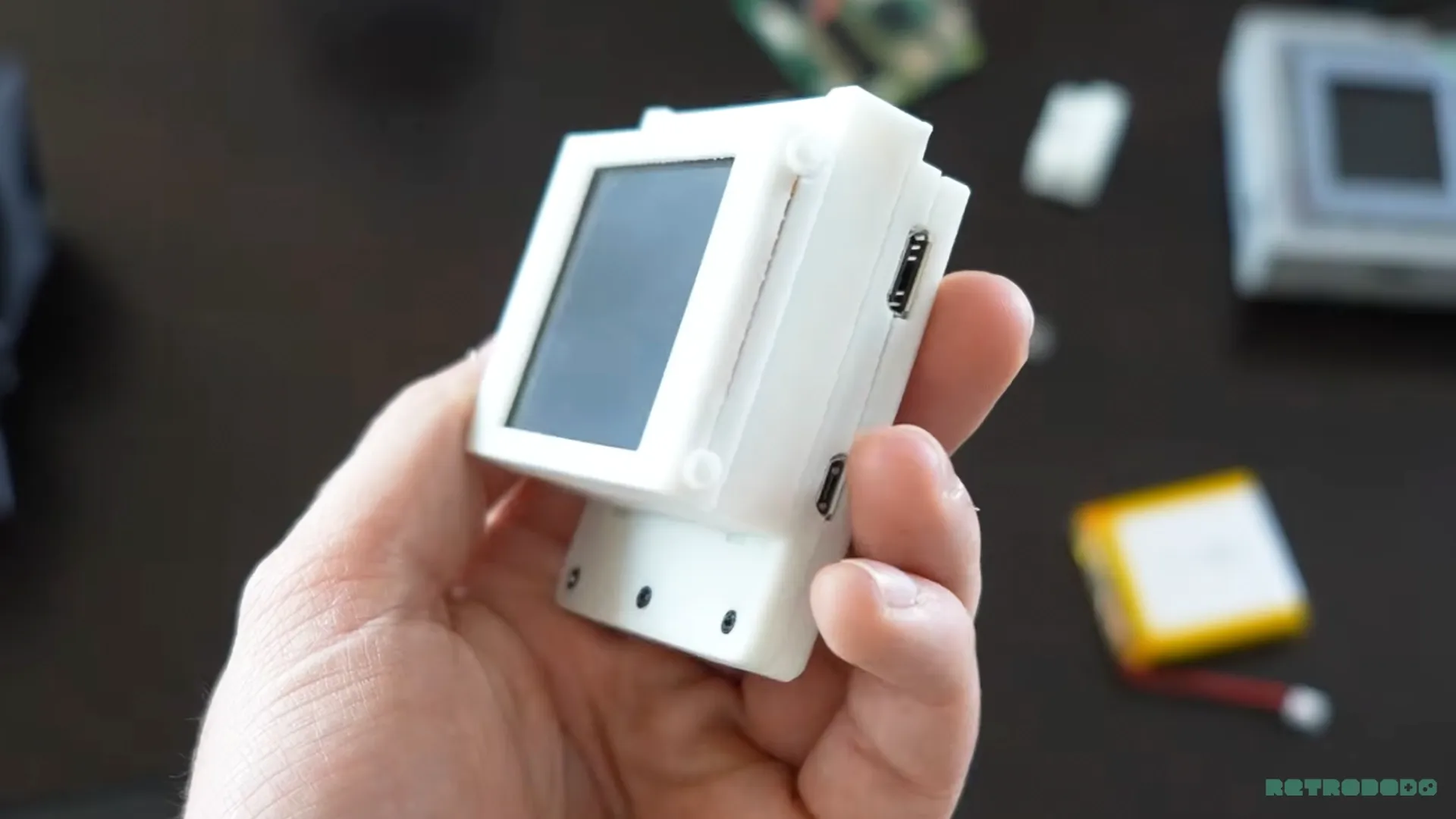
At the heart of the BrickBoy is a Raspberry Pi, housed within a custom-designed plastic enclosure. This internal structure is engineered to seamlessly integrate with the exterior LEGO pieces, allowing for a natural and secure connection to the console’s electronics. The design ethos prioritizes maintaining the aesthetic and tactile integrity of the original LEGO set, utilizing official LEGO elements wherever possible to create an organic and safe build experience.
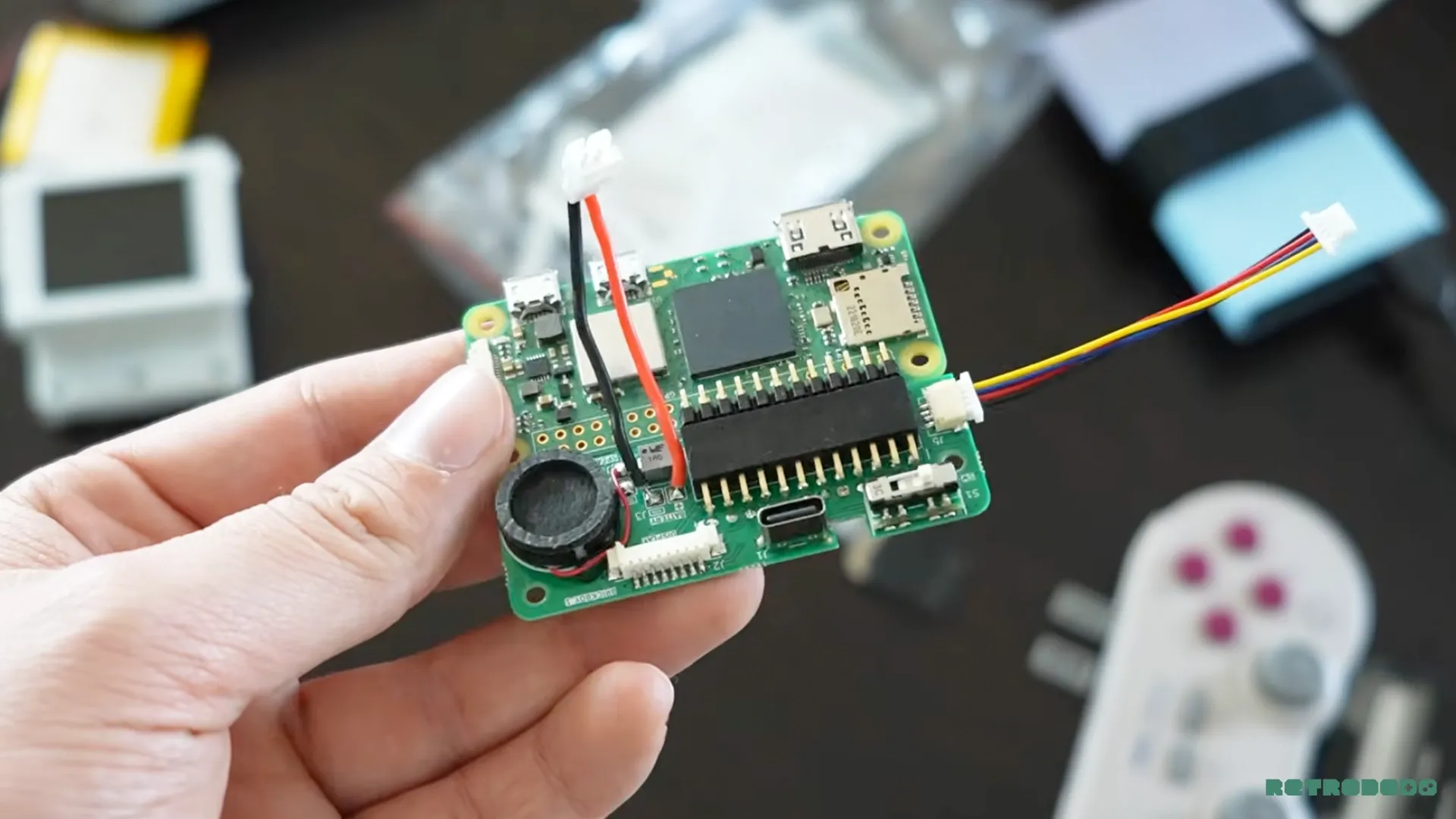
The internal components are remarkably compact yet comprehensive. The BrickBoy features a 2.4-inch display, a 3000mAh battery for extended playtime, a built-in speaker, an HDMI output for external display, and USB-C charging. A key innovation lies in its magnetic "heart," which interfaces with the original LEGO Game Boy buttons. The development team’s commitment to preserving the authentic LEGO buttons – including the D-pad, on/off, start/select, and action buttons – presented a significant technical challenge.
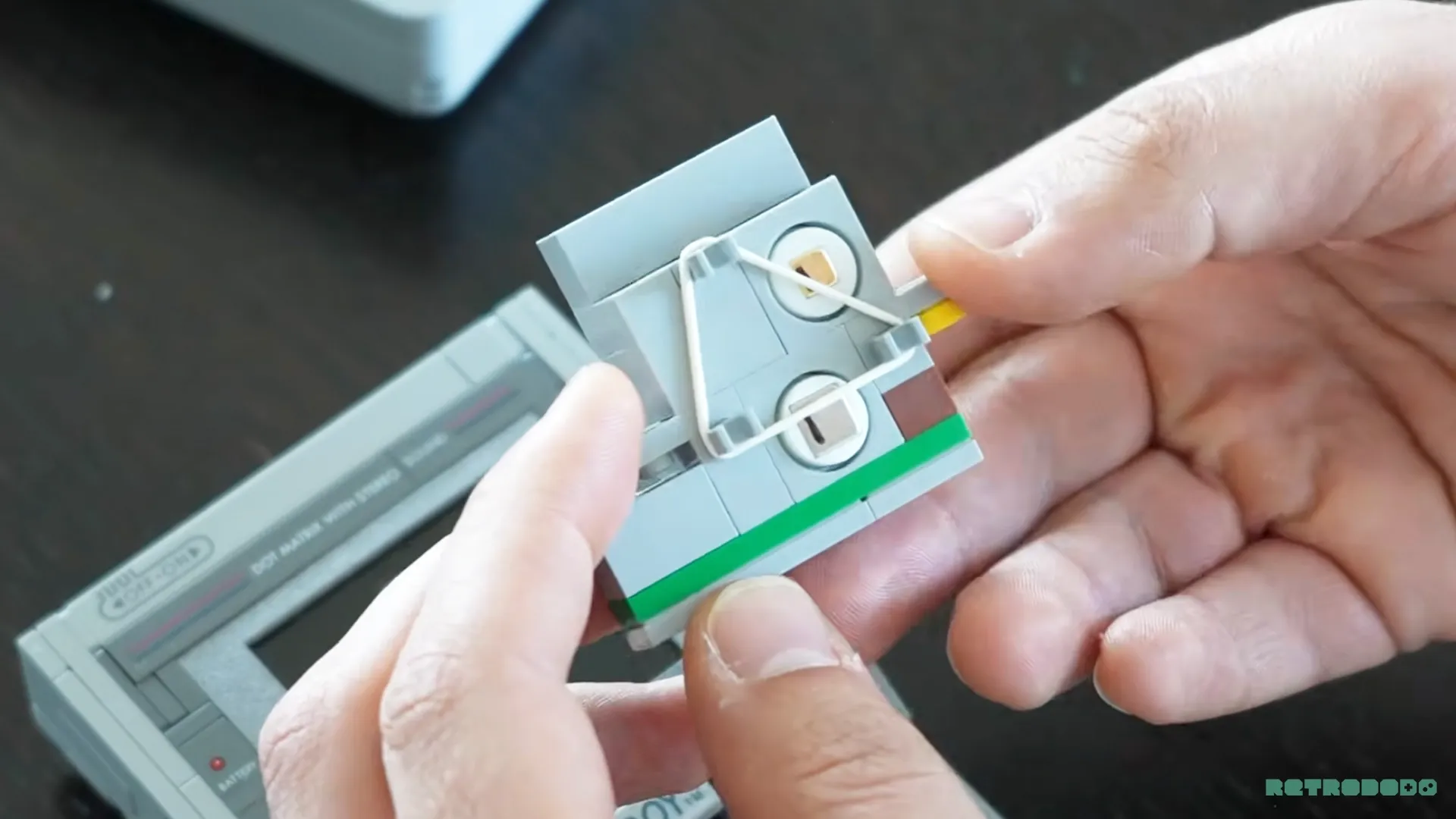
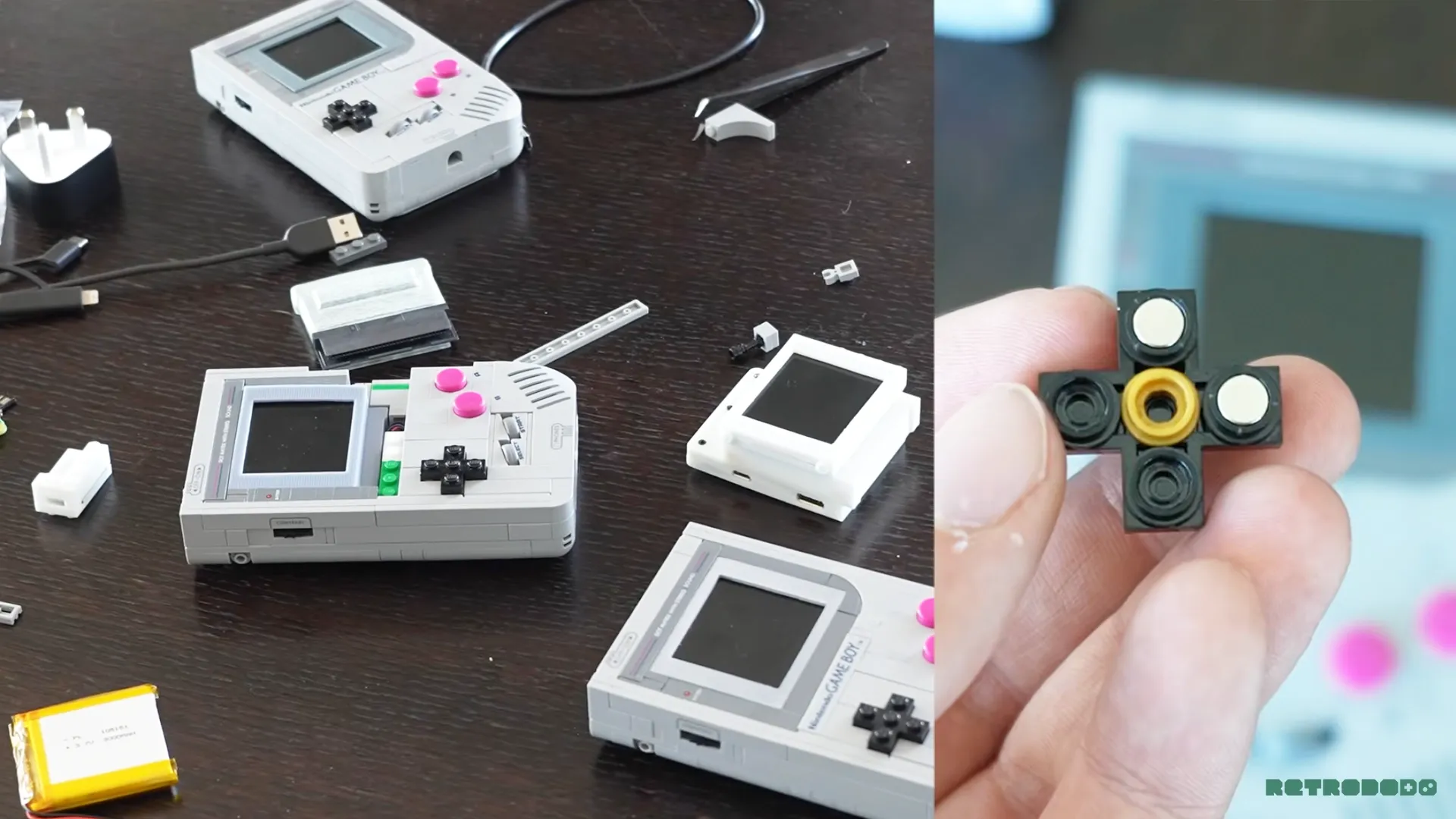
To overcome the limitations of direct wiring within the LEGO structure, the BrickBoy employs a novel magnetic input system. Magnets are strategically placed beneath the LEGO buttons and the on/off switch. The main circuit board (PCB) then detects the subtle pressure and movement of these magnets, translating them into digital inputs. This ingenious solution avoids the need for traditional wiring, preserving the integrity of the LEGO build while enabling full functionality.
During testing of the prototype, the magnetic input system, while groundbreaking, exhibited occasional inconsistencies. Instances of unregistered presses or phantom inputs were noted. However, the BrickBoy team expressed confidence that these issues would be resolved in the final production units. When functioning correctly, the system demonstrated remarkably low latency, a testament to the sophisticated engineering involved in this unique magnetic control method.
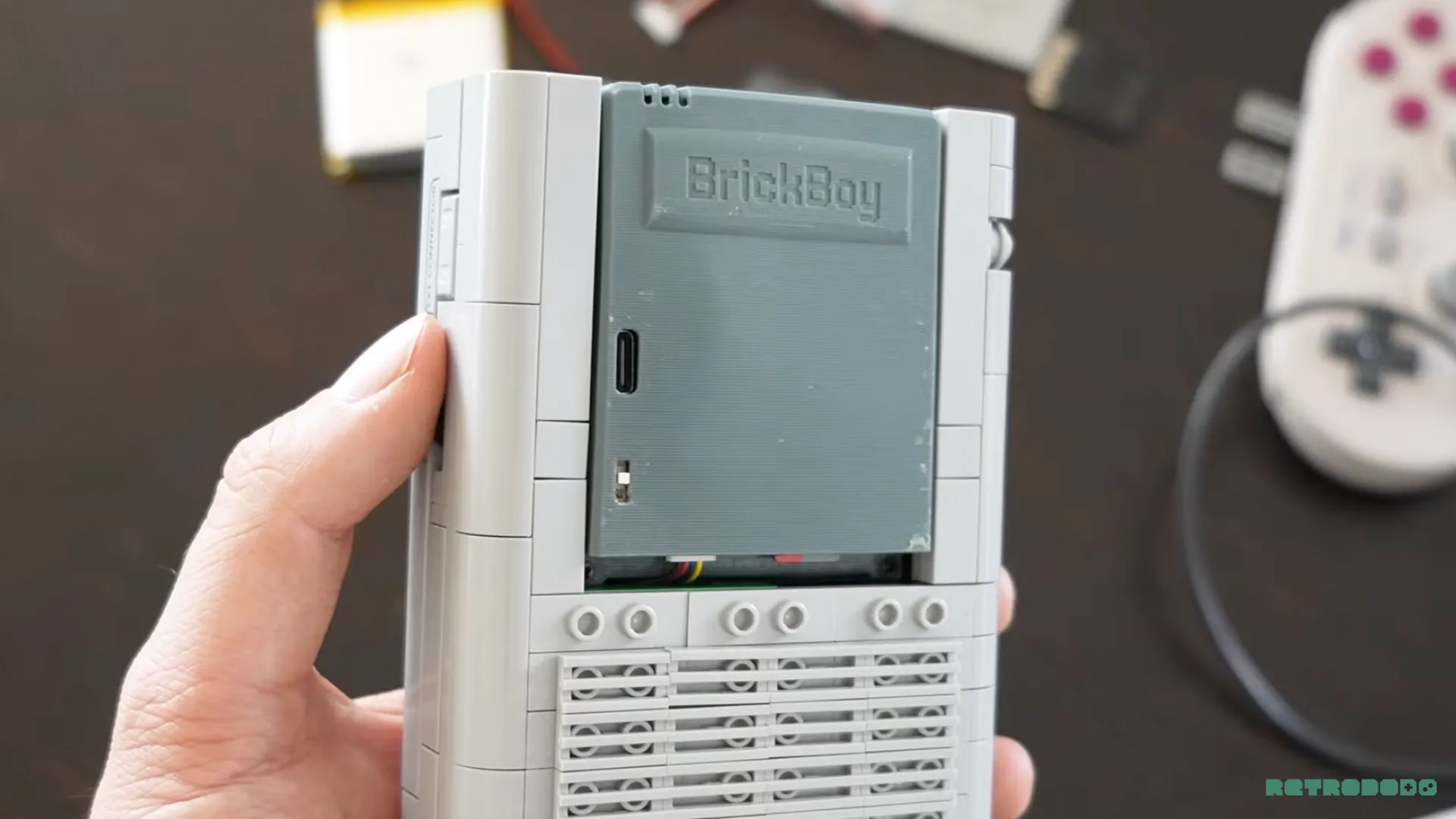
The rear of the BrickBoy is designed to mimic a game cartridge, offering a discreet housing for the console’s operational components. The original LEGO Game Boy backplate can be utilized, featuring the unit’s code, to conceal the on/off/reset/menu switch and the USB-C charging port, maintaining the seamless aesthetic. The precision of the design is evident in details such as the alignment of the on/off/reset switch with specific LEGO studs on the backplate. This switch also serves multiple functions, including initiating a reframe mode for recalibrating the magnetic sensors. The overall weight of the BrickBoy, approximately 1000g, is noticeably heavier than the empty LEGO set, adding a tangible sense of substance to the device without being cumbersome.
Software Shenanigans: Emulation and User Experience
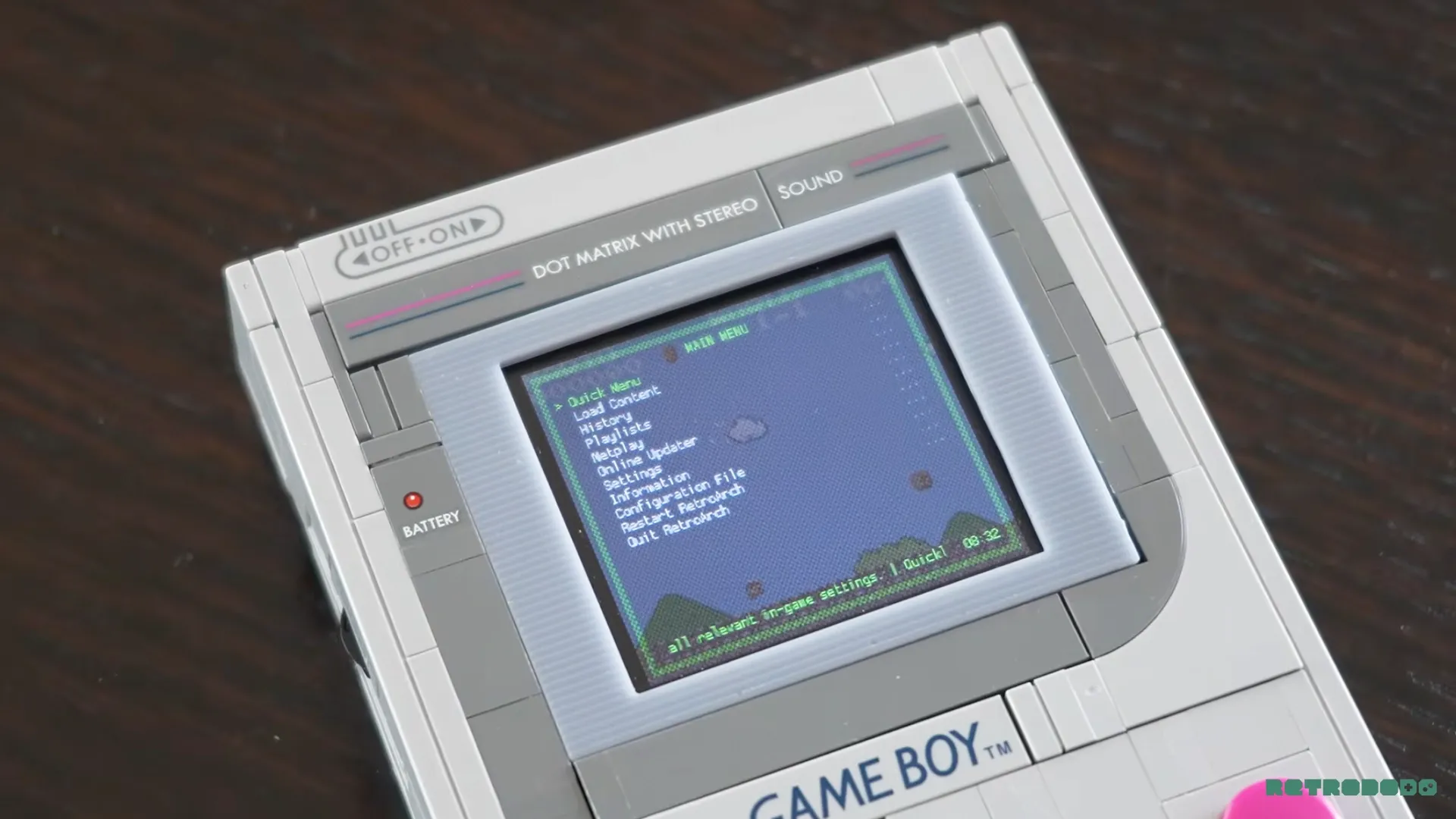
Internally, the BrickBoy is powered by a Raspberry Pi running RetroArch, a versatile front-end for emulators. This setup allows users to emulate a wide array of retro gaming systems. To utilize the BrickBoy, users will need to supply their own game ROMs and configure them within RetroArch. While this process might present a learning curve for newcomers, BrickBoy plans to include a comprehensive manual to guide users through the setup. Additionally, a custom-made front-end interface will be provided to simplify the tweaking of settings and management of emulators.
Convenient shortcuts have been implemented, such as holding a combination of buttons (A+B+Left) to access RetroArch and BrickBoy settings menus. While these shortcuts are generally unobtrusive, they could potentially interfere with rapid button-mashing in fast-paced games, a consideration for competitive players.
The Raspberry Pi Zero, while capable of emulating a broad range of systems, including more demanding ones like PlayStation 1, faces thermal limitations within the confined space of the LEGO build. The limited ventilation, exacerbated by the enclosed nature of the console, raises concerns about potential overheating under sustained heavy load. Although BrickBoy has included a heatsink, the absence of active cooling in the form of fans could be a factor for users pushing the hardware to its limits.
The audio quality of the BrickBoy has been noted as good during testing. Thomas, the co-founder, expressed a desire to further increase the audio output volume. However, the reviewer found the current volume levels to be perfectly adequate, suggesting that many users might prefer to play at lower volumes or in mute mode, preserving the immersive experience without external noise. A minor limitation is that volume adjustments cannot be controlled via the console’s buttons; users will need to manage audio levels within RetroArch. This is a pragmatic compromise, as integrating a physical volume wheel would have added significant technical complexity.
The inherent flexibility of the Raspberry Pi platform offers several advantages over modified original Game Boy PCBs. These include built-in Bluetooth connectivity for wireless controllers, the capability for over-the-air software updates, and the ability to stream content to televisions. This versatility allows the BrickBoy to function not only as a portable retro gaming device but also as a compact home console when connected to a display and wireless input devices.
How Long Does The Mod Take? A Swift Transformation
The assembly process for the BrickBoy modification is designed to be remarkably swift. While the complete build of the LEGO Game Boy set takes considerably longer, the integration of the BrickBoy kit itself is estimated to take approximately 15 minutes. This efficiency is largely due to the fact that a significant portion of the internal components is consolidated into a single, pre-assembled unit that houses the Raspberry Pi and its associated hardware.
The instruction manual will likely guide users through the removal of a minimal number of LEGO pieces from the existing set, followed by the insertion of BrickBoy’s custom components. These additions are crucial for securely housing the console’s electronics and ensuring optimal performance, such as the precise placement of the magnetic sensor at the center of the console to receive the strongest signals from button presses.
The display integration requires the replacement of a few LEGO pieces around the transparent display window of the original set. A grey display border will be included in the final product to better match the color scheme of the official LEGO components, enhancing the overall aesthetic coherence.
Overall Opinion: A Novel Blend of Nostalgia and Modern Technology
Initial hands-on experience with the BrickBoy prototype suggests it will be a captivating and relatively straightforward modification for fans of both LEGO and vintage gaming. The kit aims to seamlessly integrate into the existing LEGO Game Boy set, preserving its iconic design and building principles. However, it is important to note that the BrickBoy is geared towards enthusiasts who are comfortable with RetroArch and the Raspberry Pi platform, as some level of technical familiarity will be beneficial for setup and advanced usage.
The prototype, while showcasing immense potential, did exhibit some rough edges. The occasional unreliability of the magnetic button inputs, requiring recalibration via software, is a concern. The BrickBoy team has assured that these issues will be addressed in the final release, and it is crucial for the long-term success of the product that these input inconsistencies are fully resolved. A malfunctioning input system would render the entire modification ineffective.
Despite these prototype-specific challenges, the technical achievement of integrating a fully functional Raspberry Pi into the LEGO Game Boy with minimal disruption to the original build is highly commendable. The primary advantage of the BrickBoy over a simple modification of original Game Boy internals lies in the robust capabilities of the Raspberry Pi. Features like Bluetooth connectivity, wireless updates, and TV streaming offer a modern gaming experience within a beloved retro shell.
The BrickBoy project represents an exciting fusion of tactile construction and digital entertainment. Its anticipated release is met with considerable anticipation, and the developer’s future endeavors are keenly awaited, with hints of further LEGO-based technological projects in the pipeline. Thomas indicated that further announcements from the company are expected later in the summer, suggesting a promising trajectory for this innovative startup.
Those interested in securing a BrickBoy kit can still make late pledges on the Kickstarter page, positioning themselves to be among the first to experience this unique blend of LEGO nostalgia and functional retro gaming in the coming months. The project’s success on Kickstarter, exceeding $1,000,000 in funding, clearly demonstrates a strong market appetite for such inventive products that bridge the gap between beloved childhood toys and modern technological capabilities.








