Cecilia Chamidah Nur
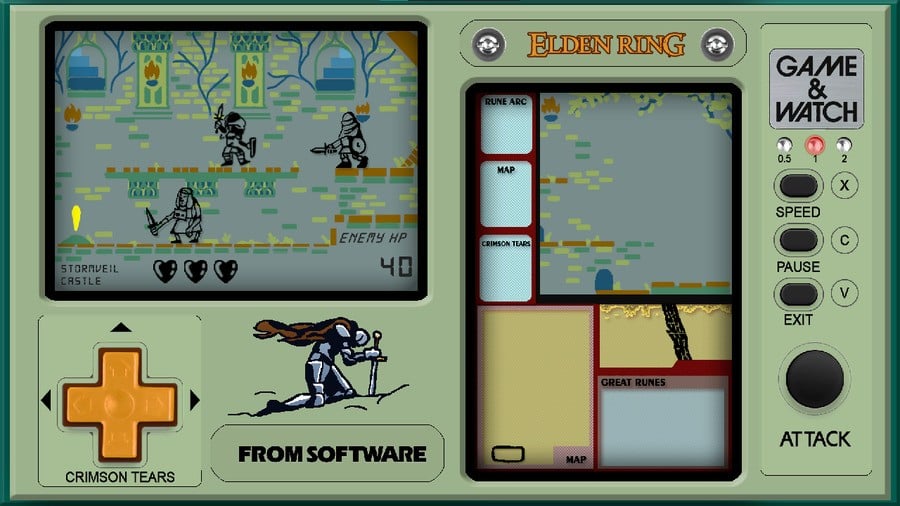
In a surprising and nostalgic fusion of modern gaming prowess and vintage handheld charm, an independent developer has meticulously crafted a playable demake of FromSoftware’s critically acclaimed action RPG, Elden Ring, reimagining the sprawling Lands Between as a minimalist, 2D LCD-based experience akin to a 1989 Nintendo Game & Watch title. This audacious fan project, released yesterday and freely available for download, offers a humorous yet technically impressive glimpse into what one of the most celebrated contemporary video games might have looked like had it emerged from a bygone era of portable entertainment.
The unexpected creation comes courtesy of Lucas Cavanna, known online as Elepunto, who distributed his unique interpretation on itch.io. Accompanying the release, Cavanna provided a playful description that succinctly encapsulated the project’s whimsical premise: "Elden Ring as it was originally intended… a 1989 Nintendo portable console." This statement, while tongue-in-cheek, immediately communicates the project’s ambition to distill the complex, open-world mechanics of Elden Ring into the severe constraints of early handheld gaming. The endeavor taps into a growing trend within the gaming community where modern blockbusters are re-envisioned through the lens of retro hardware, often celebrating both the original title’s design and the nostalgic aesthetics of classic systems.
The Allure of the Demake Phenomenon
Demakes represent a fascinating subset of fan-made content, standing as creative counterparts to the more common "remake" or "remaster." Instead of enhancing graphics and gameplay for modern systems, demakes deliberately dial back technological sophistication, adapting contemporary games to the graphical and mechanical limitations of older consoles, often decades removed from the original’s release. This trend is driven by a potent mix of nostalgia, technical challenge, and artistic commentary. Creators like Cavanna undertake these projects to explore how fundamental game design principles translate across vastly different technological landscapes, testing the core essence of a game’s appeal. They serve as a form of reverse-engineering, stripping away layers of graphical fidelity and processing power to reveal the underlying gameplay loop and narrative themes in their most basic forms.
The phenomenon is not new; countless examples exist across the internet, from Bloodborne PSX (a demake of Bloodborne for the original PlayStation aesthetic) to Grand Theft Auto: San Andreas reimagined for the NES. These projects often gain significant traction within gaming communities, not only for their technical ingenuity but also for their ability to evoke a powerful sense of nostalgia for players who grew up with the limitations of 8-bit or 16-bit systems. They bridge a generational gap, allowing newer players to appreciate the roots of gaming while offering seasoned enthusiasts a fresh perspective on beloved modern titles. For many, these demakes are more than just curiosities; they are playable tributes that celebrate the enduring power of good game design, proving that captivating experiences don’t always require cutting-edge technology.
Elden Ring: A Modern Gaming Colossus and Its Legacy
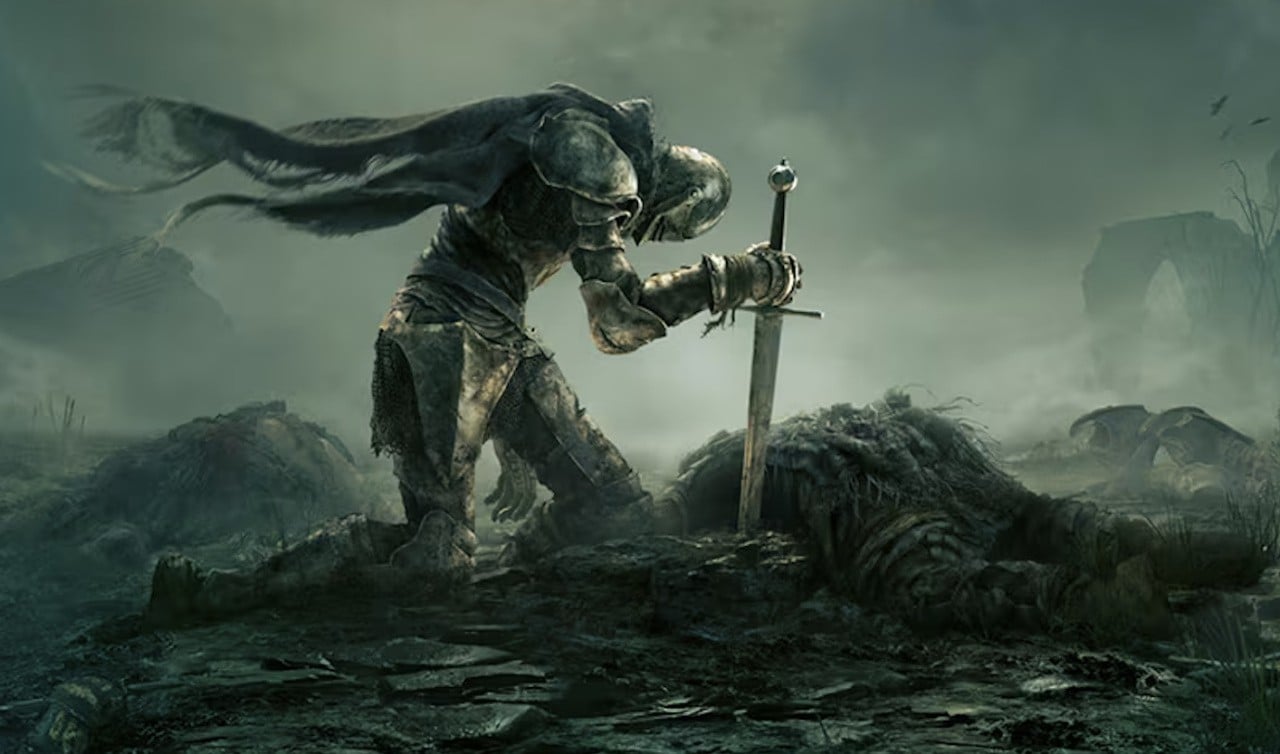
To fully appreciate the scope of Cavanna’s demake, one must first understand the monumental status of its source material. Elden Ring, released in February 2022 by Japanese developer FromSoftware and published by Bandai Namco Entertainment, quickly ascended to become one of the most critically acclaimed and commercially successful video games of all time. It garnered universal praise for its expansive open world, intricate lore co-written with fantasy author George R.R. Martin, challenging yet rewarding combat, and unique blend of action RPG elements with the signature "Souls-like" difficulty that FromSoftware had pioneered with titles like Demon’s Souls, Dark Souls, Bloodborne, and Sekiro: Shadows Die Twice.
The game shattered sales records, selling over 12 million units globally within its first three weeks and continuing its impressive trajectory to surpass 25 million units worldwide by early 2024. Its success was not merely commercial; Elden Ring earned numerous "Game of the Year" awards from prestigious outlets, lauded for its innovative approach to open-world design, which encouraged exploration and discovery rather than relying on conventional quest markers. Players were thrust into the shoes of the Tarnished, an exiled warrior tasked with traversing the Lands Between to become the Elden Lord, encountering colossal bosses, enigmatic characters, and a world steeped in decay and grandeur. The game’s intricate mechanics, vast spell and weapon variety, and deep character customization offered an unparalleled level of player agency and strategic depth. The challenge, a hallmark of FromSoftware games, became a badge of honor for many, fostering a dedicated and passionate community that delved into every secret of its sprawling universe. The contrast between this immense, high-fidelity experience and a simple LCD screen could not be starker, making Cavanna’s achievement all the more noteworthy.
The Nintendo Game & Watch Legacy: A Precursor to Portable Gaming
The inspiration for this demake, the Nintendo Game & Watch, holds a significant place in video game history as a pioneering series of handheld electronic games. Launched by Nintendo in 1980, nearly a decade before the Game Boy, the Game & Watch line was the brainchild of Gunpei Yokoi, a legendary Nintendo engineer who would later create the Game Boy itself. These devices were characterized by their simple, fixed-segment LCD screens, pre-printed backgrounds, and dedicated single-game functionality. Each unit typically featured one or two simple games, often based on common arcade tropes or original concepts, designed for quick, addictive play sessions.
The series was groundbreaking for its time, introducing features like a digital clock and alarm function (hence "Game & Watch") and popularizing the D-pad, which would become a staple of future gaming consoles. Over its lifespan, Nintendo released 59 different Game & Watch titles across various series, including the "Multi Screen" models that famously featured two screens, anticipating the Nintendo DS by decades. One particularly relevant title for Cavanna’s project is The Legend of Zelda Game & Watch spin-off from 1989. This particular unit, part of the "Game & Watch Super Color" series, offered a simplified 2D action-adventure experience, guiding Link through dungeons to defeat Ganon. Its design, with a focus on navigating a hero through limited environments and engaging in basic combat, provides a clear conceptual blueprint for how a complex RPG like Elden Ring could be distilled into the Game & Watch format. The technical limitations – monochrome LCD characters, minimal animation, repetitive sound effects, and the reliance on pre-rendered backgrounds – forced designers to be incredibly creative and efficient with their game mechanics, a challenge Cavanna embraced wholeheartedly.
Dissecting the Demake: Gameplay and Design Philosophy
Lucas Cavanna’s Elden Ring: Game & Watch Edition does not attempt a faithful recreation of the original’s 3D open world; such a feat would be impossible given the chosen medium. Instead, it ingeniously reimagines the source material as a 2D LCD-based action game, drawing heavily from the design philosophy of the 1989 The Legend of Zelda Game & Watch spin-off. This approach allows the demake to capture the spirit of Elden Ring – its challenging combat, diverse enemies, and iconic locations – within an entirely different gameplay paradigm.

Upon starting a new game, players assume control of the Tarnished, depicted as a simple, pixelated sprite on the upper left-hand side of the screen. The primary objective is to navigate this character horizontally to the right, traversing various environments. The core challenge lies in avoiding or defeating enemies positioned below the Tarnished’s path, strategically timing movements to bypass incoming attacks. The ultimate goal of each segment is to reach and defeat a "guard" blocking the entrance to the next room, mimicking the progression through Elden Ring‘s interconnected areas. This simplified movement and combat system necessitates quick reflexes and pattern recognition, echoing the demanding nature of the original game but translated into a more abstract, timing-based challenge.
Cavanna’s attention to detail in adapting Elden Ring‘s vast content is remarkable. The demake features 11 distinct locations to play through, carefully selected from the Lands Between to evoke familiarity for fans. These include iconic settings such as the formidable Stormveil Castle, the arcane Raya Lucaria Academy, the blight-ridden Caelid, and the grand Leyndell Royal Capital. Each location, though rendered in minimalistic LCD graphics, carries the distinct aesthetic and thematic weight of its Elden Ring counterpart, demonstrating Cavanna’s deep understanding of the source material.
Adding to the complexity and replayability, the demake introduces 22 different enemy types that players will face. While represented as simplified sprites, these enemies are designed to mimic the attack patterns and threats posed by their original counterparts. Players will encounter familiar foes like the aggressive Misbegotten, the unsettling Monstrous Crows, and the eerie Candle Inquisitors. The challenge escalates further with the inclusion of 10 formidable boss rooms. These encounters pit the Tarnished against larger, more powerful adversaries, featuring recognizable figures from Elden Ring‘s rogues’ gallery, such as the Grafted Scion Godrick, the Starscourage Radahn, and the Blasphemous Rykard. The inclusion of these iconic bosses, even in a simplified form, provides significant milestones and tests of skill for players.
Furthermore, Elden Ring: Game & Watch Edition boasts surprising narrative depth for a demake of its kind, offering three separate endings for players to unlock. These include two main endings, likely influenced by player choices or specific conditions met during the playthrough, and one secret ending, encouraging multiple playthroughs and rewarding thorough exploration of the demake’s content. This level of detail, from the variety of enemies and locations to the multiple endings, elevates the project beyond a mere novelty, positioning it as a thoughtfully designed tribute that respects the depth and replayability of the original Elden Ring.
The Creator’s Vision: Lucas Cavanna’s Homage
Lucas Cavanna, operating under the moniker Elepunto, clearly approached this project with both passion and a keen understanding of game design history. His sardonic declaration that this demake represents "Elden Ring as it was originally intended… a 1989 Nintendo portable console" serves as a delightful and insightful commentary on the evolving landscape of video games. It playfully suggests that beneath the graphical fidelity and open-world grandeur of modern titles lies a core of fundamental gameplay mechanics that can, theoretically, be translated to any era. This statement is not just a joke; it’s a philosophical stance on the timelessness of engaging game design.
Cavanna’s motivation likely stems from a blend of personal nostalgia for the Game & Watch era and a desire to explore the creative limits of game development. The process of demaking requires a unique set of skills: not just coding and art, but also a profound ability to abstract and simplify. It involves identifying the essential elements of a game – its core loop, iconic characters, and memorable moments – and then finding innovative ways to represent those elements within severely restricted parameters. The decision to base the demake on The Legend of Zelda Game & Watch is particularly insightful, as it provided a proven template for translating an action-adventure experience into the limited LCD format. Cavanna’s work is a testament to the ingenuity required to make an enjoyable game with minimal resources, echoing the spirit of early game developers who often worked under similar constraints.
Community Reception and Broader Implications
The release of Elden Ring: Game & Watch Edition has been met with considerable enthusiasm within the gaming community. Fans of Elden Ring appreciate the humorous and affectionate tribute to their beloved game, while retro gaming enthusiasts marvel at the technical skill involved in emulating the Game & Watch aesthetic and gameplay. The project serves as a vibrant example of how fan creations contribute significantly to the cultural dialogue surrounding video games. They foster community engagement, inspire creativity, and offer fresh perspectives on established titles.
One of the broader implications of such projects lies in their ability to bridge generational gaps. Younger players who may have never experienced the rudimentary charm of an LCD handheld can now encounter a simplified version of a game they love, potentially sparking an interest in gaming history. Conversely, older players are reminded of their early gaming days while seeing a modern masterpiece reinterpreted through a familiar lens. This cross-pollination of gaming eras enriches the overall discourse and appreciation for the medium’s evolution.
From a legal standpoint, fan-made demakes and unofficial projects like Cavanna’s typically operate in a grey area. However, because Elden Ring: Game & Watch Edition is distributed for free and is clearly a non-commercial fan endeavor, it is unlikely to face significant legal challenges from FromSoftware or Nintendo. Most major developers and publishers tend to tolerate, and even quietly encourage, such projects, recognizing them as valuable forms of fan engagement and marketing, provided they do not infringe upon intellectual property rights for commercial gain. This informal acceptance allows a vibrant ecosystem of fan content to thrive, further cementing the bond between creators and their audience.
The demake also functions as a form of artistic commentary, highlighting the enduring appeal of fundamental game design principles over mere graphical prowess. It suggests that while cutting-edge technology can enhance immersion and expand possibilities, the core joy of gaming often lies in challenge, progression, and the satisfaction of overcoming obstacles – elements that can be conveyed even through the simplest of means. Such projects can even inspire official developers to consider retro-styled spin-offs or incorporate nostalgic aesthetics into new IPs, demonstrating the commercial viability of retro-inspired experiences.
Availability and Accessibility
For those eager to experience this unique blend of modern epic and retro charm, Elden Ring: Game & Watch Edition is readily available for download. Lucas Cavanna has made the game accessible for free on his itch.io page (elepunto.itch.io/elden-ring), allowing anyone with a compatible system to give it a try. To further aid players in understanding the mechanics and depth of his creation, the developer has also provided a playthrough video of the game, offering a guided tour through its minimalistic landscapes and challenging encounters. This commitment to accessibility and transparency underscores the project’s community-driven spirit.
Conclusion
Lucas Cavanna’s Elden Ring: Game & Watch Edition stands as a remarkable testament to creative ingenuity and the enduring power of both modern and retro gaming. By successfully distilling the complex, open-world grandeur of Elden Ring into the charmingly austere format of a 1989 Nintendo Game & Watch, Cavanna has not only crafted a playable piece of digital art but also sparked a wider conversation about game design, nostalgia, and the cultural significance of fan-made content. It is a project that playfully blurs the lines between eras, proving that whether experienced on a cutting-edge console or a minimalist handheld, the magic of Elden Ring – and indeed, of compelling video games themselves – can transcend technological limitations and continue to captivate audiences across generations.