Chalid Lutfie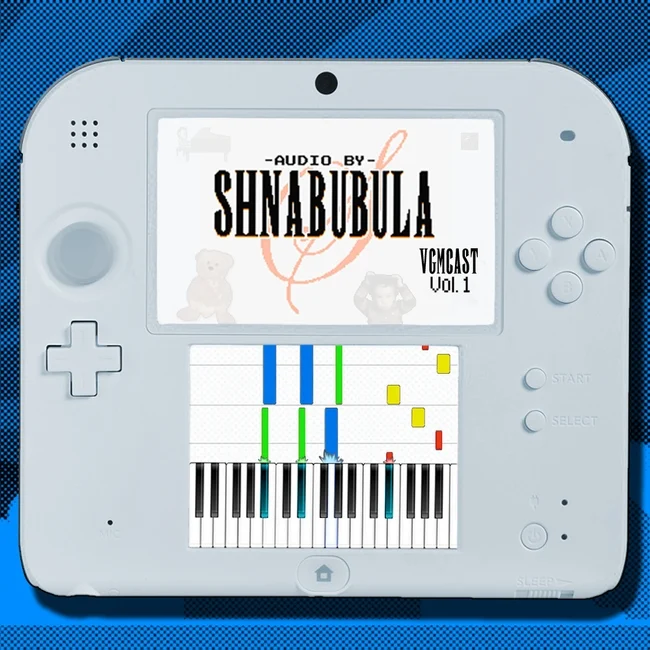
The prominent video game music composer and virtuoso pianist Samuel Ascher-Weiss, widely recognized within the digital music community under the pseudonym Shnabubula, has officially announced the commencement of a rigorous new performance project centered on live-streamed audience interaction and rapid repertoire acquisition. Launched in May 2015, the initiative represents a significant evolution in Ascher-Weiss’s career, blending the technical demands of high-level piano performance with the immediacy of modern digital broadcasting. By utilizing the Hitbox.tv platform, Ascher-Weiss aims to bridge the gap between improvisational mastery and structured performance, challenging himself to learn and master an array of requested compositions within a strictly defined weekly timeframe.
The project is structured around a two-stage engagement model designed to showcase both the process of musical learning and the finality of polished performance. According to the established schedule, Ascher-Weiss dedicates every Friday from 12:00 PM to 8:30 PM EST to a marathon learning session. During this eight-and-a-half-hour window, he accepts live requests from viewers, many of whom suggest complex pieces ranging from classic video game soundtracks to obscure contemporary compositions. Following this intensive preparation period, Ascher-Weiss returns to the platform on the subsequent Sunday at 4:00 PM EST to perform a curated setlist of the material acquired during the Friday session. This iterative process not only provides a transparent look at the cognitive and physical demands of professional music-making but also fosters a unique collaborative environment between the artist and his global audience.
The Mechanics of the Weekly Cycle: From Acquisition to Execution
The logistical framework of the Shnabubula project is a testament to the artist’s confidence in his sight-reading and ear-training capabilities. The Friday "learning" sessions serve as a public laboratory. Unlike traditional studio environments where rehearsals are conducted in private, Ascher-Weiss exposes the vulnerabilities of the learning process—initial mistakes, rhythmic deconstruction, and harmonic analysis—to a live audience. This transparency has been cited by observers as a significant pedagogical tool for aspiring musicians, offering a rare glimpse into the workflows of a professional who has spent decades honing the art of musical interpretation.
The transition from the Friday learning phase to the Sunday performance phase allows for a brief 48-hour period of mental consolidation. This timeframe is critical in the field of music psychology, as it utilizes the benefits of "sleep-dependent memory processing," wherein the brain reorganizes and strengthens the neural pathways formed during the initial intensive learning session. By the time the Sunday performance commences, the goal is to transform raw data and mechanical finger movements into a cohesive, expressive recital. The most recent iteration of this cycle resulted in the successful mastery of 14 distinct songs, a feat that underscores the high-stakes nature of the challenge Ascher-Weiss has set for himself.
A Career Defined by Technical Proficiency and Innovation
To understand the significance of this new project, it is essential to examine the background of Samuel Ascher-Weiss. Long before the advent of modern streaming, Ascher-Weiss established himself as a formidable force in the video game music (VGM) arrangement scene. His work on platforms such as OverClocked ReMix (OC ReMix) garnered critical acclaim for its complexity, often blending elements of jazz, classical romanticism, and chiptune aesthetics. His ability to reinterpret 8-bit and 16-bit melodies through a sophisticated harmonic lens earned him a reputation as one of the most technically gifted arrangers in the genre.
The decision to launch a live-streaming project is a logical progression for an artist who has frequently experimented with the boundaries of performance. Ascher-Weiss has previously released albums that push the limits of piano technique, such as his "Game Over" series, which reimagined classic themes with an intensity that bordered on the "impossible piano" genre. This new initiative, however, shifts the focus from pre-meditated complexity to spontaneous adaptation. It leverages his background in jazz improvisation, where the ability to react to new musical stimuli in real-time is a fundamental requirement.
The Strategic Choice of Hitbox.tv in the 2015 Streaming Landscape
The selection of Hitbox.tv as the primary medium for this project reflects the shifting landscape of digital media in mid-2015. While Twitch.tv remained the dominant force in the gaming and creative streaming sectors, Hitbox.tv positioned itself as a high-performance alternative, boasting lower latency and a community-centric approach. For a musician, low latency is a critical factor; it allows for near-instantaneous feedback from the chat interface, enabling a more fluid dialogue between the performer and the requesters.
The 2015 era marked a pivotal moment for "Creative" streaming. Platforms were beginning to realize that the infrastructure built for gaming—live interaction, donation systems, and long-form broadcasting—was equally suited for artists, musicians, and craftsmen. By establishing a consistent weekly schedule (Fridays for preparation and Sundays for performance), Ascher-Weiss is participating in the professionalization of the "music streamer" role. This structured approach moves beyond the occasional, sporadic broadcast, instead creating a reliable "appointment viewing" experience for his fanbase.
Analyzing the Cognitive and Musical Demands of Rapid Acquisition
The core appeal of the Shnabubula project lies in the sheer volume of material processed in a single session. Learning 14 songs in eight and a half hours requires more than just mechanical skill; it necessitates a highly developed internal musical grammar. Professional pianists often rely on "chunking"—the ability to recognize recurring patterns, chord progressions, and structural motifs—to bypass the need for note-by-note memorization.
For Ascher-Weiss, whose work often involves intricate polyphony and rapid-fire arpeggiation, the Friday sessions are an exercise in extreme focus. Data from the most recent stream indicates a high level of efficiency: on average, he spends approximately 36 minutes per song, including the time taken to source the audio or sheet music, analyze the structure, and practice the technical passages. This pace is significantly faster than standard academic or professional rehearsal standards, where a single complex piece might be studied for weeks or months before a public debut.
The implications of this "speed-learning" model are significant. It suggests a move toward a "performance-on-demand" culture where the artist’s value is derived not just from their existing repertoire, but from their ability to synthesize and deliver new content at a moment’s notice. This mirrors trends in other digital fields, such as "speedrunning" in gaming or "rapid prototyping" in design, where efficiency and speed are celebrated as much as the final product.
Community Interaction and the Evolution of the Request Model
The "request and perform" model is not new to the world of music; it has been a staple of piano bars and jazz clubs for decades. However, the digital iteration of this model introduced by Ascher-Weiss adds several layers of complexity. In a traditional setting, a performer might rely on a well-worn book of standards or a set of familiar melodies. In the Shnabubula stream, the requests are often far more demanding, including complex progressive rock tracks, avant-garde soundtracks, or fan-made compositions that may have never been transcribed for piano.
This interaction creates a feedback loop that benefits both the artist and the audience. For the fans, there is the gratification of seeing their favorite obscure tracks brought to life by a world-class musician. For Ascher-Weiss, the requests serve as a source of "new material," as he noted in his initial announcement. This exposure to diverse musical styles prevents artistic stagnation and forces the performer to solve new technical problems every week. The Sunday setlist, therefore, serves as a collaborative artifact—a collection of music that neither the artist nor the audience would have necessarily chosen in isolation.
The Sunday Performance: From Learning to Execution
The Sunday broadcasts, scheduled for 4:00 PM EST, represent the culmination of the week’s efforts. These sessions are presented as a formal setlist, where the 14 (or more) songs learned on Friday are performed in a continuous, polished format. To provide additional value to the community, Ascher-Weiss has made these performances available for download as albums. This archival process ensures that the ephemeral nature of a live stream is captured and preserved, allowing for a broader reach beyond the live audience.
The quality of these Sunday performances is a frequent point of discussion among VGM enthusiasts. Despite the limited preparation time, the recordings demonstrate a high level of musicality and nuance. This success is attributed to Ascher-Weiss’s "arranger’s ear," which allows him to translate orchestral or electronic textures into idiomatic piano writing on the fly. He does not merely play the notes; he reinterprets the compositions to suit the resonance and dynamic range of the piano, often adding improvisational flourishes that have become a hallmark of his style.
Broader Implications for the Digital Music Industry
The Shnabubula project arrives at a time when the music industry is grappling with the challenges of monetization and audience retention in the age of streaming. By creating a high-value, interactive experience, Samuel Ascher-Weiss is demonstrating a viable path for independent musicians. The model moves away from the traditional "release and tour" cycle, instead focusing on a continuous, community-driven engagement strategy.
Furthermore, this project highlights the growing importance of "process-as-product." In a world where finished, edited, and auto-tuned music is ubiquitous, there is an increasing demand for authenticity and raw skill. Seeing an artist struggle with a difficult passage and eventually conquer it provides a narrative arc that is inherently compelling. It humanizes the performer and creates a deeper emotional connection with the audience.
In conclusion, the new initiative by Samuel "Shnabubula" Ascher-Weiss is more than just a series of live streams; it is a sophisticated experiment in musical pedagogy, cognitive endurance, and digital community building. By leveraging the unique capabilities of the Hitbox.tv platform and his own extraordinary talents, Ascher-Weiss is setting a new standard for what it means to be a modern, interactive musician. As the project continues, it will likely serve as a blueprint for other artists looking to navigate the intersection of high art and digital entertainment. The 14 songs performed in the inaugural sessions are just the beginning of a journey that promises to expand the boundaries of the video game music genre and the art of the piano itself.