
 Farhan hamdan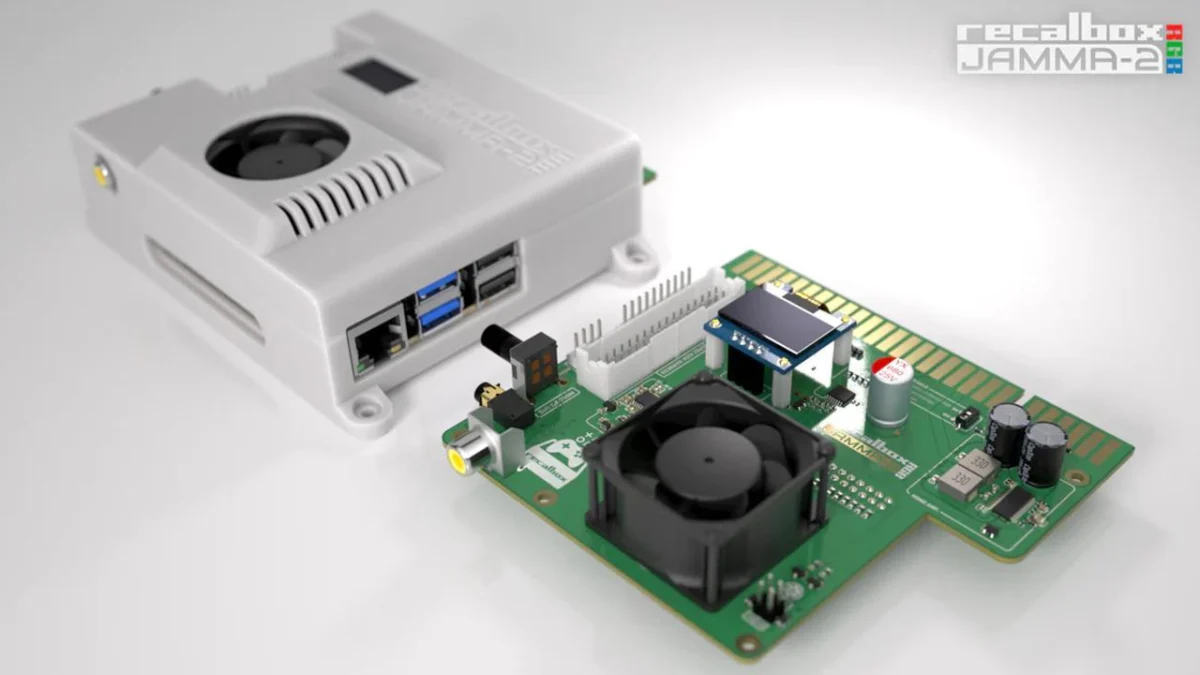
The Recalbox team has officially unveiled its highly anticipated successor, the Recalbox RGB JAMMA 2, an advanced adapter meticulously engineered to integrate the powerful Raspberry Pi 5 into traditional arcade cabinets. This new iteration builds upon the foundation of their original Raspberry Pi to JAMMA adapter, offering enhanced features and a refined user experience for retro gaming enthusiasts. Available for preorder at approximately $150, the complete kit includes the JAMMA adapter board and a custom-designed white resin-printed case, although users will need to supply their own Raspberry Pi 5 single-board computer and a compatible MicroSD card. This release marks a significant step in making modern emulation accessible to classic arcade hardware, blending cutting-edge technology with nostalgic gameplay.
Technical Evolution: Bridging Modernity and Legacy
At its core, the Recalbox RGB JAMMA 2 serves as a sophisticated bridge, translating the digital output of a Raspberry Pi 5 into the analog signals required by the Japan Amusement Machine and Marketing Association (JAMMA) standard. The JAMMA standard, introduced in 1985, revolutionized the arcade industry by providing a universal wiring harness for game boards, simplifying cabinet maintenance and game swapping. This standard dictates the pinout for video (RGB), audio (mono), power (5V, 12V), and control inputs (joysticks, buttons) for up to two players. The Recalbox RGB JAMMA 2 adapter is designed to meticulously adhere to these specifications, ensuring compatibility with a vast array of JAMMA-compliant arcade cabinets, from iconic titles of the 80s and 90s to more niche releases.
The adapter’s primary function is to convert the Raspberry Pi 5’s digital video output into a low-resolution analog RGB signal that arcade monitors expect, often at 15kHz. This is crucial for achieving an authentic visual experience, as modern displays typically operate at much higher resolutions and refresh rates, leading to potential input lag or an unfaithful representation of classic pixel art. Beyond video, the adapter manages audio conversion and amplifies the sound to match arcade cabinet speakers. Crucially, it also handles power delivery, drawing necessary voltages from the JAMMA harness to power the Raspberry Pi 5 itself, streamlining the installation process and eliminating the need for separate power supplies. Furthermore, the adapter translates the physical inputs from arcade joysticks and buttons, wired to the JAMMA harness, into digital signals that the Raspberry Pi 5 can interpret, ensuring responsive and accurate control for emulated games.
The Raspberry Pi 5 Advantage
The decision to design the Recalbox RGB JAMMA 2 specifically for the Raspberry Pi 5 is strategic, leveraging the significant performance improvements of the latest iteration of the popular single-board computer. The Raspberry Pi 5, launched in late 2023, represents a substantial leap forward from its predecessors, particularly the Raspberry Pi 4. Key enhancements include:
- Increased Processing Power: Featuring a Broadcom BCM2712 quad-core Cortex-A76 processor clocked at 2.4GHz, the RPi 5 offers a 2-3x performance increase over the RPi 4. This raw processing power is critical for smoothly emulating more demanding arcade systems and consoles, reducing lag and ensuring a consistent frame rate.
- Enhanced Graphics Capabilities: The VideoCore VII GPU provides significantly better graphical performance, crucial for rendering complex 2D and even some lighter 3D arcade titles with greater fidelity.
- Faster I/O: The inclusion of a PCI Express 2.0 interface opens up possibilities for faster storage and peripherals, while improved USB 3.0 ports ensure quicker data transfer for game ROMs.
- Dedicated Power Button and RTC: While seemingly minor, these additions improve user convenience and system management within an arcade cabinet context.
- More RAM Options: Available with 4GB or 8GB of LPDDR4X SDRAM, the RPi 5 can handle larger game libraries and more complex emulation scenarios without performance bottlenecks.
These advancements collectively position the Raspberry Pi 5 as an ideal platform for high-quality retro game emulation, making it capable of running a broader range of arcade titles, including those from systems like the Neo Geo, CPS2, and even some early 3D arcade boards, with greater accuracy and less compromise than previous Raspberry Pi models. The RGB JAMMA 2 adapter capitalizes on this power, ensuring that the hardware interface is robust enough to fully utilize the RPi 5’s capabilities within an arcade environment.
Recalbox OS: A Seamless Software Experience
A significant selling point of the Recalbox RGB JAMMA 2 is its intended "plug-and-play" compatibility with the Recalbox operating system, specifically version 10 and beyond. Recalbox, a free and open-source retro gaming platform, has garnered a strong following due to its user-friendly interface, extensive emulator support, and active development community. For the RGB JAMMA 2, Recalbox OS is expected to offer immediate recognition and configuration of the adapter, simplifying the setup process for users. This includes pre-configured drivers for the JAMMA controls, automatic detection of the video output settings for 15kHz arcade monitors, and optimized audio routing.
While the concept of "plug-and-play" in the context of arcade machines is often met with skepticism by seasoned enthusiasts—given the inherent complexities of legacy hardware—the Recalbox team aims to minimize configuration hurdles as much as possible on the software side. This means that once the Raspberry Pi 5 is installed with Recalbox OS and connected via the adapter, users should theoretically be able to boot directly into a fully functional retro gaming environment without extensive manual adjustments.
However, the article also acknowledges that while other operating systems could potentially be loaded onto the Raspberry Pi 5 for use with the adapter, such configurations would be entirely unsupported by Recalbox. Users opting for alternative OSes like RetroPie, Batocera, or custom Linux distributions would be responsible for sourcing or developing their own drivers and software configurations to ensure proper functionality with the JAMMA interface. This highlights the value proposition of the integrated Recalbox solution, which offers a curated and optimized experience specifically tailored for their hardware.
Pricing, Value, and Market Position
The Recalbox RGB JAMMA 2 is priced at approximately $150, a notable increase compared to its predecessor, which was roughly half that cost upon its launch three years ago. This price point, however, is presented as fair and justifiable by the developers and industry observers, considering several factors.
Firstly, global economic conditions, including significant inflation over the past three years, have impacted manufacturing costs, component prices, and supply chain logistics. This alone accounts for a portion of the price adjustment. Secondly, the new adapter comes with enhanced features not present in the original. While specific new features are not detailed in the initial announcement, the mention of "more features" combined with the inclusion of a high-quality resin-printed case indicates a more comprehensive and refined product. The original adapter was a bare board, whereas the RGB JAMMA 2 offers an integrated solution with physical protection.

From a market perspective, the $150 price positions the Recalbox RGB JAMMA 2 competitively within the retro gaming hardware ecosystem. Alternative solutions for integrating modern emulation hardware into arcade cabinets can vary widely in cost and complexity. For instance, dedicated FPGA-based systems like the MiSTer project, while offering cycle-accurate emulation, typically require a higher initial investment for the core hardware and various daughterboards. PC-to-JAMMA interfaces also exist, but often require a more complex setup with a full PC, custom software, and potentially external video converters. The Recalbox RGB JAMMA 2 offers a middle ground: a powerful, compact, and relatively user-friendly solution that leverages the affordable and widely available Raspberry Pi 5. Its all-in-one nature, with the included case, reduces the need for additional DIY enclosure solutions, adding to its overall value proposition.
The Genesis of an Adapter: A Brief Chronology
The development of the Recalbox RGB JAMMA 2 is rooted in a broader movement to preserve and revitalize classic arcade gaming. The original Recalbox JAMMA adapter, released approximately three years prior, was a pioneering product that allowed Raspberry Pi 3 and 4 users to connect their single-board computers to JAMMA cabinets. This initial offering democratized access to multi-game arcade setups, providing a cost-effective alternative to expensive original PCBs or complex PC-based solutions.
The evolution from the original adapter to the RGB JAMMA 2 reflects advancements in both Raspberry Pi technology and the growing demands of the retro gaming community. As the Raspberry Pi Foundation continued to release more powerful iterations of its flagship device, particularly with the Raspberry Pi 5, the need for a dedicated JAMMA interface that could fully exploit its capabilities became apparent. The development cycle likely involved extensive testing and refinement to ensure optimal video signal quality, robust power management for the more power-hungry RPi 5, and precise input handling. The decision to include a custom case from the outset also suggests a focus on product aesthetics, durability, and ease of installation, addressing potential feedback from the original bare-board design. This iterative development process underscores Recalbox’s commitment to continuously improving their hardware offerings to meet the evolving needs of retro arcade enthusiasts.
Design and Build Quality: The Enclosed Solution
A notable improvement in the Recalbox RGB JAMMA 2 is the inclusion of a white resin-printed case. This design choice is not merely aesthetic; it serves several crucial functional purposes. Firstly, the enclosure provides robust physical protection for the adapter’s sensitive electronic components. Inside an arcade cabinet, components can be exposed to dust, accidental knocks, or potential electrical shorts from loose wiring. The case mitigates these risks, enhancing the longevity and reliability of the device.
Secondly, the case helps in isolating the electronic components. This is particularly important in an environment where various power lines and signal cables run in close proximity, which can sometimes lead to electromagnetic interference (EMI). While the primary function of the case is protection, a well-designed enclosure can contribute to signal integrity by shielding components. Furthermore, the clean, white finish of the resin-printed case offers a professional and integrated look, making the installation appear more polished and less like a DIY hack, which is often appreciated by arcade cabinet owners who value aesthetics alongside functionality. The material choice of resin also suggests precision manufacturing, allowing for tight tolerances and a snug fit for the Raspberry Pi 5, ensuring stable connections and optimal heat dissipation, though active cooling for the RPi 5 might still be recommended for demanding emulation tasks within a confined cabinet space.
Community Reception and Expert Commentary
Initial reactions from the retro gaming community are expected to be largely positive, particularly among those who own JAMMA cabinets and seek a modern, convenient multi-game solution. The original Recalbox JAMMA adapter was well-received for its simplicity and effectiveness, and the successor, with its enhanced features and Raspberry Pi 5 compatibility, is likely to build upon that reputation. Expert commentators in the retro gaming hardware space, such as Bob from RetroRGB (who originally reviewed the predecessor), are likely to praise the improved design, the inclusion of the case, and the seamless integration with Recalbox OS.
Statements from the Recalbox development team, if formally released, would likely emphasize their dedication to arcade preservation and providing accessible solutions for enthusiasts. One could infer a statement highlighting the careful engineering required to harness the Raspberry Pi 5’s power for authentic arcade experiences, underscoring the team’s commitment to quality and user experience. The team would also likely reiterate the "plug-and-play" ethos for Recalbox OS users, while acknowledging the inherent complexities of working with vintage arcade hardware.
Broader Implications for Arcade Preservation
The launch of products like the Recalbox RGB JAMMA 2 holds significant implications for the broader arcade preservation movement. As original arcade PCBs become increasingly rare, expensive, and susceptible to degradation over time, modern emulation solutions offer a viable path to keeping these classic games alive and playable on their original hardware.
The adapter lowers the barrier to entry for arcade cabinet owners who wish to enjoy a vast library of games without the need to collect dozens or hundreds of original game boards. This not only makes retro gaming more accessible but also encourages the maintenance and restoration of existing arcade cabinets, preventing them from falling into disrepair. By integrating a powerful and affordable platform like the Raspberry Pi 5, the Recalbox RGB JAMMA 2 ensures that future generations of gamers can experience the tactile joy and authentic visual/audio presentation of classic arcade titles within their intended context. It represents a harmonious blend of past and present technologies, enabling a sustainable future for arcade gaming nostalgia.
In conclusion, the Recalbox RGB JAMMA 2 adapter is poised to be a pivotal product for the retro arcade community. Its thoughtful design, robust feature set, and strategic compatibility with the Raspberry Pi 5 and Recalbox OS offer an elegant solution for integrating modern emulation capabilities into classic JAMMA cabinets. Despite a higher price point than its predecessor, the added value, enhanced performance, and commitment to a seamless user experience make it a compelling option for enthusiasts dedicated to preserving the golden age of arcade gaming.








