
 Farhan hamdan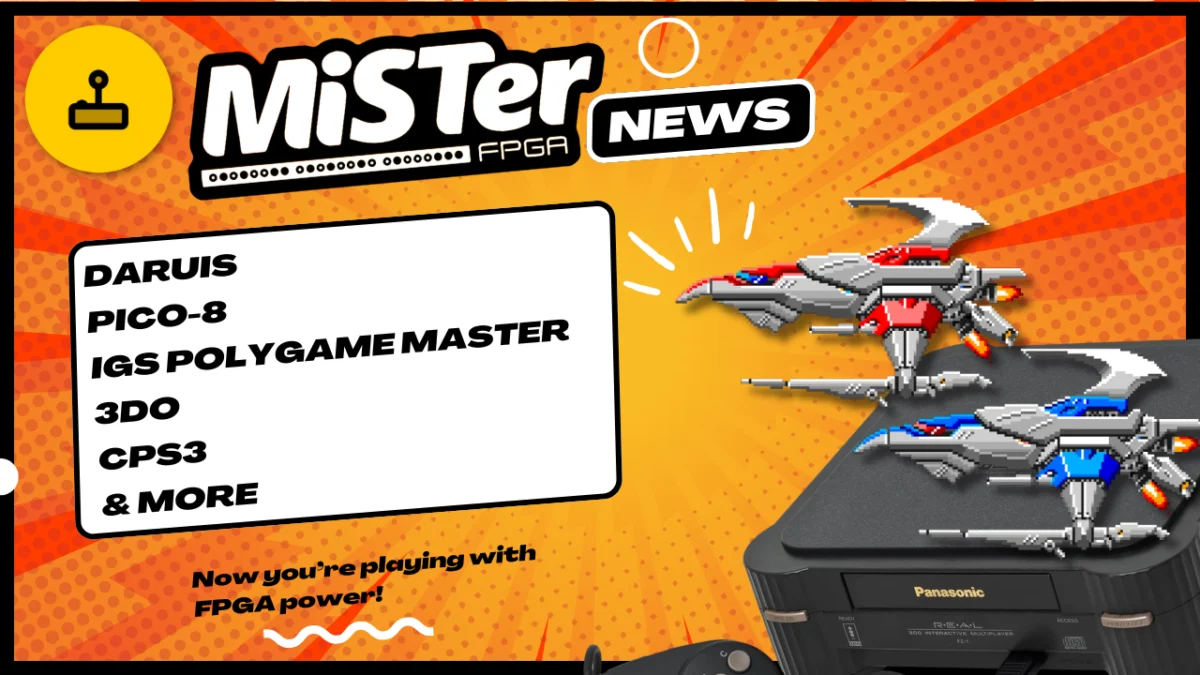
The MiSTer FPGA platform continues its remarkable expansion, demonstrating its unparalleled versatility and the dedication of its global development community with a fresh wave of core releases and significant updates. These advancements span a wide spectrum, from the revival of iconic arcade titles and the enhancement of classic console experiences to the introduction of novel applications and essential utility tools, further solidifying MiSTer’s position as a premier solution for hardware-accurate retro gaming and digital preservation. This latest series of developments underscores the platform’s ongoing commitment to delivering authentic historical computing experiences, making previously inaccessible or challenging systems available to a broader audience.
A Flourishing Ecosystem: New Cores and Enhancements
The MiSTer FPGA project, built upon an open-source framework, thrives on the continuous contributions of independent developers who meticulously translate vintage hardware into modern FPGA logic. This intricate process allows MiSTer to mimic the original systems at a hardware level, bypassing the inherent inaccuracies and latency often associated with software emulation. The recent spate of updates highlights both the breadth of systems being targeted and the depth of technical expertise applied to overcome complex challenges.
One of the most visually striking new additions is the Mandelbrot Fractal Core, dubbed "MiSTerbrot." Developed by catallo on GitHub, this core represents a spiritual successor to the captivating digital eye candy prevalent in the 1990s. More than just a static image generator, MiSTerbrot offers a real-time exploration of the infinitely complex Mandelbrot set. It operates natively at 320×240 resolution, leveraging eight parallel hardware iterators for rapid calculations and smooth rendering. Users can choose from 47 distinct palettes to colorize the fractal landscapes, and an "attract mode" automatically zooms into 25 pre-defined Points of Interest, accompanied by dynamic color cycling. This core not only showcases the raw processing power and graphical capabilities of the MiSTer FPGA but also harks back to an era when such mathematical visualizations were a staple of early computer graphics demonstrations, providing a unique blend of art and computational science. The core is readily available for download from the developer’s GitHub repository, inviting users to delve into its mesmerizing patterns.
Arcade Legends Reborn: Darius, IGS PGM, CPS3, and QIX
The preservation of arcade history remains a cornerstone of the MiSTer project, with several notable cores reaching significant milestones. The intricate hardware of classic arcade cabinets often presents formidable challenges for FPGA implementation, making each successful core a testament to dedicated reverse engineering and design.
The iconic Taito shooter, Darius, has now received a fully functional core, much to the delight of arcade enthusiasts. Released in 1986, Darius stood out with its distinctive three-screen setup, immersing players in a vast, horizontally scrolling underwater world teeming with robotic fish-like enemies. The MiSTer core faithfully reproduces this unique experience, seamlessly composing the three horizontal tile panels into an 864-pixel virtual screen, ensuring the sprawling visuals are accurately presented. The developer confirms that the core runs the complete game from start to finish across all five known ROM sets: World, US, Japan Rev 1, Japan, and Extra Version. Crucially, the implementation includes both dual audio chips, ensuring that Zuntata’s legendary, atmospheric soundtrack is reproduced with pristine accuracy. The arrival of the Darius core is a significant win for arcade preservation, bringing a technically ambitious and historically important title to the MiSTer platform without compromise.
Looking to the future, the IGS PGM (PolyGame Master) core is currently under active development, promising to unlock a new library of arcade titles. The IGS PGM, an arcade system board developed by IGS (International Games System) in Taiwan, was known for hosting a range of popular fighting games and beat ’em ups in the late 1990s and early 2000s, including titles like Oriental Legend and Knights of Valour. The development team, previously recognized for their work on AmigaVision and the 0MHz DOS Collection projects, has launched PGMCenter, a dedicated website for the IGS PGM core. While currently serving as a placeholder, its existence signals serious intent and provides a central hub for future updates. Martin Donlon is spearheading the core’s development, which is still in its nascent stages, indicating that considerable work remains before it reaches a playable state. The community eagerly anticipates the progress, recognizing the potential to expand MiSTer’s arcade library with another unique and beloved platform.
Capcom’s powerful CPS3 (Capcom Play System 3) arcade board also continues its march towards full implementation. Jotego, a prolific MiSTer developer renowned for their meticulous work on complex arcade systems, recently provided an update on the CPS3 core. This advanced board, which debuted in 1996, powered a limited but highly acclaimed roster of games, most notably Street Fighter III and JoJo’s Bizarre Adventure. Jotego showcased the first graphical elements being displayed: the Score Screen layer, a foundational step in rendering the game’s visuals. While seemingly minor, this achievement signifies that a substantial portion of the underlying system architecture has been successfully implemented. Sprites, a crucial component for character animation, are still undergoing development, with Jotego indicating more work is needed. The core currently compiles for MiSTer, but it is not yet operational on the hardware; the shared screenshot was captured from simulation. Jotego anticipates demonstrating further progress in the coming weeks, a development that excites fans of the console’s groundbreaking 2D graphics and intricate fighting game mechanics.
Another classic arcade entry making strides is the QIX core by RodimusFVC. QIX, originally released by Taito in 1981, is a unique puzzle-action game where players capture portions of the screen by drawing lines. The MiSTer core has seen significant progress, now supporting not only the original QIX but also its sequel, QIX 2. Furthermore, the core is expanding to include other related titles such as Dahna, Pop Flamer, Exerion, and Layla. Test cores and MRA files for these games are already available on the core’s GitHub page, inviting community members to participate in testing and provide valuable feedback. This iterative development process, typical of the MiSTer ecosystem, ensures robust and accurate implementations of these historical arcade experiences.
Console and Fantasy Platform Enhancements: 3DO, Genesis/Megadrive MD+, and PICO-8
Beyond arcade preservation, the MiSTer FPGA is continually enhancing its support for home consoles and unique computing platforms, often pushing technical boundaries to achieve broader compatibility and improved experiences.
A major breakthrough for the in-development 3DO Interactive Multiplayer core is its newfound ability to run on a single SDRAM stick. The 3DO, launched in 1993, was an ambitious multimedia console known for its CD-ROM format and advanced 3D capabilities for its time. Previously, the core required specific dual SDRAM configurations, limiting its accessibility to a subset of MiSTer users. This optimization means that the core is now accessible to the vast majority of MiSTer FPGA owners, significantly expanding the potential user base for this historically important platform. The 3DO core remains under constant development, with regular updates and test builds being released. Enthusiasts can follow its progress and download the latest iterations via the dedicated 3DO thread on the MiSTer FPGA forums or through the active MiSTer FPGA Discord server. This move is expected to invigorate interest in the 3DO’s unique library, making titles like Gex, Road Rash, and Myst available to a wider audience with hardware-level accuracy.
The venerable Sega Genesis/Mega Drive core is set to receive a significant audio upgrade with the impending support for MD+. MD+ is an innovative homebrew format that allows developers to modify existing Genesis cartridge games to incorporate CD-quality audio tracks, effectively replacing the original FM synthesis music with high-fidelity, arranged soundtracks. This has led to a burgeoning scene of fan-modified games that offer a dramatically enhanced auditory experience. The integration of MD+ support into the MiSTer Genesis/Mega Drive core means that users will soon be able to enjoy these enriched versions of classic titles, experiencing beloved games like Sonic the Hedgehog or Streets of Rage with orchestral or re-mastered scores. For those eager to preview this feature, necessary files for testing are already available on the MiSTer FPGA forums, allowing the community to contribute to the refinement of this exciting new capability. This enhancement not only improves the user experience but also highlights the dynamic interplay between hardware preservation and community-driven content creation within the retro gaming sphere.
In a unique development, the PICO-8 fantasy console is now fully playable on the MiSTer FPGA, thanks to the efforts of MiSTer Organize. PICO-8 is not a physical console but a virtual machine designed with intentional limitations (e.g., a 128×128 pixel display, 16-color palette, 4-channel sound) to foster creativity and encourage small, elegant game designs. It has cultivated a vibrant community and amassed a vast library of user-created games, often referred to as "carts," available on its official website. The MiSTer implementation of PICO-8 employs a clever hybrid approach: the FPGA handles the critical video timing and output, ensuring zero-lag performance, especially when connected to CRT displays with features like scanlines and shadow masks. Meanwhile, the ARM CPU, which is part of the MiSTer’s System-on-Chip (SoC) architecture, runs the PICO-8 emulator itself. This division of labor optimizes performance, marrying the precision of FPGA video output with the flexibility of software emulation for the core logic. Installation instructions are comprehensively detailed on the MiSTer Organize GitHub page, making it straightforward for users to explore this unique platform and its treasure trove of charming, minimalist games.
Essential Utilities and Community Resources
Beyond specific game and console cores, the MiSTer ecosystem is continually improved by utility tools and user guides that enhance the overall experience and accessibility for its growing user base.
The SuperStation One New User Guide, published by Taki Udon on YouTube, is a crucial resource for newcomers to the MiSTer FPGA. As the platform gains popularity, new users often face a learning curve regarding setup, configuration, and navigating the vast array of cores and features. Taki Udon’s comprehensive video guide covers all essential information, from initial setup to getting various cores up and running. This type of community-generated content is invaluable, acting as a direct bridge for new enthusiasts to quickly become proficient with their MiSTer devices. The guide’s availability on YouTube ensures easy accessibility and provides a visual, step-by-step approach that is often more effective than text-based manuals for complex technical setups. This initiative reflects the supportive and collaborative nature of the MiSTer community.
Finally, MiSTer Companion has received a series of significant updates, solidifying its role as an indispensable graphical user interface (GUI) utility for managing and maintaining the MiSTer FPGA. MiSTer Companion simplifies many common maintenance tasks that would otherwise require command-line interface (CLI) interactions, making the platform more user-friendly, especially for those less familiar with Linux environments. Recent updates have focused on enhancing usability, adding new features, and refining existing functionalities. While the specific changelog is extensive and detailed on MiSTer Companion’s GitHub page, the overall aim is to streamline processes such as core updates, firmware management, file transfers, and system configuration. This utility is particularly beneficial for users who prefer a visual interface, significantly lowering the barrier to entry and ensuring that the MiSTer remains accessible and manageable for a diverse audience. Its continuous development underscores the commitment to not only expanding the MiSTer’s capabilities but also to improving its overall user experience.
Broader Impact and Future Outlook
The consistent stream of advanced core releases and utility enhancements underscores the MiSTer FPGA’s vibrant and active development scene. Each new core represents countless hours of reverse engineering, meticulous design, and rigorous testing by dedicated volunteers. This collective effort not only expands the MiSTer’s library of supported systems but also pushes the boundaries of hardware-accurate emulation and digital preservation.
The move towards single SDRAM compatibility for systems like the 3DO significantly democratizes access to these historically rich platforms, as it reduces hardware requirements and costs for users. Similarly, enhancements like MD+ support for the Genesis/Mega Drive demonstrate how the MiSTer platform can not only preserve original experiences but also elevate them through community-driven innovations. The integration of unique platforms like PICO-8 highlights MiSTer’s versatility beyond traditional retro consoles, positioning it as a powerful, general-purpose FPGA development board capable of hosting a wide array of digital experiences.
The MiSTer FPGA project continues to be a beacon for hardware preservation, offering an alternative to software emulation that guarantees authenticity and low latency. The ongoing progress across arcade, console, and utility developments signifies a robust and forward-looking ecosystem. As developers continue to tackle more complex systems and refine existing cores, the MiSTer FPGA is poised to remain at the forefront of retro gaming and digital heritage for years to come, sustained by the passion and ingenuity of its global community. Users are encouraged to stay connected through official forums, Discord channels, and developer GitHub pages for the latest updates and community engagement.








