Cecilia Chamidah Nur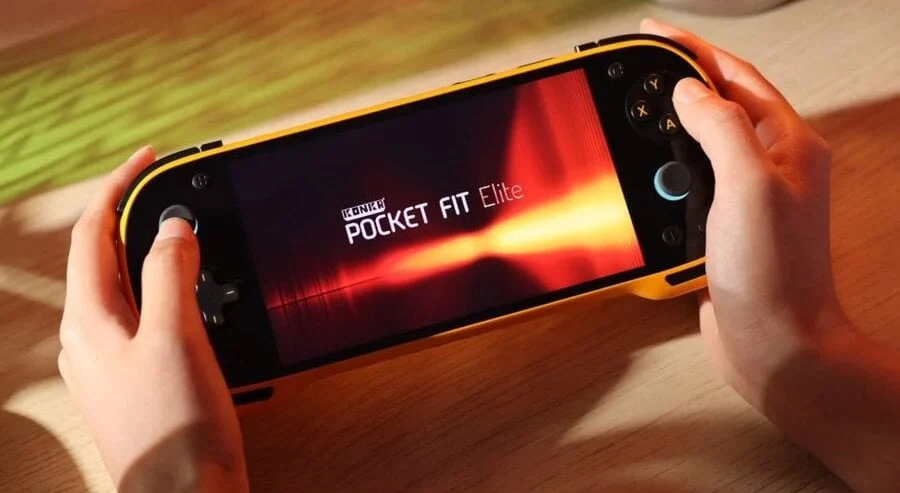
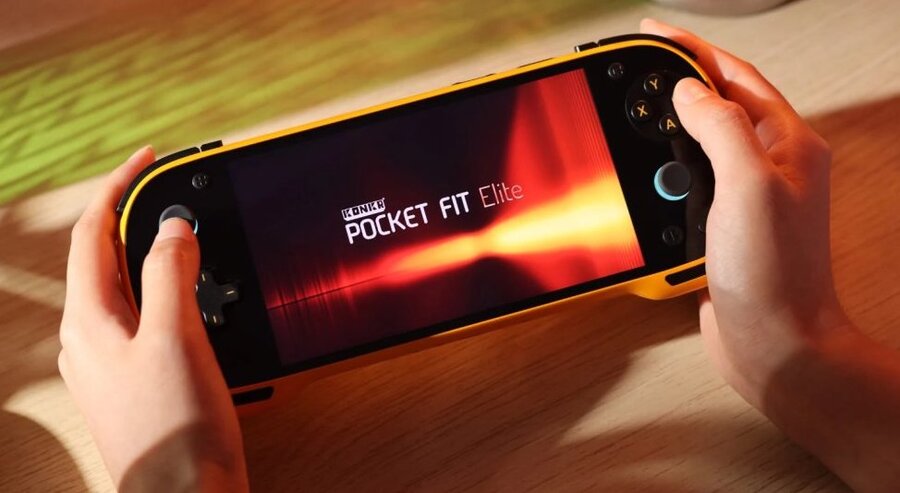
AYANEO, a prominent manufacturer in the burgeoning handheld gaming PC and Android console market, has indicated its intent to cease future production of its Pocket Fit 8 Elite handheld, citing a significant surge in the price of storage components. The revelation, delivered via an update to backers on its IndieGoGo crowdfunding campaign for the KONKR Pocket Fit series, underscores a growing challenge facing the consumer electronics sector, particularly smaller, specialized manufacturers navigating a volatile global supply chain exacerbated by intense demand for high-performance memory.
The Imminent End for the Pocket Fit 8 Elite
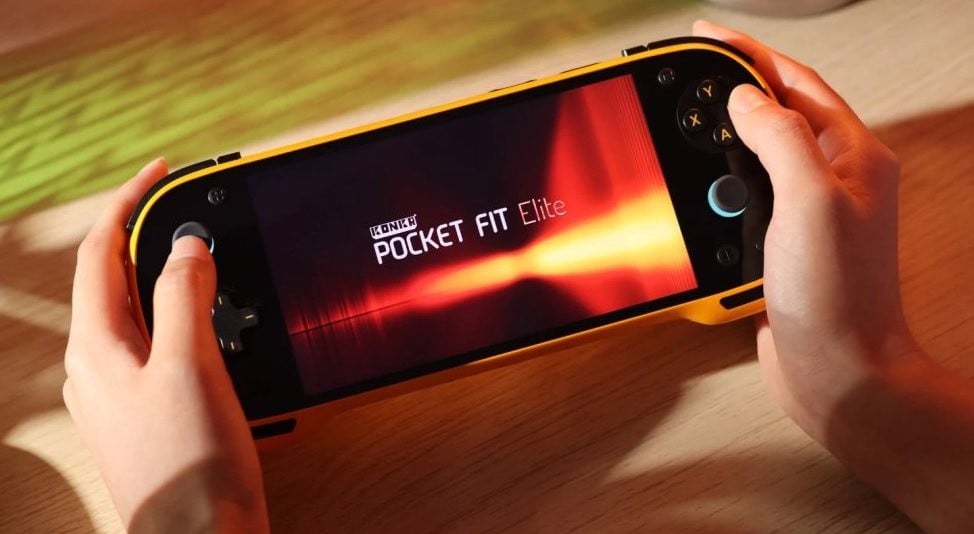
The announcement, made last Friday, follows a period of anticipation for customers who pre-ordered the Android-based KONKR Pocket Fit Elite. AYANEO confirmed that the initial batch of Pocket Fit Elite units is now shipping to pre-order customers after several reported delays. While a restock is also slated for release, the company simultaneously delivered the sobering news that this upcoming inventory is highly likely to be the final production run for the high-end variant. The primary catalyst for this decision is the escalating cost of RAM and other storage components, a phenomenon that has been broadly impacting the technology industry and has been dubbed the "RAMpocalypse" by some analysts.
The KONKR Pocket Fit series was initially unveiled in August of last year during a widely-watched livestream on AYANEO’s official YouTube channel. The line was positioned as a strategic move to offer "budget-friendly" yet high-performance Android handhelds in a market increasingly dominated by premium devices. A month later, in September, the devices became available for pre-order on IndieGoGo, offering two distinct configurations to cater to varying performance and price preferences. The base model featured the G3 Gen 3 chipset, commencing at an accessible price point of $239, while the more powerful "Elite" variant, equipped with the Snapdragon 8 Elite processor, started at $269. The current discontinuation plans specifically target the pricier Snapdragon 8 Elite version, leaving the G3 Gen 3-powered Pocket Fit seemingly unaffected by these production cost pressures.
AYANEO’s Official Stance and Future Production
The pertinent section from AYANEO’s IndieGoGo update articulates the company’s position with clarity and a degree of regret:
"Regarding whether Pocket FIT Elite will be available for purchase again: The answer is yes. We have reserved additional materials for further production. Once most of the current pre-orders have been fulfilled, we will relist Pocket FIT Elite on the AYANEO official website. We will keep you updated with the exact timing. Please also note that due to the recent increase in storage component prices, future production costs will rise significantly. As a result, after this upcoming restock, Pocket FIT 8Elite will very likely be the final production batch, and it will be available while supplies last, with no current plans for further restocking."
This statement confirms that while a limited quantity will be available for purchase directly from AYANEO’s official website post-fulfillment of pre-orders, consumers should view this as a final opportunity. The explicit mention of "no current plans for further restocking" beyond this batch signals a firm, albeit potentially reversible, decision to phase out the product. This transparency from AYANEO provides crucial information for potential buyers and existing owners alike, allowing them to plan accordingly for future purchases or support needs.
The "RAMpocalypse": An Industry-Wide Phenomenon

The challenge faced by AYANEO is not an isolated incident but rather a symptom of a broader, industry-wide crisis affecting the supply and pricing of essential electronic components, particularly DRAM (Dynamic Random-Access Memory) and NAND flash storage. This phenomenon, colloquially termed the "RAMpocalypse," has seen memory contract prices surge dramatically over recent quarters. Market intelligence reports from leading analytics firms indicate that DRAM contract prices, for instance, experienced substantial quarter-over-quarter increases in late 2023 and early 2024, with some segments seeing jumps of 15-20% or more.
The primary driver behind this significant price escalation is the unprecedented demand stemming from the artificial intelligence (AI) sector. The rapid expansion of AI technologies, large language models (LLMs), and high-performance computing (HPC) requires vast quantities of specialized, high-bandwidth memory (HBM) for AI servers and data centers. This intense demand from hyperscalers and tech giants has not only consumed a substantial portion of the available manufacturing capacity but has also shifted production priorities towards more profitable HBM and away from standard consumer-grade DRAM and NAND.
Furthermore, several other factors contribute to the volatility:
- Production Cuts: Major memory manufacturers had, in some instances, scaled back production in late 2022 and early 2023 in response to a market downturn and inventory buildup. The sudden rebound in demand, especially from AI, caught the industry somewhat unprepared.
- Supply Chain Resilience: Despite efforts to diversify, global supply chains remain vulnerable to disruptions, whether from geopolitical tensions, natural disasters, or logistical bottlenecks.
- Technological Transitions: The ongoing transition to newer, more advanced memory technologies (e.g., DDR5 for DRAM, higher-layer NAND for flash) can temporarily constrain supply as manufacturers retool and ramp up production.
These intertwined factors create a challenging environment for companies across the consumer electronics spectrum, from smartphone manufacturers to PC builders and, notably, niche handheld console developers like AYANEO.
Impact on AYANEO and the Handheld Market Landscape
The discontinuation of the Pocket Fit 8 Elite is the second high-profile product adjustment from AYANEO in a short period, highlighting the severity of the component crisis. Earlier this month, AYANEO announced the suspension of pre-orders for its AYANEO NEXT 2, a device positioned as a direct competitor to Valve’s Steam Deck. The company explicitly stated that continuing to sell the NEXT 2 was "no longer sustainable" as "the overall cost of the product [became] far higher than our current selling price." This pattern suggests a strategic re-evaluation within AYANEO, potentially leading to a leaner product portfolio or a shift in pricing strategy for future releases.
For AYANEO, a company known for its diverse range of handheld devices and its reliance on crowdfunding platforms like IndieGoGo to gauge market interest and secure initial funding, these cost pressures pose a significant threat to its business model. The ability to offer "budget-friendly" high-performance devices, a key selling point for the KONKR Pocket Fit line, becomes increasingly difficult when core component costs are unpredictable and rapidly rising. The Snapdragon 8 Elite, a powerful mobile processor, combined with the necessary high-speed RAM and storage, formed the core of the Elite variant’s appeal, making it particularly susceptible to memory price hikes.
The broader handheld gaming market is also feeling the ripple effects. AYANEO is not alone in navigating these turbulent waters. Competitors in the emulation-focused handheld space, such as AYN and Retroid, have similarly announced adjustments to their product lines. Retroid, for instance, was forced to temporarily discontinue one of its handheld models and increase the price of another due to rising costs, directly attributing these changes to the "RAMpocalypse." These instances paint a clear picture of an industry grappling with fundamental economic shifts.
Chronology of Events
- August [Last Year]: AYANEO officially announces the KONKR Pocket Fit series during a YouTube livestream, pitching it as a "budget-friendly" high-end Android handheld.
- September [Last Year]: Pre-orders for the KONKR Pocket Fit, including both the G3 Gen 3 and Snapdragon 8 Elite variants, commence on IndieGoGo. The Elite model is priced starting at $269.
- Late 2023 – Early 2024: Industry reports begin to detail significant increases in DRAM and NAND flash memory contract prices, driven largely by AI demand.
- Early March [Current Year]: AYANEO suspends pre-orders for its AYANEO NEXT 2 handheld, citing unsustainable production costs that exceeded the selling price.
- Mid-March [Current Year, Last Friday]: AYANEO releases an IndieGoGo update for the KONKR Pocket Fit. The update confirms shipping of Elite models to pre-order customers, announces an upcoming restock, but critically, warns that the Pocket Fit 8 Elite will "very likely be the final production batch" due to a "recent increase in storage component prices."
Implications for Consumers and the Future of Handhelds

For consumers, the discontinuation of devices like the Pocket Fit 8 Elite signals several potential trends. Firstly, the window for acquiring specific high-performance, budget-oriented handhelds may become increasingly narrow, emphasizing the "while supplies last" nature of current and future stock. This could lead to increased demand for existing units in the secondary market or a scramble for the final available new units.
Secondly, it suggests that the "budget-friendly" segment of the high-performance handheld market may shrink or face upward price adjustments. Manufacturers might be compelled to either absorb higher component costs, leading to reduced profit margins, or pass these costs on to consumers through higher retail prices. This could raise the entry barrier for consumers seeking powerful emulation or native Android gaming experiences in a portable form factor.
Furthermore, companies like AYANEO might pivot their product strategies. This could involve:
- Focusing on less memory-intensive models: As seen with the G3 Gen 3 Pocket Fit, which appears unaffected, concentrating on variants that use components less impacted by the AI-driven demand.
- Exploring alternative component suppliers: Diversifying the supply chain to mitigate risks associated with single-source reliance or volatile markets.
- Adjusting product lifecycles: Shorter production runs or more rapid product iterations to adapt to changing component costs and availability.
- Rethinking crowdfunding: While crowdfunding provides capital and market validation, it can also lock in pricing far in advance of production, making companies vulnerable to sudden cost spikes.
The "RAMpocalypse" serves as a stark reminder of the intricate global supply chains that underpin the electronics industry. While the demand for AI hardware is a testament to technological advancement, its ripple effects are profoundly reshaping the landscape of consumer electronics, forcing manufacturers and consumers alike to adapt to a new economic reality where even "budget-friendly" high-performance devices face an uncertain future. The handheld gaming market, known for its innovation and competitive pricing, is now at a critical juncture, navigating these unprecedented economic pressures.