Edi Durjana
The highly anticipated release of RetroArch 1.20.0 marks a significant milestone for the open-source emulation frontend, introducing a suite of advanced features designed to elevate the retro gaming experience on modern hardware. Available for immediate download across its diverse supported platforms, this update underscores RetroArch’s unwavering commitment to user-centric development, steering clear of intrusive monetization strategies while pushing the boundaries of digital preservation and immersive gameplay. The highlight features include a revolutionary CRT beam simulation shader developed in collaboration with industry luminaries, and pioneering illuminance sensor support for Linux, offering unprecedented levels of authenticity for classic titles.
RetroArch, a cornerstone of the digital preservation movement, functions as a powerful frontend for the Libretro API, enabling users to run a vast array of classic games, emulators, game engines, and media players from a unified interface. Since its inception, the project has championed an ethos of accessibility and user empowerment, distinguishing itself through its entirely free, open-source nature, devoid of in-app advertisements, monetization SDKs, or paywalled features. This steadfast commitment has fostered a robust global community that supports the project through voluntary donations via platforms like Patreon and GitHub Sponsors, as well as merchandise sales from its Teespring store. This community-driven model ensures that development remains focused purely on enhancing the end-user experience, a philosophy exemplified by the innovations present in version 1.20.0.
Revolutionizing Visual Fidelity with Shader Subframes
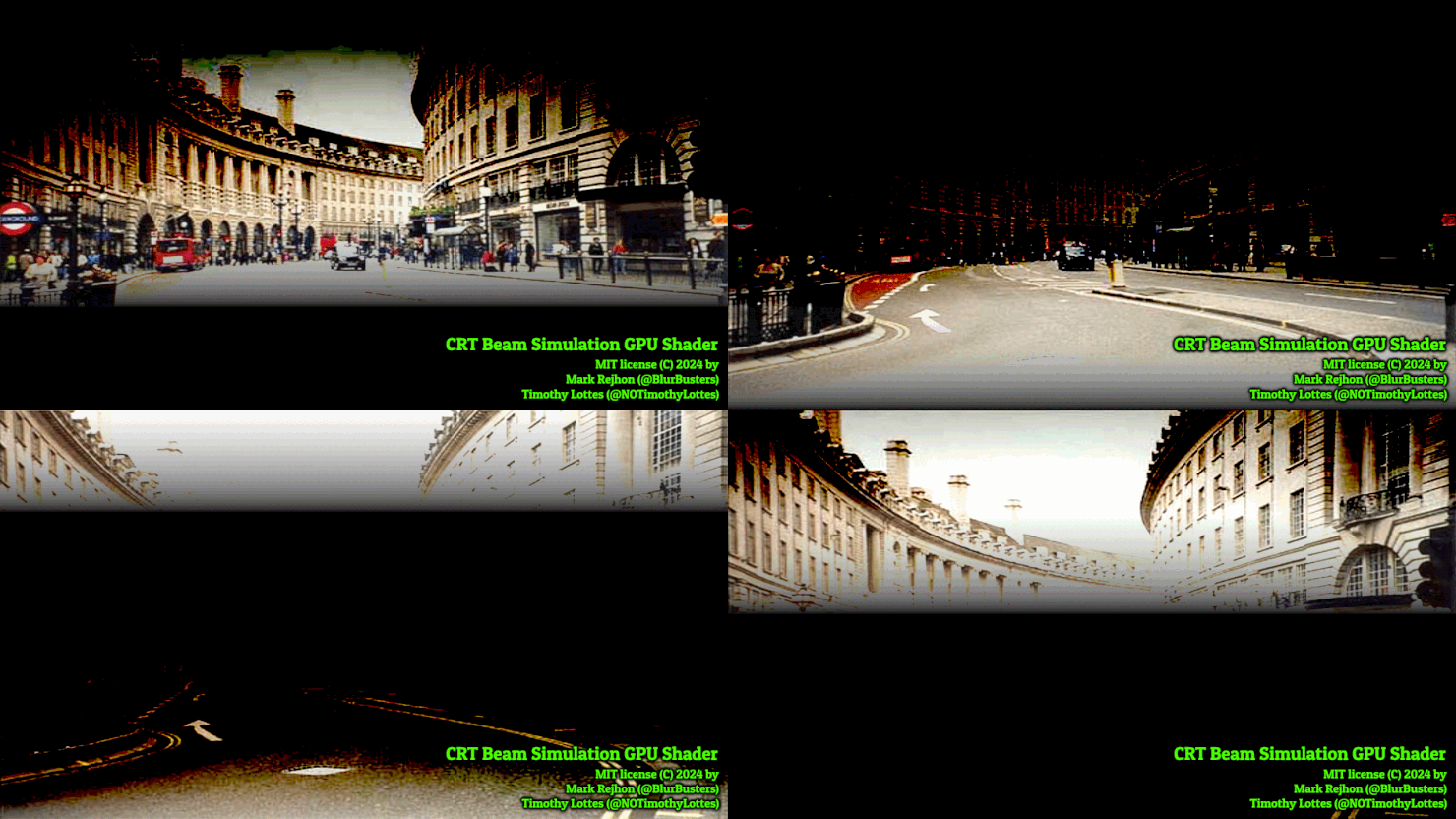
A standout feature of RetroArch 1.20.0 is the introduction of a sophisticated CRT beam simulation shader, a collaborative effort between display technology expert Mark Rejhon of BlurBusters and graphics programming veteran Timothy Lottes, known for his groundbreaking FXAA shader and popular crt-lottes shaders. This new visual enhancement leverages RetroArch’s recently integrated "subframe" shader capabilities to deliver significantly improved motion clarity on contemporary displays.
Modern LCD and OLED screens, while offering superior resolution and color depth, inherently suffer from a phenomenon known as "sample-and-hold," which can lead to motion blur, especially in fast-paced retro games. Traditional solutions, such as Black Frame Insertion (BFI), attempt to mitigate this by inserting black frames between display frames. While effective to some extent, BFI implementations often come with notable drawbacks, including a significant reduction in overall screen brightness, dulled color reproduction, and an increased risk of image persistence – a temporary form of image retention that can occur on many LCD panels and, in more severe cases, contribute to OLED burn-in concerns over prolonged use.
The new CRT beam simulation shader fundamentally rethinks this approach. By utilizing RetroArch’s "subframe" capabilities, the shader can manipulate individual scanlines and pixel updates at a granularity far beyond standard frame rates. This allows for a meticulous recreation of the dynamic illumination and decay characteristics inherent to cathode ray tube (CRT) displays. CRTs, due to their electron beam scanning mechanism, exhibit an impulse-like display, where pixels are only briefly illuminated, providing natural motion clarity without the "sample-and-hold" blur. The collaborative shader aims to mimic this impulse behavior, rendering the visual experience of classic games with an unparalleled level of authenticity, all without incurring the brightness penalties or potential screen degradation risks associated with BFI. This innovation not only caters to purists seeking an authentic retro experience but also demonstrates RetroArch’s role at the forefront of display technology application in emulation, bridging the gap between historical hardware aesthetics and cutting-edge display capabilities. Further technical details on this advanced feature are available in a dedicated article on the Libretro website.
Restoring Immersive Gameplay with Illuminance Sensor Support for Linux
Another groundbreaking addition in RetroArch 1.20.0 is the implementation of illuminance sensor support for Linux, spearheaded by developer Jesse Talavera. This feature is particularly significant for titles that originally incorporated unique hardware peripherals into their gameplay mechanics. The most prominent example cited is the Boktai series for the Game Boy Advance, and its spiritual successor Lunar Knights on the Nintendo DS. These games famously integrated a solar sensor directly into their game cartridges, requiring players to physically expose their devices to sunlight to power in-game abilities, recharge weapons, or progress through certain puzzles. This innovative mechanic, while celebrated for its novelty, has historically posed a significant challenge for emulation, as the sensor input could not be accurately replicated.
Jesse Talavera’s work directly addresses this longstanding hurdle, enabling Linux users, particularly those on portable devices like the Steam Deck, to interact with emulated games using real-world light conditions. A compelling demonstration showcases Lunar Knights running on a Steam Deck, with gameplay dynamically reacting as ambient light levels are adjusted. This integration not only allows players to experience Boktai and Lunar Knights "as intended," but it also opens up exciting possibilities for future emulation. The announcement further notes that the melonDS DS core’s next update will include robust solar sensor support, alongside broader camera support for additional platforms soon after the 1.20.0 release. This trajectory suggests a broader initiative within RetroArch to faithfully emulate unique hardware interactions, promising a more complete and immersive experience for a wider array of classic titles that relied on specialized inputs.
The Enduring Mission: Community-Driven Development and Sustainability
The RetroArch project, and by extension the Libretro ecosystem, stands as a testament to the power of open-source development and community support. Unlike many commercial software ventures that rely on subscription models, in-app purchases, or advertising revenue, RetroArch has consistently prioritized the user’s experience above all else. This commitment to an ad-free, monetization-free platform is explicitly stated as a core tenet, driven by the belief that the project exists "for the benefit of our users."
This philosophy, while laudable, places a unique emphasis on community generosity for its sustainability. The project transparently outlines multiple avenues for users to show their support: direct donations through their website, recurring contributions via Patreon, sponsorship opportunities on GitHub Sponsors, and the purchase of official merchandise from their Teespring store. This multi-pronged approach to fundraising ensures that development can continue, allowing a dedicated team of volunteers and developers to dedicate time and resources to refining the frontend, improving existing cores, and integrating innovative features like those seen in 1.20.0. The success of this model highlights a symbiotic relationship: users benefit from a continually improving, feature-rich platform, and in turn, contribute to its ongoing development, fostering a virtuous cycle of innovation and preservation.
The Broader Impact: Game Preservation and Accessibility
RetroArch’s continuous development, exemplified by releases like 1.20.0, plays a critical role in the broader landscape of video game preservation and accessibility. With thousands of games from decades past facing the risk of digital obsolescence due to decaying physical media, proprietary hardware, and evolving software standards, platforms like RetroArch serve as vital digital archives. By providing a unified, cross-platform solution for emulating a vast array of systems, from early consoles to modern handhelds, RetroArch ensures that gaming history remains accessible to current and future generations.
The innovations in 1.20.0, particularly the CRT beam simulation shader, are not merely aesthetic improvements; they are crucial for preserving the intended experience of these classic games. Many retro titles were designed with the visual characteristics of CRT displays in mind, and recreating that fidelity on modern screens is essential for a truly authentic historical understanding and appreciation of game design. Similarly, the illuminance sensor support goes beyond mere functionality, restoring unique gameplay elements that were previously lost in translation to the emulation environment. This meticulous attention to detail underscores RetroArch’s commitment to not just making games playable, but making them playable as they were meant to be experienced.
The project’s open-source nature further contributes to preservation efforts by ensuring that the code itself is openly available for scrutiny, modification, and long-term maintenance by the community. This decentralized approach mitigates the risk of a single entity controlling access to historical gaming software, securing its longevity for decades to come.
Looking Ahead: The Future of Emulation
The release of RetroArch 1.20.0 signals a vibrant future for the emulation community, demonstrating that there is still ample room for groundbreaking innovation even in a well-established field. The introduction of subframe shaders and advanced hardware sensor integration suggests a strategic direction focused on hyper-realism and comprehensive hardware emulation. Future updates could potentially build upon these foundations, exploring further advancements in display technology emulation, integrating more esoteric sensor types (such as accelerometers or gyroscopes from specific console controllers), or even pushing into more experimental territories like virtual reality integration for emulated titles.
The mention of upcoming camera support for additional platforms also hints at RetroArch’s ambition to embrace a wider range of multimedia and interactive features, moving beyond traditional input methods. This continuous evolution positions RetroArch not just as a tool for playing old games, but as a dynamic platform for exploring the full spectrum of interactive digital entertainment history, continuously adapting to new technologies while faithfully preserving the past.
Changelog Summary (RetroArch 1.20.0)
While a detailed itemized changelog would be extensive, the 1.20.0 release encompasses a broad array of improvements and fixes typical of a major RetroArch update. Key areas of enhancement include:
- Shader System Overhaul: Implementation of "subframe" capabilities and the integration of the advanced CRT beam simulation shader, significantly improving visual fidelity and motion clarity.
- Platform-Specific Integrations: Introduction of illuminance sensor support for Linux, with specific attention to devices like the Steam Deck, enhancing gameplay for titles with unique hardware requirements.
- Core Updates: Numerous updates and refinements across various Libretro cores, ensuring improved compatibility, stability, and performance for a wide range of emulated systems.
- Performance Optimizations: General code optimizations aimed at reducing latency, improving frame rates, and enhancing overall system efficiency across supported platforms.
- Bug Fixes and Stability Improvements: Addressing various reported issues, crashes, and inconsistencies to provide a more robust and reliable user experience.
- UI/UX Enhancements: Subtle refinements to the user interface and experience, potentially including improved menu navigation, accessibility options, and customization features.
- Infrastructure Updates: Backend improvements and library updates to ensure future compatibility and development scalability.
The release of RetroArch 1.20.0 is more than just another update; it’s a declaration of intent, reaffirming the project’s dedication to its users and its pivotal role in advancing the art and science of digital game preservation.