Ganda Hendra Perkasa
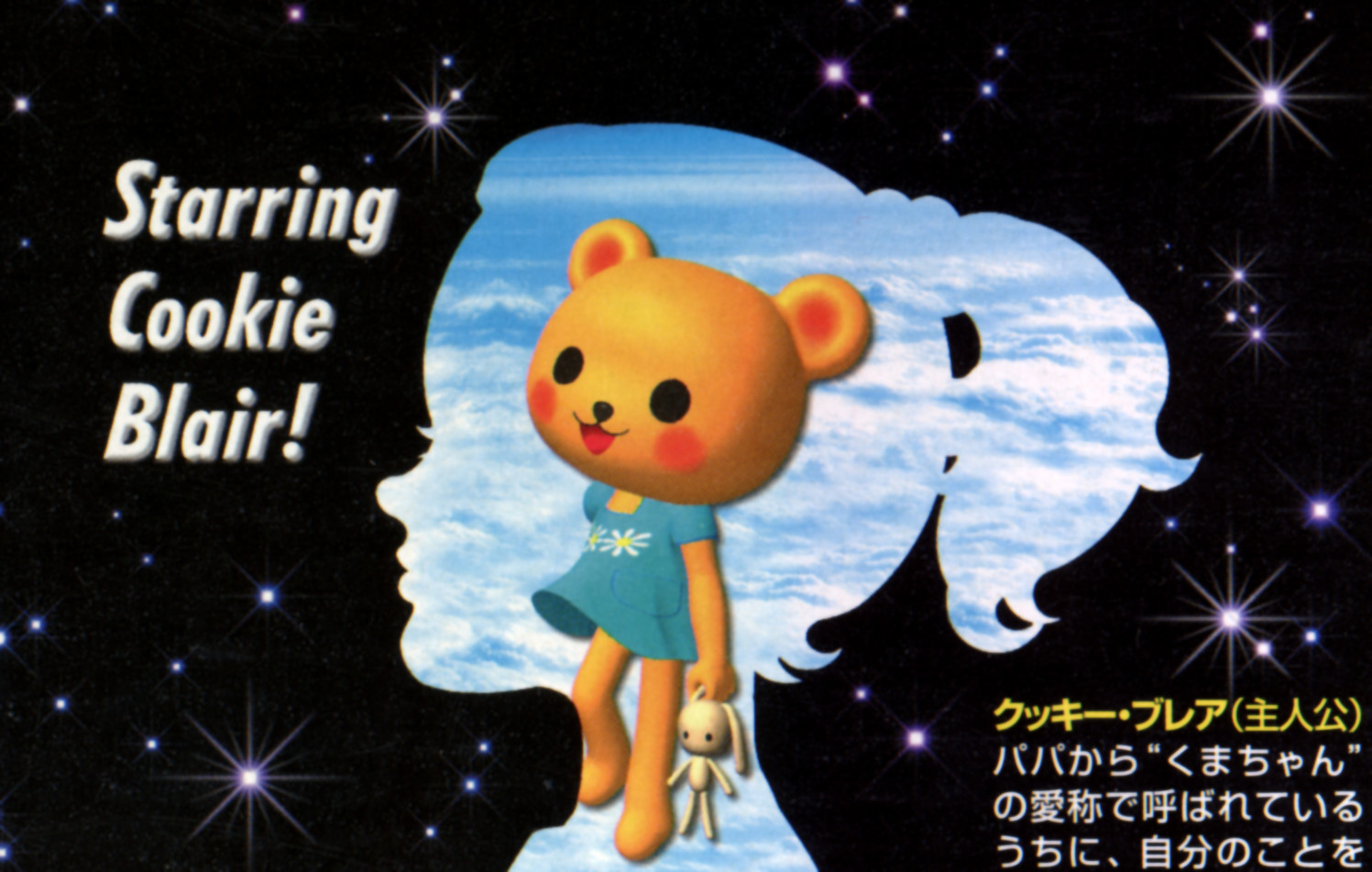
The enigmatic computer game Cookie’s Bustle, released by Japanese developer Rodik in 1999, has recently found itself at the center of a protracted legal battle against aggressive copyright enforcement tactics. Despite its obscurity and genre-defying nature, the game has cultivated a dedicated following over the years, drawn to its unique premise: players embody a five-year-old girl from New Jersey thrust into an international sports competition that spirals into civil war and intergalactic intrigue. The Video Game History Foundation (VGHF), dedicated to preserving gaming’s cultural heritage, has been a key player in this saga, facing persistent Digital Millennium Copyright Act (DMCA) takedown notices that threatened its archival efforts.
The VGHF acquired a rare physical copy of Cookie’s Bustle from multimedia researcher Misty De Méo, recognizing its artistic and historical significance. As the game has been out of print for nearly three decades, the VGHF meticulously documented its packaging and physical materials, making them accessible in their digital archive for research purposes. However, due to copyright restrictions, direct access to the game itself remains unavailable. To bridge this gap, the VGHF also provided a gameplay demonstration video, recorded by community member sebmal, offering researchers a valuable glimpse into the game’s unconventional mechanics and presentation.
The Emergence of a Copyright Troll
The VGHF’s efforts to preserve and share information about Cookie’s Bustle were significantly hampered by the actions of an individual operating under the name Brandon White, or through the corporate entity Graceware, SL. This entity repeatedly issued DMCA takedown notices to the VGHF, often via the trade association Ukie (the Association for UK Interactive Entertainment), targeting the VGHF’s legal use of materials pertaining to Cookie’s Bustle. This was not an isolated incident. Since 2022, numerous websites and individual creators have been subjected to what are described as frivolous takedown requests on behalf of Graceware. These demands have encompassed a wide range of content, from "Let’s Play" videos and fan art to mere mentions of the game’s title.
Investigating Graceware’s Claims
The disruptive nature of these takedown notices prompted the VGHF, in consultation with their legal team at Albert Sellars LLP, to investigate the legitimacy of Graceware’s claims. Their investigation revealed a significant lack of verifiable evidence that Brandon White, or Graceware, SL, actually owns the intellectual property rights to Cookie’s Bustle. Despite repeated assertions of ownership, no legally meaningful proof has ever been presented to substantiate these claims.
A Victory for the Gaming Community
Following a thorough review of the facts and presentation of their findings to Ukie, the VGHF has announced a significant development: Ukie has suspended DMCA takedown services for Cookie’s Bustle on behalf of Graceware, SL. This action is being hailed as a major victory for the gaming community, potentially bringing an end to what is described as a rights-squatting campaign that has persisted for years. The VGHF has chosen to share the details of their investigation and the legal complexities surrounding Cookie’s Bustle‘s ownership in the hope of deterring future abuses of copyright law and empowering creators and archivists to defend their rights.
The Enigma of Cookie’s Bustle‘s Ownership
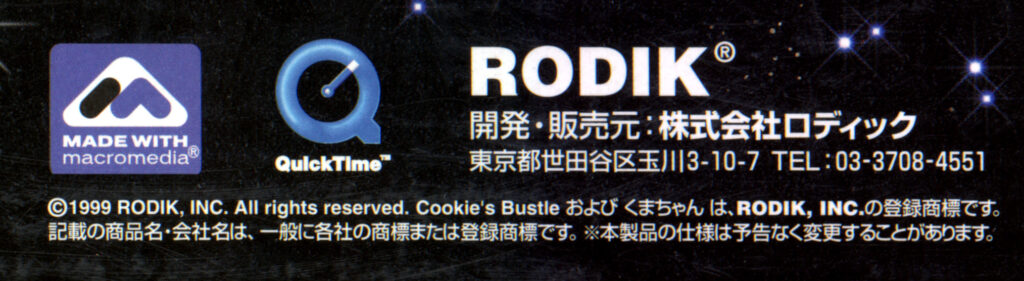
Cookie’s Bustle was officially published in 1999 by RODIK, Inc. The copyright statement on the game’s packaging, documented by the VGHF, clearly attributes all rights to RODIK, INC. Crucially, the game was only published and copyrighted in Japan, and to the VGHF’s knowledge, it has been out of print since its initial release. The current status of RODIK, Inc., and the ownership of its intellectual property rights, remains unclear. This ambiguity strongly suggests that Cookie’s Bustle falls into the category of an "orphan work"—a copyrighted work whose owner is either unknown or cannot be located.
Brandon White and Graceware, SL: A Dubious Claim
The assertion of ownership over Cookie’s Bustle by Brandon White began in 2021. This individual, operating both under his personal name and through the corporate entity Graceware, SL, initiated actions related to the game’s intellectual property, including filing trademark registrations. While no explicit connection between Brandon White and Graceware, SL has been formally established, takedown notices sent on behalf of Graceware consistently identify Brandon White as the copyright owner.
The identity and location of Brandon White remain obscure. Documents associated with Graceware suggest a Japanese base, yet business filings for Graceware, SL point to a questionable address in Andorra. Graceware itself appears to have no significant online or offline presence, and to the VGHF’s knowledge, has never offered any products or services. This leads to the conclusion that Graceware is likely a shell company for Brandon White. Skepticism surrounds the idea that RODIK, Inc., a studio primarily known for fortune-telling software based on traditional Japanese divination, would transfer its intellectual property rights to an anonymous holding company operating in Europe. If Brandon White genuinely acquired these rights, he has consistently failed to provide any substantive evidence to support his claim.
A Pattern of Spurious Takedown Notices
The primary activity attributed to Graceware has been an overwhelming volume of content takedown notices filed under Section 512 of the DMCA, all concerning Cookie’s Bustle. These notices have been characterized as both numerous and indiscriminate. Evidence gathered by the VGHF and other observers indicates that Graceware has issued takedowns for a wide array of content, including:
- "Let’s Play" videos and other gameplay footage.
- Fan art and other creative works inspired by the game.
- Discussions and reviews of Cookie’s Bustle.
- Romhacks and fan translations aimed at preserving or enhancing the game.
- Archival efforts and documentation of the game’s existence.
A significant portion of these takedown requests pertained to content that would typically be considered fair use, such as transformative commentary or educational documentation. The swiftness and aggressive nature of these takedowns were notably unusual within the video game community. Several YouTube videos have documented this pattern of behavior, with many of the few existing recordings of Cookie’s Bustle being removed due to these actions.
The VGHF itself was not immune. Over the past year, the foundation received three DMCA takedown notices from Graceware targeting materials within their digital archive related to Cookie’s Bustle. In one particularly egregious instance, a takedown notice was issued against a VGHF webpage that merely described their possession of a copy of Cookie’s Bustle. This page explicitly stated that game files were "Not Available" and did not display any copyrighted material, including images. Graceware’s action suggested a position that even archiving descriptions of the game’s existence constituted copyright infringement—a stance widely considered legally untenable. Each takedown notice asserted Graceware’s ownership or exclusive licensing of Cookie’s Bustle, yet the validity of these claims remained largely unexamined until the VGHF’s intervention.
Deconstructing Brandon White’s "Copyright Registrations"
Graceware’s primary justification for its takedown notices has been a series of "registrations" filed by Brandon White through INTEROCO—"Copyright Office" in 2021. These filings purportedly claimed ownership of various aspects of Cookie’s Bustle, including its source code, game concept, and character designs.
It is crucial to understand the principles of copyright law to assess these claims. Copyright protection arises automatically upon the creation of an original work, without the need for registration, in countries party to the Berne Convention, including Japan and the United States. While copyright registration in the U.S. offers additional legal benefits, such as the ability to file an infringement lawsuit, it does not create the underlying right.
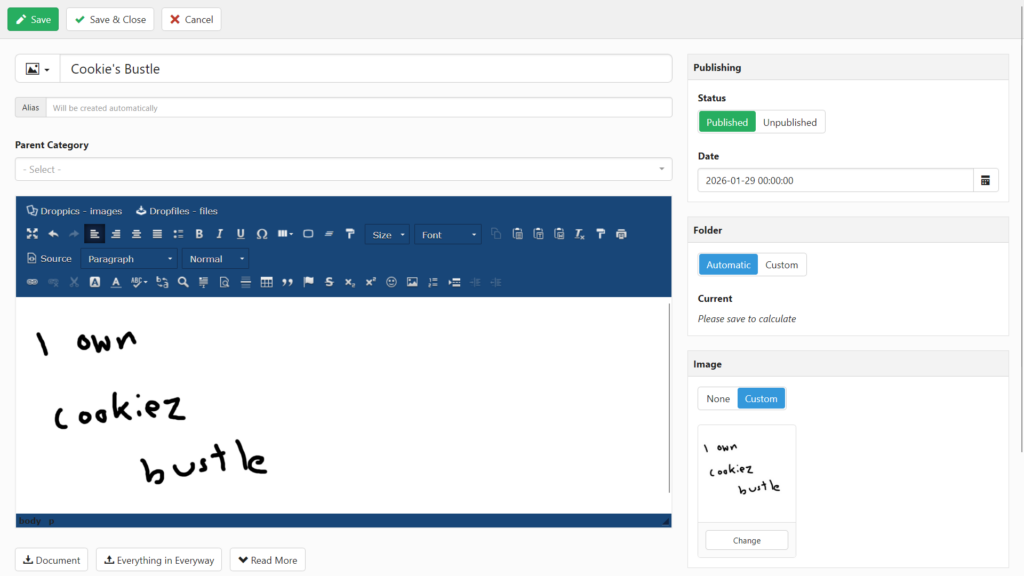
The "registrations" provided by Brandon White are not official copyright registrations. INTEROCO is a private company based in Germany that operates as a "full-automated electronic depository." It functions akin to a digital version of mailing a document to oneself for a postmark, a comparison INTEROCO itself makes. While such a deposit could theoretically serve as proof of creation date, depositing a copy of a work already published does not confer ownership of its copyright. The VGHF’s attempts to interact with INTEROCO revealed a system with questionable oversight, including the possibility of creating unverified entries and an unclear pricing structure for actual services, casting further doubt on its reliability.
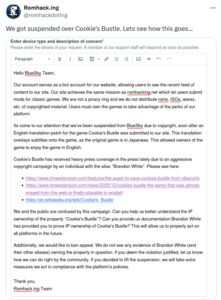
Furthermore, the presence of unique art assets and source code related to Cookie’s Bustle among Brandon White’s INTEROCO deposits does not equate to copyright ownership. The VGHF, for instance, possesses high-resolution art and development assets for Tomb Raider III, yet this does not grant them ownership of the game’s copyright. These INTEROCO "registrations," therefore, are legally meaningless as proof of ownership for Cookie’s Bustle.
Trademark Applications: An Unenforceable Placeholder
Graceware, SL has also filed trademark applications in the United States for the name "Cookie’s Bustle," covering a range of products including computer games, apparel, and merchandise. While these applications have not been cited in DMCA notices as proof of copyright ownership, they have surfaced in discussions about the game’s rights.
These trademark applications were filed under an "intent to use" basis. This means the mark is not yet actively being used in commerce. The U.S. Patent and Trademark Office (USPTO) classifies these as "pending" rather than "registered." Until the mark is demonstrably used in commerce for the specified goods and services, an intent-to-use application functions primarily as a placeholder, establishing an earlier claim date but offering no other enforceable rights. Graceware has filed multiple extensions for these applications since their December 2022 submission, indicating a continued lack of actual commercial use.
Crucially, trademark rights are distinct from copyright. The expiration of RODIK, Inc.’s original trademark for "Cookie’s Bustle" in 2001, and Graceware’s subsequent application in 2022, does not grant them ownership of the game’s copyright. This is analogous to a homebrew developer recently registering the Tengen trademark; while they can use the name for their business, it does not confer ownership of any rights associated with Warner Communications’ original use of the brand or its associated games.
Exploiting Legal Loopholes: Ukie and Web Capio
Brandon White’s strategy appears to involve leveraging low-cost legal resources to issue bulk, nuisance takedown requests. Graceware’s takedown notices have been facilitated by Ukie, the UK’s largest video game trade organization, which offers free DMCA takedown request services to its members. Graceware, as a member, appears to utilize this service. This operation is reportedly managed by Ukie’s IP coordinator, Mumith (Mo) Ali, and his IP management company, Web Capio (now operating as Obviously).
The barrier to entry for Ukie membership and access to these services is relatively low, with annual fees for small companies costing less than £1,000. This accessibility, coupled with the apparent misspelling of Graceware in Ukie’s directory and a defunct associated website, raises questions about the vetting process for members utilizing these services.
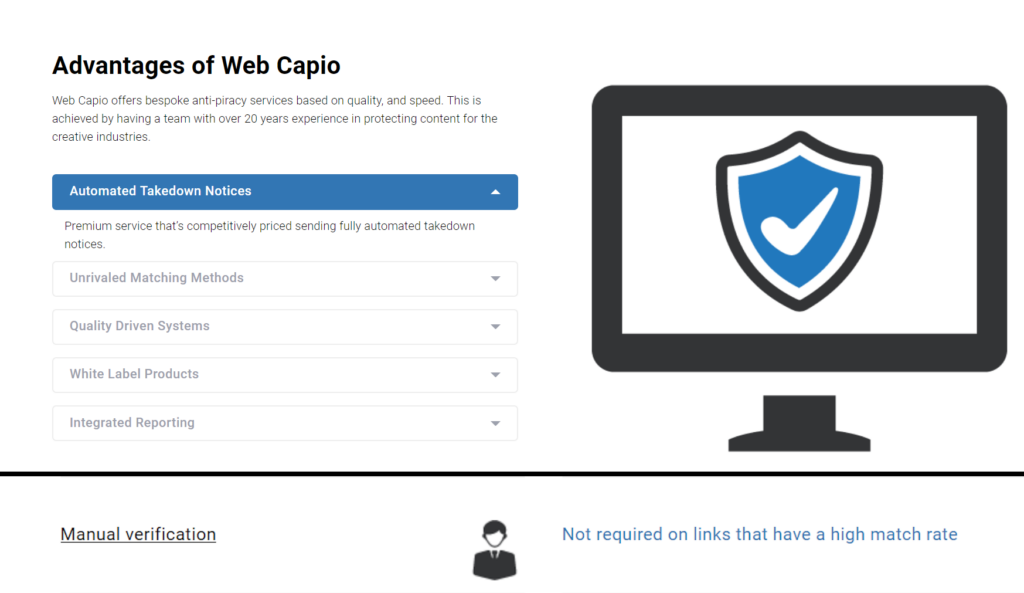
A significant concern highlighted by the VGHF is Web Capio’s advertised use of "automated takedown notices." Their marketing materials indicate that a majority of these notices do not require manual verification by a human. This automated approach facilitates the rapid, large-scale issuance of takedown requests, potentially without adequate scrutiny of their validity. Such a system is susceptible to abuse, as evidenced by the numerous spurious takedowns associated with Cookie’s Bustle.
The VGHF notes that Mumith Ali has spoken about using Ukie’s "clout" to send "hundreds, if not thousands" of takedown notices. While this approach might be appropriate for combating mass piracy, it is entirely unsuitable for addressing fair use of copyrighted material. The VGHF posits that these automated, form-letter takedowns, sent under penalty of perjury by Ali, may not have been reviewed by legal counsel. This practice not only appears irresponsible but could potentially expose Ali and his clients to liability under U.S. law, particularly 17 U.S.C. § 512(f), which penalizes knowingly false takedown notices. Furthermore, neither Web Capio nor Brandon White has initiated any actual legal proceedings related to Cookie’s Bustle, suggesting a reliance on the DMCA process as a tool for intimidation rather than legitimate legal action.
Targeting the Infrastructure: Circumventing Direct Dispute
Web Capio and Graceware appear to have exploited a critical vulnerability within the DMCA takedown system: the reliance of platforms and service providers on automatic compliance to avoid potential liability. Section 512 of the DMCA obligates platforms to remove allegedly infringing user-submitted content or risk legal repercussions. For large platforms, the sheer volume of takedown requests makes individual manual verification impractical.
The VGHF experienced this firsthand when Graceware, rather than issuing a takedown notice directly to the VGHF or its archive host, Preservica, targeted Vercel, the web host for the VGHF’s archive portal. This roundabout approach aimed to leverage Vercel’s automatic compliance mechanisms. However, Vercel took the VGHF’s concerns seriously, and no material was removed. Similar "roundabout" stories have emerged from other entities targeted by Graceware and Web Capio, suggesting a pattern of targeting underlying service providers rather than the content creators directly. This strategy has allowed for the rapid, quiet removal of content with minimal pushback.

The Inability to Prove Ownership
In December 2025, Mumith Ali directly contacted the VGHF to request the removal of a Cookie’s Bustle longplay video. When pressed for further details, Ali reiterated Graceware’s reliance on the INTEROCO "registrations" as proof of ownership. In response, the VGHF’s counsel requested clarification on the connection between Brandon White’s 2021 "registrations" and the original 1999 publication of Cookie’s Bustle. Graceware failed to provide a response.
The VGHF emphasizes that Brandon White has consistently been unable to substantiate his ownership claims when requested to do so. This failure to produce evidence, especially when facing legal scrutiny, is not indicative of a good-faith effort to protect legitimate rights.
Resolution and Ongoing Implications
In February, the VGHF brought these issues to the attention of Ukie CEO Nick Poole. Following discussions with Mumith Ali, who initially stated that Graceware’s claims were based on "good faith" and "verified ownership," Ukie ultimately suspended DMCA takedown services for Graceware. This decision appears to stem from Graceware’s inability to provide sufficient proof of their copyright claim for Cookie’s Bustle.
The suspension of Ukie’s services effectively ends Graceware’s ability to issue wide-scale, automated takedowns for Cookie’s Bustle. This development is seen as liberating the game from the grip of copyright trolling.
The Status of Cookie’s Bustle Post-Takedown Suspension
While the immediate threat has subsided, the true owner of Cookie’s Bustle remains unknown, classifying it as an orphan work. In the United States, orphan works do not receive special legal treatment and remain protected under copyright law. However, in the absence of a proven owner, it is unlikely that further legal action or takedown notices will be issued concerning the game.

Crucially, this means that fair uses of Cookie’s Bustle should no longer be subject to automated takedowns. Gameplay clips, streams, commentary, fan works, and other transformative or educational content related to the game are now more likely to exist online without interference. While previously removed videos may not be restored, future content creation should proceed without the threat of spurious DMCA notices.
Despite this resolution, underlying issues persist. INTEROCO continues to offer services that can be easily abused, and automated takedown systems like Web Capio’s can still lead to unreasonable actions against fair use, potentially exposing users to legal liability. Mumith Ali has indicated that Web Capio is implementing additional measures to escalate counterclaims, which may offer some recourse for users facing similar situations in the future.
Future Possibilities and the Importance of Knowing Your Rights
While Graceware can no longer utilize Ukie’s services, they could potentially seek alternative representatives or attempt to issue takedowns independently, relying on their unsubstantiated INTEROCO claims. However, any future DMCA notices should be made with a thorough understanding of legal obligations, particularly regarding Section 512(f) of the DMCA. The VGHF has not ruled out legal action should they be further harmed by spurious takedown requests. Graceware’s pending trademark applications, which are the only remotely plausible rights they possess, are set to expire in April 2027 and are currently unenforceable.
The VGHF stresses the importance of creators and users understanding their rights. They provide practical advice for responding to takedown notices, encouraging reference to their findings to debunk Graceware’s claims and deter future abuses.
A Broader Fight for Game Preservation
The VGHF acknowledges that their public stance on Cookie’s Bustle might seem disproportionate given the game’s obscurity. However, they argue that this is part of a larger battle. Their 2023 "Survey of the Video Game Reissue Market in the United States" estimated that roughly half of game and software titles released before 1995 have become orphan works. Video games, often treated as disposable commodities, are particularly vulnerable to this problem. This creates an environment where bad actors can easily distort the historical record, sow disinformation about ownership, and impede the efforts of historians, documentarians, and archivists.
The VGHF’s commitment to defending the legal right to document out-of-print orphan games and to confront copyright trolls is paramount. They have not complied with any of Graceware’s spurious DMCA takedown notices and have maintained all materials related to Cookie’s Bustle in their digital archive, underscoring their dedication to preserving video game history.