Chalid Lutfie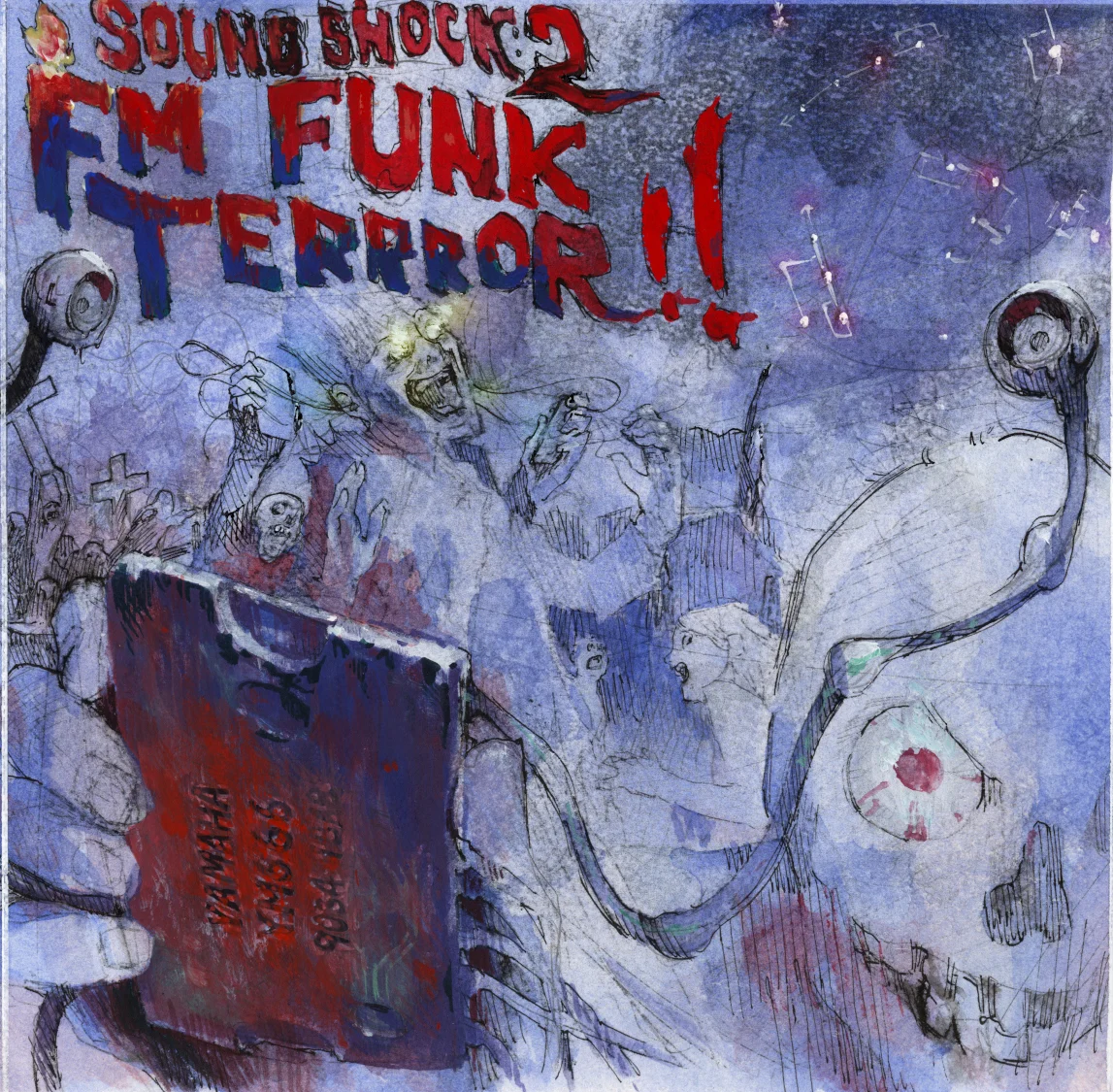
The collaboration between the series curator, known in the industry as zinger, and Shimokura began through a recommendation by the artist hex125. While Shimokura was initially recruited for his musical contributions to the first volume, FM FUNK MADDNESS!!, his professional portfolio revealed a deep proficiency in visual storytelling. Shimokura’s personal affinity for Frequency Modulation (FM) hardware—specifically the Yamaha YM series chips found in 1980s arcade boards and home computers—provided a unique synergy between the audio content and the packaging. This partnership resulted in a trilogy of covers that serve as a visual manifesto for the "believers in FM sound."
The Genesis of FM FUNK MADDNESS!! and the Mechanical Aesthetic
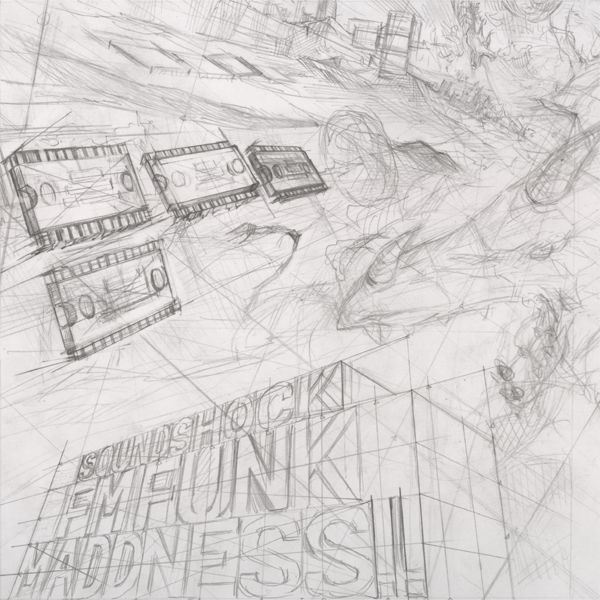
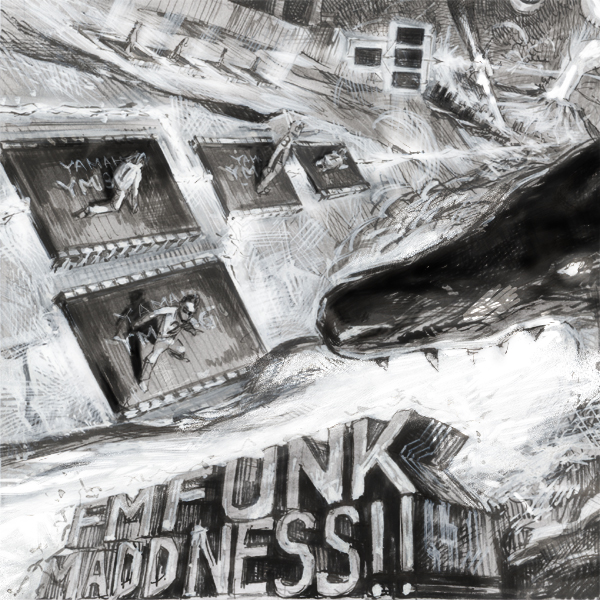
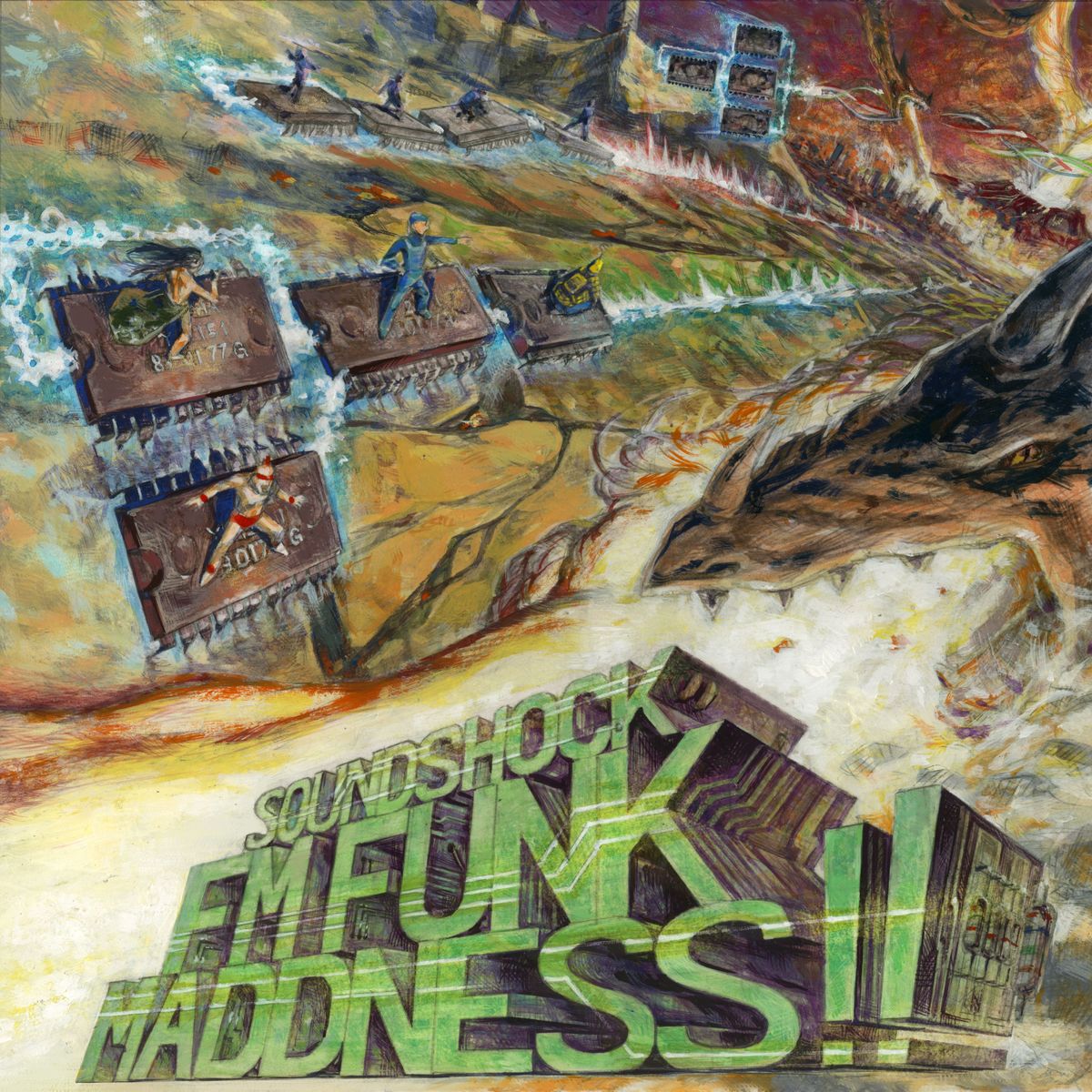
The first entry in the series, SOUNDSHOCK: FM FUNK MADDNESS!!, established the foundational visual language of the project. The creative process was characterized by a collaborative dialogue between zinger and Shimokura, focusing on the high-energy, "over-the-top" nature of the music. Influenced by the flyer artwork of classic Taito arcade titles such as Metal Black and Darius II, Shimokura developed a concept where the hardware itself became the protagonist of an epic struggle.
The artwork depicts a group of heroes and musicians utilizing the "power of FM sound" to combat monstrous entities. A distinctive feature of this cover is the anthropomorphization of FM chips. Shimokura rendered these integrated circuits with caterpillar-like legs, arranged in patterns that mirror FM algorithm charts—the mathematical diagrams used to program specific sounds on Yamaha chips. This literal interpretation of "hardware in motion" served to educate the audience on the technical aspects of the music while maintaining a sense of whimsical sci-fi action. The intentional misspelling of "MADDNESS" was a stylistic choice designed to convey an "extra power" or intensity, a naming convention that would continue through the second volume.
FM FUNK TERRROR!! and the Transition to Psychological Horror
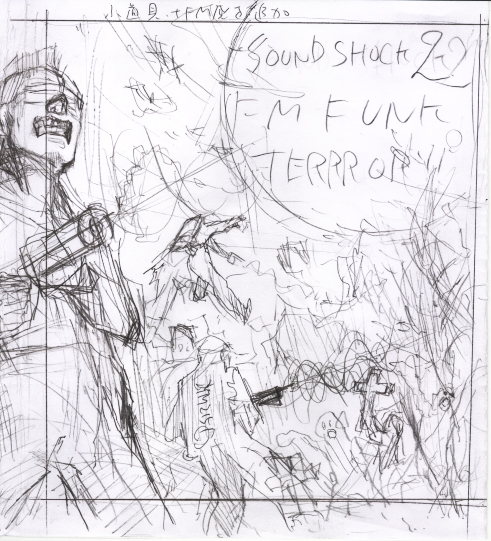
For the second volume, SOUNDSHOCK 2: FM FUNK TERRROR!!, the series shifted its thematic focus toward the aesthetic of 1980s horror cinema. The curator provided Shimokura with a curated selection of reference materials, including posters for A Nightmare on Elm Street, The Evil Dead, and the Splatterhouse video game series. This research phase lasted several weeks, resulting in a complex, detail-oriented composition that explored the "haunting" quality of retro synthesis.
The centerpiece of the TERRROR!! artwork is a ghoul wielding a stylized "YM666" device—a play on the Yamaha YM series chip numbers—designed to resemble a gravestone-themed digital music player. The lore developed by Shimokura for this installment describes a world where, on April 5, "Algorithm constellations" align, and zombies enthralled by FM sound set out to "consane and seduce" humanity. The artwork features stars arranged in FM algorithm patterns, reinforcing the series’ core technical theme. This volume demonstrated Shimokura’s ability to weave intricate narratives into a single static image, suggesting that the music was not merely a collection of songs but a transformative experience capable of "shocking the brain" of the listener.
FM FUNK NIRVANA!! and the Concept of Spiritual Transcendence
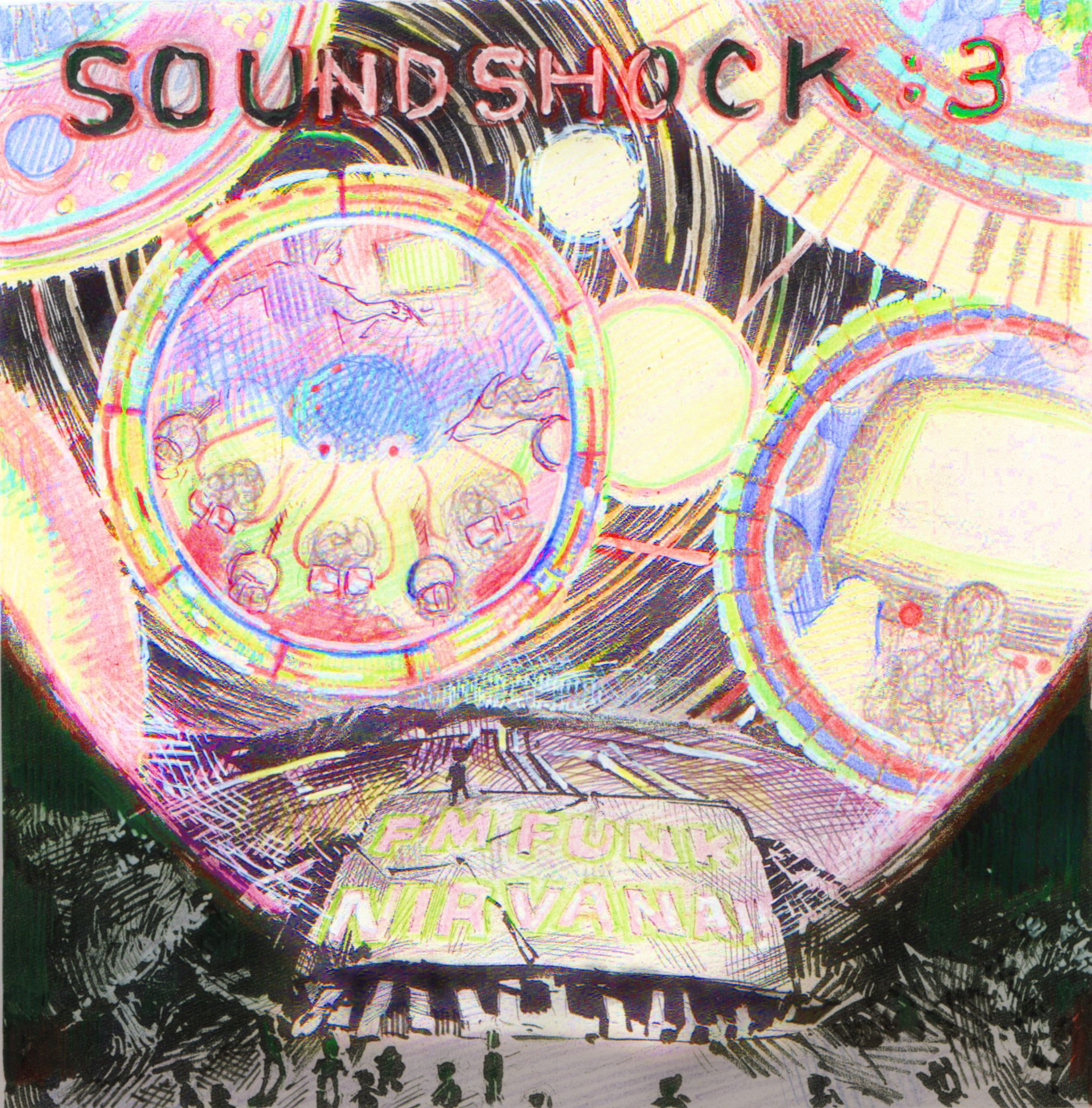
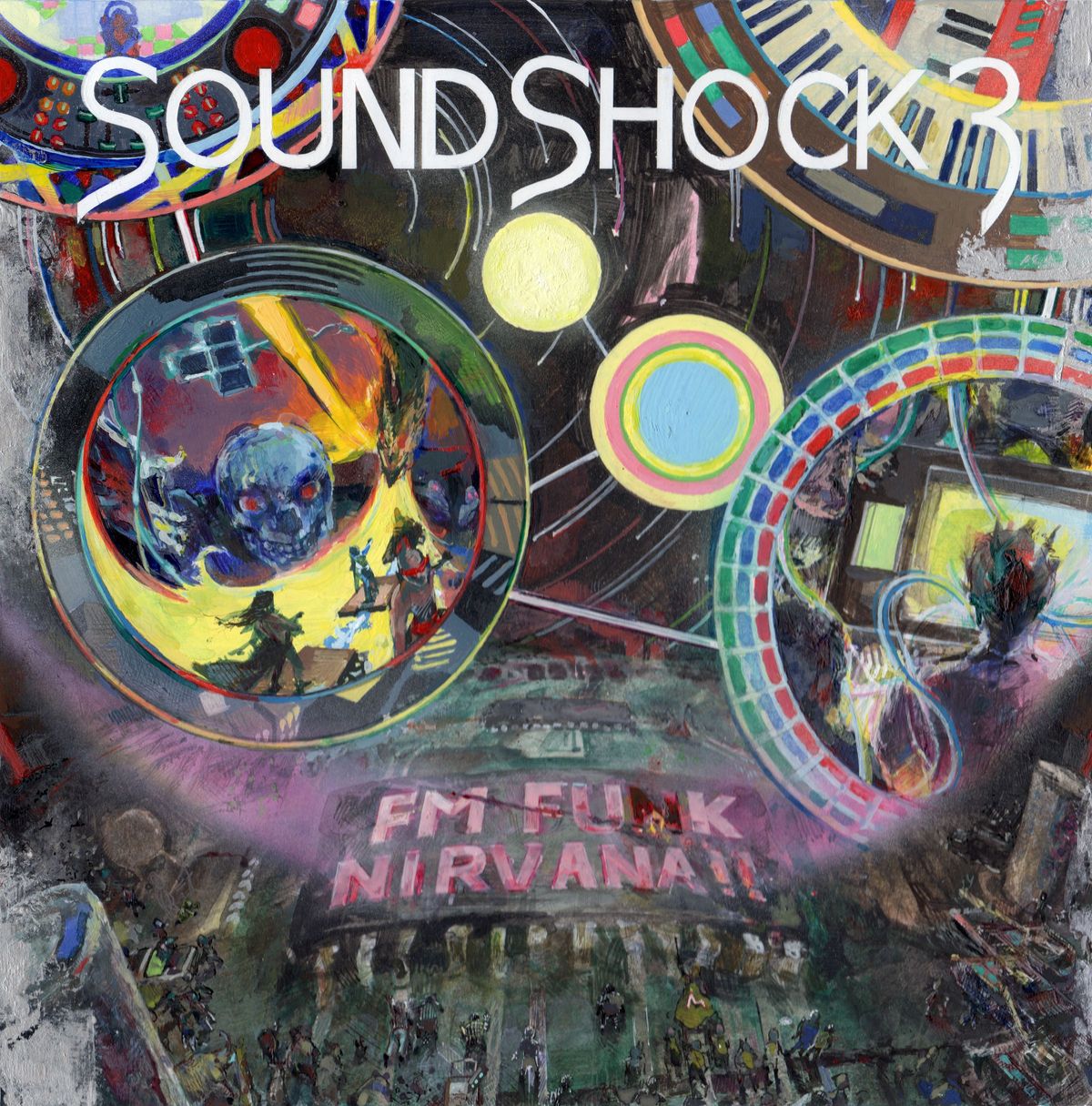
The final installment, SOUNDSHOCK 3: FM FUNK NIRVANA!!, represents the culmination of the series’ philosophical journey. Unlike the previous volumes, the title "NIRVANA" was spelled correctly, a decision made because the word itself represents an ultimate state that cannot be "overloaded" or augmented with extra letters without losing its inherent meaning.
The visual direction for NIRVANA!! moved away from the literal action of the first volume and the horror of the second, instead embracing Buddhist iconography and the concept of the mandala. Shimokura drew inspiration from the soundtrack art of Darius Gaiden, creating a cosmic map where spheres containing various "elements" form a vision of the universe. At the base of the composition, a congregation of disciples is depicted worshipping a massive FM chip mounted on a circuit board.
In this context, the FM chip is elevated from a piece of silicon to a sacred relic. Shimokura’s final message to fans emphasizes that the end of the series is not a "sad thing," but rather a dispersal of seeds. He views the project as a spiritual offshoot of the forerunners of FM sound, suggesting that the listeners will become the "future stars" of the genre. This transition from "maddness" and "terror" to "nirvana" completes a thematic arc that mirrors the lifecycle of technology: from innovation and disruption to obsolescence and, eventually, cultural veneration.
Chronology and Development Timeline
The development of the SOUNDSHOCK trilogy spanned several years, reflecting the meticulous nature of both the musical curation and the artistic production.
- 2011–2012: Initial contact between zinger and Shimokura. Development and release of FM FUNK MADDNESS!!. The visual style was established as a tribute to 1980s arcade flyers.
- 2013–2014: Production of FM FUNK TERRROR!!. The thematic shift to horror was inspired by a desire to explore the darker, more aggressive capabilities of FM synthesis.
- 2015–2017: Conceptualization of FM FUNK NIRVANA!!. The focus shifted to legacy and the "spiritual" impact of the series on its audience.
- April 15, 2017: Formal retrospective and publication of the final artist messages, marking the official conclusion of the SOUNDSHOCK series.
Technical Context: The Role of FM Synthesis in the 1980s
To understand the reverence shown to the FM chip in Shimokura’s art, one must consider the historical impact of Yamaha’s Frequency Modulation technology. Introduced to the mass market in the early 1980s through the DX7 synthesizer, FM synthesis became the dominant sound of the decade. In the gaming industry, chips like the YM2151 (used in arcade cabinets) and the YM2612 (the heart of the Sega Genesis/Mega Drive) provided a metallic, punchy, and complex sound that defined a generation of digital audio.
The "algorithms" frequently mentioned in the SOUNDSHOCK lore refer to the different ways the chip’s operators (oscillators) are connected. Programming these chips was notoriously difficult, requiring a deep understanding of mathematical ratios and carrier-modulator relationships. This difficulty is what created the "cult of the programmer," where artists who could master the hardware were viewed with a level of respect bordering on the religious—a sentiment Shimokura captured perfectly in his final "Nirvana" artwork.
Broader Impact and Implications for the Chiptune Scene
The conclusion of the SOUNDSHOCK series leaves a void in the niche market of dedicated FM funk compilations, but its impact remains significant. By treating the album covers as high-concept fine art rather than mere marketing materials, zinger and Shimokura elevated the status of chiptune as a legitimate contemporary art form.
The series has served several key functions:
- Hardware Preservation: By focusing on specific sound chips, the series encouraged a new generation of musicians to explore legacy hardware and software emulations.
- Cross-Cultural Collaboration: The project bridged the gap between Japanese artists (like Shimokura) and Western curators, fostering a global dialogue about the history of game music.
- Visual Identity: The hand-painted nature of the covers stood in stark contrast to the digital-heavy aesthetic of modern electronic music, emphasizing a "human touch" in a medium defined by computer code.
As Shimokura noted in his concluding statement, the end of the project is merely a transition. The "spiritual offshoots" of the SOUNDSHOCK series are likely to be found in the continued growth of the synthwave and neo-chiptune movements, where the influence of FM synthesis remains a potent creative force. The visual and auditory legacy of the trilogy serves as a definitive archive of a time when silicon and soul intersected to create a unique form of digital funk.